


This article was automatically translated from the original Turkish version.
+1 More
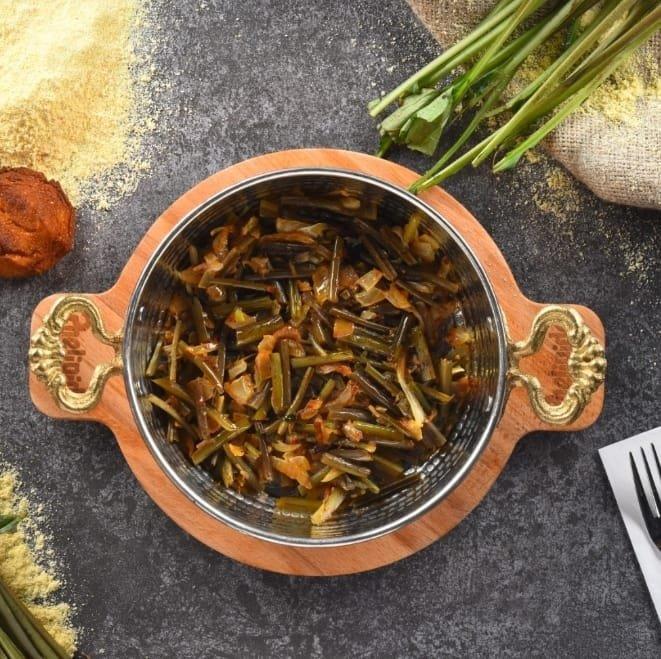
Ordu Galdirik Kavurması
Registration Number | 1193 | ||||||||
|---|---|---|---|---|---|---|---|---|---|
Registration Date | 17.08.2022 | ||||||||
Application Number | C2022/000065 | ||||||||
Application Date | 22.02.2022 | ||||||||
Name of the Geographical Indication | Ordu Galdirik Kavurması | ||||||||
Product / Product Group | Food / Dishes and Soups | ||||||||
Type of Geographical Indication | Mahreç Sign | ||||||||
Applicant / Registrant | Ordu Metropolitan Municipality | ||||||||
Address of the Registrant | Şarkiye Mah. Atatürk Bulvarı 111 Altınordu ORDU | ||||||||
Geographical Boundary | Ordu Province | ||||||||
Ordu galdirik kavurması is a local culinary specialty of the Black Sea Region and a vegetable dish unique to the province of Ordu. It is prepared using the stem portions of the Trachystemon orientalis plant, known locally in the region as “kaldirik,” “ıspıt,” “hodan,” or “balık otu.” The cleaned and boiled plant stems are sautéed with dried onion (optionally green onion or leek), sunflower oil, salt, and, if desired, butter, then served hot; paprika and black pepper are sprinkled on top. The galdirik plant grows naturally only within its geographic range between May and September and is harvested using traditional methods. This dish has become synonymous with the province of Ordu, both through the plant’s place of origin and its historical and cultural context.
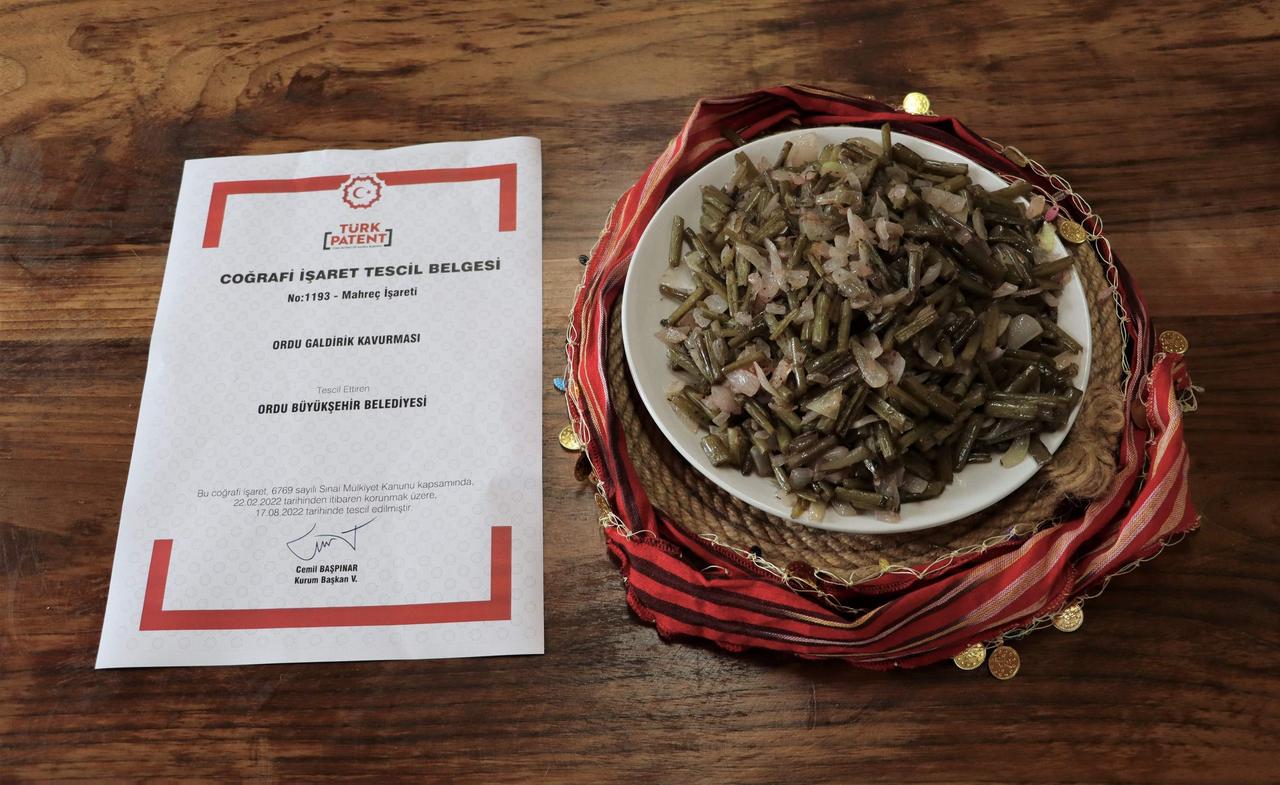
Ordu Galdirik Kavurması (Ordu Büyükşehir Belediyesi)
The primary ingredient of the dish, the galdirik plant, is botanically classified as Trachystemon orientalis and exhibits spontaneous growth. In the Ordu region, the plant is locally referred to by various names including “kaldirik,” “ıspıt,” “hodan,” and “balık otu.” The galdirik plant is harvested from nature between May and September. In addition to fresh consumption, it can be preserved through salting or freezing for use in other seasons. It has a mushroom-like aroma.
Ordu galdirik kavurması is prepared by sautéing boiled galdirik stems with various ingredients. The components and procedure for preparing a portion serving six to eight people are summarized below:
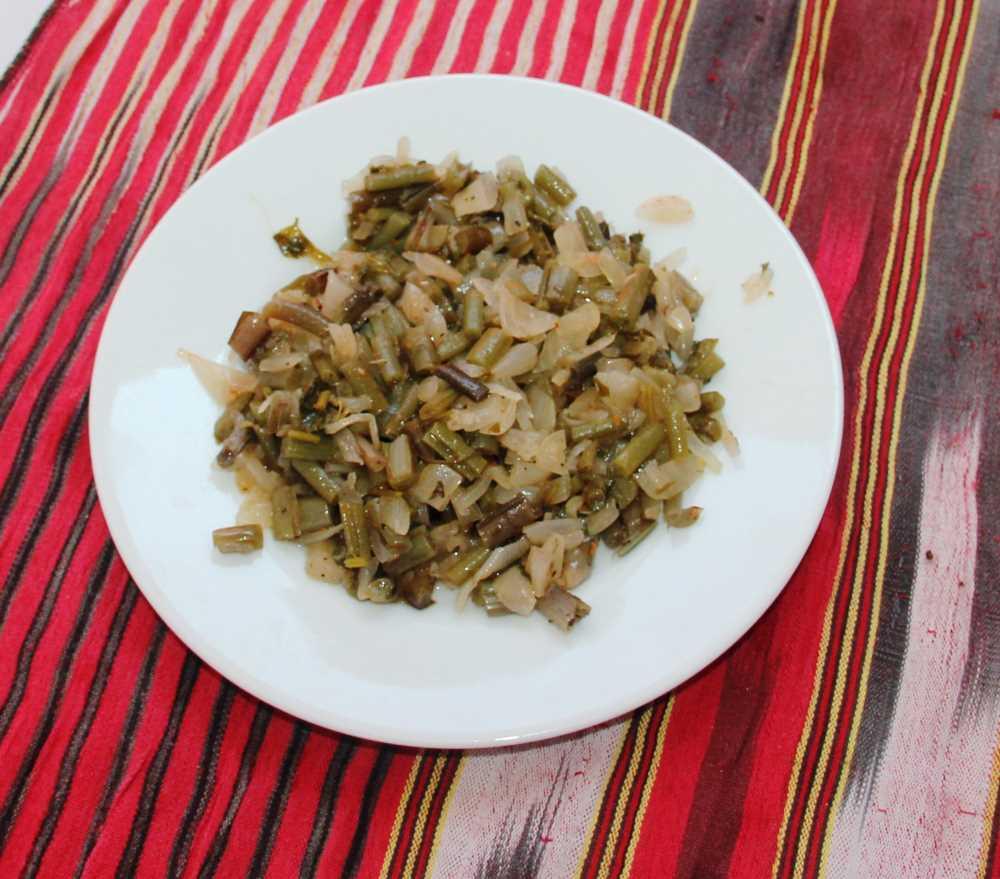
Ordu Galdirik Kavurması (T.C. Kültür ve Turizm Bakanlığı)
All stages of production for this product must occur within the boundaries of the province of Ordu. The galdirik plant grows exclusively within this geographic region, and its production, processing, and final preparation are also carried out entirely within these boundaries. The dish’s history is closely linked to the traditional culinary culture of Ordu province. Galdirik kavurması is among the traditional dishes served at local festivals and celebrations.
The product is registered as a geographical indication mark. The registering authority is the Ordu Metropolitan Municipality, located at “Şarkiye Mah. Atatürk Bulvarı 111, Altınordu, ORDU.” The designation “Ordu galdirik kavurması” and the geographical indication emblem must be clearly displayed on the product packaging or the product itself. If this is not feasible, the designation and emblem must be displayed in a readily visible location within the establishment.
Compliance with the product registration is ensured by a monitoring body established under the coordination of the Ordu Metropolitan Municipality. This monitoring body consists of at least three experts from the Ordu Metropolitan Municipalityand the Ordu Provincial Directorate of Agriculture and Forestry. Monitoring inspections are conducted at least once annually; additional inspections may be carried out as needed or in response to complaints.
Primary Criteria for Monitoring:
During the monitoring process, public institutions, private organizations, or qualified experts from these entities may be consulted for information and services. Legal procedures are managed by the registering authority.
Ministry of Culture and Tourism. "Galdirik Kavurması." Kültür Portalı. Accessed June 15, 2025.https://www.kulturportali.gov.tr/turkiye/ordu/neyenir/galdirik-kavurmasi
Ordu Büyükşehir Municipality. "Ordu Galdirik Kavurması Coğrafi İşaret Aldı." Accessed June 15, 2025.https://www.ordu.bel.tr/haber/ordu-galdirik-kavurmasi-cografi-isaret-aldi-46037
Turk Patent and Trademark Office. "Galdirik Kavurması Tescil Belgesi." PDF document. Accessed June 15, 2025.https://ci.turkpatent.gov.tr/Files/GeographicalSigns/fea3e4f7-cce0-47bc-920c-690d904f787d.pdf
Turkish Patent and Trademark Office. "Galdirik Kavurması." Geographical Indications. Accessed June 15, 2025.https://ci.turkpatent.gov.tr/cografi-isaretler/detay/6127

Ordu Galdirik Kavurması
Registration Number | 1193 | ||||||||
|---|---|---|---|---|---|---|---|---|---|
Registration Date | 17.08.2022 | ||||||||
Application Number | C2022/000065 | ||||||||
Application Date | 22.02.2022 | ||||||||
Name of the Geographical Indication | Ordu Galdirik Kavurması | ||||||||
Product / Product Group | Food / Dishes and Soups | ||||||||
Type of Geographical Indication | Mahreç Sign | ||||||||
Applicant / Registrant | Ordu Metropolitan Municipality | ||||||||
Address of the Registrant | Şarkiye Mah. Atatürk Bulvarı 111 Altınordu ORDU | ||||||||
Geographical Boundary | Ordu Province | ||||||||
No Discussion Added Yet
Start discussion for "Ordu Galdirik Kavurması" article
Botanical Origin and Regional Nomenclature
Recipe and Production Method
Ingredients
Production Process
Geographical Boundaries
Registration and Usage
Monitoring Process