


This article was automatically translated from the original Turkish version.
Optics is a broad field that studies the nature, propagation, interactions, and perception of light, and is one of the foundational pillars of both classical and modern physics. The dual wave and particle nature of light has rendered this field an exceptionally rich discipline in terms of theoretical modeling, experimental observations, and technological applications. The theories developed in optics do not merely explain visual perception; they also underpin advancements in communication, medicine, engineering, biology, and materials science, among other fields, driving the development of modern technology.
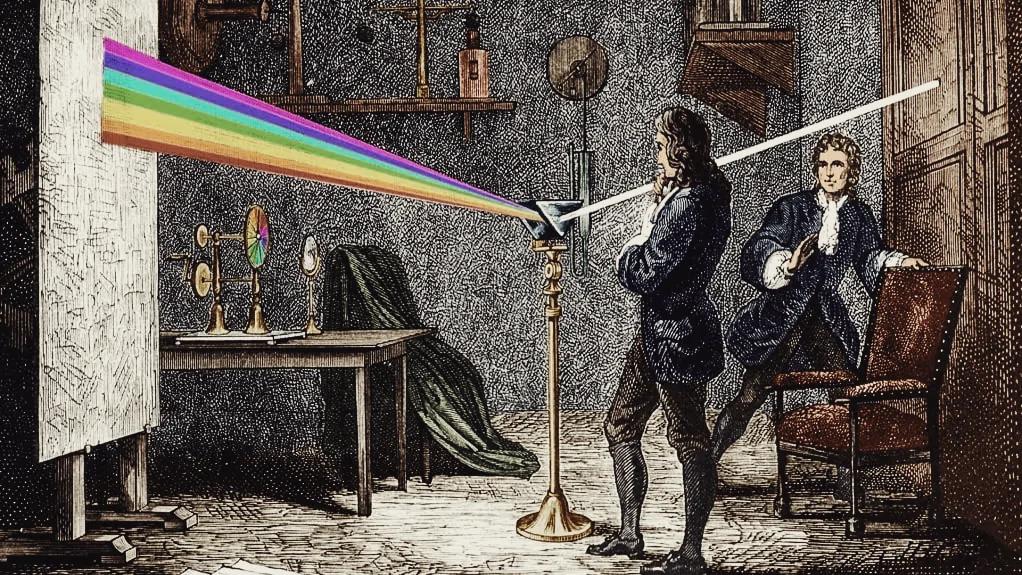
This image depicts Isaac Newton’s famous experiment in which he passed light through a prism to reveal its separation into different colors. Newton’s experiment demonstrated that white light is a combination of different wavelengths and revolutionized the field of optics.
The historical development of optics has paralleled humanity’s efforts to understand the universe. This process has been enriched by contributions from numerous scientists from antiquity to the present day.
In ancient Greece, philosophers and mathematicians formulated the first theories on the nature of light. Euclid, in his work “Optics,” developed an approach based on the rectilinear propagation of light; this model, which introduced the concept of the “ray of light,” is regarded as the first steps in geometric optics. Ancient thinkers such as Ptolemy made observations on refraction and reflection, examined light behavior in different media, and proposed the earliest hypotheses regarding the underlying principles of these phenomena.
During the Middle Ages, scientific work in the Islamic world played a critical role in the evolution of optics. Ibn al-Haytham (Alhazen), in his book “Kitab al-Manazir,” systematically investigated the laws of reflection and refraction on empirical foundations and offered new explanations of the visual process. Ibn al-Haytham’s work made significant contributions not only to the observation of optical phenomena but also to the development of experimental methods, laying the groundwork for the methodological foundations of modern science.
During the Renaissance, scientists such as Johannes Kepler and René Descartes systematized optics mathematically. Kepler developed models of the eye’s function and optical system design, while Descartes formulated the laws of refraction in mathematical terms. This era is notable for bringing analytical approaches to the forefront alongside geometric principles. The power of mathematical descriptions played a critical role in the design of optical instruments such as telescopes, microscopes, and lens systems, enhancing the applicability of optical knowledge.
In the 17th century, Isaac Newton defended the corpuscular theory of light, proposing that its fundamental constituents were “corpuscles.” Newton demonstrated through experimental findings that white light contains different colors, each arising from particles with distinct properties. In contrast, Christiaan Huygens proposed a wave theory of light, attempting to explain wave propagation by suggesting that each point of light acts as a new source of waves.
In the 18th century, Thomas Young’s double-slit experiment provided definitive proof of the wave nature of light, revealing constructive and destructive interference patterns. Augustin-Jean Fresnel further strengthened the wave theory by mathematically detailing interference and diffraction phenomena. These experimental and theoretical findings established the concept of wave-particle duality as one of the foundational pillars of modern physics.
In the mid-19th century, James Clerk Maxwell, through his electromagnetic equations, revealed the dynamic interdependence of electric and magnetic fields. Maxwell’s equations demonstrated that light is an electromagnetic wave and that it propagates in vacuum at a constant speed. This discovery was revolutionary in understanding the relationship between visible light and other regions of the electromagnetic spectrum, such as ultraviolet, infrared, and microwave radiation.
In the early 20th century, Albert Einstein’s explanation of the photoelectric effect revealed that light behaves as discrete energy packets called photons, accelerating the development of quantum mechanics. This approach demonstrated that light possesses both wave and particle characteristics, opening the door to a new field known as quantum optics. Quantum optics has since become one of the pioneers of modern technology by establishing principles critical to quantum computing, cryptography, and optical communication systems.
To understand optics, the fundamental nature of light must be examined through mathematical models and experimental observations.
Light constitutes not only the visible portion of the electromagnetic spectrum but also spans a broad range from gamma rays to X-rays, ultraviolet to infrared, and microwaves to radio waves. Electromagnetic waves arise from the perpendicular oscillation of electric (E) and magnetic (B) fields. Maxwell’s equations describe the behavior of these fields and the propagation of light in space:
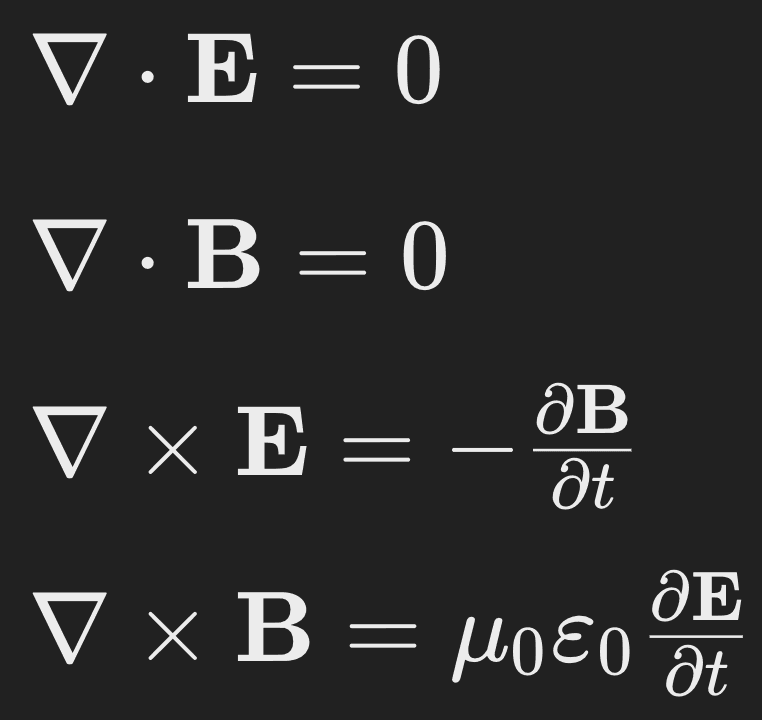
Here ε0 is the electric permittivity of vacuum, and μ0 is the magnetic permeability of vacuum. These equations play a fundamental role in explaining the propagation, energy transfer, and interactions of electromagnetic waves in space. The following expression, known as the wave equation, shows how light propagates in vacuum using plane wave solutions:

Here E0 is the amplitude, k is the wave vector, and ω is the angular frequency.
Visible light occupies a wavelength range of approximately 400–700 nm. The relationship between wavelength (λ) and light energy (E) is expressed by Planck’s quantum hypothesis:
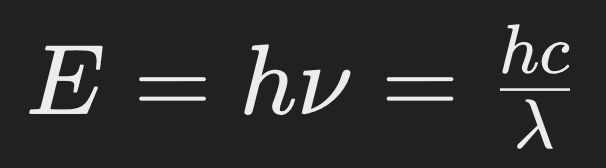
Here h is Planck’s constant, ν is the frequency, and c is the speed of light in vacuum. This formula shows that shorter wavelengths (e.g., blue and violet light) correspond to higher energy, while longer-wavelength red light carries lower energy.
The behavior of light when it strikes a surface is described by the principles of reflection and refraction.
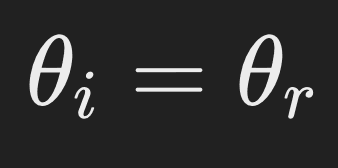

One of the most prominent manifestations of light’s wave nature is observable through phenomena such as interference and diffraction.
The theoretical foundations of optics are supported by mathematical models and systems of equations. This section examines the fundamental equations and formulas that describe the behavior of light.
Maxwell’s equations reveal the dynamic interactions of electric and magnetic fields in space. In vacuum, the wave equation derived from Maxwell’s equations for the electric field E can be written as:
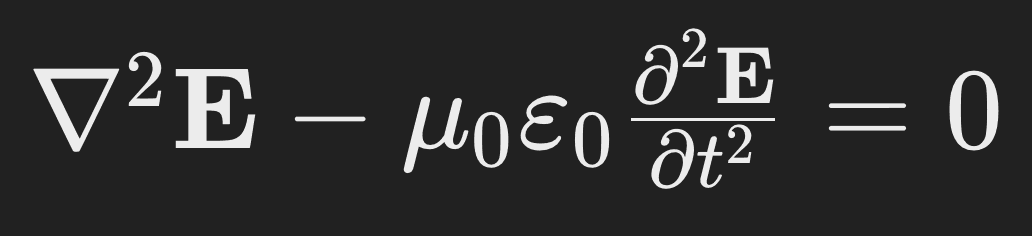
This equation describes the propagation of wave functions through space and their time-dependent variation. The plane wave solution is expressed as:

This solution demonstrates that light propagates at a constant speed (c):
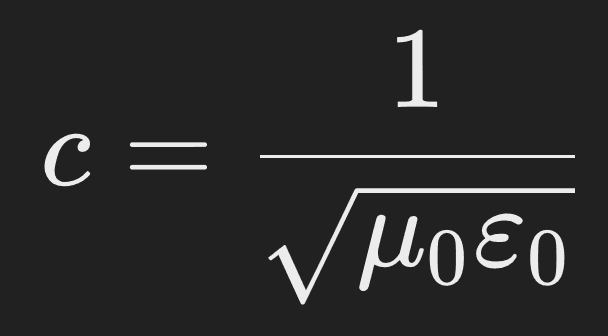
and plays a fundamental role in understanding all regions of the electromagnetic spectrum.
Refraction is observed as the change in direction of light as it passes between two different media. Snell’s Law provides the mathematical basis for this change:

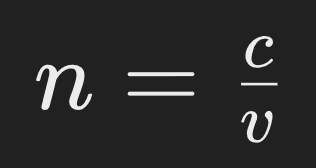
This equation is critical in the design of optical elements such as lenses and prisms. The refractive index is a fundamental parameter that determines the optical density of a medium and the speed of light within it.
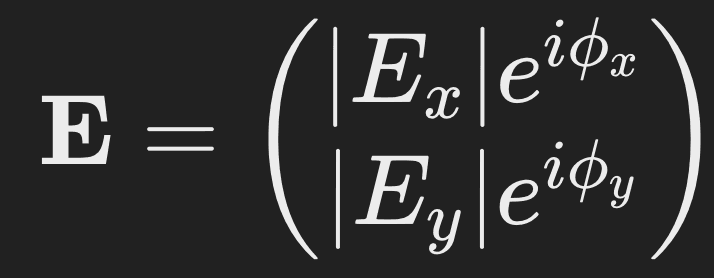
The Fresnel equations determine the ratios of reflection and transmission when light strikes a surface. These equations provide different reflection coefficients (r) and transmission coefficients (t) depending on the polarization state of light:
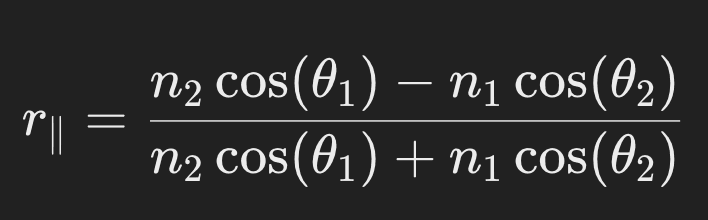
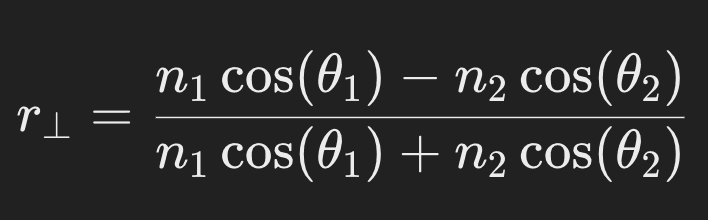
These expressions are used to predict the reflection and transmission behavior of light in optical coatings, polarization devices, and fiber optic systems.
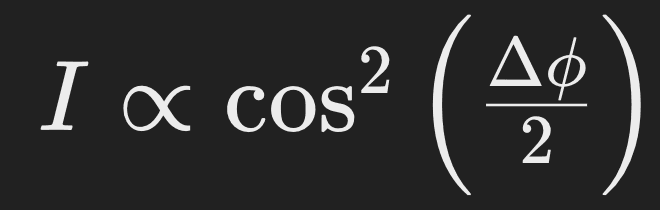
Interferometry encompasses techniques that use the principle of interference between two or more light waves to perform high-precision measurements. Michelson, Mach-Zehnder, and Fabry-Pérot interferometers are used for distance measurements, frequency determination, and calibration of optical components. The light intensity obtained in interferometry is generally expressed by the following formula:

Here I1 and I2 are the individual light intensities and Δϕ represents the phase difference between the waves. This mathematical expression is a fundamental tool for detailed analysis of interference patterns and high-precision measurements.
The theoretical foundations of optics are reflected in a wide range of applications in modern technology.
Geometric optics analyzes the behavior of optical elements (lenses, mirrors, prisms) by assuming the rectilinear propagation of light. This approach establishes the fundamental principles of image formation, focusing, and the distinction between virtual and real images. As in the thin lens formula:
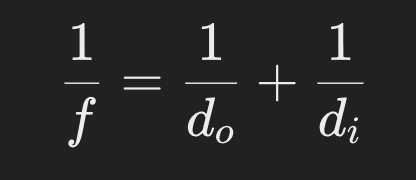
where f is the focal length of the lens, do is the object distance, and di is the image distance. Geometric optics is often the preferred approach for making initial analyses of complex optical systems using simple models.
Physical optics considers the wave nature of light and examines interference, diffraction, and polarization in detail. Applications such as laser technology, holography, and optical fibers are based on the fundamental principles of physical optics. Lasers are coherent light sources operating on the principle of stimulated emission. The working mechanism of lasers is explained by transitions between energy levels of atoms or molecules in the active medium, which is essential for generating a coherent and intense light beam. Holography enables the reconstruction of three-dimensional images by recording the interference pattern between a reference beam and light reflected from an object.
Quantum optics studies light within the framework of quantum mechanics. The quantum nature of photons, quantum versions of the double-slit experiment, and concepts such as quantum entanglement form the basis of research in this field. Quantum optics plays a critical role in the development of quantum computers, quantum cryptography, and high-precision measurement systems. In particular, photons are defined as energy packets. This approach enables understanding of light’s quantum properties beyond classical wave theory.
Optoelectronics focuses on systems that manage the conversion between light and electricity. Devices such as LEDs, photodiodes, laser diodes, and solar panels are practical examples of optoelectronic technology. LED technology is widely used in modern lighting and display systems due to its energy efficiency, long lifespan, and low heat generation.
Fiber optic technologies are based on the principle of transmitting optical signals through glass or plastic fibers. Thanks to the principle of total internal reflection, signal loss is minimized, enabling high bandwidth and long-distance data transmission. Fiber optic communication is a fundamental component of today’s internet infrastructure.
Optics is used both to validate theoretical models and to discover new applications through experimental setups and measurement techniques.
Interferometry enables precise measurements based on the interference of two or more light waves. Michelson, Mach-Zehnder, and Fabry-Pérot interferometers are used for distance measurements, wavelength determination, and calibration of optical components. Interference patterns obtained in interferometry provide critical data that enhance measurement precision.
Spectroscopy allows the analysis of material structures by separating light into different wavelengths. This technique, used in both astronomy and chemistry, biology, and materials science, contributes to understanding molecular and atomic interactions.
Laser technology has revolutionized industrial cutting, medical surgery, communication, and scientific measurements through the development of coherent and intense light sources. The operating principle of lasers is explained by stimulated emission transitions between energy levels. Holography, enabled by the high coherence of lasers, allows the recording and reconstruction of three-dimensional objects; this method is widely applied in the study of microscopic structures and high-resolution imaging systems.
Optoelectronic systems encompass applications that convert light into electrical signals and vice versa. Components such as LED displays, optical sensors, photovoltaic cells, and laser diodes are used in communication, energy production, and medical diagnosis technologies. In these systems, the integration of optical and electronic components plays a critical role in developing high-performance, low-energy-consumption devices.
Quantum optics is a field that goes beyond classical optical principles to deeply investigate the quantum nature of light and the behavior of photons. Phenomena such as quantum entanglement, superposition, and stimulated emission form the basis of theoretical models developed in this area. Quantum cryptography, quantum computers, and optical communication systems have become possible through the principles of quantum optics, pioneering new paradigms in information security and computing.
Current experimental research is expanding the ability to control and measure quantum states of photons, while nano-optics and metamaterial technologies are revealing new dimensions of light-matter interactions. These advances are paving the way for the development of more efficient optical circuits, photonic systems integrated with artificial neural networks, and autonomous sensing technologies.
In addition, the rise of integrated photonic circuits is laying the foundation for next-generation information processing technologies that offer high speed data processing and low energy consumption beyond conventional electronics. New interferometry techniques developed in quantum optics experiments enable the design of ultra-sensitive sensors for space-time measurements.
In today’s era of increasing interdisciplinary interaction, optics is opening doors to numerous new applications and technological innovations. Nano-optics, plasmonic structures, and metamaterial technologies are taking a leading role in controlling light-matter interactions at the nanometer scale, enabling the development of biosensors, high-resolution imaging, and efficient solar energy harvesting systems.
Moreover, artificial intelligence-assisted optical systems, optical communication networks, and autonomous robotic sensing technologies are achieving significant progress in both fundamental research and industrial applications. These systems provide innovative solutions in areas such as optical data processing, noise reduction in signals, and real-time image analysis, meeting the demands of modern technology.
In next-generation optical technologies, particularly quantum-optics-based systems, secure communication, high-precision measurements, and low-energy-consumption applications are coming to the forefront. Scientists are working on experimental setups that integrate optical and quantum principles to develop more efficient and scalable technologies.
Born, Max, and Emil Wolf. Principles of Optics. 7th ed. Cambridge: Cambridge University Press, 1999.
Einstein, Albert. "On a Heuristic Point of View Concerning the Production and Transformation of Light." Annalen der Physik 17 (1905): 132–148.
Feynman, Richard P., Robert B. Leighton, and Matthew Sands. The Feynman Lectures on Physics, Vol. II. Reading, MA: Addison-Wesley, 1964.
Hecht, Eugene. Optics. 5th ed. Boston: Pearson Education, 2017.
Jackson, John David. Classical Electrodynamics. 3rd ed. New York: Wiley, 1999.
Maxwell, James Clerk. A Treatise on Electricity and Magnetism. Oxford: Clarendon Press, 1873.
Sabra, A. I., trans. Ibn al-Haytham. The Book of Optics. Cambridge, MA: MIT Press, 1989.
Saleh, Bahaa E. A., and Malvin Carl Teich. Fundamentals of Photonics. 2nd ed. New York: Wiley, 2007.
Scully, Marlan O., and M. Suhail Zubairy. Quantum Optics. Cambridge: Cambridge University Press, 1997.
Young, Thomas. "Experimental Demonstration of the General Law of the Interference of Light." Philosophical Transactions of the Royal Society of London 94 (1804): 1–16.

History of Optics
Ancient Period and Early Approaches
The Islamic World and the Contributions of Ibn al-Haytham
Renaissance: Strengthening of Mathematical Approaches
17th and 18th Centuries: The Wave-Particle Debate
19th Century: Rise of the Electromagnetic Wave Theory
20th Century: Quantum Optics and Modern Approaches
Fundamental Concepts and Mathematical Foundations
Light and Electromagnetic Waves
Spectrum and Energy Distribution of Visible Light
Reflection and Refraction
Interference, Diffraction, and Polarization
Mathematical Formulations and Theoretical Approaches
Maxwell’s Equations and the Wave Equation
Snell’s Law and Refractive Index
Fresnel Equations
Interferometry and Interference Patterns
Applications of Optics
Geometric Optics
Physical Optics
Quantum Optics
Optoelectronics and Fiber Optic Technologies
Experimental Techniques and Optics in Modern Applications
Interferometry and Spectroscopy
Laser and Holography Applications
Optoelectronic Systems
Quantum Optics and Future Perspectives
Additional Applications and Future Developments