+1 More

Ölüm tarihi | 2010-01-28 | ||||||||
|---|---|---|---|---|---|---|---|---|---|
Place of Death | Istanbul | ||||||||
Birth | 1931, Istanbul | ||||||||
Major Works | Dog Looking at the Path (2001) Prince (2000) Moon Rabbit (1999) Wall of Death (1999) Submarine in Icy Waters (1985) Soviet Tanker Passing Through the Bosphorus (1984) Crows on Büyükada (1984) Baby Icon (1978) Born in Africa (1975) Mother and Child (1974) | ||||||||
Museum Collections in Türkiye | İzmir Museum of Painting and Sculpture - Figure and Nude Ankara Museum of Painting and Sculpture - Two Photo Models (1984) | ||||||||
Solo Exhibitions | Art of This Century Gallery - New York Atatürk Cultural Center - Istanbul Galerie Montenay - Paris Yapı Kredi Kâzım Taşkent Art Gallery - Istanbul | ||||||||
Places Lived | Nigeria London and Paris USA Türkiye | ||||||||
Education | 1953–1957 Engineering Education (Boston and New York) 1949–1953 Robert College | ||||||||
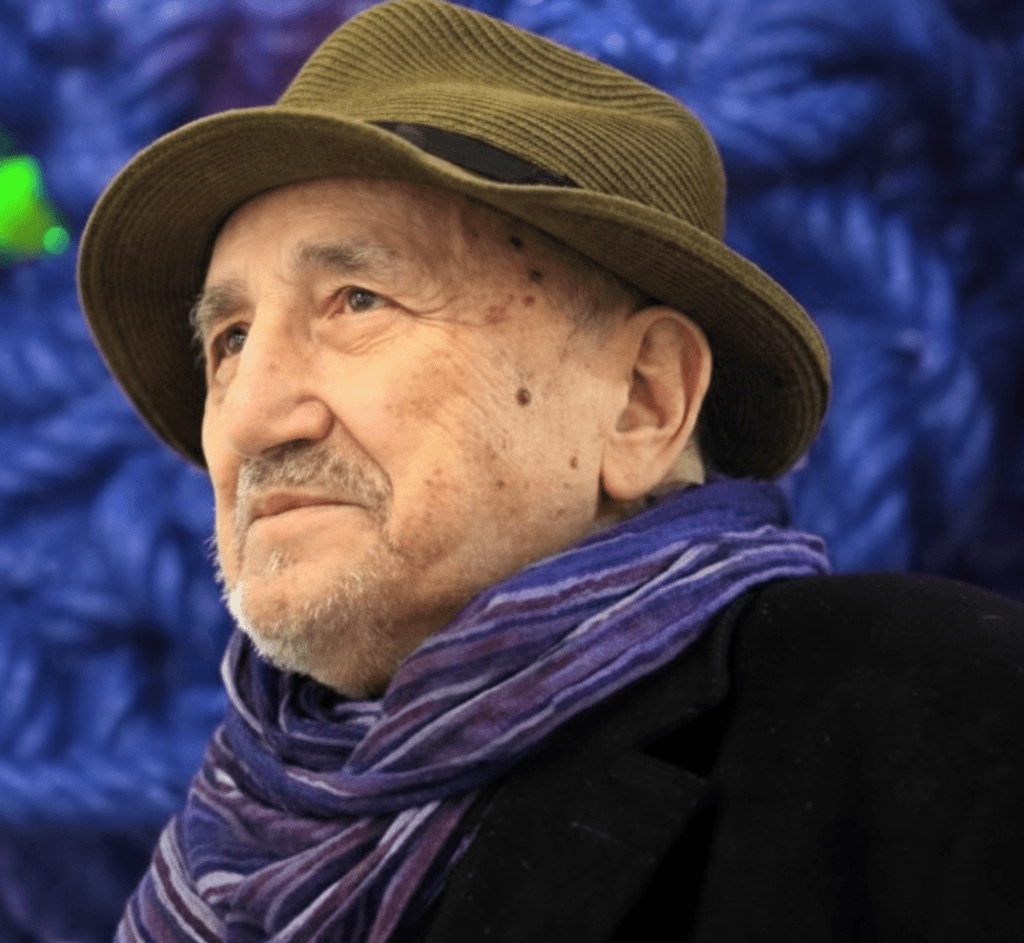
Ömer Uluç was a Turkish painter and sculptor. He was born in Istanbul in 1931. Throughout his artistic career he produced works in painting, design, collage, sculpture, and installation, combining diverse materials in both two-dimensional and three-dimensional pieces. His artistic practice spanned over fifty years. He passed away in Istanbul on Thursday, 28 January 2010.
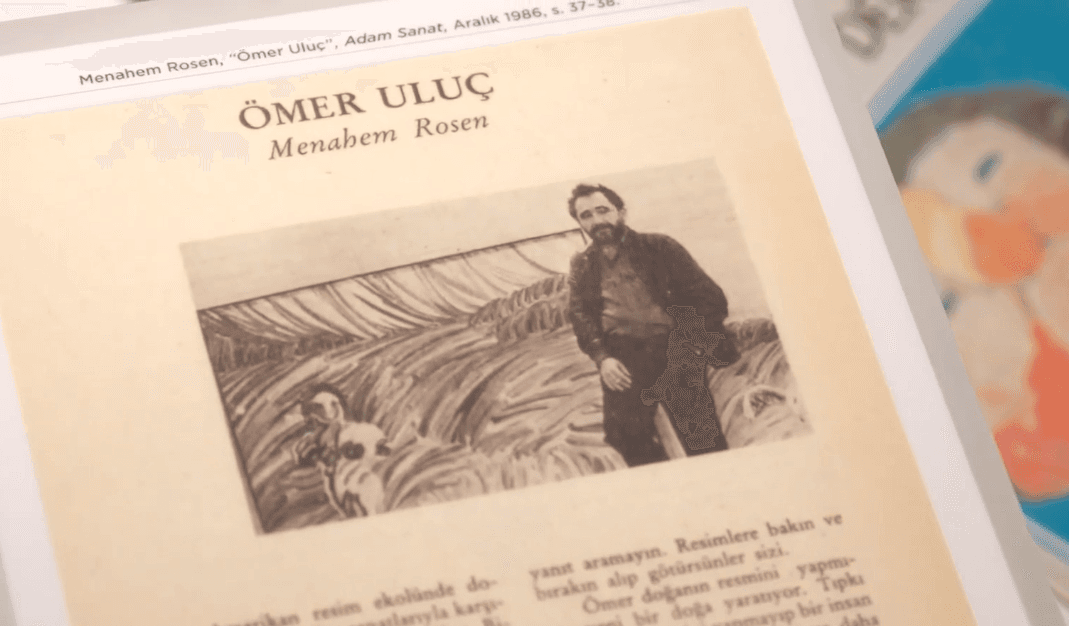
On Ömer Uluç (Istanbul Modern Art Museum)
He studied at Robert College in Istanbul from 1949 to 1953. During this period he began engaging with painting and worked in Nuri İyem’s studio.
From 1953 to 1957 he pursued engineering studies in Boston and New York in the United States. He continued his painting practice during and after his engineering education, producing particularly abstract works during these years.
In 1953 he joined a group led by Nuri İyem, known as the Tavanarası Painters, which rejected the academic approach to art and pursued painting outside institutional frameworks. This milieu advocated for art that was abstract and original. Uluç’s early works from this period retained figurative qualities, yet abstract expressionist tendencies were also evident.【1】
While living in the United States between 1953 and 1957, Uluç continued his painting practice alongside his engineering studies. He maintained his production of abstract painting during this period.【2】 In 1955 he held his first solo exhibition in Boston.【3】
In the 1960s Ömer Uluç embarked on a search for a unique artistic language, beginning to use color as dynamic stains on flat surfaces. He later grouped his works from after 1965 under the title “Armalar”. While continuing abstract painting, he experimented with spiral color bundles, which gradually evolved into figurative forms.【4】
Between 1971 and 1972 the artist lived in the United States, and from 1973 to 1977 he resided in Nigeria in West Africa. In works from this period such as Ana Çocuk (1974), Afrika’da Doğdu (1975), and Bebek İkon (1978), he depicted figures evoking African types, composed in blue, red, and gray-brown tones. These figures were enlarged to dominate the background.【5】
In the 1980s a new openness emerged in the color clusters Uluç used in his paintings. Color applications executed with free brushstrokes became prominent. In his nude figure studies from this period, the color clusters dissolved into free, curvilinear lines. He settled in Paris in 1983. Paintings from this time such as Büyükada’da Kargalar (1984), Boğazdan Geçen Sovyet Tankeri (1984), and Buzlu Sularda Denizaltı (1985) incorporated imagery related to Istanbul.【6】
In 1987, as part of the First International Istanbul Biennial, he designed multi-panel canvases for the Mimar Sinan Hamamı. Beginning around 1988 he began working with thick brushstrokes, arranging two or more canvases in complementary compositions that repeated the same imagery. From the early 1990s he developed works he called “outward paintings,” extending imagery beyond the canvas boundaries using collage techniques.【7】
From the late 1990s onward, Uluç transformed the spiral color clusters from his paintings into three-dimensional forms, beginning to produce sculptures. He initially used rope, then later plastic and industrial hoses.【8】
On Ömer Uluç (Istanbul Modern Art Museum)
He employed these sculptures as freestanding installations in front of or within large-scale paintings, such as in Ölüm Duvarı (1999) and Yola Bakan Köpek (2001). He expanded his material palette to include Plexiglas, acrylic, and polyester to produce three-dimensional works. He named his sculptures made from industrial hoses Ay Tavşanı (1999) and Prens (2000). From the late 1990s through the 2000s he integrated sculptural textures that overlapped with his painted surfaces.【9】
Throughout his life Ömer Uluç lived in various locations including Istanbul, Paris, the United States, Mexico, and Nigeria. From 1982 until his death in 2010 he divided his time between Paris and Istanbul.
He held solo exhibitions at Yapı Kredi Kâzım Taşkent Art Gallery (Istanbul, 1997, 1999, 2003), Galerie Montenay (Paris, 1998), Atatürk Cultural Center (Istanbul, 2002), and Art of This Century Gallery (New York, 2004). He participated in FIAC (Paris), Art Basel (Basel), and ARCO (Madrid).【10】
Ömer Uluç: Beyond the Horizon Line Exhibition (Istanbul Modern Art Museum)
Ömer Uluç’s works are held in various museum collections. His pieces İki Fotomodel (1984) are in the collection of the Ankara Museum of Painting and Sculpture, while Figür and Çıplak are in the collection of the İzmir Museum of Painting and Sculpture.【11】
Ömer Uluç passed away in Istanbul in the early hours of Thursday, 28 January 2010. With an artistic career spanning over fifty years, Uluç is recognized among the artists who produced significant work in Türkiye and the international art scene during the second half of the 20th century and the early 21st century.
Anadolu Ajansı. "Turkish Painter Omer Uluc Passes Away." January 28, 2010. Accessed January 25, 2026. https://www.aa.com.tr/en/archive/turkish-painter-omer-uluc-passes-away/424031
Ankara Resim ve Heykel Müzesi. "Ömer Uluç (1931 - 2010)." Accessed January 25, 2026. https://arhm.ktb.gov.tr/artists/detail/2297/omer-uluc-1931-2010
Artam. "Ömer Uluç (1931 - 2010)." Accessed January 25, 2026. https://artam.com/sanatcilar/omer-uluc-1931-2010
Yapı Kredi Yayınları. "Ömer Uluç." Accessed January 25, 2026. https://www.yapikrediyayinlari.com.tr/yazarlar/omer-uluc
İstanbul Modern Sanat Müzesi. "Ömer Uluç: Ufuk Çizgisinden Öteye | 21 Mart–12 Aralık 2025." YouTube, 1:03. Accessed January 25, 2026. https://www.youtube.com/watch?v=jiMdtbOx6ng
İstanbul Modern Sanat Müzesi. "Ömer Uluç: Ufuk Çizgisinden Öteye | 21 Mart–12 Aralık 2025." YouTube, 1:21. January 25, 2026. https://www.youtube.com/watch?v=PDYQeShiOQU
İstanbul Modern Sanat Müzesi. "Ömer Uluç: Ufuk Çizgisinden Öteye | 21 Mart–12 Aralık 2025." YouTube, 1:50. Accessed January 25, 2026. https://www.youtube.com/watch?v=ft29SLjIDOE
İstanbul Modern. "Ömer Uluç: Ufuk Çizgisinden Öteye." Accessed January 25, 2026.
[1]
Artam. "Ömer Uluç (1931 - 2010)." Accessed 25 January 2026. https://artam.com/sanatcilar/omer-uluc-1931-2010
[2]
Ankara Museum of Painting and Sculpture. "Ömer Uluç (1931 - 2010)." Accessed 25 January 2026. https://arhm.ktb.gov.tr/artists/detail/2297/omer-uluc-1931-2010
[3]
Anadolu Agency. "Turkish Painter Omer Uluc Passes Away." 28 January 2010. Accessed 25 January 2026. https://www.aa.com.tr/en/archive/turkish-painter-omer-uluc-passes-away/424031
[4]
Artam. "Ömer Uluç (1931 - 2010)." Accessed 25 January 2026. https://artam.com/sanatcilar/omer-uluc-1931-2010
[5]
Artam. "Ömer Uluç (1931 - 2010)." Accessed 25 January 2026. https://artam.com/sanatcilar/omer-uluc-1931-2010
[6]
Artam. "Ömer Uluç (1931 - 2010)." Accessed 25 January 2026. https://artam.com/sanatcilar/omer-uluc-1931-2010
[7]
Artam. "Ömer Uluç (1931 - 2010)." Accessed 25 January 2026. https://artam.com/sanatcilar/omer-uluc-1931-2010
[8]
Artam. "Ömer Uluç (1931 - 2010)." Accessed 25 January 2026. https://artam.com/sanatcilar/omer-uluc-1931-2010
[9]
Artam. "Ömer Uluç (1931 - 2010)." Accessed 25 January 2026. https://artam.com/sanatcilar/omer-uluc-1931-2010
[10]
Yapı Kredi Publications. "Ömer Uluç." Accessed 25 January 2026. https://www.yapikrediyayinlari.com.tr/yazarlar/omer-uluc
[11]
Ankara Museum of Painting and Sculpture. "Ömer Uluç (1931 - 2010)." Accessed 25 January 2026. https://arhm.ktb.gov.tr/artists/detail/2297/omer-uluc-1931-2010
Ölüm tarihi | 2010-01-28 | ||||||||
|---|---|---|---|---|---|---|---|---|---|
Place of Death | Istanbul | ||||||||
Birth | 1931, Istanbul | ||||||||
Major Works | Dog Looking at the Path (2001) Prince (2000) Moon Rabbit (1999) Wall of Death (1999) Submarine in Icy Waters (1985) Soviet Tanker Passing Through the Bosphorus (1984) Crows on Büyükada (1984) Baby Icon (1978) Born in Africa (1975) Mother and Child (1974) | ||||||||
Museum Collections in Türkiye | İzmir Museum of Painting and Sculpture - Figure and Nude Ankara Museum of Painting and Sculpture - Two Photo Models (1984) | ||||||||
Solo Exhibitions | Art of This Century Gallery - New York Atatürk Cultural Center - Istanbul Galerie Montenay - Paris Yapı Kredi Kâzım Taşkent Art Gallery - Istanbul | ||||||||
Places Lived | Nigeria London and Paris USA Türkiye | ||||||||
Education | 1953–1957 Engineering Education (Boston and New York) 1949–1953 Robert College | ||||||||
Education
Entry into the Art World
The 1950s: Abstract Painting
The 1960s: Search for a Unique Artistic Language
The 1970s: Period in the United States and Africa
The 1980s: Transformation in Painting and Move to Paris
1987–1990s: Multi-Panel Canvases
Sculpture, Installation, and Three-Dimensional Works
Works and Exhibitions
Death