This article was automatically translated from the original Turkish version.
Type of Geographical İndication | Traffic Sign | ||||||||
|---|---|---|---|---|---|---|---|---|---|
Application Date | 01.10.2012 | ||||||||
Registration Number | 335 | ||||||||
Registration Date | 20.03.2018 | ||||||||
Product / Product Group(s) | Other products | ||||||||
Province(s) | Gaziantep | ||||||||
Applicant/Registrant(s) | Nizip Chamber of Commerce | ||||||||
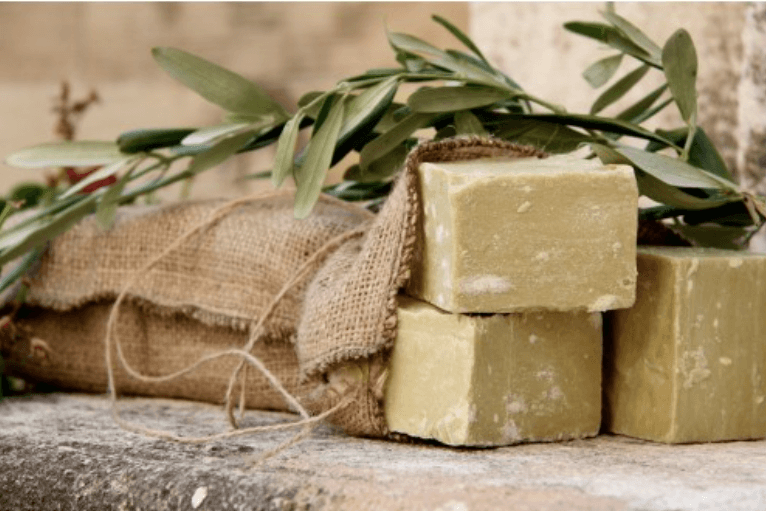
Nizip Soap is a traditional product with a deep-rooted history in the Nizip district of Gaziantep. Registered as a “geographical indication” on 20.03.2018 under the Industrial Property Law No. 6769, the soap was first applied for on 01.10.2012. This geographical indication signifies a regional technique and quality standard based on prina oil and acid derived from Nizip olive oil residue. The registration was carried out by the Nizip Chamber of Commerce, and producers may use the geographical indication on their products through proper labeling.
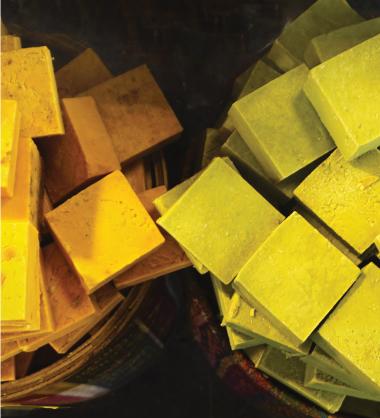
Nizip Soap (Gaziantep Metropolitan Municipality)
The raw materials used in the soap include:
The production of soap involves 740 kg of soap-making oil, 260 kg of caustic (sodium hydroxide), and 2 tons of water to yield approximately one ton of raw soap. In the first stage, the mixture is boiled at 80–100°C for about four hours. The caustic solution is then filtered, and the mixture is boiled a second time with salt water before being left to rest.
The resulting soap mass is spread onto paper sheets known as “hutban” using a “brato” mixer. After being left to rest for 8–12 hours in the drying area, the soap is manually cut and shaped according to customer demand, typically into rectangular or square molds weighing 180–200 grams. Finally, the soaps are arranged in cage-like structures and left to dry naturally for at least three months.
One of the most distinctive features of Nizip Soap is the influence of the local climate on its production process. Due to Nizip’s low humidity and dry air, the soap dries more quickly and loses moisture earlier. This natural advantage enables mass packaging while preserving quality standards. The cage system used in drying ensures that the soap is exposed to minimal sunlight and maximum air circulation.
Although modern laboratory techniques are employed, Nizip Soap is still analyzed using traditional sensory methods:
These traditional methods reflect knowledge and experience passed down through generations in soap production.
The production of Nizip Soap follows the TS 54 Prina Soap Standard. All stages of production, processing, and packaging occur entirely within the geographical boundaries of Nizip. Inspections are conducted at least once a year under the coordination of the Nizip Chamber of Commerce, in collaboration with Gaziantep University Nizip Vocational School, the Ministry of Health of the Republic of Türkiye Environmental Health Unit, Nizip Municipality, and the Nizip Chamber of Commerce. In cases of complaints, producers are subject to inspection within one to four weeks.
Because the soap is made entirely from vegetable oils, it is regarded by the public as both a cleansing agent and a healing remedy. It is said to be effective in treating conditions such as eczema, psoriasis, and scabies. In the treatment of fractures and dislocations, the soap is grated and mixed with egg white to form a paste, which is then wrapped in cloth. It is also reported that soap is fed to large livestock to relieve constipation.
Alpay, Türkan. “Nizip Zeytinyağlı Sabunu.” *Türkiye Turizm Ansiklopedisi*. Accessed July 5, 2025. https://turkiyeturizmansiklopedisi.com/nizip-zeytinyagli-sabunu
Turk Patent and Trademark Office. "Coğrafi İşaretler Portalı." Turk Patent and Trademark Office. Accessed July 5, 2025. https://ci.turkpatent.gov.tr/cografi-isaretler/detay/38080
Type of Geographical İndication | Traffic Sign | ||||||||
|---|---|---|---|---|---|---|---|---|---|
Application Date | 01.10.2012 | ||||||||
Registration Number | 335 | ||||||||
Registration Date | 20.03.2018 | ||||||||
Product / Product Group(s) | Other products | ||||||||
Province(s) | Gaziantep | ||||||||
Applicant/Registrant(s) | Nizip Chamber of Commerce | ||||||||
Raw Materials and Production Technique
Climatic Influence and Distinctive Features
Sensory Analysis and Traditional Methods
Inspection Process and Standards
Cultural and Health Context