


This article was automatically translated from the original Turkish version.
+1 More
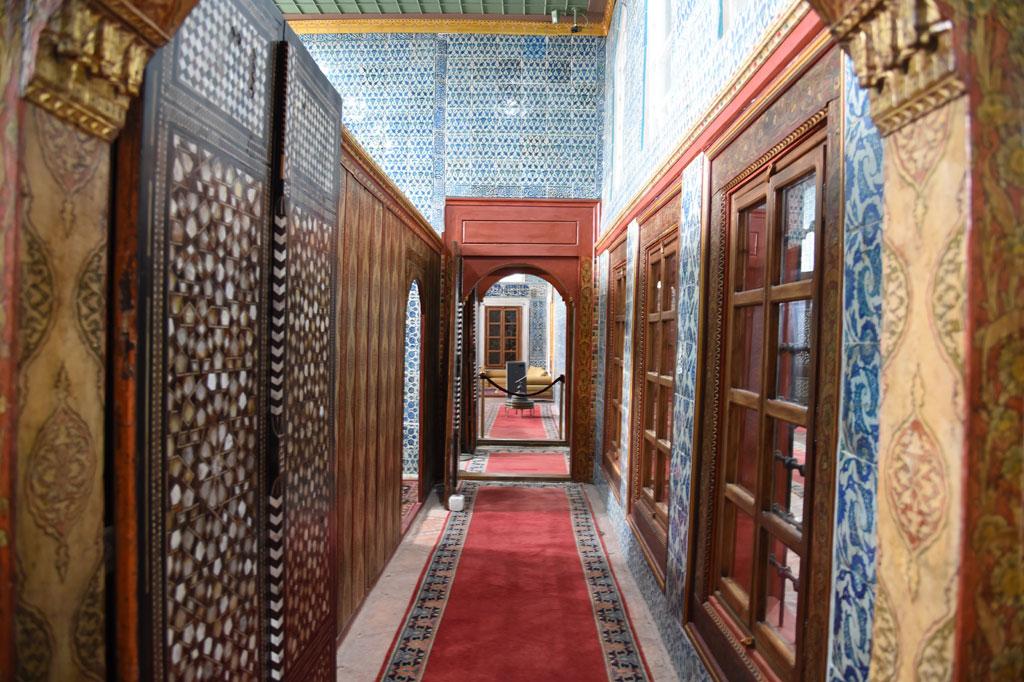
Yeni Cami Hünkâr Kasrı
Location | Eminönü / İstanbul | ||||||||
|---|---|---|---|---|---|---|---|---|---|
Architectural Style | Ottoman civil architecture | ||||||||
Current Use | Exhibition and cultural activity area | ||||||||
Architect | Mustafa Ağa | ||||||||
Construction Date(s) | 1660–1663 (contemporaneous with the completion of the Yeni Cami Külliyesi) | ||||||||
Decorative Elements | Tile-fired hearths and stained-glass windows Wood carvings Mother-of-pearl inlaid window shutters Calligraphy Rare 17th-century tiles | ||||||||
Patron | Hatice Turhan Sultan (mother of IV. Mehmed) | ||||||||
New Mosque Hünkâr Kasrı is an example of Ottoman civil architecture built adjacent to the Istanbul New Mosque in Eminönü during the 17th century for the sultan and Valide Sultan to rest and receive guests before worship. The structure is a historical building that houses exemplary works of Turkish arts such as tilework, penwork and woodcarving.
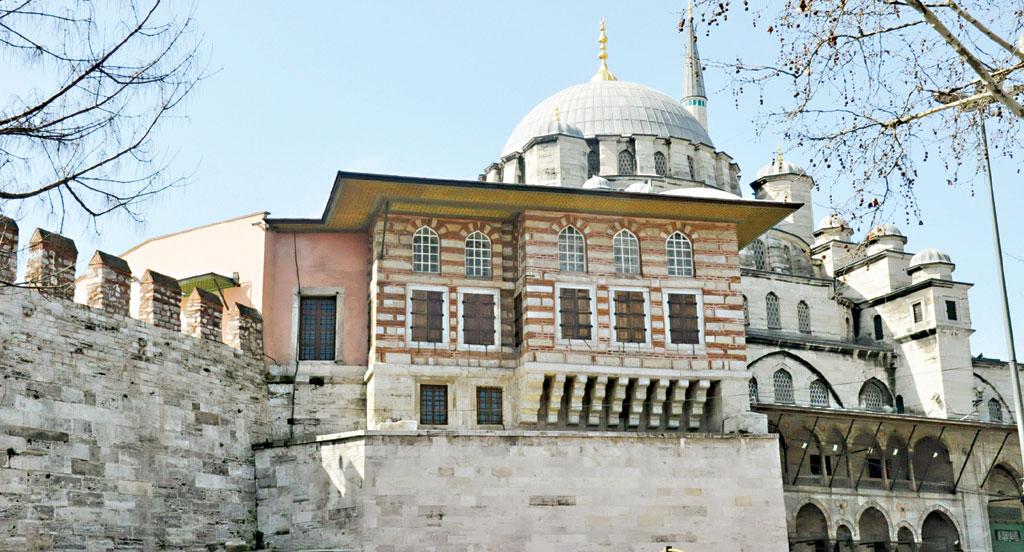
Hünkar Kasrı (
The construction of the kasrı is linked to the completion process of the New Mosque Külliyesi. The foundation of the külliye was laid in 1597 by Safiye Sultan, wife of Sultan III Murad and mother of Sultan III Mehmed; however, construction of the mosque was repeatedly interrupted for various political and financial reasons.【1】 Following a major fire in 1660, reconstruction was restarted under the orders of Hatice Turhan Sultan, mother of Sultan IV Mehmed, and completed in 1663. The külliye was officially opened in 1665.【2】
The Hünkâr Kasrı was constructed as a separate but adjacent structure to the mosque, designed specifically for the sultan and Valide Sultan to use upon their arrival. The kasrı, attributed to architect Mustafa Ağa, was arranged to allow the sultan to rest, perform ablutions, and conduct state affairs before or after prayer, and also served as a reception space.
The issue of demolishing the New Mosque Hünkâr Kasrı emerged during urban planning and development activities in Istanbul in the 1930s. As part of the urban master plans prepared by French urban planner Henri Prost, the area around Eminönü was targeted for reorganization, and demolition of the kasrı was among the proposed measures.【3】
The demolition issue first appeared in the press on 19 January 1938 and quickly became a subject of public debate.【4】 News articles from the period revealed a tension between the building’s historical and architectural value and the demands of urban development. While some publications advocated for its preservation, others argued that demolition was necessary for urban progress.
Public discussion largely ended after reports in the press on 22 February 1938 confirmed that the kasrı would not be demolished.【5】 By the end of February, the issue had been removed from the public agenda and the New Mosque Hünkâr Kasrı survived the period without being demolished. These debates are significant as they illustrate how the preservation of historical structures was addressed by public opinion and the press during the early Republican period.【6】
The New Mosque Hünkâr Kasrı is a structure built adjacent to the eastern facade of the New Mosque Külliyesi, designed for the sultan’s use upon arrival at the mosque. The building features a spatial arrangement intended to accommodate the temporary residence and rest of high-ranking state officials. The kasrı was constructed as a distinct structure separate from the main complex, with interior spaces organized around a controlled entrance system.
The plan of the kasrı was designed to accommodate reception and rest functions. Rooms, lounges and transitional spaces are arranged hierarchically, reflecting the spatial organization principles seen in Ottoman palace architecture. The structural system is based on masonry walls, with wooden elements used for the roof and interior fittings.
Architectural decoration highlights include tilework, penwork, wood carving and mother-of-pearl inlay. These decorative elements serve not only an aesthetic function but also reflect the status and representational character of the kasrı. The building is regarded as a cohesive example of Ottoman civil architecture where design and decorative program are applied in unified harmony.
Following restoration works carried out by the Istanbul Chamber of Commerce, the structure has been preserved in accordance with its original form and transformed into a center hosting cultural events. Annual exhibitions and artistic activities are held in the Hünkâr Kasrı, along with art workshops where artists display their works.
İstanbul Ticaret Odası. "Yeni Cami Hünkâr Kasrı." İTO. Accessed December 28, 2025.https://www.ito.org.tr/tr/kurumsal/kultur-ve-sanat/yeni-cami-hunkar-kasri
Şimşek, Sezer. “Eminönü Yeni Cami Hünkâr Kasrı’nın Yıkılmasının 1930’lu Yıllarda Gündeme Gelmesi ve Türk Basınındaki Tartışmalar.” *Sakarya İletişim* 4, no. 2 (2024): 187–203. Accessed December 28, 2025.https://dergipark.org.tr/tr/pub/silet/article/1482096
[1]
Sezer Şimşek, “Eminönü Yeni Cami Hünkâr Kasrı’nın Yıkılmasının 1930’lu Yıllarda Gündeme Gelmesi ve Türk Basınındaki Tartışmalar,” Sakarya İletişim 4, no. 2 (2024): syf 189, https://dergipark.org.tr/tr/pub/silet/article/1482096
[2]
A.e., syf 190
[3]
A.e., syf 187
[4]
A.e., syf 187
[5]
A.e., syf 187
[6]
A.e., syf 188-191

Yeni Cami Hünkâr Kasrı
Location | Eminönü / İstanbul | ||||||||
|---|---|---|---|---|---|---|---|---|---|
Architectural Style | Ottoman civil architecture | ||||||||
Current Use | Exhibition and cultural activity area | ||||||||
Architect | Mustafa Ağa | ||||||||
Construction Date(s) | 1660–1663 (contemporaneous with the completion of the Yeni Cami Külliyesi) | ||||||||
Decorative Elements | Tile-fired hearths and stained-glass windows Wood carvings Mother-of-pearl inlaid window shutters Calligraphy Rare 17th-century tiles | ||||||||
Patron | Hatice Turhan Sultan (mother of IV. Mehmed) | ||||||||
No Discussion Added Yet
Start discussion for "New Mosque Hünkar Pavilion" article
History
Demolition Agenda in the 1930s
Architectural Features
Current Status and Use