


This article was automatically translated from the original Turkish version.
+1 More
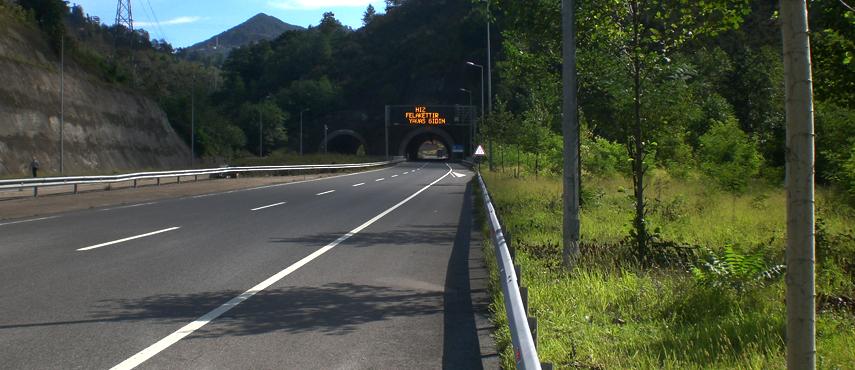
Nefise Akçelik Tunnel
Name(s) | Nefise Akçelik Tunnel | ||||||||
|---|---|---|---|---|---|---|---|---|---|
Region(s) | Black Sea Region | ||||||||
Province(s) | Ordu | ||||||||
Attached Districts | Perşembe – Fatsa (Bolaman Neighborhood) | ||||||||
Project Name | Black Sea Coastal Road Project | ||||||||
Depth in Portals | 33 meters | ||||||||
Tunnel Length | 3776 meters (each tube) | ||||||||
Opening Year | 2007 (completed); opened to traffic in 2007 | ||||||||
Person After Whom It Is Named | Nefise Akçelik (Civil Engineer) | ||||||||
Support Elements | Bolts, shotcrete, steel supports, internal lining concrete | ||||||||
The Nefise Akçelik Tunnel is located within the boundaries of Ordu Province as part of the Black Sea Coastal Road Project, between the districts of Perşembe and Bolaman. The tunnel consists of two tubes, each with dual lanes, and at a total length of 3776 metres, it is one of Türkiye’s longest dual-tube road tunnels. Both tubes were constructed to ensure uninterrupted and safe traffic flow. The design depth at the tunnel portals is 33 metres, while along the alignment it varies between 75 and 375 metres.
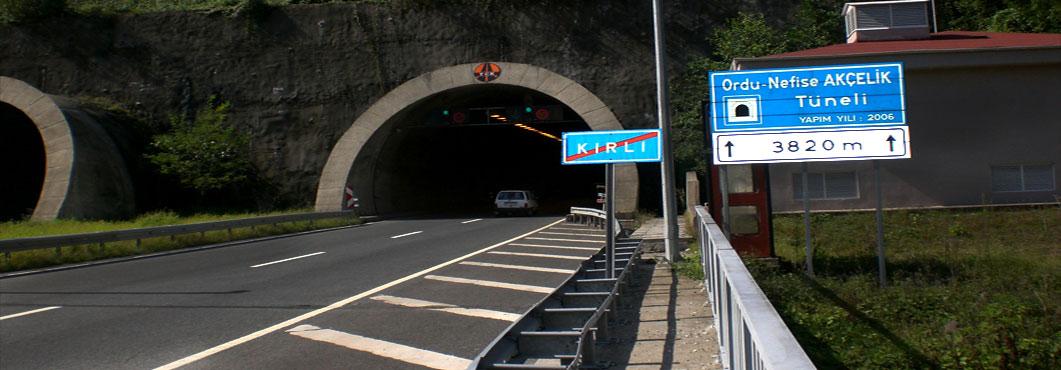
Nefise Akçelik Tunnel (oyakcimento)
The tunnel is named after Nefise Akçelik, one of Türkiye’s first female civil engineers, who pioneered tunneling projects under the General Directorate of Highways. The naming honors her contributions and legacy. Akçelik actively participated in the planning, design, and execution of tunnel projects and served as an inspiration to the industry through her leadership in engineering.
The area where the tunnel was constructed features a geomorphology shaped by high tectonic activity, deep valleys, and steep topography. Engineering risks include fault and fracture systems formed by recent tectonics, extensive weathering zones, and groundwater seepage. The tunnel was excavated through medium to weak volcanic rocks (basalt, tuff, and agglomerate). Particularly high deformation risks were identified in the sections between Km 10+683 and Km 10+800 on the left tube and between Km 10+693 and Km 10+742 on the right tube.
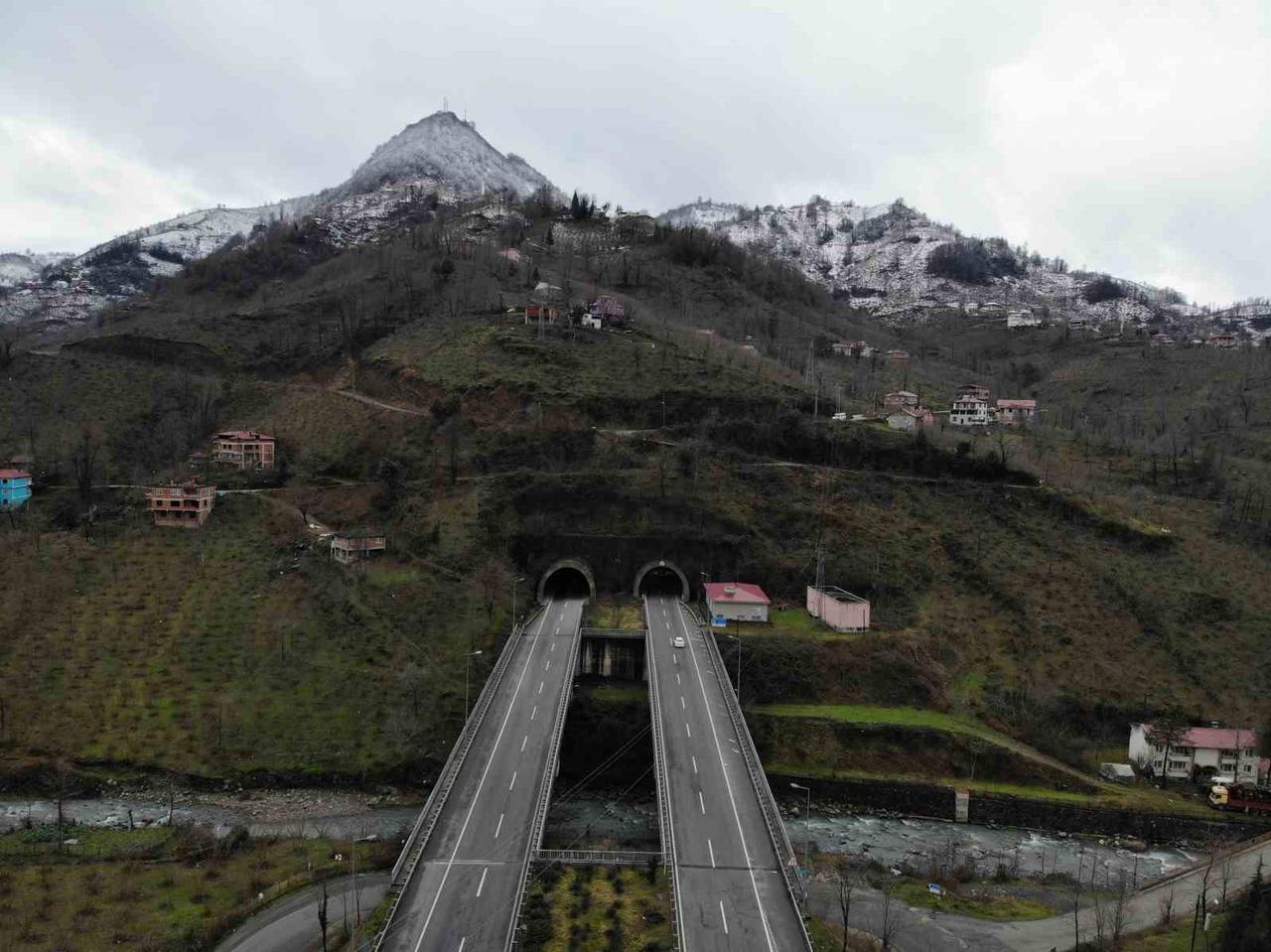
Aerial view of the Nefise Akçelik Tunnel (UAV)
Tunnel excavation was carried out in accordance with the New Austrian Tunnelling Method (NATM). Problematic zones were classified as A2, B1, B2, and B3, and support systems were designed accordingly. The following support systems were employed:
As a result of insufficient support elements, lateral deformations of up to 14 cm were measured on the tunnel walls.
USTA (Expert System for Tunnel Analysis), developed by Istanbul Technical University (ITU), is a software capable of analyzing data collected during tunnel construction in digital format, monitoring displacement trends, velocities, and accelerations. Developed using Visual Basic 6.0, USTA operates with Microsoft Access databases and generates reports in Excel and Word formats.
Applied to the Nefise Akçelik Tunnel, USTA provided the following warnings based on displacement data recorded at point Km 10+714.50:
The program also calculated in-situ geomechanical parameters for use in tunnel support design, including an internal friction angle of φ = 30° and a cohesion value of c = 2.23 MPa. These values showed strong agreement with results obtained through the finite element method.
The Nefise Akçelik Tunnel holds a unique place in Türkiye’s tunneling history, not only because it was successfully completed under challenging ground conditions using applicable engineering solutions, but also because it was among the first projects supported by domestically developed expert system software. It also stands as an important symbol highlighting the contributions of female engineers to the sector.
Emay Uluslararası Engineering. "Karadeniz Otoyolu Perşembe - Bolaman Arası Nefise Akçelik Tüneli İnşaatı." ÖzgünTR Projeler. Accessed May 15, 2025. https://www.ozguntr.com/proje/karadeniz-otoyolu-persembe-bolaman-arasi-nefise-akcelik-tuneli-insaati.
Koçak, Bülent, and Mahir Vardar. “Yeraltı Kaya Yapılarının Denetimi ve Yönlendirilmesinde Uzman Sistem Oluşturulması.” *İTÜDERGİSİ/d* 7, no. 1 (2008): 41–52. http://itudergi.itu.edu.tr/index.php/itudergisi_d/article/viewFile/377/325.
Oyak Çimento. "Nefise Akçelik Tüneli." Oyak Çimento Resmî Web Sitesi. Accessed May 15, 2025. https://www.oyakcimento.com/tr/projeler/cimento-projeleri/nefise-akcelik-tuneli.
Uraloğlu, Abdulkadir. “Bakan Uraloğlu, Nefise Akçelik Tünelinin Hikayesini Anlattı.” Hayat Gazetesi Ordu, July 19, 2023. https://hayatgazetesiordu.com/haber/18945676/bakan-uraloglu-nefise-akcelik-tunelinin-hikayesini-anlatti.
İhlas Haber Ajansı. “Türkiye’nin En Büyük Tünellerinden Birinin Hikayesi: Mühendisinin İsmini Taşıyor.” İHA Ordu Haberleri, January 22, 2023. https://www.iha.com.tr/ordu-haberleri/turkiyenin-en-buyuk-tunellerinden-birinin-hikayesi-muhendisinin-ismini-tasiyor-53782821.
Nefise Akçelik Tunnel
Name(s) | Nefise Akçelik Tunnel | ||||||||
|---|---|---|---|---|---|---|---|---|---|
Region(s) | Black Sea Region | ||||||||
Province(s) | Ordu | ||||||||
Attached Districts | Perşembe – Fatsa (Bolaman Neighborhood) | ||||||||
Project Name | Black Sea Coastal Road Project | ||||||||
Depth in Portals | 33 meters | ||||||||
Tunnel Length | 3776 meters (each tube) | ||||||||
Opening Year | 2007 (completed); opened to traffic in 2007 | ||||||||
Person After Whom It Is Named | Nefise Akçelik (Civil Engineer) | ||||||||
Support Elements | Bolts, shotcrete, steel supports, internal lining concrete | ||||||||
No Discussion Added Yet
Start discussion for "Nefise Akçelik Tunnel" article
History and Naming
Geological Structure and Challenges
Structural and Support Systems
Application of USTA (Expert System for Tunnel Analysis)