


This article was automatically translated from the original Turkish version.
+2 More
Monkeypox is a zoonotic infectious disease caused by the Monkeypox virus (MPXV), classified within the Orthopoxvirus genus of the Poxviridae family. Its clinical symptoms resemble those of smallpox; however, its transmissibility and mortality rate are lower than those of smallpox. MPXV is an enveloped virus with a double-stranded DNA genome and is genetically closely related to the Variola, Vaccinia and Cowpox viruses.
The disease was first identified in 1958 in Denmark, in laboratory monkeys. However, subsequent research revealed that the natural host of the virus is not monkeys but certain rodent species. The first confirmed human case was detected in 1970 in the Democratic Republic of the Congo in a nine-month-old boy. This case emerged during the smallpox eradication campaign, after which monkeypox became endemic primarily in Central and West African regions.
Over time, increased international travel and the exotic animal trade have led to the spread of the disease to non-endemic areas. In 2003, more than 70 cases reported in the United States of America were linked to rodents imported from Ghana. This situation is significant as it demonstrated the potential for global spread of the disease.
Monkeypox typically follows a self-limiting clinical course, with symptoms resolving within 2 to 4 weeks. However, more severe clinical manifestations and complications can occur in individuals with compromised immune systems, children, and pregnant women. Due to these characteristics, the disease is not only an individual health concern but also an important public health issue.
Vaccines developed against smallpox are known to provide 85 percent protection against MPXV. However, following the eradication of smallpox in 1980, vaccination programs were discontinued, leading to a decline in population-level immunity against Orthopoxviruses in subsequent generations.
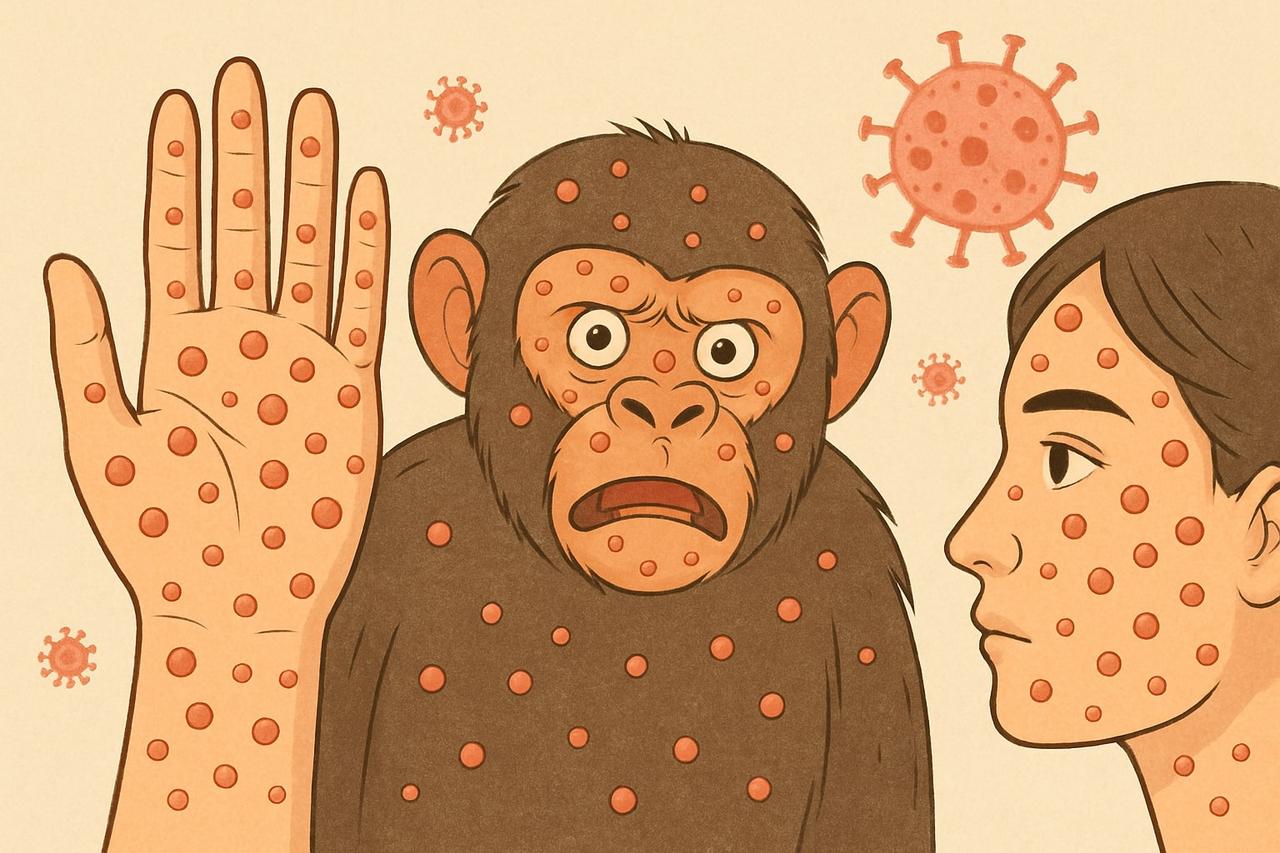
An image generated by artificial intelligence illustrating monkeypox.
The natural reservoir of the monkeypox virus has not been definitively identified, but epidemiological and laboratory studies have shown that many animal species are susceptible to this virus. Major suspected hosts include squirrels, tree squirrels, Gambian pouched rats, nutmeg mice, and other small rodent species. Humans and monkeys are accidental hosts, and it is believed that the virus primarily circulates in nature through rodents.
Infections in animals are often asymptomatic, allowing infected animals to spread the virus into the environment without being detected. This complicates efforts to prevent zoonotic transmission and hinders virus control. Therefore, wildlife monitoring programs, identification of reservoir species, and investigation of human-animal interface interactions are of great importance for developing strategies to prevent infection.
The first reported human case of monkeypox occurred in 1970 in the Democratic Republic of the Congo. In the following years, occasional small outbreaks were reported in Central and West Africa. Significant outbreaks were documented in the Congo in 1996–1997 and in Nigeria in 2017.
In the Nigerian outbreak, over 500 suspected and more than 200 confirmed cases were identified, with a reported mortality rate of approximately 3 percent.
In 2003, an outbreak in the United States of America linked to animals imported from Africa was recorded as the first major monkeypox outbreak outside Africa. More than 70 people were infected, demonstrating the potential for zoonotic transmission on a global scale.
By 2022, there was a marked increase in case numbers, and the World Health Organization (WHO) declared the disease a Public Health Emergency of International Concern (PHEIC) on 21 July 2022. During this period, consecutive cases were reported in non-endemic countries, establishing monkeypox as a global public health priority.
The Monkeypox virus can be transmitted from animals to humans (zoonotic transmission) and from person to person (human-to-human transmission).
Animal-to-human transmission typically occurs through contact with the blood, bodily fluids, skin lesions, or raw or undercooked meat of infected animals. Bites or scratches from infected animals can also contribute to transmission.
Human-to-human transmission occurs primarily through direct contact with skin lesions of infected individuals, indirect contact with contaminated objects (towels, bed sheets, clothing, etc.), or prolonged close respiratory contact (via droplets). Transmission from mother to fetus via the placenta (congenital transmission) is also possible.
Considering all these transmission routes, both individual hygiene measures and community-based isolation strategies are of great importance in preventing the spread of the disease.
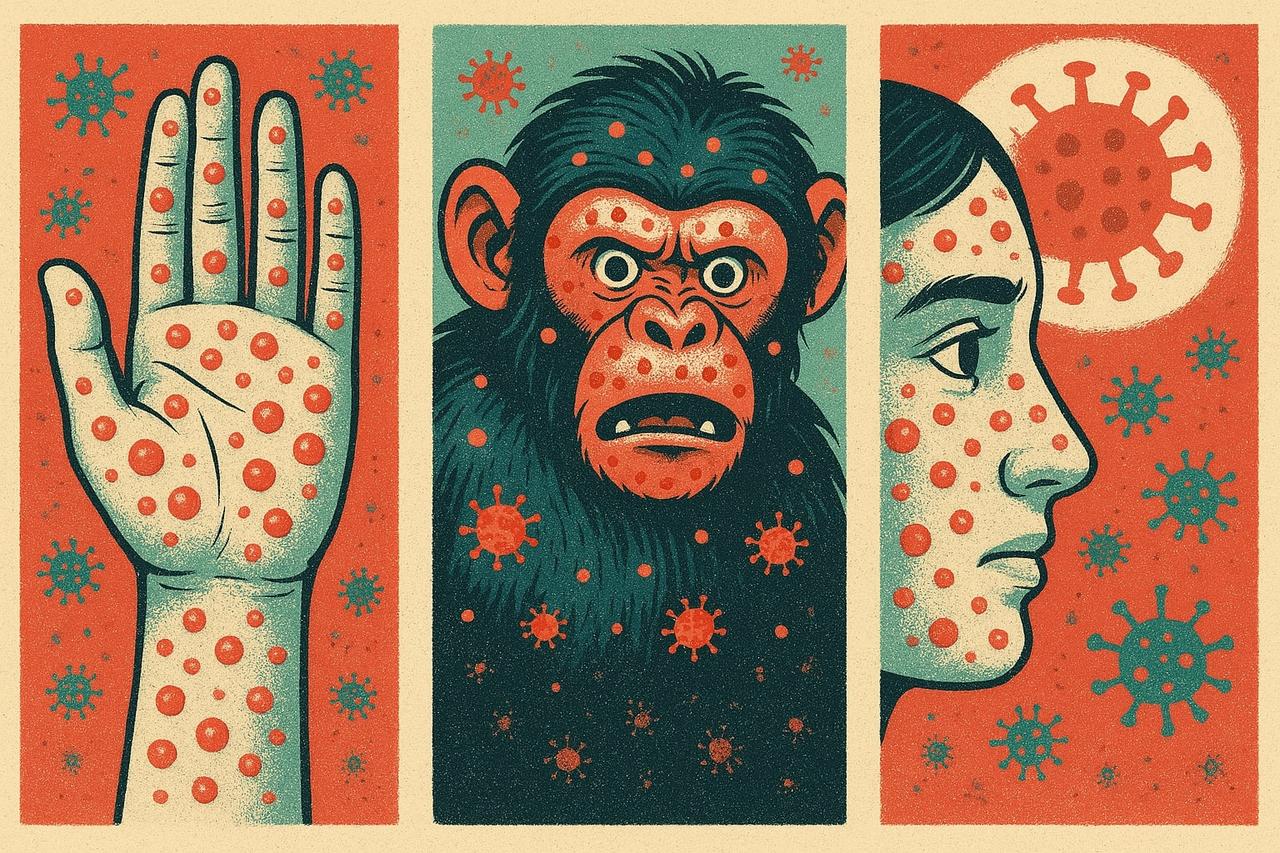
An image generated by artificial intelligence illustrating monkeypox.
The incubation period of monkeypox typically ranges from 6 to 13 days; however, in some cases it may extend from 5 to 21 days. Infection usually begins with a prodromal phase characterized by systemic symptoms such as fever, headache, lymphadenopathy, myalgia, back pain, and fatigue. These symptoms are typically followed by a skin rash.
A definitive diagnosis of monkeypox is based on the molecular detection of the virus’s genetic material. Real-Time PCR (RT-PCR) is the most sensitive and specific diagnostic method, especially when using samples taken from skin lesions. Serological tests, viral culture, and electron microscopy serve as supportive diagnostic tools.
Differential diagnosis must consider diseases such as chickenpox (varicella), smallpox (variola), herpes simplex infections, syphilis, bacterial skin infections, and certain drug reactions.
Proper sampling, transportation conditions, and collaboration with reference laboratories are essential for accurate diagnosis.
Warning: The content in this article is provided solely for general encyclopedic information purposes. The information presented here should not be used for diagnosis, treatment, or medical advice. Before making any decisions regarding health matters, you must consult a physician or qualified healthcare professional. The author and KÜRE Encyclopedia assume no responsibility for any consequences resulting from the use of this information for diagnostic or therapeutic purposes.
Anadolu Ajansı. "10 Soruda Maymun Çiçeği Hastalığı." May 24, 2022.https://www.aa.com.tr/tr/saglik/10-soruda-maymun-cicegi-hastaligi/2594469.
Ankara Üniversitesi Faculty of Veterinary Medicine. "Maymun Çiçeği (Monkeypox) Hastalığı." July 5, 2022.https://www.veterinary.ankara.edu.tr/2022/07/05/maymun-cicegi-monkeypox-hastaligi/
Aydın, Şenay. Maymun Çiçeği (Monkeypox) Virüsü Hastalığı Rehberi. Ankara: T.C. Sağlık Bakanlığı, 2022.
Aytekin, Tuğba, and Gülhan Doğan. "Maymun Çiçeği (Monkeypox) Virüsü Salgını." Kastamonu Tıp Dergisi 1, no. 2 (2022): 81–86.https://doi.org/10.24938/kutfd.1135547.
StatPearls. "Monkeypox." NCBI Bookshelf. Updated: 2024.https://www.ncbi.nlm.nih.gov/books/NBK574519/.
T.C. Sağlık Bakanlığı Halk Sağlığı Genel Müdürlüğü. Maymun Çiçeği (Monkeypox) Virüsü Hastalığı Rehberi. Ankara, 2022.
Türk Tabipleri Birliği. Maymun Çiçeği (Monkeypox) Virüsü Salgını: Bilimsel Değerlendirme ve Öneriler. Ankara: TTB Yayınları, 2022.
Çelik, Emine, and Güldeniz Tanrıverdi. "Maymun Çiçeği Virüsü (Monkeypox Virus) ve Hastalığı." Bursa Sağlık Bilimleri Dergisi 1, no. 2 (2022): 107–111.https://doi.org/10.34084/bshr.1162411.

History of the Disease
Natural Hosts and Reservoirs
Epidemiology and Outbreaks
Modes of Transmission
Clinical Signs and Course
Diagnosis and Laboratory Methods