


This article was automatically translated from the original Turkish version.
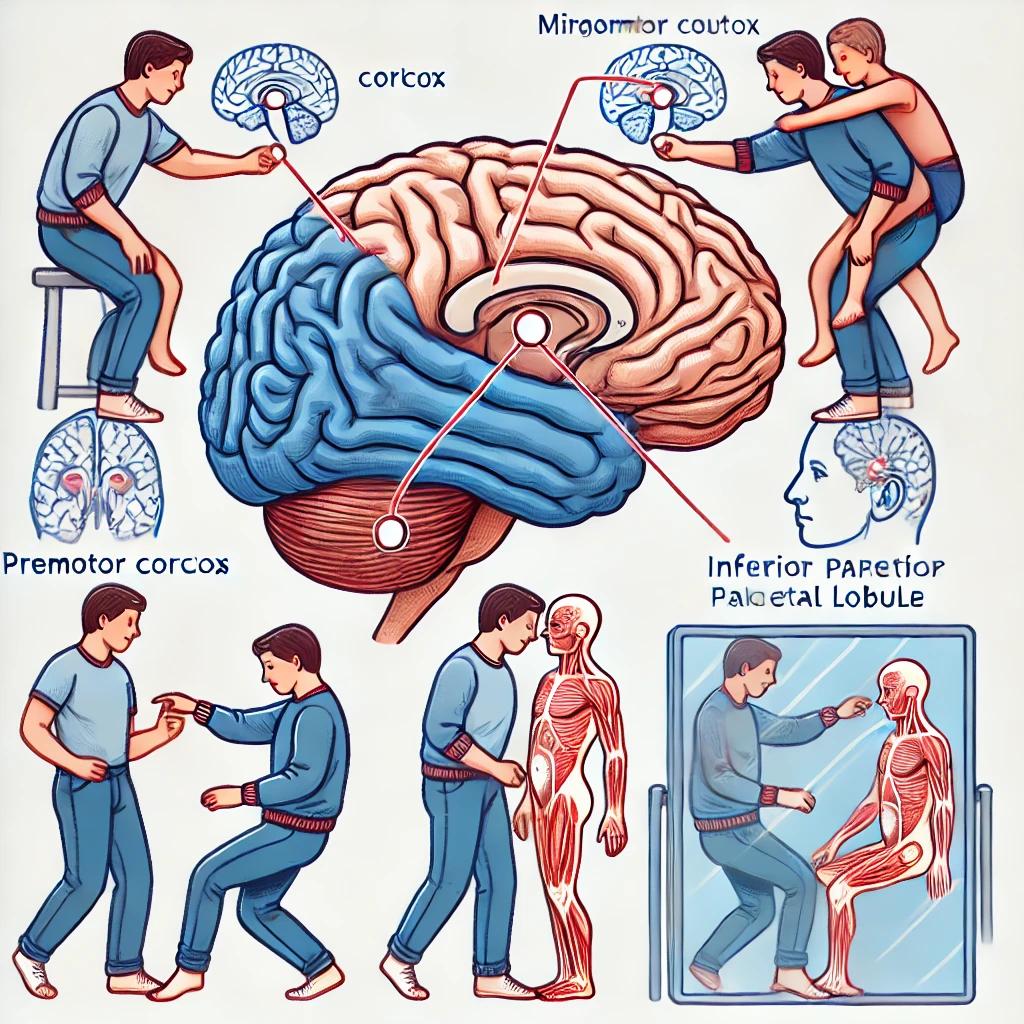
Mirror Neurons
Description | Mirror neurons are specialized nerve cells located in certain regions of the brain that become active both when an individual performs an action and when they observe another person performing the same action. | ||||||||
|---|---|---|---|---|---|---|---|---|---|
Additional Information | They support learning processes by facilitating the imitation and understanding of others' actions. They play an important role in empathy learning motor skill development and social interaction. Their existence was identified through experiments conducted on macaque monkeys. They were first discovered in the 1990s by Giacomo Rizzolatti and his team. | ||||||||
Mirror neurons are specialized cells in our brain. These cells become active when a person performs a specific movement or observes another person performing the same or similar movement. In other words, they fire when we perform movements ourselves or when we watch others perform the same actions【1】
Mirror neurons were first discovered in the late 1980s through the 1990s by Giacomo Rizzolatti and his team during research on these cells. These neurophysiologists implanted electrodes into the ventral premotor cortex of three Macaca nemestrina monkeys and monitored their hand and body movements over a period. During the experiment, they encouraged the monkeys to imitate the movements of the person opposite them. During this time, the researchers noticed that certain neurons in the F5 region responded specifically to these imitative movements. These neurons were subsequently named “mirror neurons”.【2】
In humans, the presence of mirror neurons cannot be studied using invasive methods as in monkeys, so non-invasive techniques such as neuroimaging (functional Magnetic Resonance Imaging – fMRI) and electrophysiological methods (Electroencephalography – EEG, Transcranial Magnetic Stimulation – TMS, and Magnetoencephalography – MEG) are used. Mirror neuron activity in humans has been detected in the premotor cortex (dorsal areas of the inferior frontal gyrus) and the inferior parietal lobe (IPL), and these areas are known to be homologous to the F5 region in monkeys. In addition to these regions, mirror neuron activity has also been observed in the primary motor cortex and the hippocampus 【3】
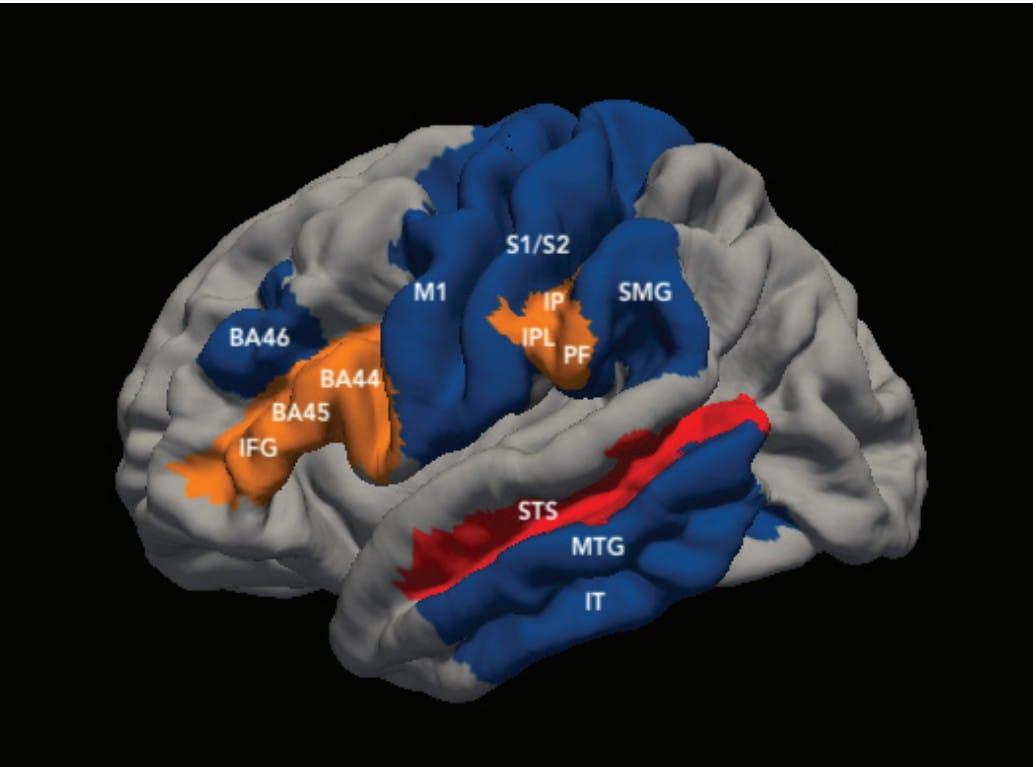
Figure 1: Location of mirror neurons in the cerebral cortex
These neurons help humans understand each other and engage in social interaction. Thanks to mirror neurons, our ability to imitate others’ movements develops, which supports our capacity for empathy, communication, and social interaction. Through mirror neurons, people better understand each other’s emotions, intentions, and behaviors.
Neuroscience shows that mirror neurons influence our ability to acquire new skills, gain knowledge, and form deep emotional bonds with those around us. These neurons help us understand why people do what they do. 【4】
Mirror neurons have been found in many brain regions including the premotor cortex, joint movement areas, the primary somatosensory cortex, the amygdala, the thalamus, and the inferior parietal cortex. Mirror neurons are more likely to fire when the observer can understand the goals or intentions behind the observed action. 【5】
Mirror neurons facilitate learning by enabling us to imitate the actions and behaviors we observe. When we watch someone engaged in a task, specific regions of our brain activate as if we ourselves were performing that task.
Neuroimaging studies show that the same brain regions are activated when we observe someone running on the street as when we run ourselves, during both movement perception and movement production. These neurons fire not only when we observe a behavior but also later when we recall the experience. Unfortunately, watching a concert violinist play does not enable us to play the violin ourselves, especially if we have never taken lessons. Mirror neurons do not provide the “complete motor code” of the observed action, but they support observation, visualization, and representation, making them a vital component of learning.【6】
Neuroscientists generally believe that brain regions activated during our own emotional experiences are also activated when we observe another individual’s emotions or feelings. Evidence shows that mirror neurons are strongly linked to human empathy.
Recent research suggests that we can understand others’ thoughts, emotions, and feelings by simulating within ourselves similar mental states, emotions, or sensations. When we experience pain, the anterior cingulate cortex becomes active. We also observe activation in this same region when we observe another person undergoing a painful experience.
These types of mirror mechanisms appear equally active when we evaluate others’ actions and process their experiences, feelings, and emotions. When we observe emotional information, the mirror neuron system automatically enables us to share the observed person’s experience by generating a corresponding brain state that matches their mental condition.【7】
Author(s) Name. "Article Title." Dergipark, Volume Number, no. Issue Number (Year): Page Range. Accessed February 14, 2025.https://dergipark.org.tr/tr/download/article-file/1356660.
Evrim Ağacı. "Ayna Nöronlar Nedir Ne İşe Yarar?" Evrim Ağacı, Accessed February 14, 2025.https://evrimagaci.org/ayna-noronlar-nedir-ne-ise-yarar-2534.
Hiwell. "Ayna Nöronlar."Hiwell Blog, Accessed February 14, 2025.https://www.hiwellapp.com/blog/ayna-noronlar.
[1]
[2]
[3]
[4]
[5]
[6]
[7]

Mirror Neurons
Description | Mirror neurons are specialized nerve cells located in certain regions of the brain that become active both when an individual performs an action and when they observe another person performing the same action. | ||||||||
|---|---|---|---|---|---|---|---|---|---|
Additional Information | They support learning processes by facilitating the imitation and understanding of others' actions. They play an important role in empathy learning motor skill development and social interaction. Their existence was identified through experiments conducted on macaque monkeys. They were first discovered in the 1990s by Giacomo Rizzolatti and his team. | ||||||||
History
What Do Mirror Neurons Do?
How Mirror Neurons Work
Mirror Neurons and Behavior
Mirror Neurons and Empathy