


This article was automatically translated from the original Turkish version.
Publication Language | Arabic | ||||||||
|---|---|---|---|---|---|---|---|---|---|
Number of Pages | 160 | ||||||||
Publisher | Ayrıntı Yayınları | ||||||||
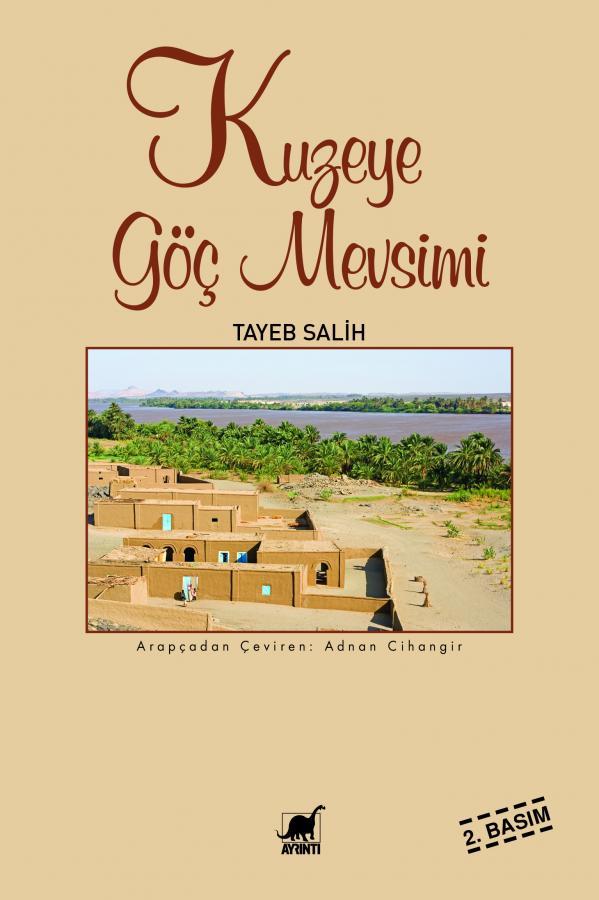
Tayeb Salih’s Season of Migration to the North, published in 1966, is regarded as one of the most important works of Arab literature. The novel is set in Sudan and profoundly explores the cultural conflicts between the West and the East, identity crises, and the impacts of the postcolonial era. Salih addresses both an individual quest for identity and a social critique in this work.
At the start of the novel, an anonymous narrator lives in a village on the banks of the Nile River in northern Sudan. The narrator has traveled abroad to study in London and returns to his village after several years. Upon his return, he reconnects with the villagers and reexamines their way of life. During this time, he meets Mustafa Said, a mysterious man in the village. Said is a Sudanese man who studied and lived in the West but remains a completely alien figure within the village’s traditional lifestyle.
Mustafa Said is highly intellectual and cultured; he has been romantically involved with many different women in the West. Yet Said’s life in the village is in stark contrast to his intellectual and sophisticated past in the West. As the narrator comes to know Said, he becomes determined to unravel Said’s complex and mysterious past. In doing so, he uncovers Said’s life in the West, his relationships, and his struggles with identity.
Mustafa Said traveled to London to pursue higher education and built a life there. The years he spent in London profoundly shaped his identity, forcing him to view both the West and the East through a new lens. While studying at a university in the West, he became detached from his local culture and traditions and adopted a lifestyle aligned with Western values. Yet he also confronted Western intellectual elitism, racism, and the alienating attitudes of Western society toward him. His relationships with Western women reveal another dimension of his cultural identity crisis.
Said’s relationships with Western women reflect a sense of vengeance toward the Western world. These relationships give him a feeling of power, a sense of retribution, and intellectual pleasure. Yet in all these relationships, Said also experiences profound loneliness and inner emptiness. This loneliness becomes part of his search for identity, and during his years in the West, he endures not only academic but also spiritual alienation.
Mustafa Said abandons his life in the West and returns to his village in Sudan. Yet the villagers find his modern lifestyle and intellectual background utterly foreign. This situation makes it extremely difficult for Said to adapt to the village’s traditional structure. The villagers perceive Said as strange and eccentric; Said, in turn, feels out of place amid the village’s simple life and traditional values. Thus, as a character caught between the West and the East, Said feels alienated in both worlds.
The narrator begins deeper investigations to learn more about Said’s past and his life in the village. He discovers details of Said’s life in London, his relationships with Western women, and the tragic consequences of these relationships. The dramas in Said’s relationships with Western women reflect the complexity of his inner world, shaped by Western cultural influence.
At the end of the novel, Said’s tragic death is seen as the culmination of the cultural divide between the West and the East and his identity crisis. His death represents the peak of his obsession with modernization and Western culture and the resulting loneliness he endured. Said’s internal conflicts mirror the profound rift between the two cultures and the pressure they exert on the individual.
After Said’s death, the narrator begins to question his own reflections and interpretations of Said’s life. Said’s attachment to his past in the West and his sense of alienation upon returning to Sudan are viewed as tragic outcomes of his identity crisis and the transition between these two worlds. As the narrator unravels Said’s story, he enters not only into an individual’s journey but also into a significant thought process about his society’s cultural transition.
1. Identity Search and Alienation:
The novel is a layered exploration of identity search and alienation. Mustafa Said’s connections with the West and his relationships with Western women nourish him intellectually yet create an inner void and sense of alienation. As he strives to integrate into Western society, he distances himself from his roots and traditions. Upon returning to Sudan, he is alienated by both the Western world and his own village community.
2. Cultural Conflict Between the West and the East:
One of the novel’s central themes is the deep cultural conflict between the West and the East. Said’s internal struggles depict the identity crisis of an individual caught between these two worlds. The modern lifestyle and values of the West have distanced him from his traditional Eastern life and rendered him alien in both cultures.
3. Modernization and Postcolonial Critique:
Tayeb Salih adopts a postcolonial perspective in the novel. Written during the 1960s, a period when independence movements were rising across the Arab world and Africa, the novel highlights the tension between modernization and tradition under the influence of Western culture. The novel critically examines the psychological turmoil experienced by individuals shaped by Western cultural dominance and the social problems this process generates.
4. Love and Relationships:
Said’s relationships with Western women are not merely romantic themes but are presented as reflections of cultural conflict and identity crisis. Said’s love life reveals his relationship with the West and simultaneously exposes his inner emptiness in the search for identity.
class=\
Salih, Tayeb. Kuzeye Göç Mevsimi. Ayrıntı Yayın Grubu, 1966.
Publication Language | Arabic | ||||||||
|---|---|---|---|---|---|---|---|---|---|
Number of Pages | 160 | ||||||||
Publisher | Ayrıntı Yayınları | ||||||||
No Discussion Added Yet
Start discussion for "Migration to the North (Novel)" article
Beginning and the Narrator’s Perspective
Mustafa Said’s Life in the West
Said’s Return to the Village and Identity Crisis
Said’s Death and Tragic Outcome
Themes and Message of the Novel