


This article was automatically translated from the original Turkish version.
Bernard Lewis’s work titled "Ortadoğu" is an important study that examines in detail the historical cultural and political dynamics of the region. The book analyzes the complex structure of the region from antiquity to the present within the framework of historical events and social transformations and serves as a valuable source for understanding the transformation of the Middle East in the modern era. Lewis approaches the Middle East from both Eastern and Western perspectives examining its impact on global politics and the historical turning points in its relations with the West.
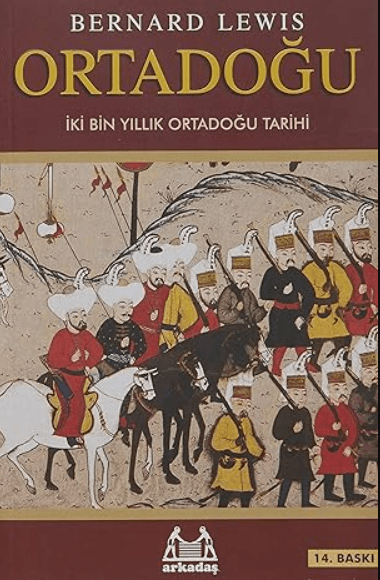
Ortadoğu
Lewis emphasizes the Middle East’s role as the cradle of civilizations by examining its historical background. The contributions of Mesopotamia Egypt and the Levant region to human history are analyzed in detail. The emergence of Islam brought about a profound transformation and established the region as a central force in world history. In this context Lewis explains the impact of Islamic civilization on both the West and the East.
The influence of the Ottoman Empire on the Middle East occupies a prominent place in the book. The book analyzes how the region was shaped under Ottoman rule and how central authority transformed the social and political structures of the area. Particularly the modernization and reform efforts that began in the 19th century are discussed in terms of how they altered regional balances as the Ottoman state weakened. Lewis highlights the growing influence of the West during this period.
Lewis comprehensively examines the colonial experience of the Middle East. Following the collapse of the Ottoman Empire after World War I he discusses how Western powers drew borders in the region and how this process contributed to political instability. Examples illustrate how the artificial borders established by British and French mandates and Western intervention laid the foundation for the region’s modern problems.
The book extensively addresses the role of the Middle East in international relations in the modern era. After World War II the region’s increasing strategic importance is analyzed particularly in the context of control over energy resources. The establishment of Israel and the Arab-Israeli conflicts are discussed in relation to the region’s role in the bipolar world order during the Cold War as well as the patterns of conflict and alliance within the region. Lewis also examines how Islamism and modern nation-state structures have clashed with each other.
Lewis gives significant attention in the book to the cultural and social dynamics of the Middle East. Traditional structures modernization efforts and the social changes accompanying these processes are examined particularly in relation to religion ethnic identity and gender. The author explains how modernization initiatives in the region have generated tension with Western influences and how this tension has affected social life.
Bernard Lewis, Ortadoğu: İki Bin Yıllık Ortadoğu Tarihi, Translator: Selen Y. Kölay, 15th Edition, Arkadaş Yayınları, 2017

Content of the Book
Historical Background of the Middle East
The Ottoman Empire and the Middle East
The Colonial Period and Western Influence
Modern Middle East and International Relations
Cultural and Social Dynamics