


This article was automatically translated from the original Turkish version.
+1 More
The Mevlânâ Museum is a historical, cultural, and faith-based museum established during the Republican era by converting the former Mevlânâ Dergâhı complex, centered around the tomb of the great Sufi master Mevlânâ Celâleddin Rûmî. The museum houses architectural elements characteristic of the Mevlevî tradition, spaces reflecting the life of the order, and a large collection of valuable manuscripts and artistic works, serving as a center documenting Sufi culture from the Seljuk, Karamanid, and Ottoman periods.
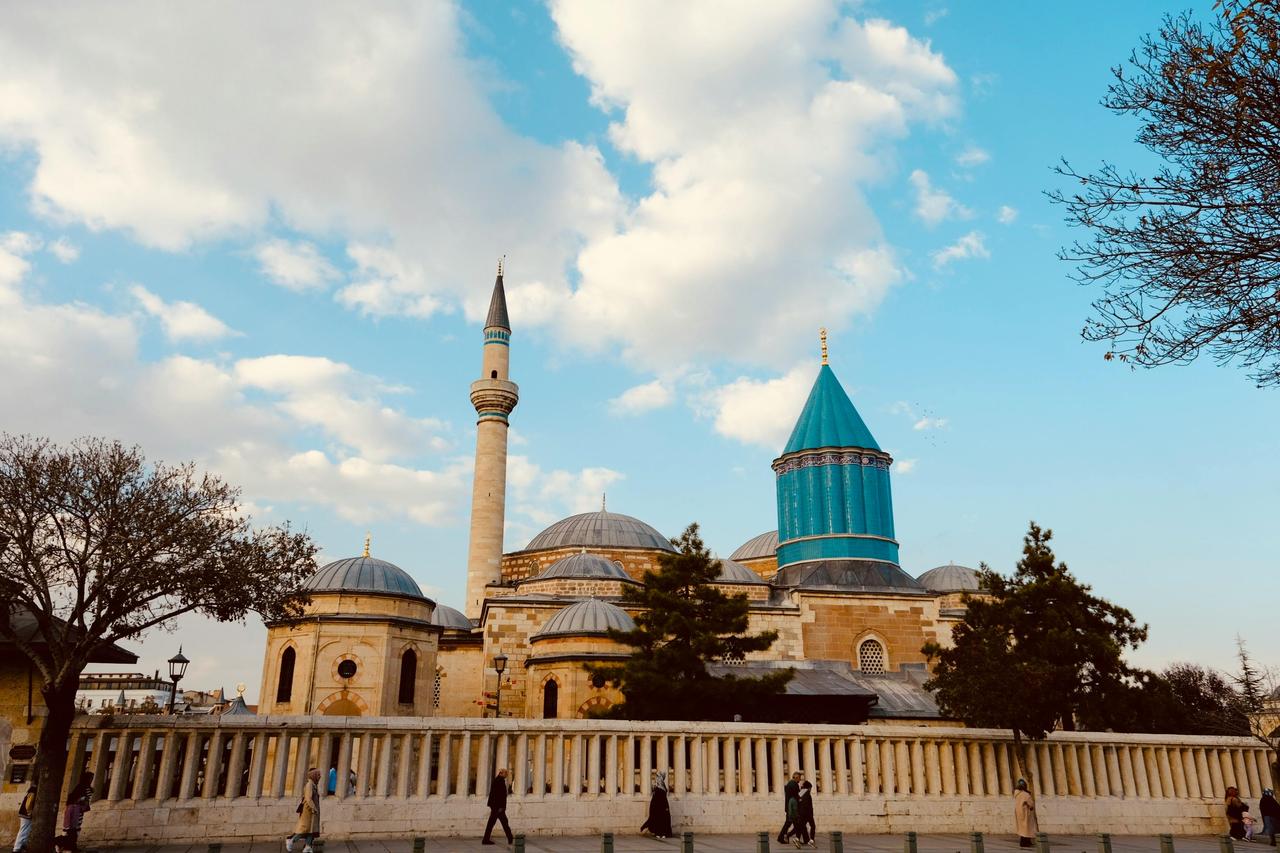
Mevlana Museum (Pexels)
The land on which the Mevlânâ Museum stands was originally a rose garden belonging to a palace granted by Seljuk Sultan I. Alaeddin Keykubad to Mevlânâ’s father, Sultânü’l-Ulemâ Bahâeddin Veled. After Bahâeddin Veled’s death in 1231 and his burial on this site, the location became a place of pilgrimage and formed the core of the Mevlânâ Külliyesi. Following Mevlânâ Celâleddin Rûmî’s death on 17 December 1273, he was buried beside his father. Although Mevlânâ had opposed the construction of a tomb over his grave during his lifetime, it was built after his death with the permission of his son, Sultan Veled.
The tomb erected over Mevlânâ’s grave, known as Kubbe-i Hadra (Green Dome), was constructed in 1274 by the architect Tebrizli Bedrettin, resting on four elephant legs. Over time, surrounding structures including a semahane, mosque, dervish cells, kitchen, şadırvan, and cemetery were added; the dergâh complex attained its present architectural unity especially during the 16th century under Ottoman rule. The Mevlânâ Dergâhı was closed in 1925 under the Law on the Abolition of Dervish Lodges and Tekkes, and reopened to the public in 1926 as the Konya Ancient Artifacts Museum. In 1954, following a new reorganization, it was renamed the Mevlânâ Museum.
The Mevlânâ Museum features a large külliye layout centered on Mevlânâ’s tomb. Entry to the museum is through the Dervişân Gate on the western side; the courtyard contains a şadırvan, cemetery areas, and several tombs. The Şeb-i Arûs Pool and its covered şadırvan were built in 1512 during the reign of Yavuz Sultan Selim. Around the tomb, the Hâmûşân, Neyzenler, Huzûr-ı Pîr, and Valideler cemeteries were established as burial grounds for prominent figures of the Mevlevî tradition.
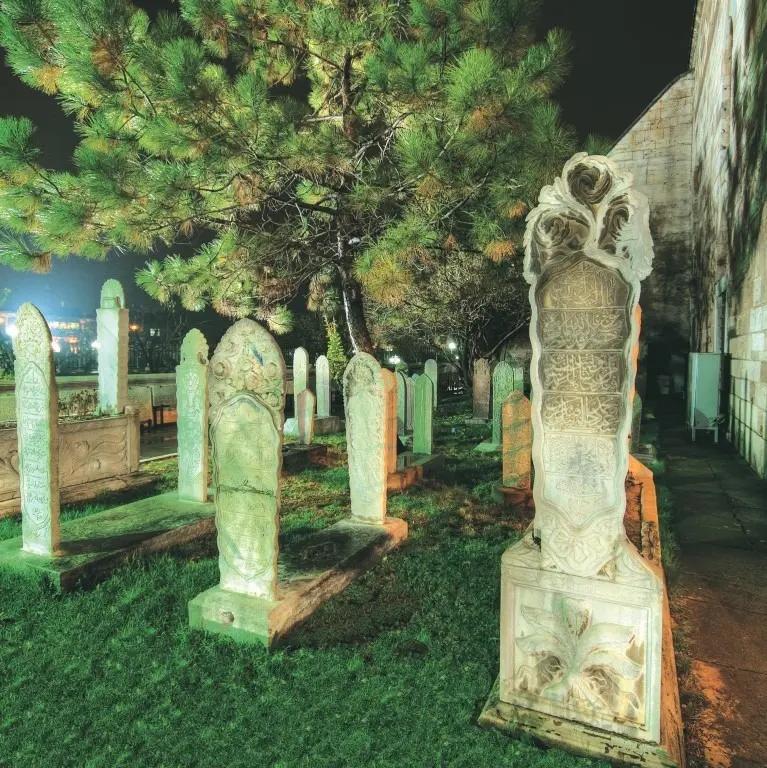
Around the Tomb (Mevlana Tomb)
The central section of the museum, Huzûr-ı Pîr, encompasses the tomb chamber beneath the Kubbe-i Hadra. This section houses marble sarcophagi belonging to Mevlânâ Celâleddin Rûmî and his son Sultan Veled, as well as a Seljuk-era wooden carved sarcophagus belonging to Mevlânâ’s father, Sultânü’l-Ulemâ Bahâeddin Veled. Above the sarcophagi are burial coverings commissioned by Sultan II. Abdülhamid in 1894, adorned with gold embroidery. The Tilâvet Odası, located at the entrance to the tomb, now serves as a hall displaying calligraphic works; the Gümüş Kapı, through which visitors enter the tomb, was gifted to the dergâh by Hasan Paşa in 1599.
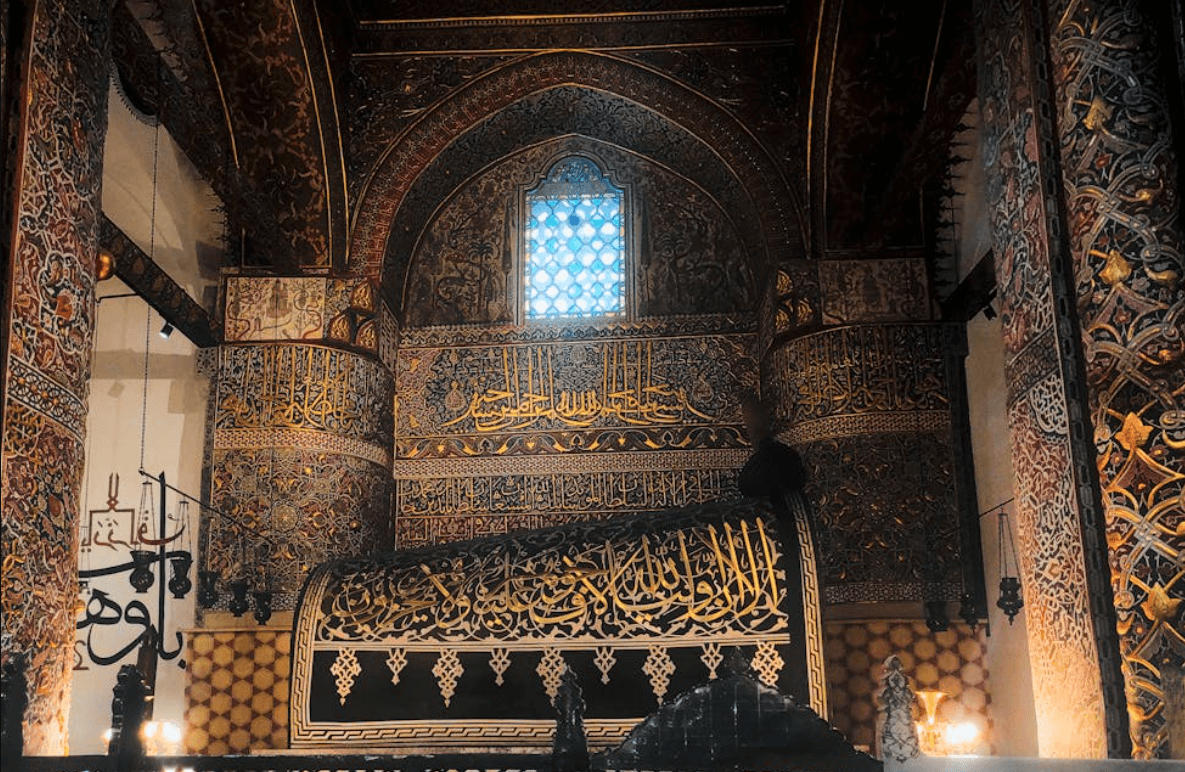
Mevlana Tomb (Kültür Portalı)
The Semâhâne and Mescit, constructed in the 16th century, were used by the Mevlevîs for their sema ceremonies. Today, these spaces have been converted into halls displaying artifacts related to Mevlevî culture. Exhibits in the vitrines include garments attributed to Mevlânâ and Şems-i Tebrîzî, Mevlevî coins, ney, kudüm, rebab, and other musical instruments, as well as manuscript copies of the Mesnevî and Divân-ı Kebîr. Original architectural features such as the Müezzin Mahfili and Mesnevîhan Kürsüsü have been preserved in the mosque section.
Matbah-ı Şerif, built in 1584 during the reign of Murad III, functioned both as the dergâh’s kitchen and as a center for dervish training. This space holds particular significance as the site where the Mevlevî educational process known as the “1001-day trial” was carried out. Today, the kitchen section is displayed with copper cauldrons, kitchen utensils, and reconstructions reflecting daily life of the period. The Dedegân Hücreleri, located on the north and west sides of the courtyard, were the cells where dervishes lived and received training; some have been arranged as postnişin and mesnevîhan rooms and opened to visitors.
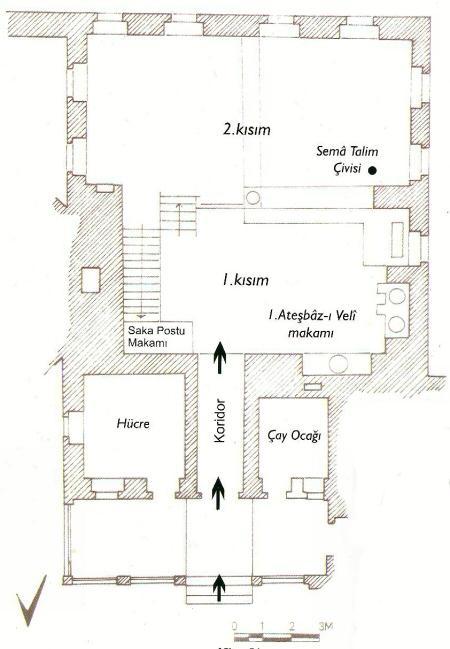
Matbah-ı Şerif Plan (Mevlana Tomb)
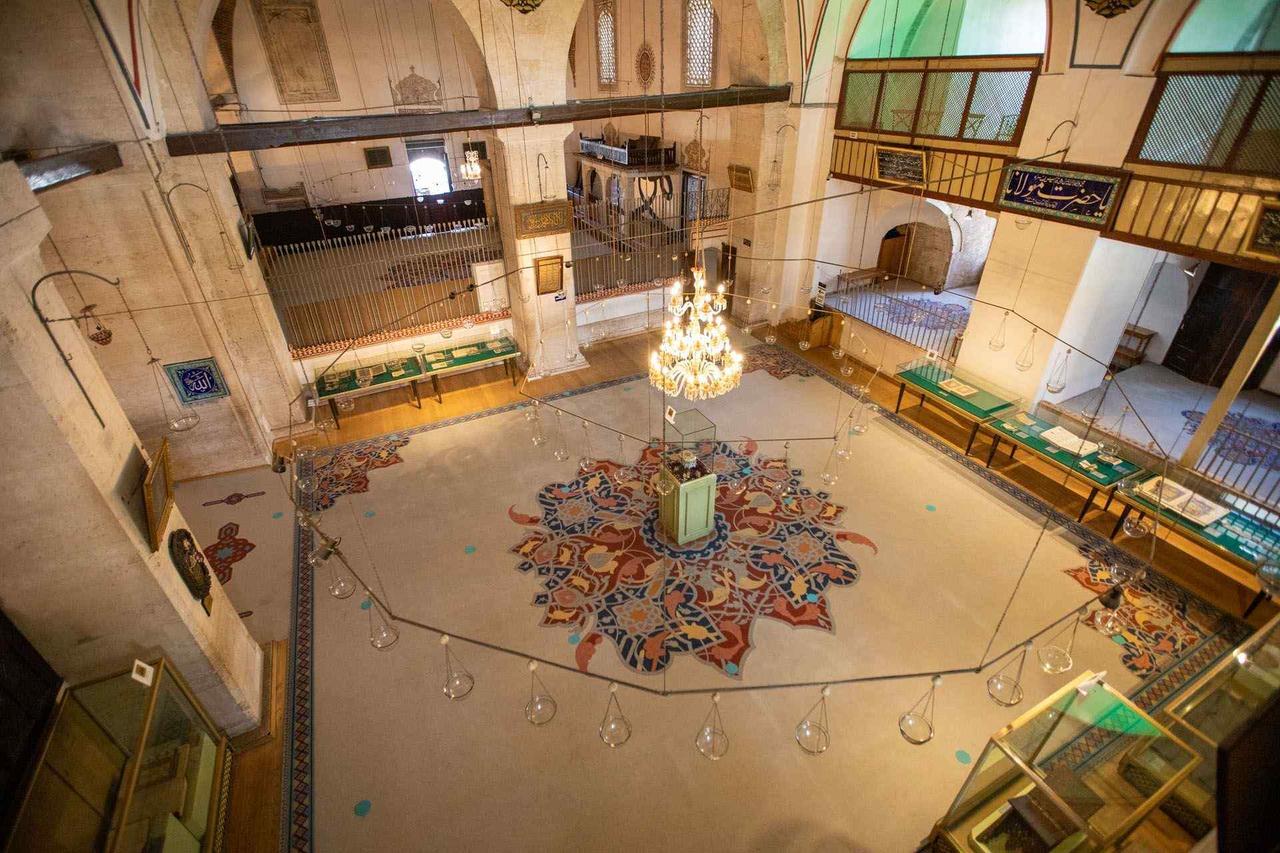
Semâhane (Mevlana Tomb)
The Mevlânâ Museum preserves over 4,000 manuscripts from the Seljuk, Karamanid, and Ottoman periods through its specialized library. The museum’s collection includes manuscript copies of the Mesnevî written shortly after Mevlânâ’s death, manuscripts of the Divân-ı Kebîr, early Qur’an fragments written in Kufic script, and numerous examples of calligraphy, illumination, and miniature painting. Additionally, the Nisan Tası, silver cages, healing vessels, lamps, and wooden and metal ritual objects are among the museum’s most striking artifacts.
Erol, Erdoğan. "Mevlevîlikte Zikir ve Mevlana Müzesinde Bulunan Dört Zikir Tesbihi." Praising God in Mawlawi Order and Four Praising Rosaries in the Museum of Rumi. Accessed December 16, 2025.
Kunt, İbrahim, and Karademir, Murat. “Mevlânâ Müzesi Haziresindeki Mezar Taşlarından Örnekler.” Mütefekkir 6, no. 12 (December 2019): 489–516. Accessed December 16, 2025.https://dergipark.org.tr/tr/pub/mutefekkir/issue/51202/659195
Ministry of Culture and Tourism. "Mevlana Müzesi."Türkiye Kültür Portal. Accessed December 16, 2025.https://www.kulturportali.gov.tr/turkiye/konya/gezilecekyer/mevlna-muzesi
Turkish Ministry of Culture and Tourism.Mevlana Müzesi Promotion File. Accessed December 16, 2025.https://turkishmuseums.com/Uploads/M%C3%BCze/Dosya/7d1a078d-1bd9-46fb-8966-92b598f7ae9f.pdf
Türkiye Diyanet Vakfı İslâm Ansiklopedisi. "Mevlana Müzesi." Accessed December 16, 2025.https://islamansiklopedisi.org.tr/mevlana-muzesi
Çam, Oğuz, and Hakkı Çılgınoğlu. “İnanç Turizmi Merkezi Olarak Mevlana Müzesi ile Şeyh Şaban-ı Veli Külliyesi’nin Değerlendirilmesi.” *Turizm Destinasyonları ve Tanıtımı Araştırmaları Dergisi* 5, no. 2 (2020): 342–357. Accessed December 16, 2025.https://doi.org/10.37847/tdtad.739933

History and Architecture
Sections of the Museum
Valuable Artifacts in the Museum