


This article was automatically translated from the original Turkish version.
+1 More
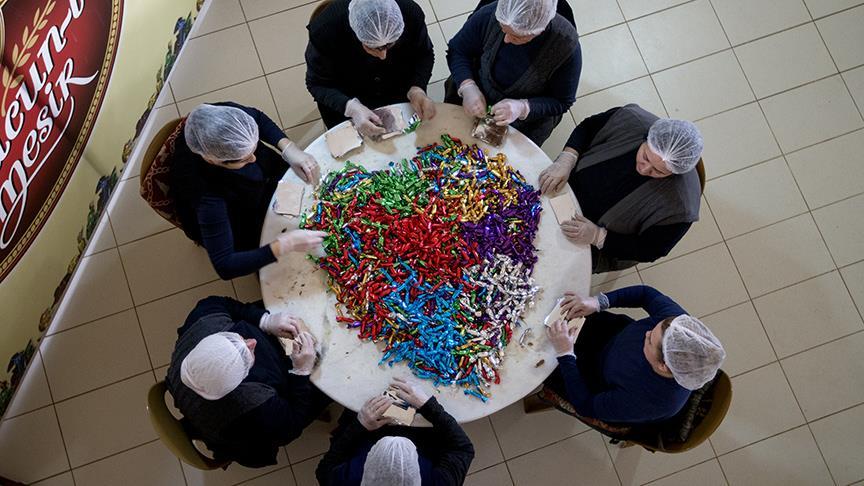
Mesir Macunu
Origin | Ottoman Period 16th century | ||||||||
|---|---|---|---|---|---|---|---|---|---|
Initial Preparer | Merkez Efendi | ||||||||
Content | 41 types of spices and herbs | ||||||||
Initial Distribution Year | 1527 | ||||||||
UNESCO List | 2012 – Intangible Cultural Heritage | ||||||||
EU Geographical Indication Registration | 2018 | ||||||||
Preparation Time | Approximately 20 days | ||||||||
Mesir macunu is a traditional paste made from a blend of 41 different spices and herbs, unique to the city of Manisa in Türkiye. With a history dating back to the 16th century, mesir macunu is known both for its health benefits and its cultural significance. Originally prepared during the Ottoman period to cure the illness of Hafsa Sultan, mother of Sultan Süleyman the Magnificent, this mixture is now distributed to the public each year during the International Manisa Mesir Macunu Festival held in Manisa.
The origin of mesir macunu is linked to the treatment of Hafsa Sultan, mother of Ottoman Sultan Süleyman the Magnificent. Prepared by Merkez Efendi, chief physician of the Sultan Mosque Medrese, the paste composed of 41 herbs and spices restored Hafsa Sultan’s health. Following her recovery, she requested that the paste be distributed to the public annually during the Nowruz week. Since then, the Mesir Macunu Festival has been held in Manisa for nearly 400 years. In 2012, the festival was inscribed on UNESCO’s Representative List of the Intangible Cultural Heritage of Humanity.
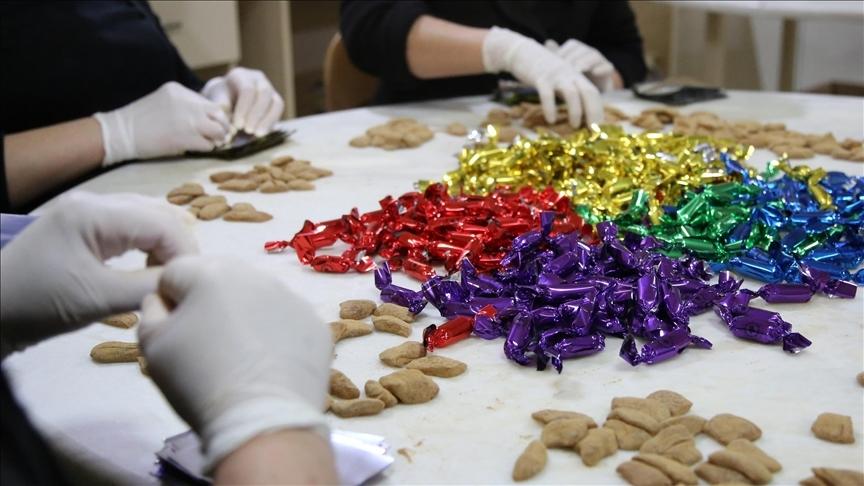
Mesir Macunu (Anadolu Ajansı)
Mesir macunu consists of a mixture of 41 different herbs, spices, and medicinal plants. Its ingredients include poppy seeds, mustard seeds, cinnamon bark, clove, lemon peel, myrrh resin, saffron, cardamom, anise, licorice root, mastic resin, flaxseed, cumin, coriander, black pepper, caraway, ginger, and turmeric, among other botanical components. These ingredients are combined in varying proportions to achieve a balanced flavor and aroma, as well as the health-promoting properties traditionally attributed to the paste.
Mesir macunu is produced in two forms: liquid and solid. The liquid version is prepared by cooking a mixture of lemon salt, glucose syrup, sugar, and the 41 herbs at a controlled temperature, then packaged in glass jars. The solid version is made by cooking similar ingredients with sugar, mixing them with ground herbs, and shaping the mixture into sticks. Under proper storage conditions, the liquid form has a shelf life of approximately three years, while the solid form is more durable and is hand-shaped before packaging.
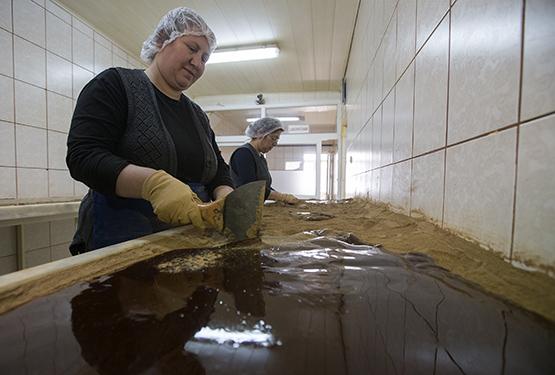
Mesir Macunu (Anadolu Ajansı)
Mesir macunu is produced annually in Türkiye at an average rate of around 500 tons, with 97 to 98 percent consumed domestically and 2 to 3 percent exported. Export destinations include Saudi Arabia, Kuwait, Libya, Qatar, Jordan, Israel, Iran, Iraq, the United Kingdom, Russia, Italy, the Netherlands, France, and Germany. In 2018, the Manisa Mesir Promotion and Tourism Association obtained geographical indication certification to protect the product’s authenticity and quality. The festival plays a vital role in preserving and promoting cultural values while contributing significantly to the local economy.
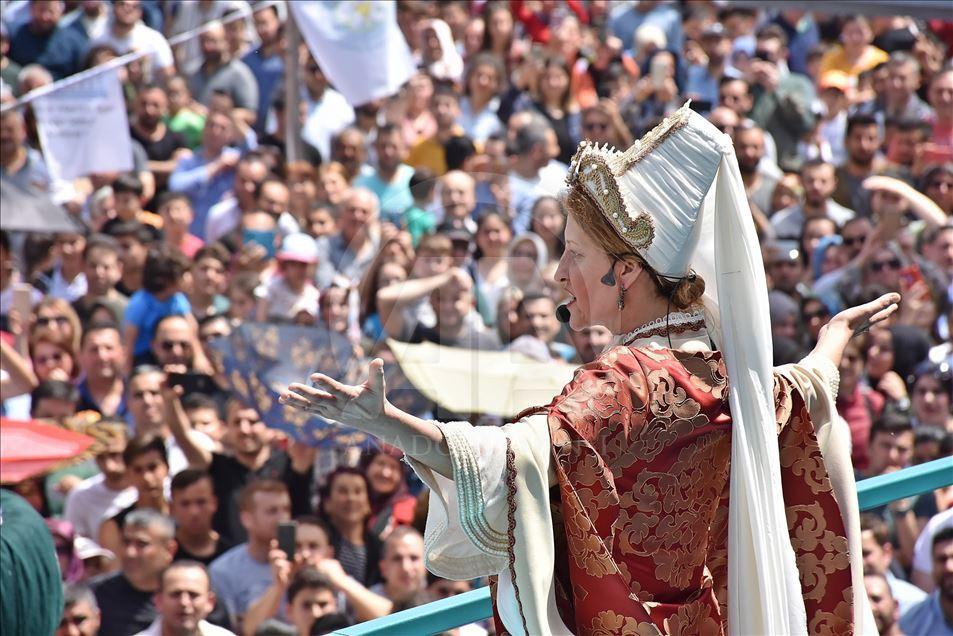
Mesir Macunu Festivali (Anadolu Ajansı)
Held annually during Nowruz week in Manisa, the International Manisa Mesir Macunu Festival is a cultural event that has continued for nearly 400 years. During the festival, various ceremonies, processions, and the ceremonial mixing of mesir macunu take place. At the conclusion of the festival, tons of the paste are scattered from the domes and minarets of the Sultan Mosque to the crowd. The festival attracts widespread attention from both locals and visitors and is recognized as one of Türkiye’s intangible cultural heritage traditions.
Mesir Macunu (TRT Archive)
Warning: The content presented here is intended solely for general encyclopedic informational purposes. The information provided should not be used for diagnosis, treatment, or medical advice. Before making any decisions regarding health, you must consult a physician or qualified healthcare professional. The author of this article and the KÜRE Encyclopedia assume no responsibility for any consequences arising from the use of this information for diagnostic or therapeutic purposes.
Anadolu Ajansı. "479 Yıllık Gelenek: Mesir Macunu." Accessed May 20, 2025.https://www.aa.com.tr/tr/kultur-sanat/479-yillik-gelenek-mesir-macunu/1424914.
Anadolu Ajansı. "Manisa Mesir Macunu AB’den Coğrafi İşaret Tescili Aldı." Accessed May 20, 2025.https://www.aa.com.tr/tr/ekonomi/manisa-mesir-macunu-abden-cografi-isaret-tescili-aldi/3383292
Anadolu Ajansı. "Mesir Macunu 479 Kez Saçıldı." Accessed May 20, 2025.https://www.aa.com.tr/tr/pg/foto-galeri/mesir-macunu-479-kez-sacildi.
Anadolu Ajansı. “Manisalı Kadınların Mesir Macunu Mesaisi Başladı.” Accessed May 20, 2025.https://www.aa.com.tr/tr/yasam/manisali-kadinlarin-mesir-macunu-mesaisi-basladi/764841.
Manisa Valiliği. "Şifa Şehri Manisa Uluslararası Mesir Macunu Festivali." Accessed May 20, 2025.http://www.manisa.gov.tr/sifa-sehri-manisa-uluslararasi-mesir-macunu-festivali.
Sarıca, Vildan, and Özbay, Gülçin. “Somut Olmayan Kültürel Miras Kapsamında Fonksiyonel Gıdalar: Mesir Macunu Örneği.” MANAS Sosyal Araştırmalar Dergisi 12, no. 2, 2023. Accessed May 20, 2025.https://dergipark.org.tr/tr/download/article-file/2504586.
TRT Arşiv. *Mesir Macunu*. YouTube video. Accessed May 20, 2025.https://www.youtube.com/watch?v=AqZTxF1XRxk
Mesir Macunu
Origin | Ottoman Period 16th century | ||||||||
|---|---|---|---|---|---|---|---|---|---|
Initial Preparer | Merkez Efendi | ||||||||
Content | 41 types of spices and herbs | ||||||||
Initial Distribution Year | 1527 | ||||||||
UNESCO List | 2012 – Intangible Cultural Heritage | ||||||||
EU Geographical Indication Registration | 2018 | ||||||||
Preparation Time | Approximately 20 days | ||||||||
History and Cultural Heritage
Ingredients and Herbal Composition
Production Process and Product Variants
Economic and Cultural Significance
Manisa Mesir Macunu Festival