


This article was automatically translated from the original Turkish version.
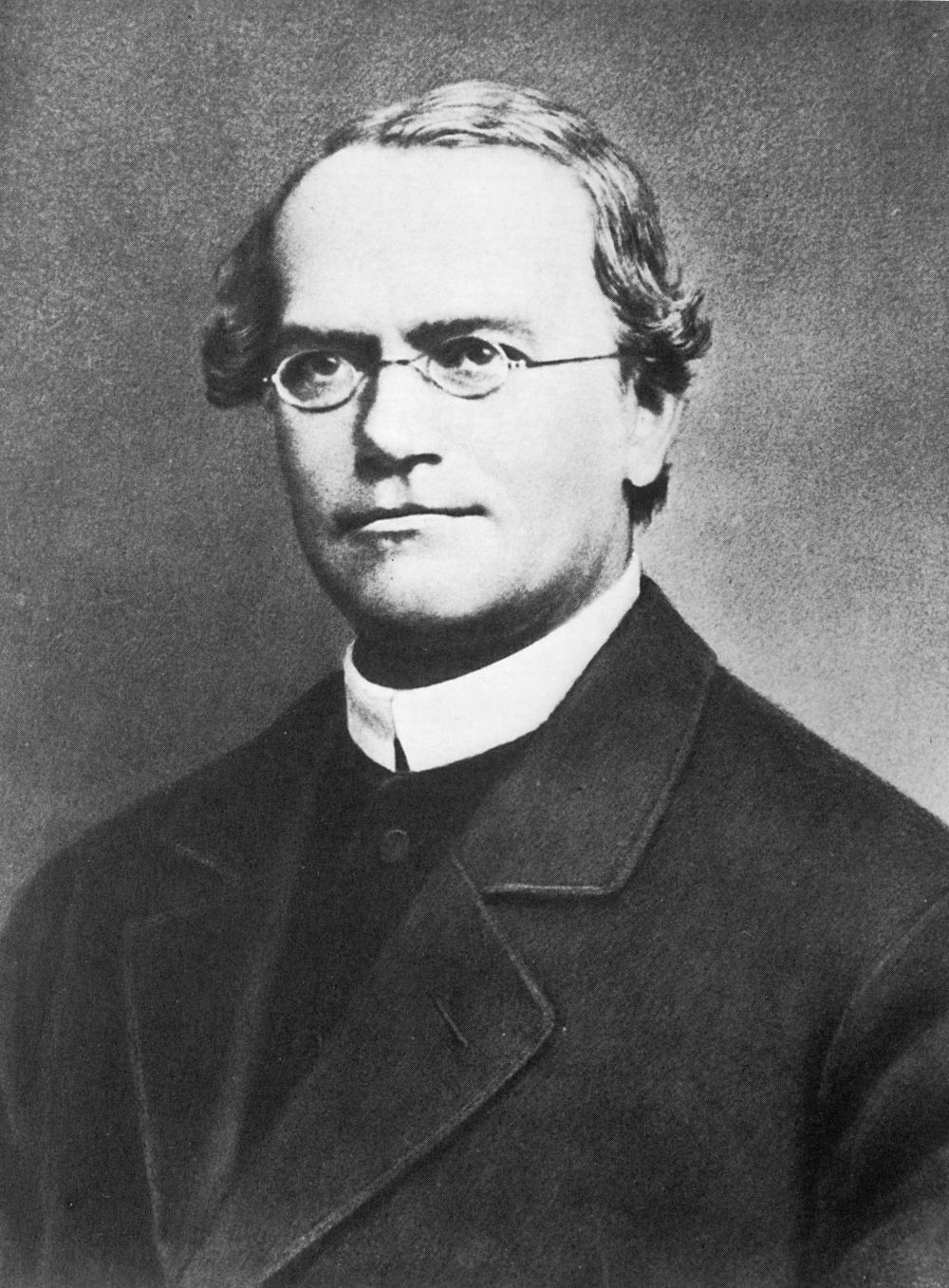
Gregor Mendel
Date of birth | 1822-07-20 | ||||||||
|---|---|---|---|---|---|---|---|---|---|
Date of death | 1884-01-06 | ||||||||
Father | Anton Mendel | ||||||||
Mother | Rosine Mendel | ||||||||
Mendelian genetics is a model that defines the principles of inheritance forming the foundation of modern genetics. The work of Gregor Johann Mendel in the 19th century demonstrated that organisms pass traits to offspring according to specific rules. Mendel’s laws are among the most important scientific discoveries explaining the fundamental mechanisms of inheritance.
Gregor Johann Mendel was born in 1822 in Moravia and conducted scientific research as a monk at the St. Thomas Monastery in Brno. Between 1856 and 1863, his experiments with pea plants (Pisum sativum) revealed that inheritance follows definite rules. His 1866 publication, "Versuche über Pflanzen-Hybriden" (Experiments on Plant Hybrids), received little attention from the long time science community. However, it was rediscovered in 1900 by Hugo de Vries, Carl Correns, and Erich von Tschermak, laying the foundations of modern genetics.
In his studies, Mendel focused on distinct traits of pea plants such as flower color, seed shape, and plant height, and formulated three fundamental laws of inheritance.
1. Law of Segregation: Each individual carries two alleles for each gene, and these alleles separate during gamete formation. An offspring inherits one allele randomly from each parent. For example, a pea plant carrying alleles for round and wrinkled seeds will produce gametes containing either the round or the wrinkled allele.
2. Law of Independent Assortment: Genes for different traits are transmitted to offspring independently of one another. For instance, flower color and seed shape in pea plants are inherited independently. However, it is now known that some genes are linked and therefore do not always assort independently.
3. Law of Dominance (Dominance and Recessiveness): In Mendel’s experiments, some alleles were observed as dominant while others were recessive. For example, the allele for round seeds (R) is dominant over the allele for wrinkled seeds (r). If an individual has the genotype (Rr), only the dominant trait (round seeds) appears in the phenotype.
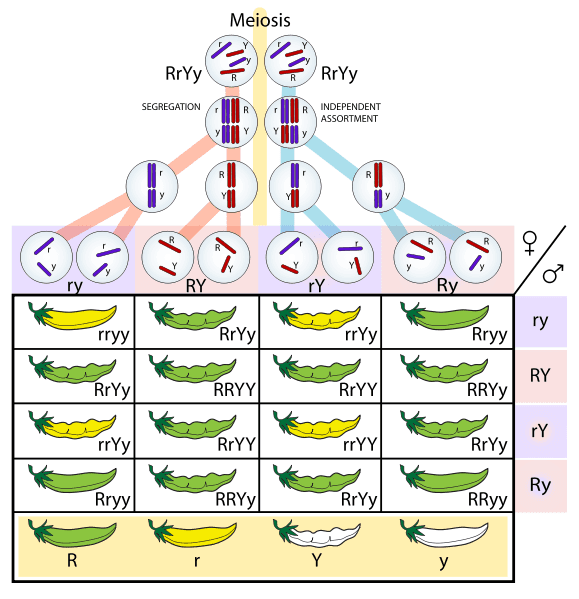
Mendel’s Law of Independent Assortment - Bilgiustam
Mendel employed mathematical analysis to identify patterns of inheritance. His innovative approach was based on evaluating inheritance within a framework of statistical probabilities. Today, Mendel’s work is recognized as one of the fundamental building blocks of fields such as genetic engineering, biotechnology, and medical genetics.
Mendel’s findings merged in the early 20th century with Thomas Hunt Morgan’s chromosome theory, accelerating the development of genetics. It is now known that Mendel’s laws do not always apply in certain cases (such as linked genes, codominance, and multiple alleles), yet the fundamental mechanisms of genetic inheritance still rest on the principles he established.
"Gregor Mendel," Encyclopedia Britannica. Accessed February 9, 2025.Accessed Adresi.
Schwarzbach, Erik, Petr Smýkal, Ondřej Dostál, Michaela Jarkovská, and Simona Valová. “Gregor J. Mendel – Genetics Founding Father.” *Czech Journal of Genetics and Plant Breeding* 50, no. 2 (2014): 43–51. Accessed February 9, 2025.Accessed Adresi

Gregor Mendel
Date of birth | 1822-07-20 | ||||||||
|---|---|---|---|---|---|---|---|---|---|
Date of death | 1884-01-06 | ||||||||
Father | Anton Mendel | ||||||||
Mother | Rosine Mendel | ||||||||
Historical Background
Mendel’s Laws of Inheritance
Mendel’s Method and Scientific Contributions
Mendel’s Place in Modern Genetics