


This article was automatically translated from the original Turkish version.
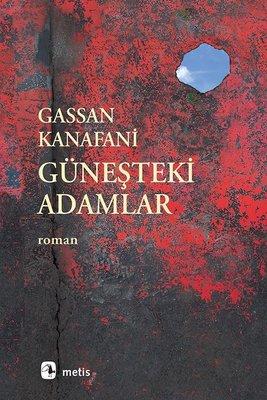
Men of the Sun
Original Name | Ricâlun fi’ş-Şems (رجال في الشمس ) | ||||||||
|---|---|---|---|---|---|---|---|---|---|
Type | Story | ||||||||
Author | Ghassan Kanafani | ||||||||
Translator | Mehmet Hakkı Suçin | ||||||||
Publication Year(s) | 2023 | ||||||||
Publisher | Metis Publications | ||||||||
Number of Pages | 80 | ||||||||
ISBN | 13 978-605-316-277-3 | ||||||||
Men in the Sun (original title: رجال في الشمس / Ricâlun fi’ş-Şems), is the first novel by Palestinian writer Gassan Kanafani'. The work has been translated into many languages including English, German, French and Flemish. The novel takes place in multiple locations but primarily along the desert route from Basra to Kuwait. The text contains references indicating that the events occur in the years following the 1948 Arab–Israeli War.
Men in the Sun addresses the efforts of Palestinian refugees to rebuild their lives. It narrates the journeys of three Palestinian refugees from different ages and social backgrounds traveling toward Kuwait. Through this novel, Kanafani focuses on the lives of Palestinian characters and reveals their social and psychological realities.
Upon its initial publication, the novel sparked debate among Palestinian readers, particularly regarding its ending. The story presented is not limited to a political message; the personal dramas of the characters, their longing for home, their helplessness and experiences of exile give it a universal dimension. Especially Abu Kays’ yearning for his village and family and Mervan’s journey undertaken at a young age for the sake of earning bread reflect universal feelings of displacement.
Time in the novel is not presented in a strict chronological order. However, the period and season in which the events occur can be inferred from clues within the text. The desert journey, the extreme heat and the recurring imagery of the sun indicate that the events take place in August. Expressions such as ten years ago, yesterday, today, spring, sun and heat in the text reflect both the passage of time and the psychological states of the characters. One indicator of time in the novel is the information provided about Abu’l-Hayzeran’s past: “Abu’l-Hayzeran was an excellent driver. He served in the British army for five years before 1948.”【1】 This information points to the exile experienced by Palestinians in the aftermath of the 1948 war.
The characters’ internal perception of time is also evident. For instance, Abu Kays’ longing for his village and his sense of alienation in exile are conveyed through lines such as: “The damp earth, left over from yesterday’s rain… No, it did not rain yesterday. We are in August. Have you forgotten?”【2】 Such internal temporal shifts nourish the emotional structure of the novel. The progression of time can be traced through the interconnected stories of the characters. Events such as Esad’s prior experience working in Kuwait enabling him to persuade Abu Kays, and Mervan being forced to travel to Kuwait after his brother stopped sending money, are linked by cause and effect. Thus, time is treated in multiple layers—both in the plot and at the subconscious level of the characters.
Thematic elements in the novel include migration, poverty, destitution, hunger, deceit, ignorance, corruption, death and despair. The novel particularly examines the social and economic hardships faced by Palestinian refugees and reflects how these conditions affect individuals’ moral and psychological worlds.
The author explores exploitation and the pursuit of personal gain through the character of Abu’l-Hayzeran, who served as a driver in the British army and later works for the Kuwaiti businessman Hajji Riza. Through this character, Kanafani portrays the corruption within Palestinian society—the abandonment of values for material gain.
Throughout the novel, Kanafani highlights the conflict between what ought to be and what is. The characters’ destitution reflects the destructive impact of war, poverty and exile on individual lives. The author makes visible the psychological state of society through the characters’ inner monologues and emotional movements.
One of the main characters of the novel, Abu’l-Hayzeran is a tanker driver. He fought in the 1948 war, previously served in the British army, was wounded during combat and is therefore partially physically disabled. He is tall, thin, experienced and cunning. While working as a driver for the wealthy Kuwaiti Hajji Riza, he earns money by smuggling people across the border in empty tankers.
His greatest desire is to save money and live the rest of his life comfortably. Unconcerned with the Palestinian cause or ideals, Abu’l-Hayzeran is a character who, for financial gain, leads people into a dangerous journey. In this respect, he symbolizes pragmatism and the quest for individual survival.
Abu Kays is one of the central characters of the novel. He is an elderly Palestinian refugee living under difficult conditions with his family in Basra. He resides in a hut allocated to him by a benefactor and worries about his children’s future due to financial hardship. A character filled with nostalgia for his homeland, Abu Kays decides to travel to Kuwait at Esad’s insistence. Throughout the novel, Abu Kays is defined by his longing for his village, his land and his past. His inner turmoil represents the identity, belonging and poverty issues faced by Palestinian refugees.
Esad is a man in his thirties who has previously worked in Kuwait and gained experience. The most seasoned among the Palestinian refugees, Esad assumes leadership of the group. He is cautious in his decisions and guides his companions. However, due to financial difficulties, he decides to return to Kuwait. His goal is to provide his family with a better life despite the negative experiences he endured in the past.
Mervan is a young character, about sixteen or seventeen years old, who is forced to support his family financially. After his older brother Zekeriya gets married, he stops sending money, prompting Mervan to drop out of school and decide to travel to Kuwait. This situation highlights the theme of intergenerational responsibility. Mervan enters a forced migration path to ensure his family’s survival. Zekeriya, on the other hand, is a character whose priorities shift after marriage, thereby affecting the family’s economic balance.
Ummu Kays is Abu Kays’ wife. She does not directly oppose her husband’s decision to travel to Kuwait; her silence is said to reflect the social position of the dutiful woman. She is a devoted mother who has dedicated her life to raising her children.
Abu Bekir is a character stationed at the border who neglects his duties and is fond of conversation and tea. In this respect, he represents bureaucratic indifference and apathy.
Kavkap is a woman with whom Abu’l-Hayzeran is involved. In the novel, her personal life reflects superficiality and emotional emptiness.
Hajji Riza is a wealthy Kuwaiti businessman and Abu’l-Hayzeran’s employer. He represents socioeconomic inequality.
The novel also includes figures such as the village headman, the imam and the teacher. These characters represent the social structure of rural life and the community’s opinion leaders.
Kanafani received the 1966 Lebanese Literature Prize for this novel. In 1972, the novel was adapted into a film titled el-Muhdi'ûn by Tewfik Saleh. The film won the Human Rights Film Award in Strasbourg and received awards in Paris and Tunis. However, it was banned in many Arab countries for criticizing their governments.【3】
Can, Felek. *Gassan Kenefânȋ (Hayatı, Edebi Kişiliği, Eserleri ve Ricâlun Fi'ş-Şems Adlı Romanının İncelenmesi).* Master's thesis, Dicle Üniversitesi, 2016. Accessed November 5, 2025.https://tez.yok.gov.tr/UlusalTezMerkezi/TezGoster?key=RrI-Krk3A-RkF4YfHofuk8pc8QTQnqOEqKckwzWVuGwoy_fmhMdwAO5m0Zjgd3go
Kanafani, Gassan. Güneşteki Adamlar. Translated by Mehmet Hakkı Suçin. Istanbul: Metis Yayınları, January 2023.
Kekeç, Elmira Memmedova, and Rıza Ülker. "Orhan Kemalin ve Gassan Kenefani'nin Toplumcu Gerçekçi Romanları: “Bereketli Topraklar Üzerinde” ve “Güneşteki Adamlar”." *Zeitschrift für die Welt der Türken/Journal of World of Turks* 13, no. 3 (2021): 125–138. Accessed November 5, 2025.https://www.dieweltdertuerken.org/index.php/ZfWT/article/view/1411
Sarıkaya, Hasan, and Ramazan Kazan. "Sanatını Filistin’in Özgürlüğüne Teksif Eden Edebiyatçı: Gassân Kenefânî." *International Journal of Social Sciences (IJSS)/Uluslararasi Sosyal Bilimler Dergisi* 8, no. 34 (2024): 90–112. Accessed November 5, 2025.https://www.ceeol.com/search/article-detail?id=1270913
[1]
Felek Can. Gassan Kenefânȋ (Hayatı, Edebi Kişiliği, Eserleri ve Ricâlun Fi'ş-Şems Adlı Romanının İncelenmesi). Yüksek Lisans Tezi, Dicle Üniversitesi, (2016): s. 98. Erişim 5 Kasım 2025. https://tez.yok.gov.tr/UlusalTezMerkezi/TezGoster?key=RrI-Krk3A-RkF4YfHofuk8pc8QTQnqOEqKckwzWVuGwoy_fmhMdwAO5m0Zjgd3go
[2]
Felek Can. Gassan Kenefânȋ (Hayatı, Edebi Kişiliği, Eserleri ve Ricâlun Fi'ş-Şems Adlı Romanının İncelenmesi). s. 98. Erişim 5 Kasım 2025. https://tez.yok.gov.tr/UlusalTezMerkezi/TezGoster?key=RrI-Krk3A-RkF4YfHofuk8pc8QTQnqOEqKckwzWVuGwoy_fmhMdwAO5m0Zjgd3go
[3]
Felek Can. Gassan Kenefânȋ (Hayatı, Edebi Kişiliği, Eserleri ve Ricâlun Fi'ş-Şems Adlı Romanının İncelenmesi). s. 81. Erişim 5 Kasım 2025. https://tez.yok.gov.tr/UlusalTezMerkezi/TezGoster?key=RrI-Krk3A-RkF4YfHofuk8pc8QTQnqOEqKckwzWVuGwoy_fmhMdwAO5m0Zjgd3go

Men of the Sun
Original Name | Ricâlun fi’ş-Şems (رجال في الشمس ) | ||||||||
|---|---|---|---|---|---|---|---|---|---|
Type | Story | ||||||||
Author | Ghassan Kanafani | ||||||||
Translator | Mehmet Hakkı Suçin | ||||||||
Publication Year(s) | 2023 | ||||||||
Publisher | Metis Publications | ||||||||
Number of Pages | 80 | ||||||||
ISBN | 13 978-605-316-277-3 | ||||||||
No Discussion Added Yet
Start discussion for "Men of the Sun (Book)" article
Subject
Theme
Characters
Abu’l-Hayzeran
Abu Kays
Esad
Mervan and Zekeriya
Ummu Kays
Abu Bekir
Kavkap
Hajji Riza
Other Characters
Awards and Achievements