This article was automatically translated from the original Turkish version.
Marmara Island Marble
Type of Geographical İndication | Traffic Sign | ||||||||
|---|---|---|---|---|---|---|---|---|---|
Application Date | 19.01.2015 | ||||||||
Registration Date | 16.10.2018 | ||||||||
Registration Number | 387 | ||||||||
Product / Product Group(s) | Other products | ||||||||
Province(s) | Balıkesir | ||||||||
Applicant/Registrant(s) | Erdek Chamber of Commerce | ||||||||
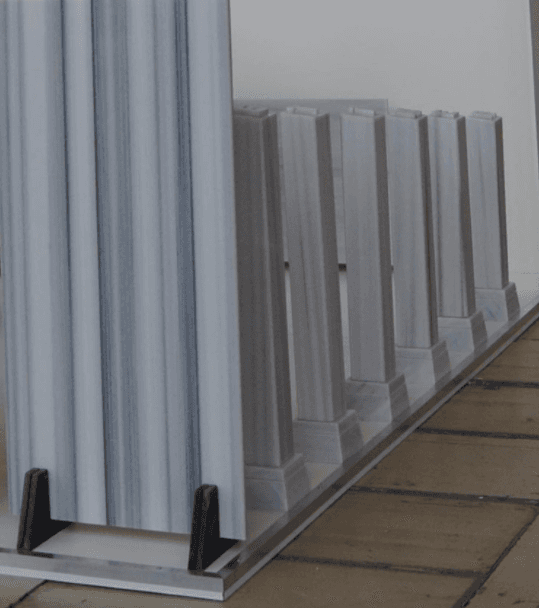
Marmara Marble is a natural stone renowned worldwide for its white base with parallel gray veins, extracted from Marmara Island in the Balıkesir province of Türkiye and used as a building material since antiquity. Throughout history, this type of marble has been an important material in both architectural and artistic applications.
Marmara Marble is a metamorphic rock composed of crystallized calcite. It is distinguished by its linear veining pattern, high polishability, durability, and low water absorption rate. It formed primarily through regional metamorphism of dolomitic limestone. Its coloration consists of gray or black lines on a white background, exhibiting homogeneous patterns.
The use of Marmara Marble dates back to the 6th century BCE. It was employed in numerous structures during the ancient Roman and Byzantine periods, including Istanbul. Notable examples include Hagia Sophia, Sultanahmet Camii, and Topkapı Sarayı. During the Ottoman period, it was frequently chosen for baths, mosques, fountains, and tombstones.
Marmara Marble is extracted from Marmara Island, after which it is named (Balıkesir – Marmara district). The quarries on the island are among the oldest active marble quarries in the world and continue production today. Blocks are extracted from the quarries and subsequently processed in factories through cutting and polishing.
Marmara Marble was registered as a geographical indication by name by the Turkish Patent and Trademark Office on 16.10.2018. According to the registration, the product may only be extracted and processed on Marmara Island. The physical and chemical properties, production methods, and processing criteria of the marble are detailed in the geographical indication certificate.
Due to its high quality standards, Marmara Marble is preferred not only in Türkiye but also in countries across Europe, the Middle East, and East Asia. Its aesthetic qualities, historical identity, and durability make it a material of choice in prestigious projects.
Turk Patent and Trademark Office. "Marmara Mermeri." Geographical Indications Database. Accessed July 29, 2025. https://ci.turkpatent.gov.tr/cografi-isaretler/detay/38150.
Turk Patent and Trademark Office. *Marmara Mermeri Coğrafi İşaret Tescil Belgesi*. Ankara: TÜRKPATENT, 2023. Accessed July 29, 2025. https://ci.turkpatent.gov.tr/Files/GeographicalSigns/5cb29090-a902-4a65-a58a-1cdd1f190024.pdf.
Uzun, Murat. “Antropojenik Jeomorfoloji Yaklaşımı ile Marmara Adası’nda Mermer Ocaklarından Kaynaklı Değişimlerin Analizi.” *Doğu Coğrafya Dergisi* 28, no. 50 (2023): 75–87. Accessed July 30, 2025. https://dergipark.org.tr/tr/pub/ataunidcd/issue/82823/1425140.

Marmara Island Marble
Type of Geographical İndication | Traffic Sign | ||||||||
|---|---|---|---|---|---|---|---|---|---|
Application Date | 19.01.2015 | ||||||||
Registration Date | 16.10.2018 | ||||||||
Registration Number | 387 | ||||||||
Product / Product Group(s) | Other products | ||||||||
Province(s) | Balıkesir | ||||||||
Applicant/Registrant(s) | Erdek Chamber of Commerce | ||||||||
No Discussion Added Yet
Start discussion for "Marmara Island Marble" article
Geological Properties
History
Production Area
Applications
Geographical Indication and Protection
International Reputation