


This article was automatically translated from the original Turkish version.
+1 More
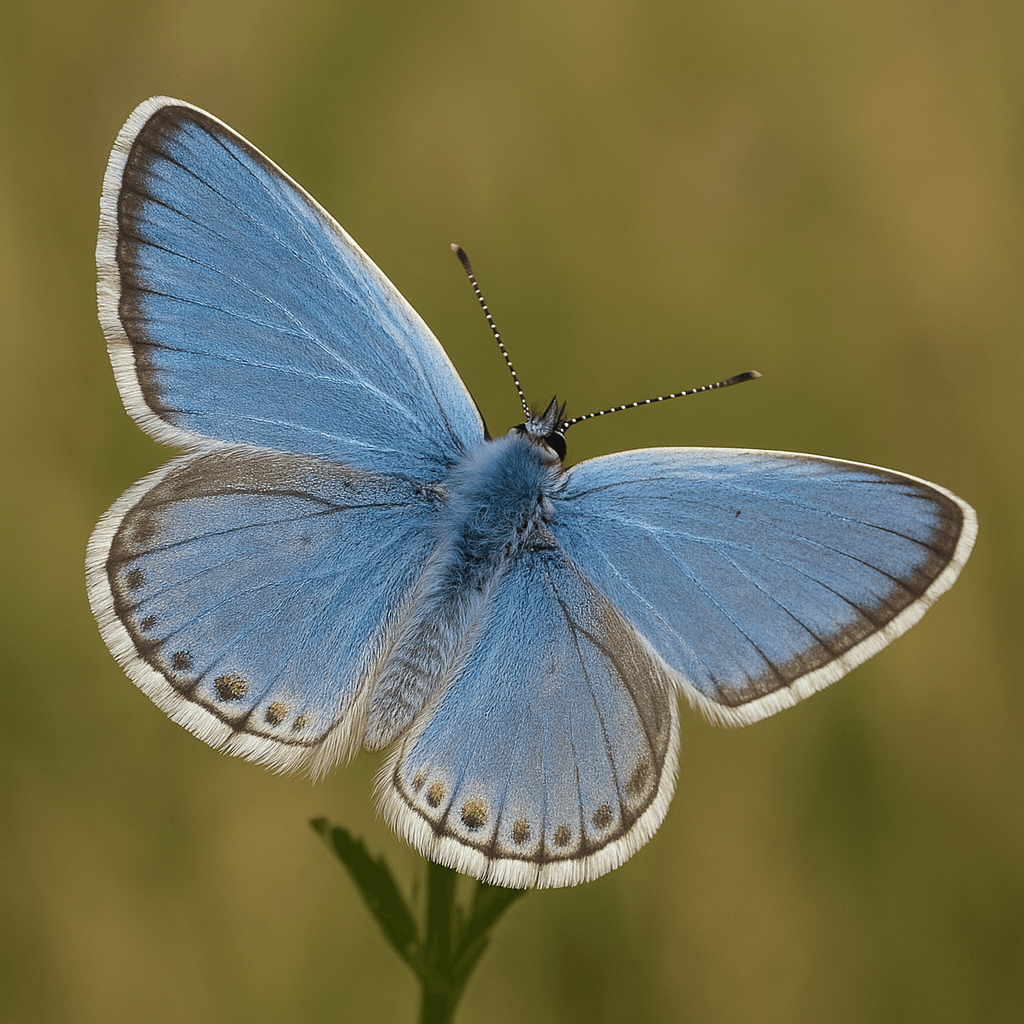
Many-Eyed Amanda (Generated with Artificial Intelligence.)
Scientific Name(s) | Polyommatus amandus | ||||||||
|---|---|---|---|---|---|---|---|---|---|
Division | Arthropoda | ||||||||
Class | Insecta | ||||||||
Order | Lepidoptera | ||||||||
Family | Lycaenidae (Many-eyed) | ||||||||
Distribution(s) | Europe Asia | ||||||||
Similar Species | Polyommatus icarus (Blue Many-eyed), Polyommatus semiargus (Sky-blue Many-eyed) | ||||||||
Conservation Status | Least Concern (LC) | ||||||||
The Blue Apollo butterfly (Polyommatus amandus) is a delicate species with a wingspan of 28–36 mm. Males have upper wings with a bright sky-blue coloration bordered by a black line. Females display wings in brown or gray-brown tones, sometimes with bluish reflections. The undersides of the wings are adorned with black spots and fine orange patterns on a gray-beige background. These markings are a key feature for distinguishing this species from similar blue butterflies.
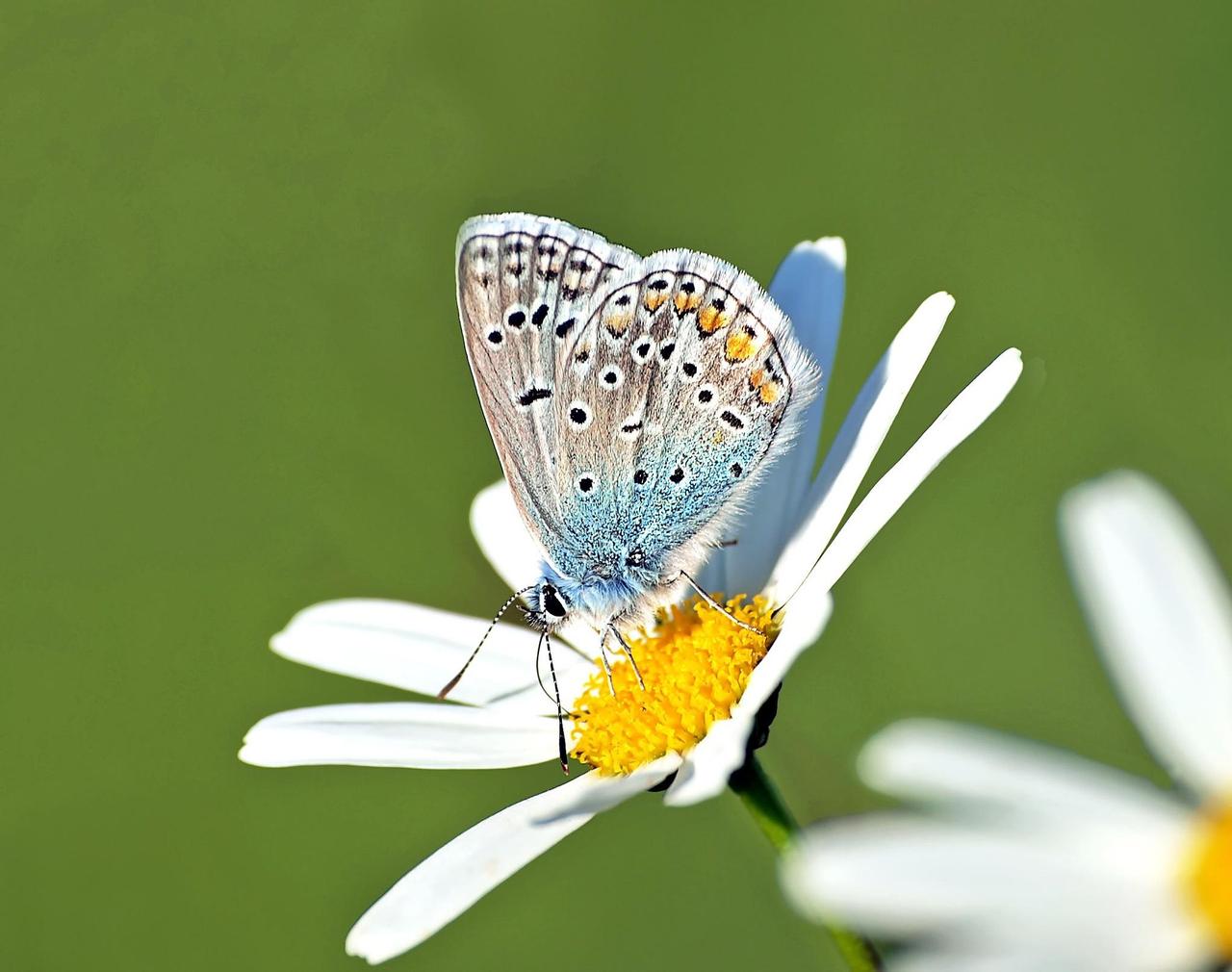
Blue Apollo (pixabay)
This species has a wide distribution across the Palearctic region, extending from much of Europe through Türkiye, the Caucasus, Central Asia and Siberia. In Türkiye it is observed in nearly all regions and inhabits elevations up to 2000 meters above sea level. Preferred habitats include moist meadows, stream banks, alpine grasslands, forest clearings and the edges of agricultural land.
The Blue Apollo flies from May to August. In lowland areas it produces two generations per year, while in higher elevations only one generation occurs. Adult individuals feed primarily on nectar from leguminous plants such as clover (Trifolium), sainfoin (Onobrychis), medick (Medicago) and milkvetch (Astragalus). Larvae feed on the leaves of these plants and overwinter in the larval stage. Additionally, some larvae have a symbiotic relationship with certain ant species; the ants protect the larvae while the larvae provide them with sugary secretions.
Polyommatus amandus can be easily confused with Polyommatus icarus (Common Blue) and Polyommatus semiargus (Mazarine Blue). However, the Blue Apollo is generally larger, has brighter blue upper wings and more distinct black spots on the underside of the wings.
It is evaluated as “Least Concern (LC)” by the IUCN. Although not threatened globally, local populations may be negatively affected by agricultural activities, intensive pesticide use, habitat loss and climate change.
Species of the genus Polyommatus are important model organisms in biogeography, taxonomy and evolutionary biology research. They are also among the butterfly species that attract the interest of nature observers due to their vibrant colors and aesthetic appearance.
Bálint Z, Kertész K, Piszter G, Vértesy Z, Biró LP. "The well-tuned blues: the role of structural colours as optical signals in the species recognition of a local butterfly fauna (Lepidoptera: Lycaenidae: Polyommatinae)." *J R Soc Interface* 9, no. 73 (2012): 1745–1756. Accessed September 16, 2025. https://doi.org/10.1098/rsif.2011.0854
Pixabay. "Mavimsi, Hauhechel, Polyommatus icarus görseli JPG." Pixabay. Accessed September 16, 2025. https://pixabay.com/tr/photos/mavimsi-hauhechel-polyommatus-icarus-1390204/
Stefanescu, C., Herrando, S., & Páramo, F. "Butterfly species richness in the north‐west Mediterranean Basin: the role of natural and human‐induced factors." *J Biogeogr* 31, no. 6 (2004): 905–915. Accessed September 16, 2025. https://doi.org/10.1111/j.1365-2699.2004.01088.x

Many-Eyed Amanda (Generated with Artificial Intelligence.)
Scientific Name(s) | Polyommatus amandus | ||||||||
|---|---|---|---|---|---|---|---|---|---|
Division | Arthropoda | ||||||||
Class | Insecta | ||||||||
Order | Lepidoptera | ||||||||
Family | Lycaenidae (Many-eyed) | ||||||||
Distribution(s) | Europe Asia | ||||||||
Similar Species | Polyommatus icarus (Blue Many-eyed), Polyommatus semiargus (Sky-blue Many-eyed) | ||||||||
Conservation Status | Least Concern (LC) | ||||||||
No Discussion Added Yet
Start discussion for "Many-eyed Amanda (Polyommatus amandus)" article
Distribution and Habitat
Biology and Ecology
Similar Species
Conservation Status
Scientific and Cultural Significance