


This article was automatically translated from the original Turkish version.
+1 More
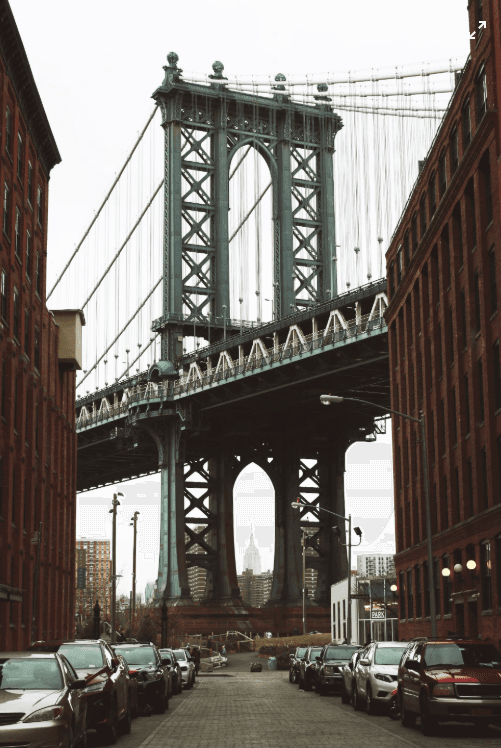
Manhattan Bridge
Address | Manhattan Brg United States NY 11201 New York | ||||||||
|---|---|---|---|---|---|---|---|---|---|
Construction Start Date | 1901 | ||||||||
Architect | Leon Moisseiff | ||||||||
Manhattan Bridge is a suspension bridge connecting Chinatown in Lower Manhattan with the Downtown area of Brooklyn in New York City. Construction began in 1901 and the bridge opened to traffic on 31 December 1909, although its official construction was not completed until 1912. As the third major crossing over the East River after the Brooklyn and Williamsburg bridges, it represents a significant engineering advancement during the early 20th century urban development of America.
The bridge was designed by Latvian-born engineer Leon Moisseiff. Moisseiff’s application of the “deflection theory” on the Manhattan Bridge challenged the prevailing engineering understanding of the time and later became a model used in iconic structures such as the Golden Gate Bridge.
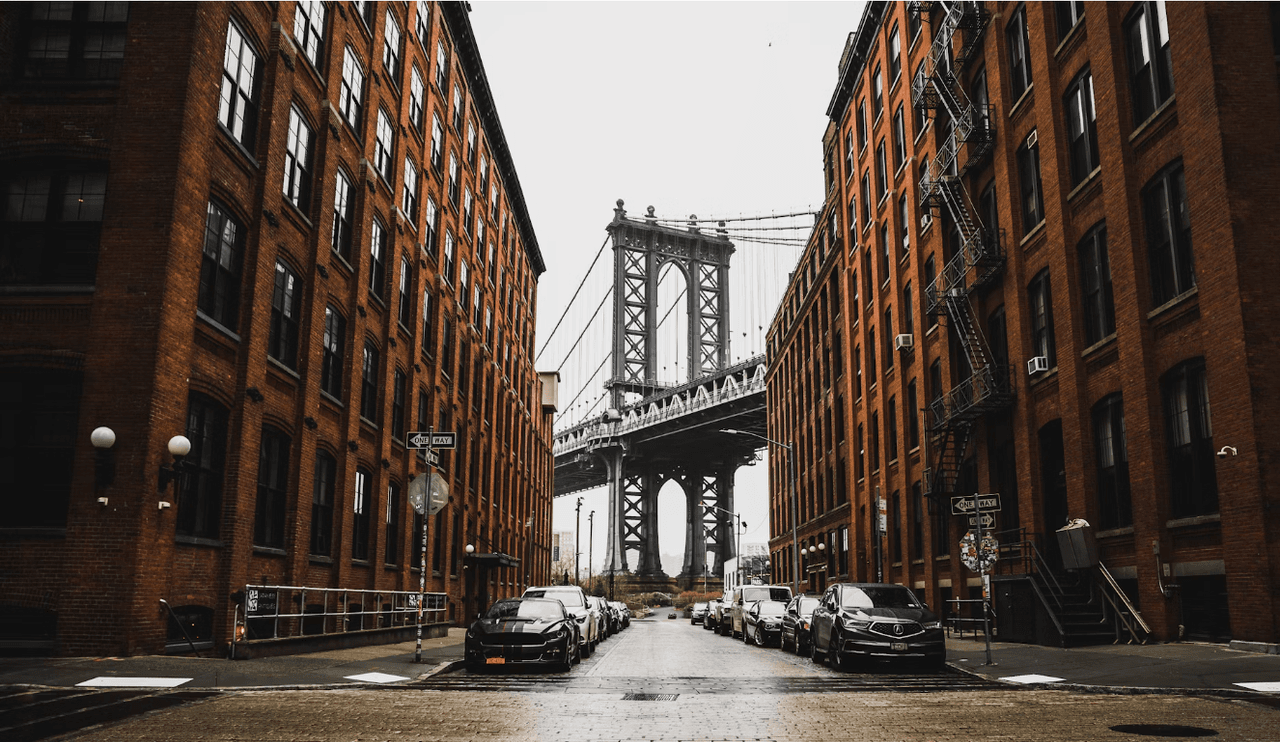
Manhattan Köprüsü (Redd Francisco)
This theory argued that suspension bridges could carry greater loads than traditionally assumed and enabled the construction of more flexible and economical structures without massive rigid elements. However, this flexible design also introduced structural issues such as torsion and elongation caused by heavy train traffic.
The Manhattan Bridge was constructed as a multifunctional infrastructure capable of accommodating four subway lines (Q, N, D, B), seven road lanes, a pedestrian walkway, and a bicycle path. Initially, the upper level was intended for streetcars and rail lines, but it was later converted to automobile traffic.
The subway lines were connected to the 6th Avenue and Broadway lines, but these connections were reconfigured in 1967 with the Chrystie Street Connection project. During these modifications, the bridge operated for years with reduced single-direction subway service, further highlighting its maintenance needs.
Beginning in the 1980s, the bridge underwent a comprehensive restoration in three phases. During this process, the southern and northern approaches were closed sequentially, and steel bracing and load-bearing systems were renewed. The bridge’s approximately eight-foot elongation due to train traffic was identified as a structural vulnerability. With a total cost of $920 million, both aesthetic and static improvements were carried out on the bridge.
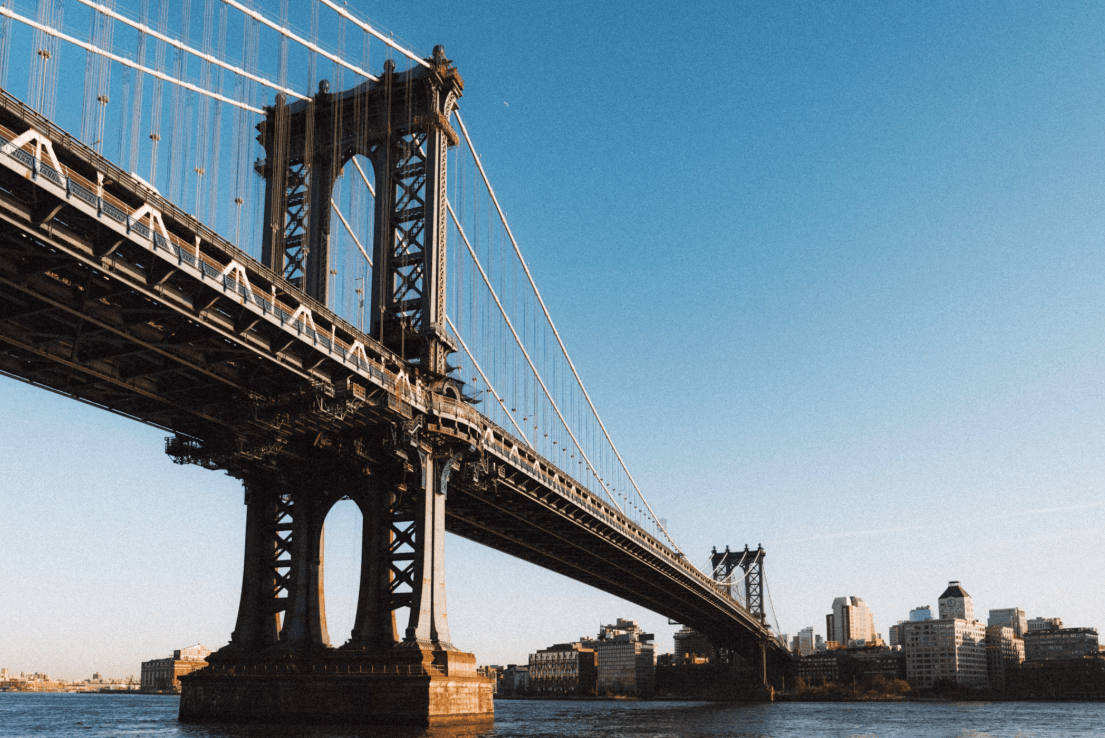
Manhattan Köprüsü (Dushawn Jovic)
In 2004, with the full reactivation of all four rail tracks, the bridge returned to full operational capacity. Rehabilitation efforts continued through the 2000s under the management of the New York City Department of Transportation (NYCDOT). Between 2018 and 2021, under the “Contract 15” program, structural components such as tower ornamentation, pedestrian railings, fire systems, approach spans, and steel joints were repaired and restored while preserving original architectural elements.
The ornate arches and columns at the Manhattan end of the bridge are an example of Beaux-Arts architecture in New York, designed by the architectural firm Carrère and Hastings. This same firm was responsible for the main building of the New York Public Library. The total length of the bridge is 6,090 feet (approximately 1,857 meters), with a main span of 1,470 feet. The four main suspension cables are each 3,224 feet long.
The original bluish steel color, known visually as “Manhattan Bridge Blue,” has become an iconic symbol of the structure. On the Brooklyn side, the bridge integrates seamlessly into the DUMBO neighborhood, adding a dimension that directly connects its architecture to public life. DUMBO, an acronym for “Down Under the Manhattan Bridge Overpass,” represents both its geographic location and its cultural transformation.
The famous perspective from Washington Street, through the bridge’s arch, offering a view of the Empire State Building, has been used iconographically in numerous films and advertisements.
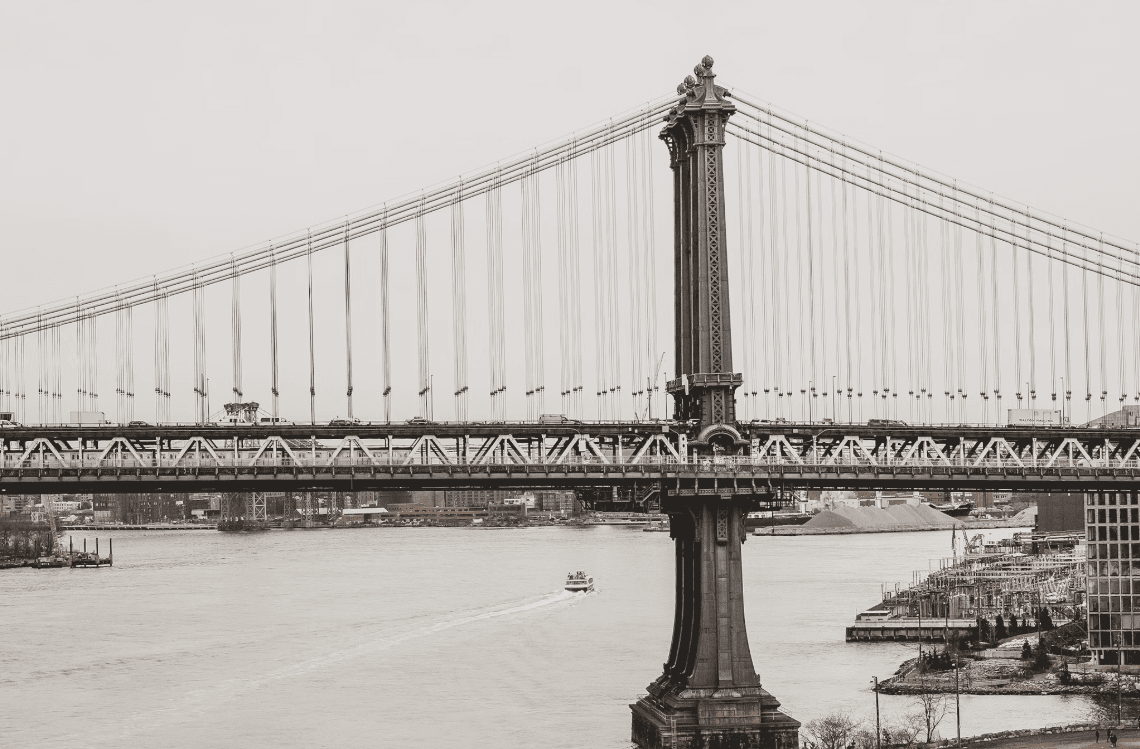
Manhattan Köprüsü (Alex Presa)
Today, the Manhattan Bridge serves not only as a transportation structure but also as a pedestrian and bicycle path, a photographic site, and an observation terrace offering panoramic city views. Used daily by an average of 70,000 vehicles, 6,000 cyclists, and 3,000 pedestrians, the bridge is preferred by locals over the Brooklyn Bridge due to its lesser congestion.
The recommended walking route is from Brooklyn to Manhattan, as this direction offers walkers a unique view that captures both the Manhattan skyline and the Brooklyn Bridge in a single frame. Particularly at sunset, when Manhattan’s Financial District is bathed in golden hues, this experience becomes both calming and visually satisfying.
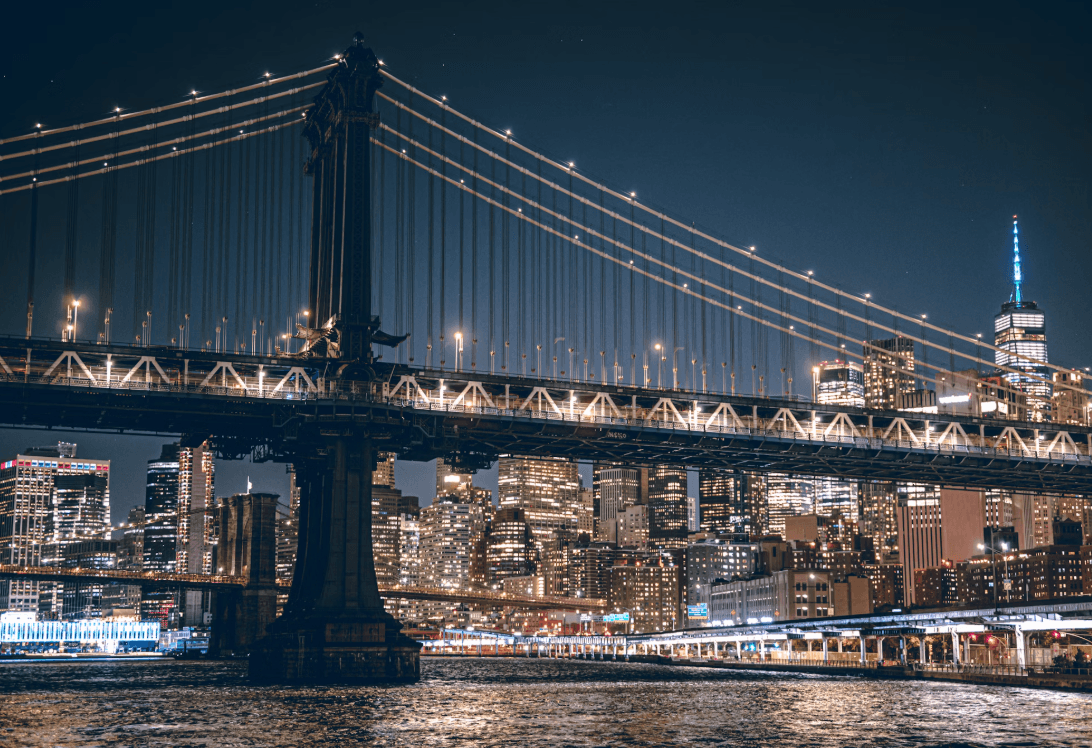
Manhattan Bridge (John Angel)
Although often overshadowed by the Brooklyn Bridge, the Manhattan Bridge holds a unique place in New York’s infrastructure history and urban sociology. Its engineering innovations, integration with the city’s rail system, and pioneering application of deflection theory elevate it beyond the status of an ordinary bridge. As a city icon linked to the 20th-century growth model of American cities, it functions as both a material and symbolic entity.
Liberty Cruise NYC. “Manhattan Bridge.” LibertyCruise.NYC. Accessed May 12, 2025.https://libertycruise.nyc/attractions/manhattan-bridge?srsltid=AfmBOoo1qFz4ydLn4lwy210pyvJ-gi-MHgVlvpZV_9H-9MOKa5J8h8Ot
NYC DOT. “Manhattan Bridge.” NYC.gov. Accessed May 12, 2025.https://www.nyc.gov/html/dot/html/infrastructure/manhattan-bridge.shtml
NewYork.com.au. "Manhattan Bridge in New York." Accessed May 12, 2025.https://www.newyork.com.au/manhattan-bridge-in-new-york/
One Manhattan Square. "Stepping Into History on the Manhattan Bridge." OneManhattanSquare.com. Accessed May 12, 2025.
Pirmann, David. “Manhattan Bridge.” NYCSubway.org. Accessed May 12, 2025.https://www.nycsubway.org/wiki/Manhattan_Bridge
Unsplash. "A view of a city at night from the water." Photograph, Accessed May 12, 2025:https://unsplash.com/photos/a-view-of-a-city-at-night-from-the-water-hQE2VbnUWXQ
Unsplash. “Bird’s eye view of gray concrete bridge.” Photograph, Accessed May 12, 2025.https://unsplash.com/photos/birds-eye-view-of-gray-concrete-bridge-0GrBpPrbLO8
Unsplash. “Cars parked near brown building.” Photograph, Accessed May 12, 2025.https://unsplash.com/photos/cars-parked-near-brown-building-wOj5odhDOZ0
Unsplash. “Gray bridge under blue sky during daytime.” Photograph, Accessed May 12, 2025.https://unsplash.com/photos/gray-bridge-under-blue-sky-during-daytime-l1qCIc1qdzQ

Manhattan Bridge
Address | Manhattan Brg United States NY 11201 New York | ||||||||
|---|---|---|---|---|---|---|---|---|---|
Construction Start Date | 1901 | ||||||||
Architect | Leon Moisseiff | ||||||||
Design and Engineering Innovations
Restoration and Structural Interventions
Urban Fabric and Architectural Features
Transportation, Tourism, and Contemporary Function
Cultural and Historical Significance