


This article was automatically translated from the original Turkish version.
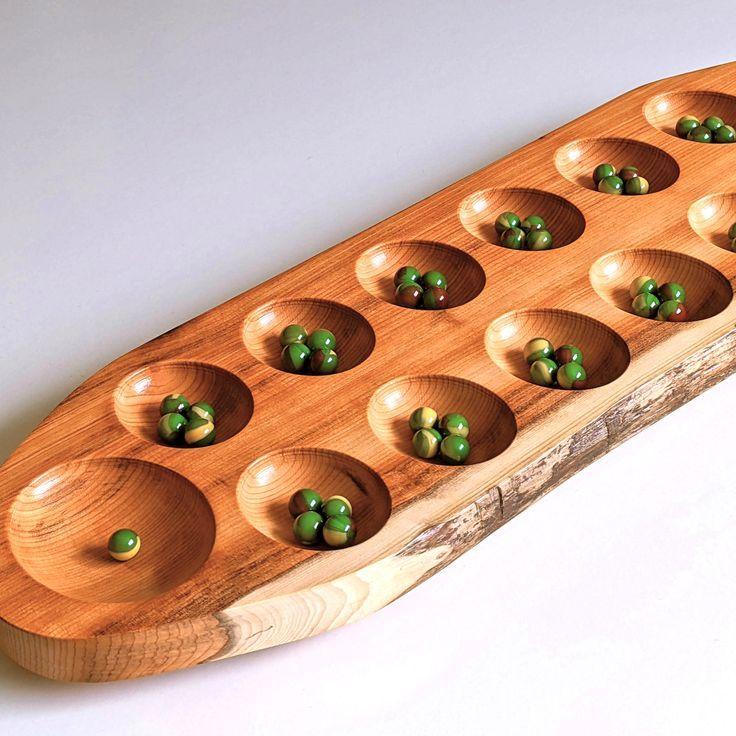
Mangala
Type | Strategy and intelligence game | ||||||||
|---|---|---|---|---|---|---|---|---|---|
Historical Origin | At least 4000 years ago | ||||||||
Cultural Connection | Turkish and Central Asian cultures | ||||||||
Playing Area | Wooden or digital platform | ||||||||
Number of Players | 2 | ||||||||
Mangala is a strategy and intelligence game with historical roots in Central Asia, particularly holding an important place in Turk culture. This two-player game aims to outmaneuver the opponent by moving stones according to specific rules. Recognized by UNESCO as part of the Intangible Cultural Heritage List, Mangala is played not only in its traditional form but also in modern digital environments.
Mangala is a strategy and intelligence game with a history stretching back thousands of years, played in Central Asia and Anatolia. As an important part of Turk game culture, Mangala is considered one of the ancestors of chess and encourages strategic thinking and rapid decision making. Known during the Ottoman period, the game has been played across various regions under different rules and names throughout history.
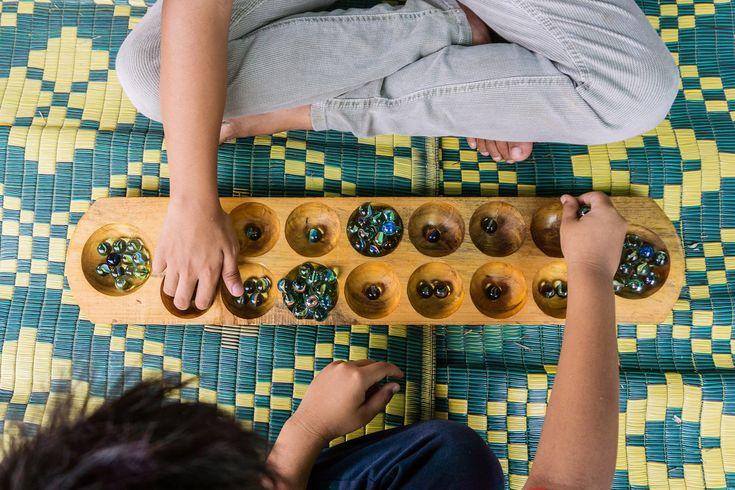
Mangala Game (
The oldest known examples of Mangala have been found carved into the rock walls of the Dastarbası Cave in Kazakhstan. This discovery indicates that the game has a history of at least 4,000 years.
Word Origin: It derives from the Arabic word “mankala,” meaning “to carry” or “to transfer.”
Place in Turk Culture: Among Turkic peoples, it is also known by names such as “Köçürme” and “Kuyu Oyunu.”
Ottoman Period: It is known to have been widely played in the Ottoman palace and among the general public.
Mangala is typically played by two players. The game board consists of six small pits on each player’s side and one large store (scoring area). The objective is to strategically move stones to empty the opponent’s pits and collect the most stones.
These rules may vary regionally, and different versions exist in Turkey, Central Asia and the Arab world.
How to Play Mangala? (Samet Karaağaç)
Mangala helps players develop planning, concentration and logical thinking skills. It is known that some Ottoman state officials played the game to practice strategic thinking.
In Turkey and many other countries, Mangala is taught in schools to develop mathematical thinking skills. It is used as a teaching material in primary and middle schools.
Mangala can be played to enhance family interaction. Due to its benefits for motor skills and hand-eye coordination, it is also used in rehabilitation programs.
With technological advancement, Mangala has been adapted to mobile and desktop gaming platforms. However, due to insufficient promotion in digital environments, its popularity remains lower than that of the traditional version.
However, players often prefer the traditional version due to the loss of tactile sensation in digital formats.
Mangala is not merely a form of entertainment but also a part of cultural heritage. Its inclusion by UNESCO in the Intangible Cultural Heritage List demonstrates international recognition of its historical and cultural significance. To ensure its transmission to future generations, greater promotion during the process of digitalization and increased use as an educational resource are essential.
Büyükokutan Töret, Aslı, and Naciye Baştürk. “Mangalanın Dijital Kültür Ortamındaki Seyri Üzerine.” Kültür Araştırmaları Dergisi 19 (2023): 41-59.https://dergipark.org.tr/en/pub/kulturder/article/1338095.
Gümüş, Ayşe, İsmail Gümüş, Azime Yudar, Zeliha Aras, and Çağlar Sakarya. “Gönül Dağı Sivrihisar’dan Köçürme (Kuyu/Mangala) Oyunları.” Uluslararası Türk Dünyası Araştırmaları Dergisi 4, no. 3 (2021): 47-86.https://dergipark.org.tr/tr/pub/tudad/issue/64396/946135.
Samet Karaağaç. "Mangala Nasıl Oynanır? Saldırı ve Savunma Nasıl Yapılır? Galibiyet İçin Gerekli Taktikler." Video. YouTube, August 14, 2020.
Yıldız, Rahmi. "Zekâ Oyunları ve Geleneksel Çocuk Oyunlarının Ortaokul Öğrencilerinde Dikkat ve Görsel Algıya Etkisi." PhD thesis, Aksaray Üniversitesi, 2023.https://acikerisim.aksaray.edu.tr/xmlui/handle/20.500.12451/11343.
Mangala
Type | Strategy and intelligence game | ||||||||
|---|---|---|---|---|---|---|---|---|---|
Historical Origin | At least 4000 years ago | ||||||||
Cultural Connection | Turkish and Central Asian cultures | ||||||||
Playing Area | Wooden or digital platform | ||||||||
Number of Players | 2 | ||||||||
Origin and History of Mangala
How Mangala Is Played
Game Rules
Cultural and Educational Significance of Mangala
Contributions to Intelligence and Strategy Development
Use in Education
Use as a Socialization and Therapeutic Tool
Modern and Digital Versions of Mangala
Popular Digital Mangala Games