


This article was automatically translated from the original Turkish version.
+1 More
Province | Antalya | ||||||||
|---|---|---|---|---|---|---|---|---|---|
Area | Approximately 2,300 km² | ||||||||
Population (2024) | 262,576 (TÜİK 2024 ADNKS) | ||||||||
Climate | Mediterranean climate | ||||||||
Establishment (As District) | 1914 | ||||||||
District Governor | Adil Karataş | ||||||||
Mayor | Niyazi Nefi Kara | ||||||||
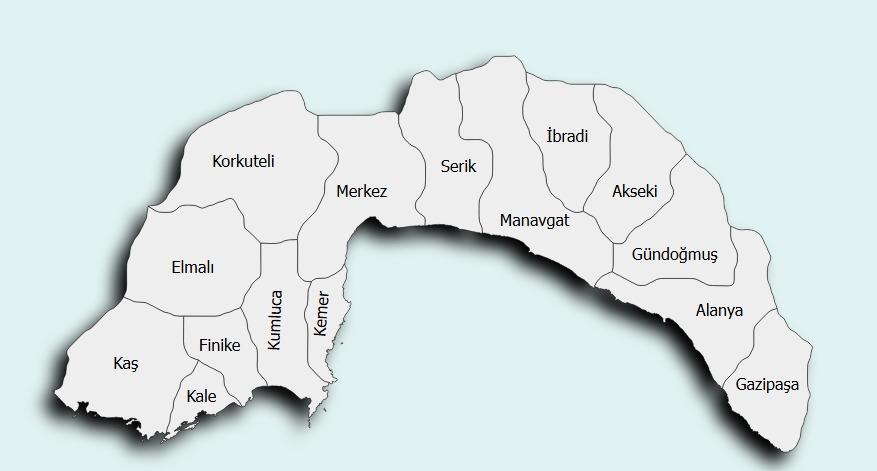
Manavgat is a large coastal district located in the east of Antalya province in southern Türkiye. Bordered by the Mediterranean Sea, Manavgat is approximately 75 km from the city center of Antalya. The district is surrounded by Alanya to the east, Serik to the west, and Akseki and Gündoğmuş to the north. Manavgat attracts attention for both its natural beauty and historical fabric. The district center developed around the Manavgat River and is one of the region’s important centers for agriculture and tourism.
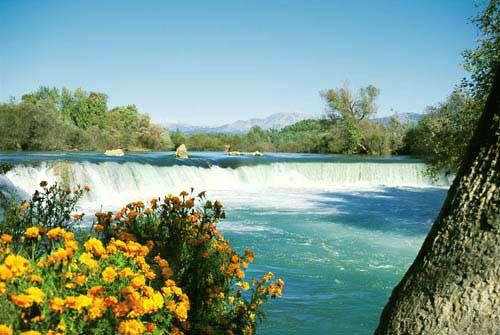
Manavgat Şelalesi (Manavgat Municipality)
The history of Manavgat extends back to the ancient Pamphylia period. The ancient city of Side, located near the district, was founded in the 7th century BCE and served as an important settlement during the Hellenistic, Roman, Byzantine and Seljuk periods. During the Ottoman era, Manavgat was administratively part of the Teke Sanjak and developed a distinct district identity from the early years of the Republic. Mentioned as a nahiye at the end of the 19th century, Manavgat gained district status in 1914. Today it is a settlement where cultural and natural tourism intertwine, featuring ancient cities such as Side as well as rivers, waterfalls and forest areas.
Manavgat district lies on the Mediterranean coast in the east of Antalya. With an area of approximately 2,300 km², Manavgat is one of the largest districts in Antalya. The district’s territory extends northward to the Taurus Mountains and is bounded to the south by the Mediterranean coastline. The Manavgat River is the district’s most important natural feature, dividing the city center in two and playing a major role in agricultural irrigation and tourism. The Manavgat Waterfall, located on the river, is one of the district’s natural symbols. The climate is typical Mediterranean: summers are hot and dry, winters are mild and rainy. The annual average temperature ranges from 18–20°C and annual precipitation is approximately 1,000 mm.
According to TÜİK’s 2024 Address-Based Population Registration System data, the population of Manavgat district is 262,576. The district experiences seasonal population fluctuations due to tourism, with a noticeable increase in temporary residents during the summer months. Migration to the district has occurred from various provinces of Türkiye, particularly from the Black Sea Region. In recent years, the number of foreign nationals settling in the district has also increased. This diversity is reflected in the district’s social structure.
Manavgat’s economy is based primarily on tourism, agriculture and trade. The district hosts numerous hotels, holiday villages and accommodation facilities, concentrated especially in the areas of Side, Titreyengöl and Evrenseki. In agriculture, citrus fruits, wheat, cotton, tomatoes, peppers and bananas are the main products. Nature-based tourism is also growing through boat tours and rafting activities on the Manavgat River. Fishing is supported by small-scale enterprises along the riverbanks. The district contains small and medium-sized industrial zones and commercial centers, and the construction sector is also experiencing growth.
Manavgat is one of Antalya’s most important tourism centers. The neighboring Side Neighborhood features open-air museum characteristics with its ancient ruins including the Temple of Apollo, the Roman Theater and the Agora. The Side Ancient City is listed on UNESCO’s Provisional Heritage List. Titreyengöl and Sorgun forests are attractive destinations for camping and ecotourism due to their natural beauty. The Manavgat Waterfall is another popular site for picnics and leisure. Each year the Manavgat Peace Water Culture, Tourism, Art and Youth Festival is held in the district.
Manavgat cuisine reflects influences from Mediterranean and Yörük cultures. Tahinli piyaz, kabak tatlısı, keşkek, hibeş and citrus marmalade are among the standout local flavors. Fish restaurants and eateries serving traditional home-cooked meals are common in the region. In summer, jams, sauces and dried products made from field produce reflect the unique tastes of the area.
Province | Antalya | ||||||||
|---|---|---|---|---|---|---|---|---|---|
Area | Approximately 2,300 km² | ||||||||
Population (2024) | 262,576 (TÜİK 2024 ADNKS) | ||||||||
Climate | Mediterranean climate | ||||||||
Establishment (As District) | 1914 | ||||||||
District Governor | Adil Karataş | ||||||||
Mayor | Niyazi Nefi Kara | ||||||||
No Discussion Added Yet
Start discussion for "Manavgat (District)" article
History
Geography and Climate
Population and Demographics
Economy
Tourism, Culture and Cuisine