


This article was automatically translated from the original Turkish version.
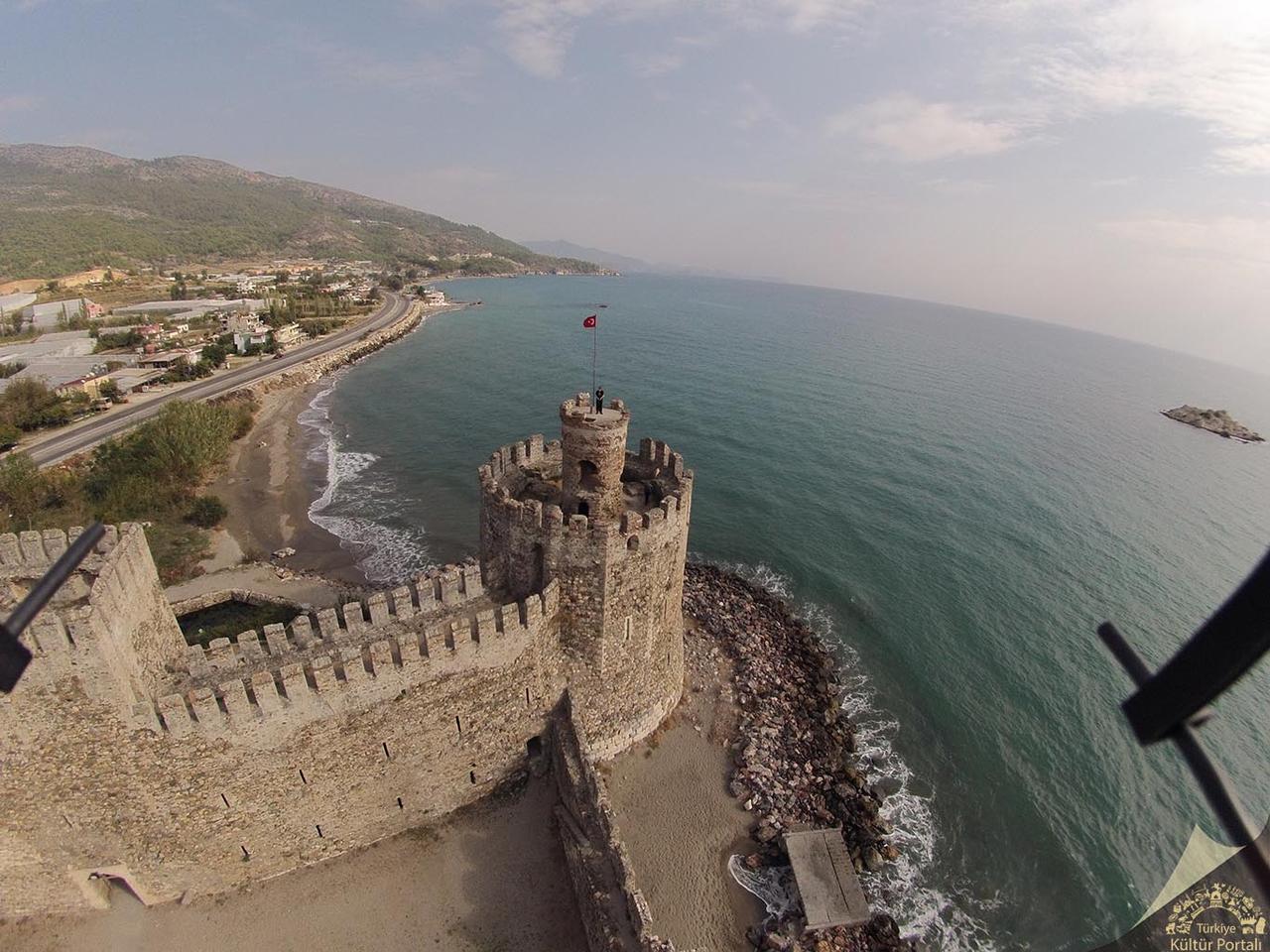
Mamure Castle
Location | On the Antalya-Mersin highway Mersin 6 km from Anamur Anamur district Within the boundaries of Bozdoğan Village | ||||||||
|---|---|---|---|---|---|---|---|---|---|
Surface Area | 23,500 m² | ||||||||
Historical Origins | It is estimated to have been built by the Romans in the 3rd or 4th century AD, constructed on the foundations of the Rigmonai Ancient City. | ||||||||
Periods | Roman, Byzantine, Seljuk, Karamanids, Ottoman | ||||||||
UNESCO Status | On the UNESCO World Heritage Tentative List | ||||||||
Initial Construction | Built by the Romans to oversee the Mediterranean and Cilician trade routes. | ||||||||
Sections | Inner courtyard (east), Outer castle (west), Inner castle (on the southern cliffs). | ||||||||
Towers | 39 structures (main tower, corner towers, Lighthouse Tower - ruined). | ||||||||
Walls | Built with double-layered cut stone with wider base and narrower top, and Horasan mortar; bricks were used in later repairs. | ||||||||
Entrance | The main entrance is between two towers with an inscription in the northern part of the inner courtyard; the current entrance is different. The bridge over the moat has been destroyed. | ||||||||
Structures | Single-domed mosque (Karamanid period, 16th century Ottoman architecture), Water cisterns, Storage rooms, Bathhouse remains. | ||||||||
Defense | A moat 10 meters wide, observation windows, and pathways between towers. | ||||||||
Mamure Castle, located in the eastern part of the Anamur district of Mersin Province in Türkiye, lies along the Antalya-Mersin highway within the boundaries of Bozdoğan Village and covers an area of 23,500 m². Built upon high cliffs and plateaus, this structure is believed to have been constructed on the foundations of the ancient Roman city of Rigmonai and is considered a medieval castle. Mamure Castle features remains from the Roman, Byzantine, Seljuk, Karamanid, and Ottoman periods and attracts attention for its architectural diversity and historical structure. Listed on UNESCO’s Tentative World Heritage List, it is regarded as one of the most robust Turkish castles to have survived on the Mediterranean coast.
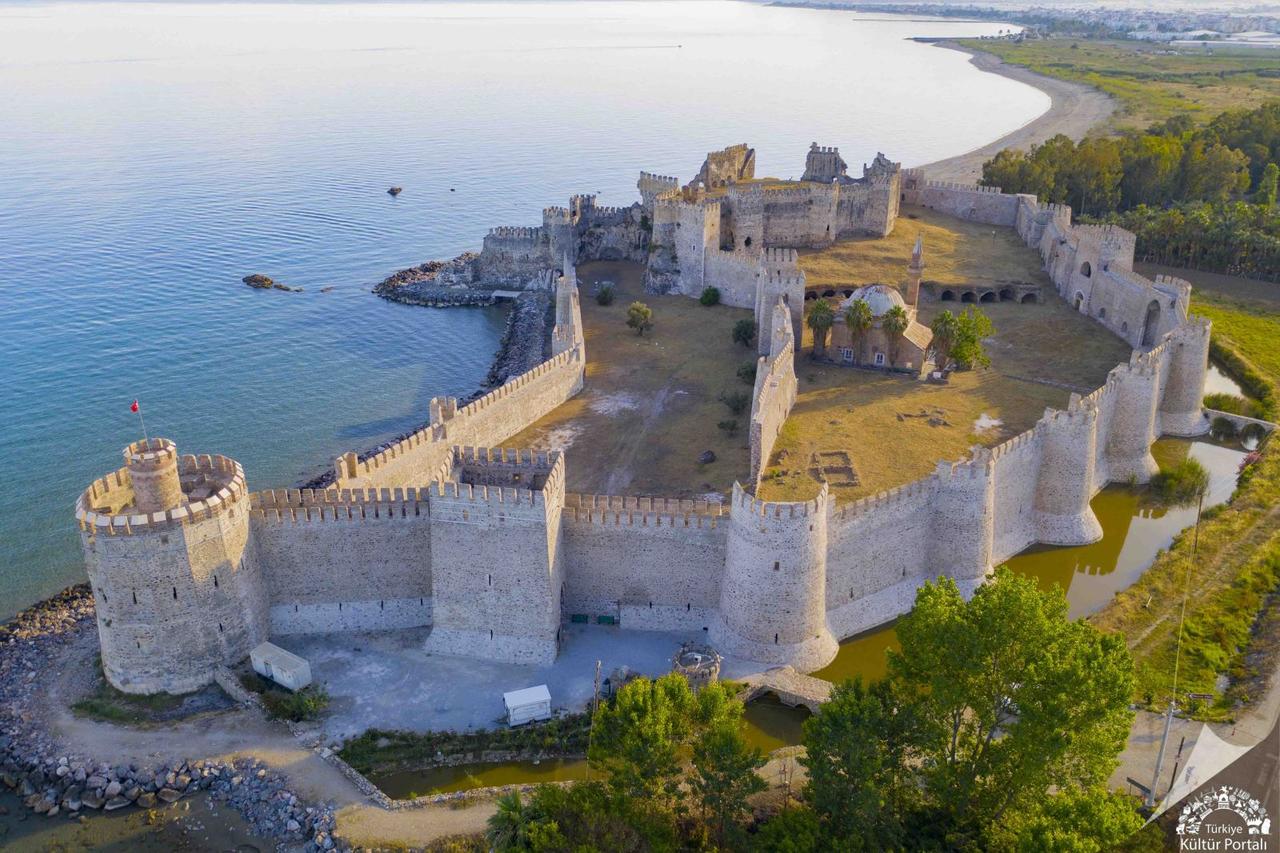
Mamure Castle (Culture Portal)
The exact date of construction of Mamure Castle is unknown, but it is believed that its initial construction was carried out by the Romans in the 3rd or 4th century AD to monitor trade routes along the Mediterranean and Cilicia. The precise date and builders of the ancient foundations made of large cut stones have not been definitively determined. After the Roman period, the castle was expanded by the Byzantines and Crusaders and was captured in 1221 by Seljuk Sultan Alaaddin Keykubat.
Following the decline of the Seljuks, the castle came under the control of Christian forces and was recaptured in the 14th century by Karamanoglu Mahmut Bey (1300–1308), who besieged it, repaired it, and renamed it “Mamuriye.” During this period, parts of churches were demolished and mosques were built in their place. According to an inscription on the castle, it was reconstructed in 854 AH (1450) by Sultan Ibrahim, son of Alaaddinoğlu of the Karamanids. The inscription reads: “Mamure Village and its castle are a place of support in war. The fortified settlement was completed with the aid of Allah for jihad.”【1】 The castle was repaired by the Ottomans in the mid-16th century and at the end of the 18th century, and was most recently restored by the General Directorate of Foundations in the 1960s.
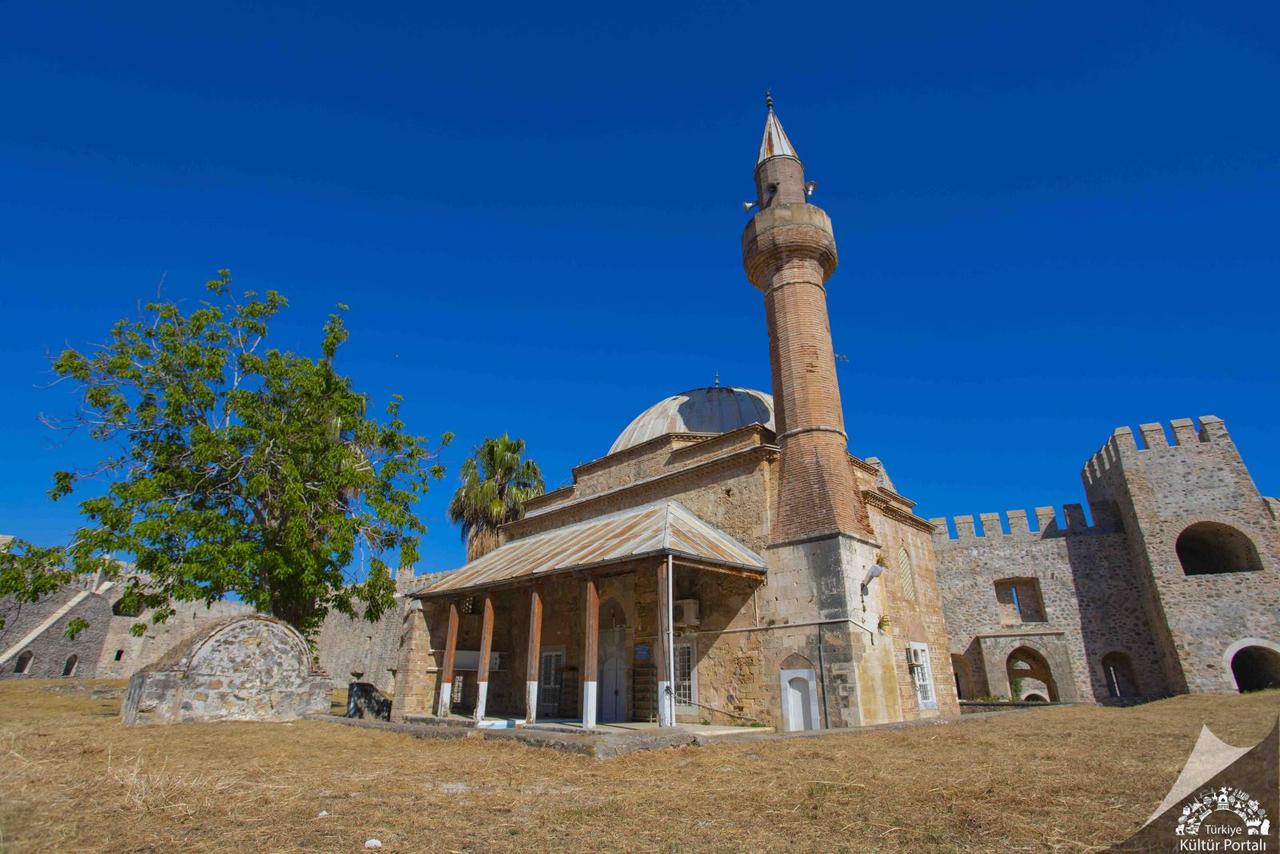
Mamure Castle (Culture Portal)
Mamure Castle consists of three main sections separated by high walls: the inner courtyard to the east, the outer castle to the west, and the inner castle built on the southern cliffs. The castle is notable for its 39 towers, water cisterns, mosque, and the remains of a bathhouse outside its walls. It is surrounded by a defensive moat 10 meters wide. The castle walls are double-layered, with wider lower sections that narrow toward the top.
Walls and bastions were constructed using various stones and Horasan mortar; cut stone was used for gateways, arches of windows, and wall corners, while bricks were employed in later repairs. Internal passages with interconnected galleries and staircases provide access to the upper-level towers. On the southern side, overlooking the coastline, the thick and tall observation tower (Baş Kale), along with circular and square-shaped bastions and the completely ruined Fener Tower, stand out.
In the outer castle, a centrally planned single-domed mosque, a fountain, storage rooms, cisterns, and structures believed to have housed soldiers are located. The mosque’s original construction dates to the Karamanid period and exhibits classical elements of 16th-century Ottoman architecture. The main entrance to the castle is situated between two square-plan towers on the northern side of the inner courtyard and features a six-line inscription.
The entrance currently in use is not the original one, and the bridge over the moat has been destroyed. Water needs were met through a channel in the tower northeast of the main gate and by cisterns within the castle. In 1988, rescue excavations conducted by the Anamur Museum Directorate in the northern part of the castle uncovered remains of a bathhouse and dwellings built with rubble stone and Horasan mortar, their floors paved with mosaics. These remains are believed to belong to the ancient city of Rigmonai and are dated to the Late Roman period based on ceramic fragments found there.
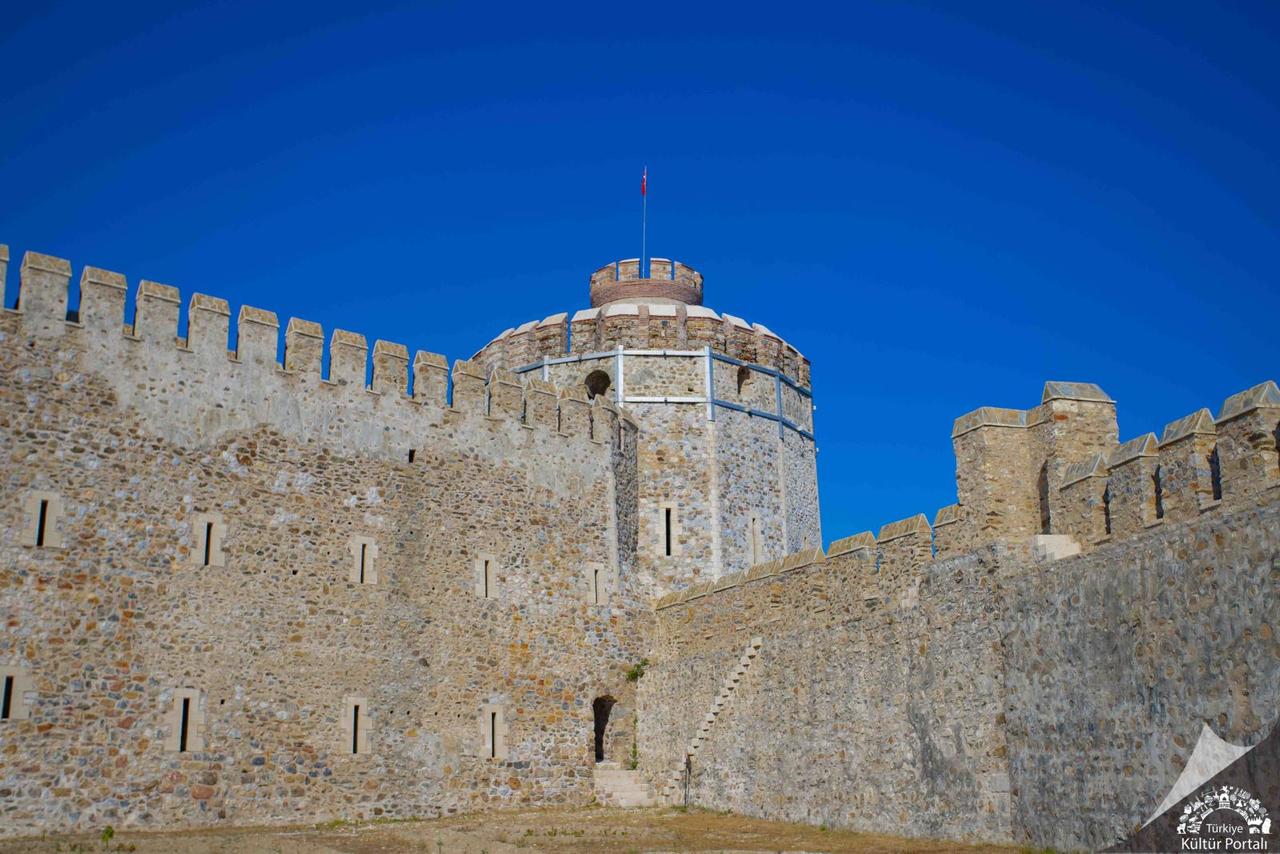
Mamure Castle (Culture Portal)
Mamure Castle is one of Türkiye’s largest and best-preserved castles, with historical and architectural features spanning from Roman to Ottoman times. Its defensive observation windows, connecting pathways between towers, and fortification systems give it strategic importance. The craftsmanship and construction techniques resemble those of Alanya Castle. The mosque within the castle has remained open for worship for centuries and offers visitors both a historical and spiritual experience.
Mamure Castle is located 216 km west of Mersin, on the Mediterranean coast section of the Antalya-Mersin motorway. This castle, where history and natural landscape converge, combined with surrounding historical ruins and natural areas, has become one of the region’s most important tourist sites.
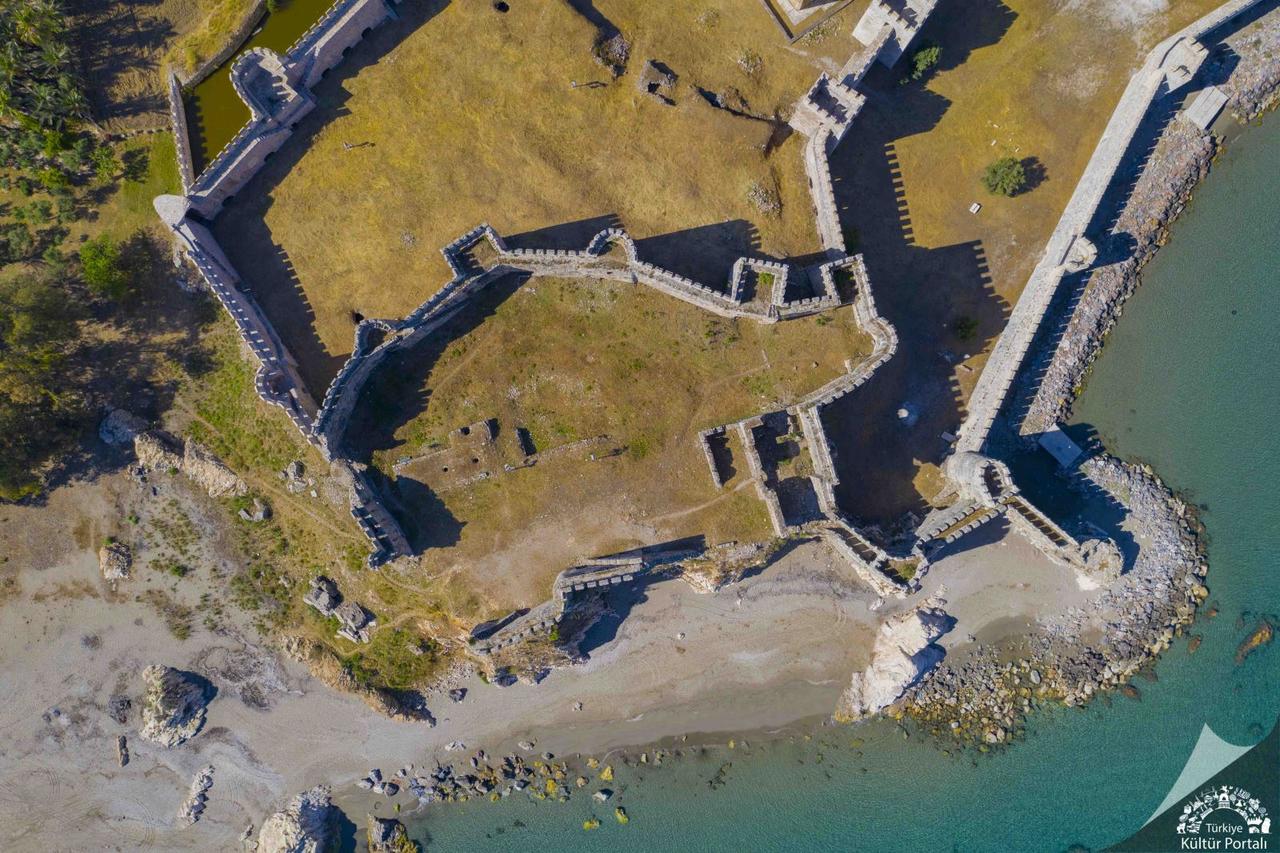
Mamure Castle (Culture Portal)
Anamur Belediyesi. “Mamure Kalesi.” Accessed April 5, 2025.https://anamur.bel.tr/mamure-kalesi/.
Anamur Kaymakamlığı. "Anamur Mamure Kalesi." Accessed April 5, 2025.http://www.anamur.gov.tr/anamur-mamure-kalesi
Culture and Museums General Directorate. "Mamure Kalesi - Mersin." Accessed April 5, 2025.https://kvmgm.ktb.gov.tr/TR-45348/mamure-kalesi-mersin.html
Esin, Turgay. Anamur Mamuriye Kalesi: Kale Kitabesi ve Tam Metni. Mersin: Anamur Belediyesi Yayınları, 2021.
Kültür Portalı. "Mamure Kalesi | Kültür Portalı." Accessed April 5, 2025.https://www.kulturportali.gov.tr/turkiye/mersin/gezilecekyer/mamure-kalesi.
T.C. Ministry of Culture and Tourism, General Directorate of Museums. "Mamure Kalesi." Accessed April 5, 2025.https://muze.gov.tr/muze-detay?SectionId=MMA01&DistId=MRK
Türkiye Turizm Ansiklopedisi. "Mamure Kalesi." Accessed April 5, 2025.https://turkiyeturizmansiklopedisi.com/mamure-kalesi
[1]
Bu günümüz Türkçesiyle sadeleştirilmiş halidir, aslı şu şekildedir;
1- Hüve müyessiru’l-âmâl
2- Kad enşee ve benâ fehamide ilâ’llâhi ve senâ
3- el-Melikü’l-a‘zam ve’l-mevlâ’l-mu‘azzam zıllu’llâhi
4- fî’l-Âlem müfeyyizu’l-hayri ve’l-cûdi el-mansûru bi-nasri’l-Meliki’l-Vedûd tâcü’d-devleti ve’d-dîn es-sultân İbrâhim bin Muhammed bin ‘Alâüddin bin Karamân.
5- Halleda’llâhu sultânehû ve evdaha ‘ale’l-âlemîne bürhânehû el-Beldete’l-ma‘mûrate ve’l-kal‘ate’n-nâciyete’l-mansûrate ‘hisnen li’l-guzâti ve meskenen li’l-‘urâti el-mücâ-
6- hidîne fî sebîli’llâhi hakka cihâdihi ve etemmehâ bi-‘avni’llâhi’l-Meliki’l-‘Azîm şâkiran li-en‘umihi ictebâhû ve hedâhû ilâ sırâtin müstakîm kütibe’t-târîhu fî şe’nî şevvâli’l-mübarek min şuhûri seneti hamsîne ve semâniyne.
Turgay Esin, Anamur Mamuriye Kalesi: Kale Kitabesi ve Tam Metni (Mersin: Anamur Belediyesi Yayınları, 2021), s. 15.

Mamure Castle
Location | On the Antalya-Mersin highway Mersin 6 km from Anamur Anamur district Within the boundaries of Bozdoğan Village | ||||||||
|---|---|---|---|---|---|---|---|---|---|
Surface Area | 23,500 m² | ||||||||
Historical Origins | It is estimated to have been built by the Romans in the 3rd or 4th century AD, constructed on the foundations of the Rigmonai Ancient City. | ||||||||
Periods | Roman, Byzantine, Seljuk, Karamanids, Ottoman | ||||||||
UNESCO Status | On the UNESCO World Heritage Tentative List | ||||||||
Initial Construction | Built by the Romans to oversee the Mediterranean and Cilician trade routes. | ||||||||
Sections | Inner courtyard (east), Outer castle (west), Inner castle (on the southern cliffs). | ||||||||
Towers | 39 structures (main tower, corner towers, Lighthouse Tower - ruined). | ||||||||
Walls | Built with double-layered cut stone with wider base and narrower top, and Horasan mortar; bricks were used in later repairs. | ||||||||
Entrance | The main entrance is between two towers with an inscription in the northern part of the inner courtyard; the current entrance is different. The bridge over the moat has been destroyed. | ||||||||
Structures | Single-domed mosque (Karamanid period, 16th century Ottoman architecture), Water cisterns, Storage rooms, Bathhouse remains. | ||||||||
Defense | A moat 10 meters wide, observation windows, and pathways between towers. | ||||||||
History
Architectural Features
Cultural and Historical Significance