This article was automatically translated from the original Turkish version.
+1 More
Registration Number | 706 | ||||||||
|---|---|---|---|---|---|---|---|---|---|
Registration Date | 26.03.2021 | ||||||||
Application Number | C2014/030 | ||||||||
Application Date | 30.04.2014 | ||||||||
Name of the Geographical Indication | Malatya Banazı Karası Grape | ||||||||
Name of the Product | Grape | ||||||||
Type of Geographical Indication | Place of Origin | ||||||||
Applicant/Registrant(s) | Yeşilyurt Municipality | ||||||||
Address of the Registrant | No:12 Opposite Maşti, Turgut Özal Blv., Karakavak Neighborhood, Yeşilyurt, MALATYA | ||||||||
Geographical Boundary | Yeşilyurt and Akçadağ Districts of Malatya Province | ||||||||
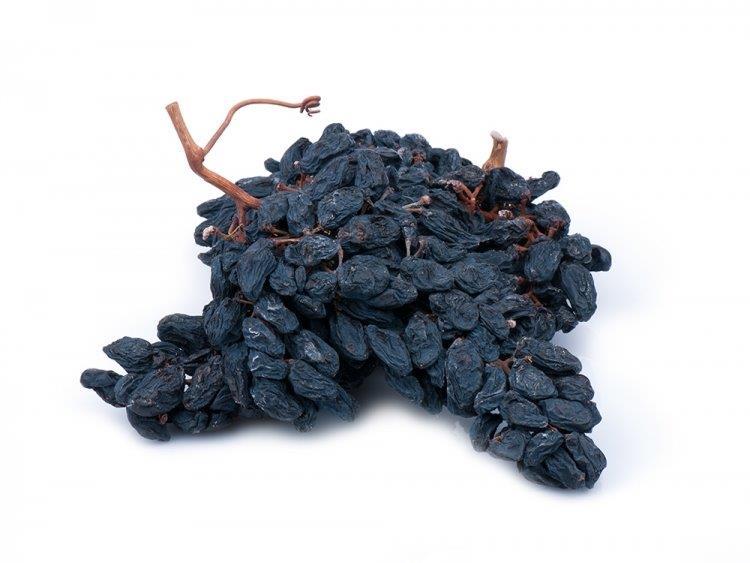
Malatya Banazı Karası Üzümü is a seeded, black-skinned grape variety native to Malatya Province in Türkiye, belonging to the species Vitis vinifera L. Due to its high tannin content in the skin, it has a bitter taste and is rarely consumed fresh; instead, it is typically dried naturally and marketed in this form. Its distinctive feature is that it is dried whole with the bunch intact. Ripening is completed in September, and the water-soluble dry matter content in dried berries ranges between 26% and 30%.
Malatya Banazı Karası Üzümü is a seeded, black-colored grape variety of the species Vitis vinifera L. Due to the high resistance of its berries to detachment, it is marketed in bunches in its natural dried state. The high tannin concentration in the skin imparts a bitter flavor, rendering the fruit unsuitable for fresh table consumption. No additives are used during the drying process, and the grapes achieve a uniform color. The original color of the grape is black, covered by a powdery bloom. This powdery layer is a key distinguishing feature that sets it apart from other drying varieties.
Botanically, this grape variety has hermaphroditic flowers. Phenological observations show that full flowering occurs in early June, color change and sugar accumulation take place during the first and second weeks of August, and ripening and harvest occur during the second and third weeks of September. Complete leaf fall is completed during the second and third weeks of November.
The cane structure is very strong. When examined for ampelographic characteristics:
At harvest time, the water-soluble dry matter (WSDM) content in juice extracted from ripe berries ranges between 22% and 24%. In dried berries, this value varies between 26% and 30%. Drying yield can range from 26% to 34%. This variety is generally cultivated under dryland conditions. However, in irrigated vineyards, irrigation should not exceed two applications per season. Excessive irrigation causes berry cracking and negatively affects quality.
Both fresh and dried forms of the product retain a powdery bloom on the skin. It is essential to preserve this powdery layer during drying, as mechanical contact, impact, or other physical disturbances can damage it, thereby shortening shelf life and promoting spoilage.
The regions where Malatya Banazı Karası Üzümü is grown are characterized by a continental climate with significant day-night temperature variations. In years with pronounced temperature differences, canes may suffer damage and yields may decline. The high number of sunny days in the region positively influences the water-soluble dry matter content and drying yield of the grapes.
To ensure a long shelf life, the moisture content of dried grapes must be maintained between 18% and 21%. Rainfall during the ripening period causes berry cracking, reducing both yield and quality. Bunches during ripening should not be exposed to direct sunlight for prolonged periods; shading is preferred where possible. Therefore, careful attention must be paid to green pruning practices. Grapes developing in shade exhibit superior color and flavor characteristics. Bunches exposed to excessive sunlight may develop a reddish hue and show poor berry development.
A continental climate prevails in the regions where Malatya Banazı Karası Üzümü is cultivated. Day-night temperature differences are considerable. This condition may lead to cane damage and yield losses in certain years. The area experiences a high number of sunny days, which positively affects the water-soluble dry matter content and drying yield of the product.
However, excessive sunlight during ripening causes the berries to turn reddish and impairs berry development. Therefore, careful green pruning is essential. Particularly, allowing bunches to ripen in shade is critical for preserving the grape’s original color and flavor.
Generally grown under dryland conditions, Malatya Banazı Karası Üzümü in irrigated vineyards should receive no more than two irrigation applications. Over-irrigation leads to berry cracking and quality losses.
During land preparation for cultivation, planting holes of 60–80 cm depth are typically dug to encourage deeper root penetration and stronger cane development under dryland conditions. As the sapling grows, the holes are gradually filled with soil to raise the plant to ground level. Surface roots formed annually at the root collar are cut during spring soil cultivation to promote deeper root growth.
The training systems used are cordon and goblet. Planting spacing is set at 3x3 meters or 4x4 meters. In Malatya Banazı Karası Üzümü, long pruning is applied, leaving 7–8 buds on two or three canes. Pruning is carried out at the end of March to early April and again in June, before buds break.
Harvest timing is determined when berries on the cane begin to shrivel. Harvested bunches are laid directly on the ground or on cloths, paper, or other coverings placed on the ground to dry. The drying process is performed without any chemical treatment, with the bunches intact, and lasts 5–9 days. Care is taken during drying to preserve the powdery bloom on the grapes.
After drying, rotten and low-quality berries are sorted out. The product is stored in cool, shaded environments protected from sunlight, in cloth or plastic sacks, or in covered plastic or wooden crates, without requiring special packaging.
The production and marketing of Malatya Banazı Karası Üzümü are monitored at least once annually, or as needed in response to complaints or other circumstances, by a minimum three-member monitoring body composed of experts from the Apricot Research Station Directorate, Malatya Provincial Directorate of Agriculture and Forestry, and Yeşilyurt District Directorate of Agriculture and Forestry, under the coordination of the Fırat Development Agency.
The following criteria are inspected during monitoring:
The monitoring body may obtain services from public institutions, private organizations, or qualified experts. The entity registering the product assumes responsibility for protecting its legal rights in judicial proceedings.
The designation “Malatya Banazı Karası Üzümü” and the origin emblem must appear on the product itself or its packaging. In cases where these cannot be placed on the product or packaging, they must be displayed in a clearly visible location within the production facility.
T.C. Turkish Patent and Trademark Office. "Malatya Banazı Karası Üzümü Coğrafi İşaret Tescil Dosyası." PDF, 9330f5ee-bedf-4532-a826-ea64364fc4b8, Accessed July 13, 2025. https://ci.turkpatent.gov.tr/Files/GeographicalSigns/9330f5ee-bedf-4532-a826-ea64364fc4b8.pdf.
Turkish Patent and Trademark Office. "Coğrafi İşaret Detay: Malatya Banazı Karası Üzümü." Accessed July 13, 2025. https://ci.turkpatent.gov.tr/cografi-isaretler/detay/38119.

Registration Number | 706 | ||||||||
|---|---|---|---|---|---|---|---|---|---|
Registration Date | 26.03.2021 | ||||||||
Application Number | C2014/030 | ||||||||
Application Date | 30.04.2014 | ||||||||
Name of the Geographical Indication | Malatya Banazı Karası Grape | ||||||||
Name of the Product | Grape | ||||||||
Type of Geographical Indication | Place of Origin | ||||||||
Applicant/Registrant(s) | Yeşilyurt Municipality | ||||||||
Address of the Registrant | No:12 Opposite Maşti, Turgut Özal Blv., Karakavak Neighborhood, Yeşilyurt, MALATYA | ||||||||
Geographical Boundary | Yeşilyurt and Akçadağ Districts of Malatya Province | ||||||||
No Discussion Added Yet
Start discussion for "Malatya Banazı Karası Grape" article
Distinctive Characteristics
Climate and Growing Conditions
Production Method
Monitoring Process
Usage