
Education | Politics and Economics Graduate 2020) University of Oxford (Philosophy | ||||||||
|---|---|---|---|---|---|---|---|---|---|
Occupation | Human rights defender Education activist | ||||||||
Important award | Pakistan National Youth Peace Prize (2011) Nobel Peace Prize (2014) Sakharov Prize for Freedom of Thought (2013) | ||||||||
Parent | Ziauddin Yousafzai (father) | ||||||||
Reason for fame | Advocate for girls' education rights, founder of the Malala Fund, victim of the 2012 Swat attack | ||||||||
Spouse | Asir Malik | ||||||||
Place of birth | Mingora, Swat Valley, Pakistan | ||||||||
Date of birth | 1997-07-12 | ||||||||
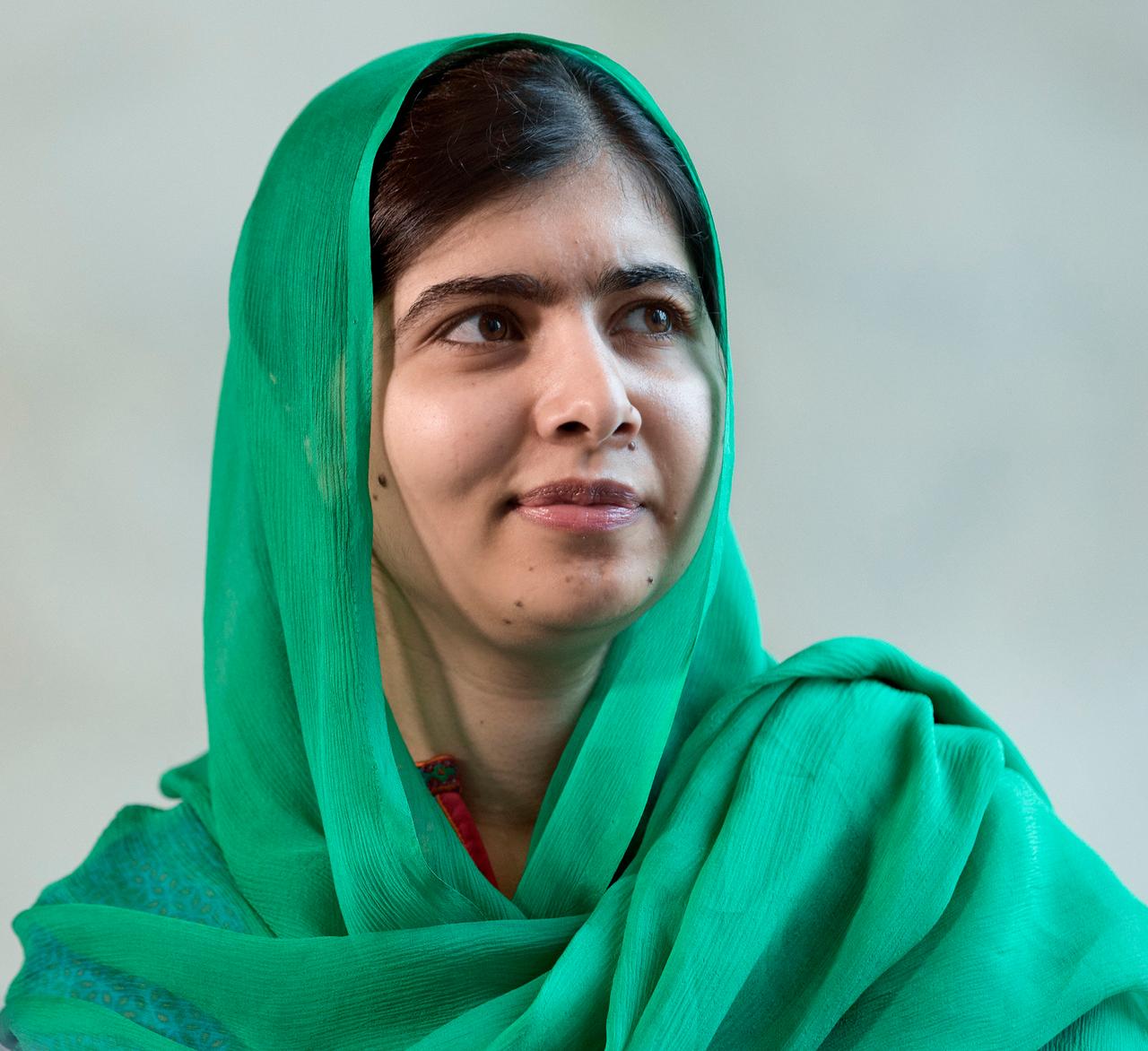
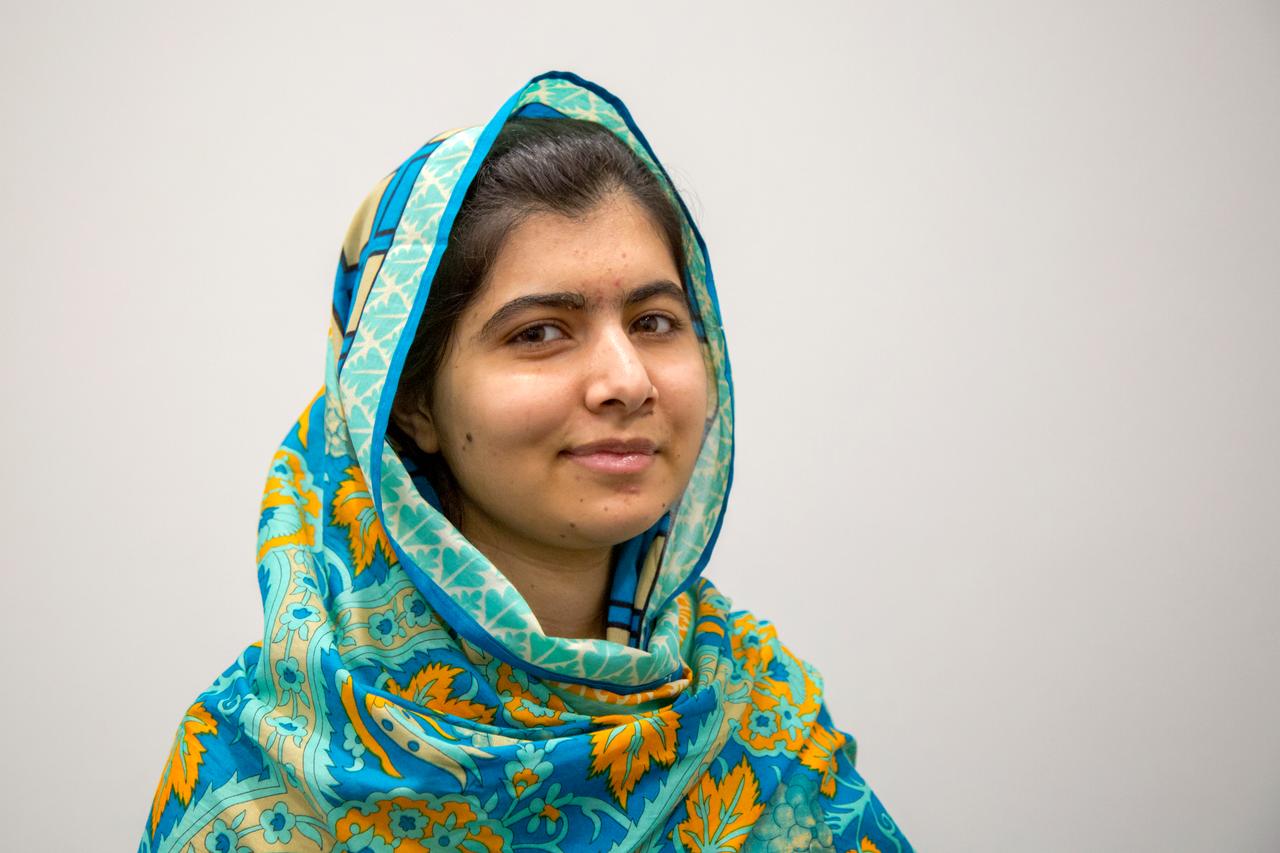
Malala Yousafzai is a Pakistani activist known for her work on girls’ access to education and women’s rights. In 2014 she became the youngest person ever to receive the Nobel Peace Prize.【1】 Yousafzai gained international recognition for her activism against the restriction of girls’ education rights under Taliban rule in Pakistan’s Swat Valley and for the armed attack she survived in 2012.【2】
Malala Yousafzai was born on 12 July 1997 in the city of Mingora, located in Pakistan’s Swat Valley. Her father, Ziauddin Yousafzai, is an educator, school owner and poet. Her family adopted an approach contrary to the traditional restrictions in the region regarding girls’ education.
Beginning in 2007, the Tehrik-i-Taliban Pakistan (TTP) took control of the Swat Valley, leading to significant changes in social life. Television and music were banned, strict dress codes were imposed on women, and girls were prevented from attending school. Additionally, polio vaccinations were banned by the group on the grounds that they were part of a Western conspiracy.
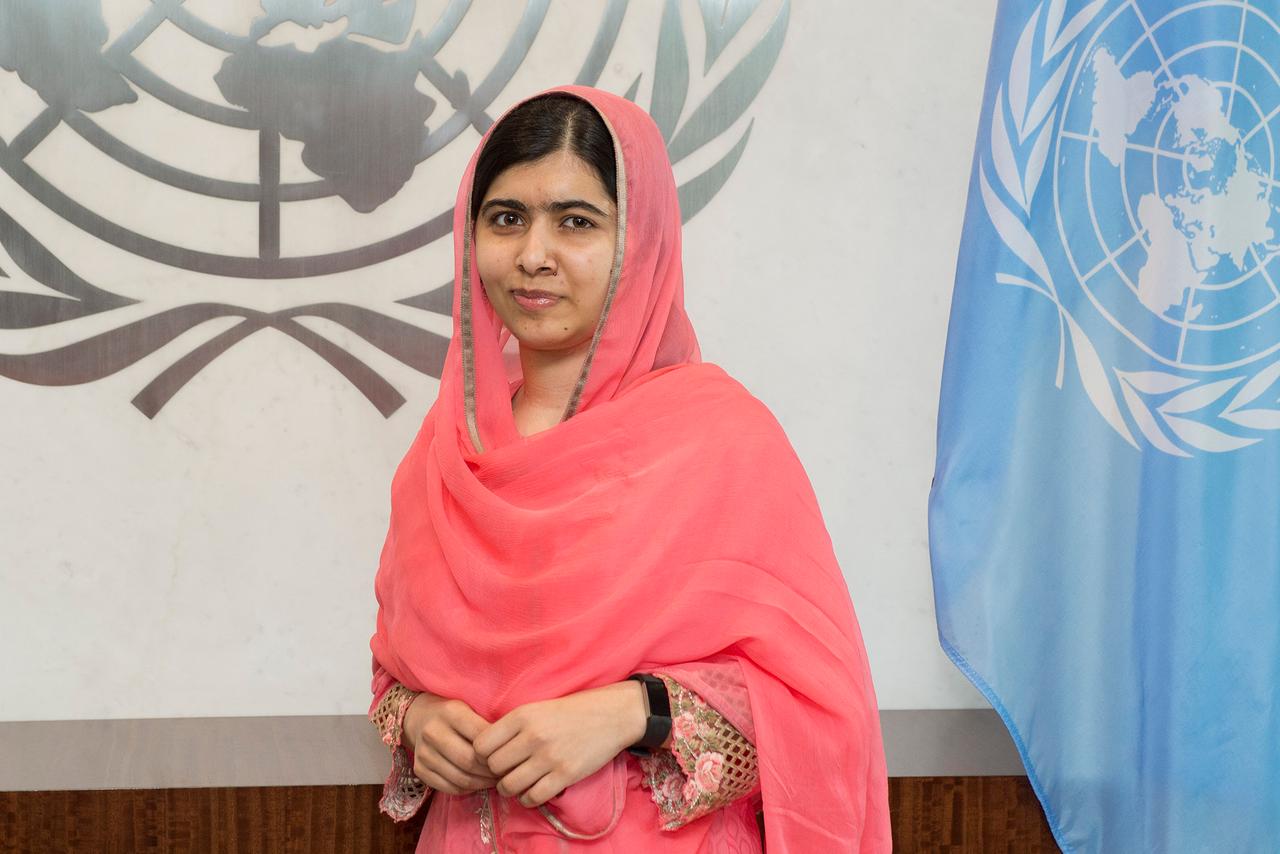
Malala Yousafzai (Flickr)
Yousafzai’s activism began in 2008 with a speech she delivered in Peshawar alongside her father about the right of girls to education. In January 2009, at the age of 11, she began writing a blog for the BBC Urdu service under the pseudonym Gul Makai, describing life under Taliban rule and the ban on education. During the same period she appeared in the documentary Class Dismissed produced by the New York Times.
Due to her activism, Yousafzai was nominated for the International Children’s Peace Prize in 2011 and won Pakistan’s first National Youth Peace Prize that same year.【3】
On 9 October 2012, while returning home on a school bus, Yousafzai was stopped by masked TTP militants. After her identity was confirmed, she was shot in the left side of her head. Two other students on the bus were also injured. Her condition became critical after the bullet damaged her neck and spinal cord. She was first taken to a military hospital in Peshawar and then transferred to Birmingham, England, for advanced medical care and treatment. After completing her recovery and rehabilitation, she settled in the United Kingdom with her family.【4】
In a statement following the attack, the TTP claimed that Yousafzai was a symbol of Western culture and warned that she would be targeted again if she survived. The Pakistani government condemned the attack and offered a cash reward for the capture of the perpetrators.【5】
After completing her medical treatment, Yousafzai, together with her father, established the non-profit Malala Fund to support the right of girls to 12 years of free, safe and quality education.【6】
On 12 July 2013, she delivered a speech at the United Nations Headquarters on the right of children to education. The UN designated this date as “Malala Day.” The same year her autobiographical book I Am Malala was published and she was awarded the Sakharov Prize for Freedom of Thought by the European Parliament.【7】
In December 2014, Malala Yousafzai was awarded the Nobel Peace Prize jointly with Indian child rights advocate Kailash Satyarthi for her struggle against the suppression of children and young people and for the right of all children to education. At age 17, she became the youngest recipient in the history of the Nobel Prize.【8】
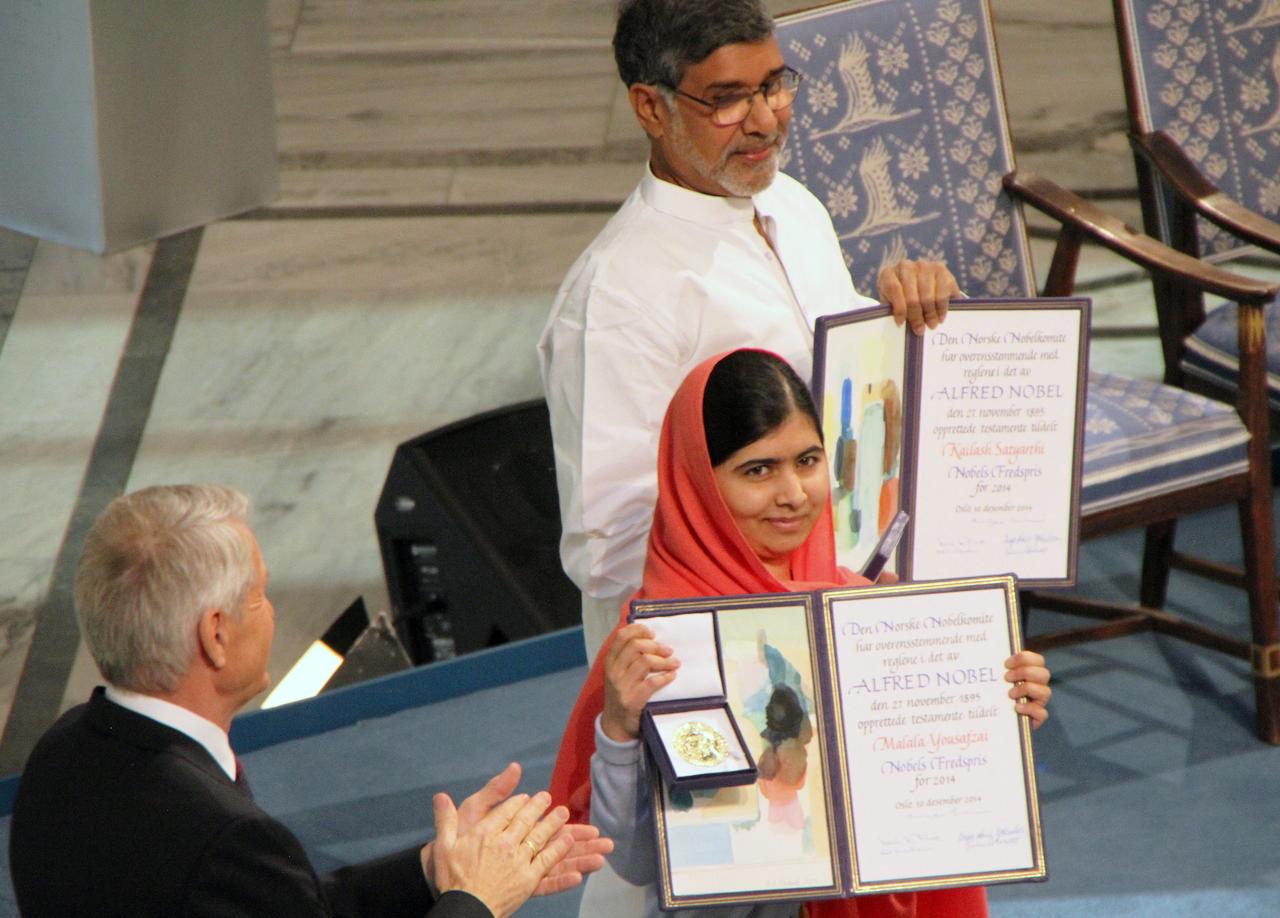
Malala Yousafzai with Kailash Satyarthi at the Nobel Prize Ceremony (Flickr)
Yousafzai was admitted to the University of Oxford in 2017 to study Philosophy, Politics and Economics (PPE) and graduated in 2020. In 2021 she married Asser Malik.
Continuing her work through the Malala Fund, Yousafzai focuses on education initiatives in countries including Afghanistan, Brazil, Ethiopia, Nigeria, Pakistan and Tanzania. In particular, as of 2024, she advocates on international platforms for the recognition of gender apartheid as a crime, in response to the ban on girls’ secondary education in Afghanistan.【9】
While Yousafzai’s work has received international support, it has elicited mixed reactions in parts of her home region, the Swat Valley, and in Pakistan. Some local groups have criticized her associations with Western countries and the awards she has received. Additionally, concerns raised by some members of the local population include the lack of similar international support for other students injured in the same attack and fears that her activism may have endangered regional security and contributed to the TTP’s return.【10】
Ak, Mert Mustafa, Muhammed Faruk Erdoğan, and Genç Osman İlhan. “Görsel Bir Öğretim Materyali Olarak Dijital Çizgi Roman Tasarımı: Gezdim, Gördüm, Öğrettim”. *Tarih Okulu Dergisi (TOD)*. Accessed January 20, 2026.https://www.researchgate.net/publication/345936438_GORSEL_BIR_OGRETIM_MATERYALI_OLARAK_DIJITAL_CIZGI_ROMAN_TASARIMI_GEZDIM_GORDUM_OGRETTIM
Chai, Jaclyn, Rachel Gordon, and Paula A. Johnson. “Malala Yousafzai: A Young Female Activist”. Global Health Education and Learning Incubator at Harvard University. Accessed January 20, 2026.https://media.repository.gheli.harvard.edu/filer_public/e7/11/e7119d74-18a2-43ff-934b-fb4f46c85ca9/2013_gheli_malala_tc.pdf
DFID - UK Department for International Development. “Malala Yousafzai: Education for girls”. Flickr. Accessed January 20, 2026.https://www.flickr.com/photos/dfid/22419395331
Malala Fund. "Malala's Story." Malala Fund. Accessed January 20, 2026.https://malala.org/malalas-story
United Nations Photo. “Messenger of Peace Malala Yousafzai Gives Interview to UN News.” Flickr. Accessed January 20, 2026.https://www.flickr.com/photos/un_photo/
Utenriksdepartementet UD. "Nobel Peace Prize Ceremony 2014." Flickr. Accessed January 20, 2026.https://www.flickr.com/photos/utenriksdept/
[1]
Malala Fund. "Malala's Story." Malala Fund. Erişim 20 Ocak 2026. https://malala.org/malalas-story
[2]
Chai, Jaclyn, Rachel Gordon ve Paula A. Johnson. “Malala Yousafzai: A Young Female Activist”. Global Health Education and Learning Incubator at Harvard University. Erişim 20 Ocak 2026. https://media.repository.gheli.harvard.edu/filer_public/e7/11/e7119d74-18a2-43ff-934b-fb4f46c85ca9/2013_gheli_malala_tc.pdf
[3]
Malala Fund. "Malala's Story." Malala Fund. Erişim 20 Ocak 2026. https://malala.org/malalas-story
[4]
Chai, Jaclyn, Rachel Gordon ve Paula A. Johnson. “Malala Yousafzai: A Young Female Activist”. Global Health Education and Learning Incubator at Harvard University. Erişim 20 Ocak 2026. https://media.repository.gheli.harvard.edu/filer_public/e7/11/e7119d74-18a2-43ff-934b-fb4f46c85ca9/2013_gheli_malala_tc.pdf
[5]
Chai, Jaclyn, Rachel Gordon ve Paula A. Johnson. “Malala Yousafzai: A Young Female Activist”. Global Health Education and Learning Incubator at Harvard University. Erişim 20 Ocak 2026. https://media.repository.gheli.harvard.edu/filer_public/e7/11/e7119d74-18a2-43ff-934b-fb4f46c85ca9/2013_gheli_malala_tc.pdf
[6]
Malala Fund. "Malala's Story." Malala Fund. Erişim 20 Ocak 2026. https://malala.org/malalas-story
[7]
Chai, Jaclyn, Rachel Gordon ve Paula A. Johnson. “Malala Yousafzai: A Young Female Activist”. Global Health Education and Learning Incubator at Harvard University. Erişim 20 Ocak 2026. https://media.repository.gheli.harvard.edu/filer_public/e7/11/e7119d74-18a2-43ff-934b-fb4f46c85ca9/2013_gheli_malala_tc.pdf
[8]
Ak, Mert Mustafa, Muhammed Faruk Erdoğan ve Genç Osman İlhan. “Görsel Bir Öğretim Materyali Olarak Dijital Çizgi Roman Tasarımı: Gezdim, Gördüm, Öğrettim”. Tarih Okulu Dergisi (TOD). Erişim 20 Ocak 2026. https://www.researchgate.net/profile/Muhammed-Erdogan-13/publication/345936438_GORSEL_BIR_OGRETIM_MATERYALI_OLARAK_DIJITAL_CIZGI_ROMAN_TASARIMI_GEZDIM_GORDUM_OGRETTIM/links/6350379296e83c26eb37bd50/GOeRSEL-BIR-OeGRETIM-MATERYALI-OLARAK-DIJITAL-CIZGI-ROMAN-TASARIMI-GEZDIM-GOeRDUeM-OeGRETTIM.pdf
[9]
Malala Fund. "Malala's Story." Malala Fund. Erişim 20 Ocak 2026. https://malala.org/malalas-story
[10]
Chai, Jaclyn, Rachel Gordon ve Paula A. Johnson. “Malala Yousafzai: A Young Female Activist”. Global Health Education and Learning Incubator at Harvard University. Erişim 20 Ocak 2026. https://media.repository.gheli.harvard.edu/filer_public/e7/11/e7119d74-18a2-43ff-934b-fb4f46c85ca9/2013_gheli_malala_tc.pdf

Education | Politics and Economics Graduate 2020) University of Oxford (Philosophy | ||||||||
|---|---|---|---|---|---|---|---|---|---|
Occupation | Human rights defender Education activist | ||||||||
Important award | Pakistan National Youth Peace Prize (2011) Nobel Peace Prize (2014) Sakharov Prize for Freedom of Thought (2013) | ||||||||
Parent | Ziauddin Yousafzai (father) | ||||||||
Reason for fame | Advocate for girls' education rights, founder of the Malala Fund, victim of the 2012 Swat attack | ||||||||
Spouse | Asir Malik | ||||||||
Place of birth | Mingora, Swat Valley, Pakistan | ||||||||
Date of birth | 1997-07-12 | ||||||||
Early Life and Background
Activism (2008–2012)
Armed Attack and Medical Treatment
The Malala Fund and International Work
Nobel Peace Prize
Education and Current Activities
Criticism and Local Perception