

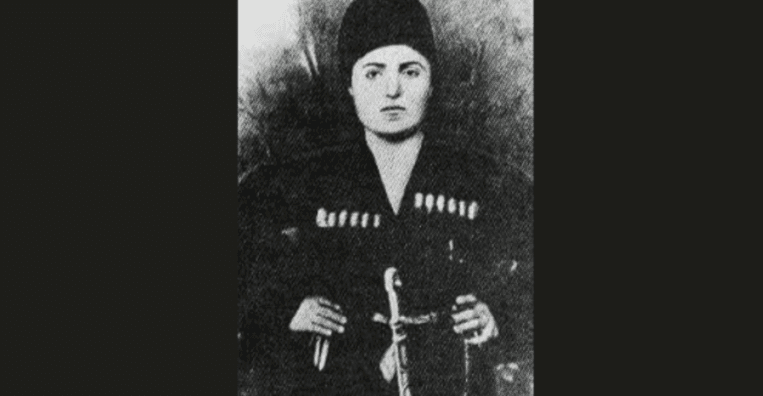

Makbule Hanım of Gördes
Birth | Gördes, Manisa, Türkiye (1902) | ||||||||
|---|---|---|---|---|---|---|---|---|---|
Death | 1922 Kocayayla Mevkii | ||||||||
Marriage | Usturumcalı Halil Efe | ||||||||
Place of Burial | Kocayayla Mevkii | ||||||||
Other Names | Asker Makbule Gördes Kızı Makbule Efe | ||||||||
Makbule Hanım of Gördes was born in 1902 in the Gördes district of Manisa. Her childhood coincided with the final years of the Ottoman Empire. During the First World War, she lost her father, and during the Yemen War, her elder brother was martyred. Makbule Hanım, through these family losses, became familiar at an early age with the devastating effects of war. After these losses, she was raised by her mother and, from a young age, learned to use firearms and ride horses—roles outside traditional expectations for women. Because of these skills, she became known in her community as "Soldier Makbule".
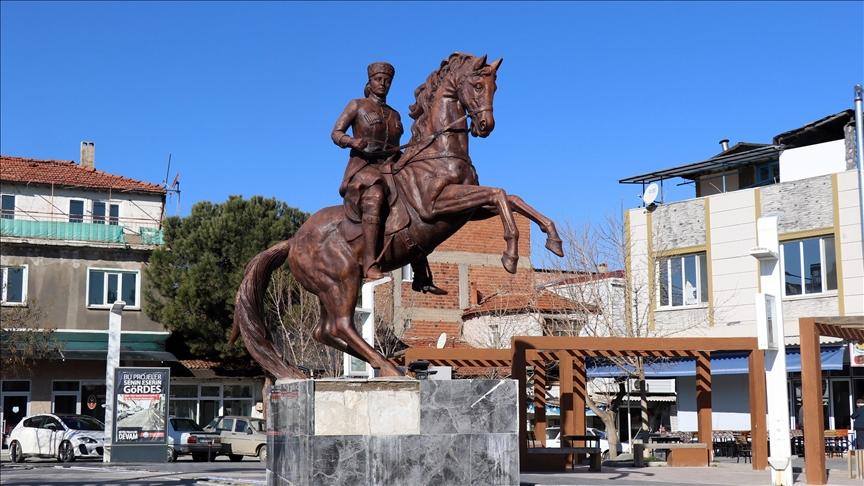
Gördesli Makbule Hanım (Anadolu Ajansı)
Makbule Hanım married Usturumcalı Halil Efe, one of the leading figures of the National Struggle period. Their marriage coincided with a time when the country was under occupation and the struggle for liberation was underway. Upon discovering that her husband Halil Efe had secretly begun organizing preparations for the National Struggle against the occupying forces, Makbule Hanım refused to remain at home.
Driven by a desire to actively defend her homeland, she secretly followed Halil Efe when he left their home. Despite his persistent pleas, she refused to return and clearly declared her determination to join the struggle. In the presence of Kaymakam İbrahim Ethem Bey, commander of the Demirci Akıncılar Organization, she tearfully expressed her refusal to be deprived of participation in this spiritually significant cause. Moved by Makbule Hanım’s resolve and patriotism, İbrahim Ethem Bey granted her permission to join the Akıncı detachment. Thus, Makbule Hanım became a full-fledged member of the unit, equipped with her horse and rifle.
Makbule Hanım participated in numerous key battles alongside the Akıncılar in the mountains of Demirci, Gördes, Simav, and Sındırgı. She fought wearing black trousers, a jacket, a long coat, boots, and a black head covering that concealed her face except for her eyes. She carried a short Japanese flintlock and a captured Turkish horse, serving as the detachment’s rear guard. Her exceptional bravery in battle drew attention; she was renowned for riding better than many male fighters and for being the first to fire her weapon in moments of danger. She played a heroic role in the victory of the "Güvemdere Battle," inspiring demoralized troops to renew their offensive against the enemy.
On 17 March 1922, at the age of just twenty, she was martyred during a clash with enemy forces at the Kocayayla position. Her body was secretly buried to prevent it from falling into enemy hands. Her husband, Halil Efe, commander of the 12th Detachment, was also martyred approximately two months after Makbule Hanım’s death, during an offensive against enemy forces.
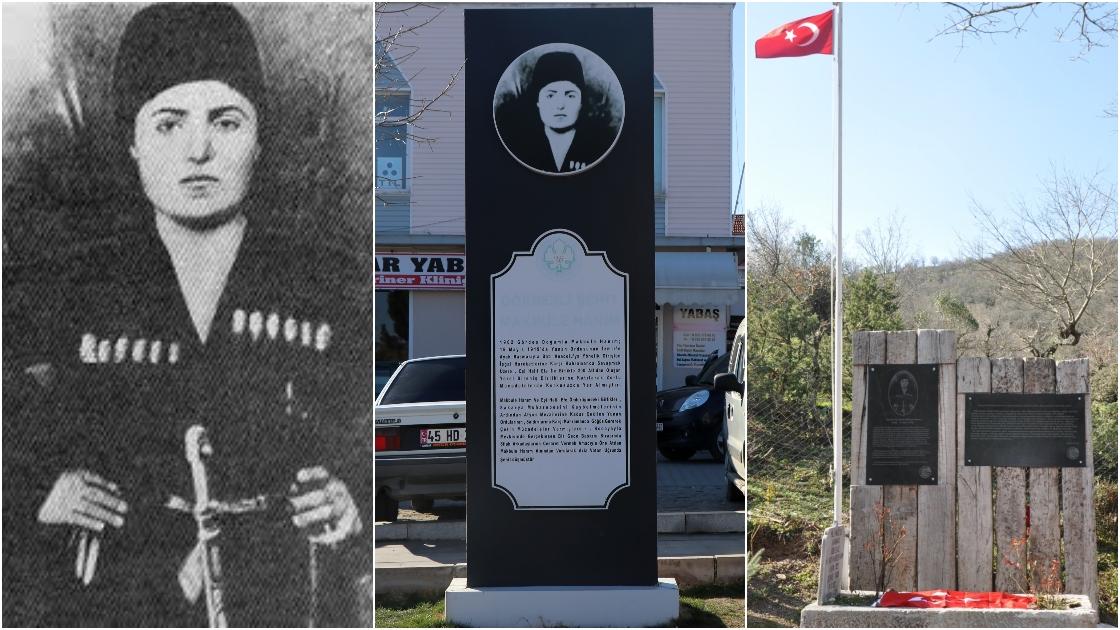
Gördesli Makbule Hanım Anıtı (Anadolu Ajansı)
Makbule Hanım’s grave was discovered 78 years after her martyrdom, thanks to the efforts of Zekeriya Özdemir, then a lecturer at Balıkesir University, at the Dereçatı location above the Harlak Stream in the Sındırgı district.
Kaymakam İbrahim Ethem Bey, a hero of the War of Independence, wrote in his memoirs with deep respect of Makbule Hanım’s martyrdom and patriotism, emphasizing that she was a source of pride for the Turkish nation and for Turkish women.
Her memory, known by names such as "The Girl of Gördes," "Makbule of Gördes," and "Makbule Efe," is kept alive in her hometown of Gördes. Her name has been given to town squares, schools, and streets, and the site of her grave has been transformed into a martyrs’ memorial. Commemorative events are organized through the cooperation of the Gördes and Sındırgı Municipalities, ensuring that Makbule Hanım’s heroism is passed on to future generations. She has secured her place in history as one of the symbolic figures representing the active and self-sacrificing role assumed by women during the Turkish War of Independence.
Anadolu Ajansı. "Gördes'in Kızı Makbule Hanım, Şehadetinin 100. Yılında Anılıyor." Accessed June 5, 2025.https://www.aa.com.tr/tr/kultur-sanat/gordesin-kizi-makbule-hanim-sehadetinin-100-yilinda-aniliyor/2537629.
Gördes Belediye. "Şehit Makbule Hanım." Accessed June 5, 2025.https://www.gordes.bel.tr/icerik/sehit-makbule-hanim.
Özelmacı, Şeyma, and Uğur Çakır. "Kadın Kahramanlarımızdan Bir Milis; Gördesli Makbule." *Takvim-i Vekayi* 7, no. 1 (2019): 1–23. Accessed June 5, 2025.https://dergipark.org.tr/tr/download/article-file/692621

Makbule Hanım of Gördes
Birth | Gördes, Manisa, Türkiye (1902) | ||||||||
|---|---|---|---|---|---|---|---|---|---|
Death | 1922 Kocayayla Mevkii | ||||||||
Marriage | Usturumcalı Halil Efe | ||||||||
Place of Burial | Kocayayla Mevkii | ||||||||
Other Names | Asker Makbule Gördes Kızı Makbule Efe | ||||||||
No Discussion Added Yet
Start discussion for "Makbule Hanım of Gördes" article
Marriage and Participation in the National Struggle
Her Struggles and Martyrdom