

+2 More

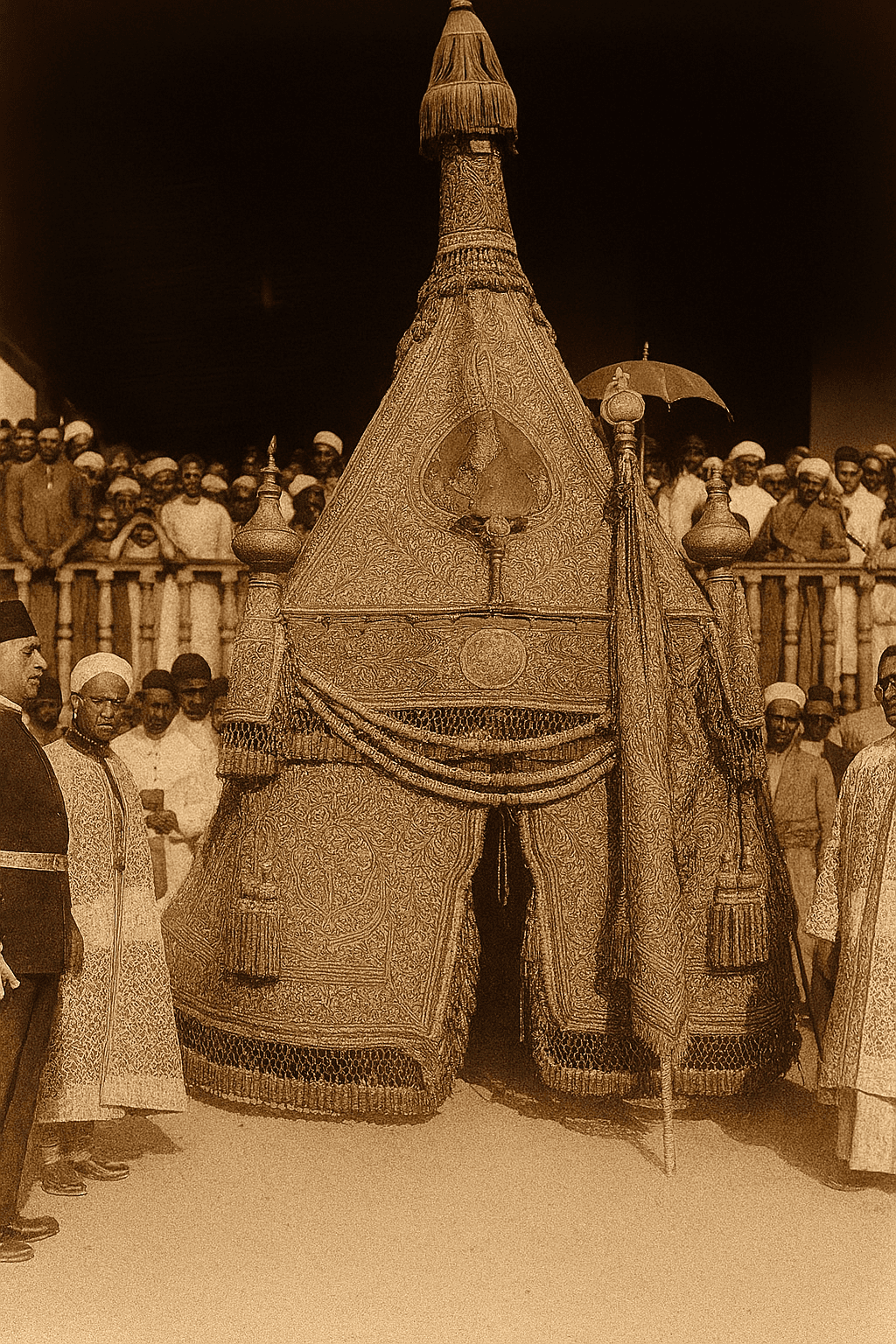
Mahmal (Created by artificial intelligence)
Type(s) | Religious-Political Symbol / Ceremonial structure | ||||||||
|---|---|---|---|---|---|---|---|---|---|
Purpose of Use(s) | Symbolic Representation of the Caliph | ||||||||
Carrier | Camel | ||||||||
Internal Structure | Wooden Frame with Dome-Like Form | ||||||||
Covering Material | Silk, Satin or Velvet | ||||||||
Places of Use | Egypt, Syria, Ottoman Hajj Caravans | ||||||||
Period of Use | From the 13th to the Mid-20th Century | ||||||||
Symbolic Meaning | Representation of the Caliph’s Protective Presence | ||||||||
Final Usage | 1920s to the 1950s | ||||||||
Museum Examples | Topkapı Palace (Istanbul), Louvre Museum (Paris), Museum of Islamic Art (Cairo) | ||||||||
Mahmal (Arabic: مَحْمَل) is a ceremonial palanquin carried on the back of a camel as part of the Hajj caravans. Although no one rides in it during the journey, it symbolically represents the protection and patronage of the sultan or the state. The coverings of the mahmal are typically regarded as sacred and are adorned with decorative embroidery.
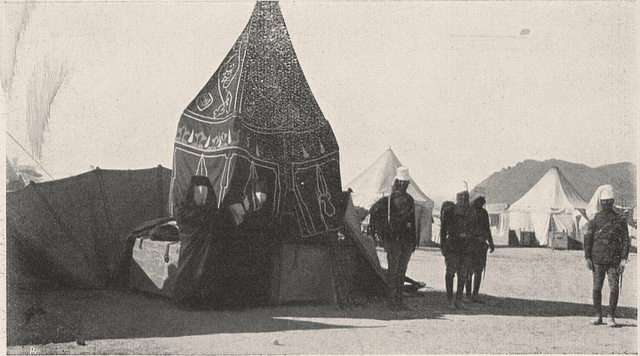
Mahmal (PICRYL)
The use of the mahmal became widespread in the Egypt-based Mamluk Sultanate starting in the 12th century. It symbolized the caliphal authority’s intention to offer protection and patronage to Muslims undertaking the Hajj pilgrimage. This tradition was continued during the Ottoman period as well. Up until the mid-20th century, the mahmal remained a symbolic element of Hajj caravans.
The mahmal was constructed with a wooden frame and typically featured a triangular or conical shape, topped with a pointed roof. It was covered with richly decorated fabric, embroidered with Qur’anic verses, dynastic seals, and caliphal symbols. While color choices varied over time, mahmal coverings during the Mamluk period were often yellow, whereas in later periods, red or green fabrics became more common.
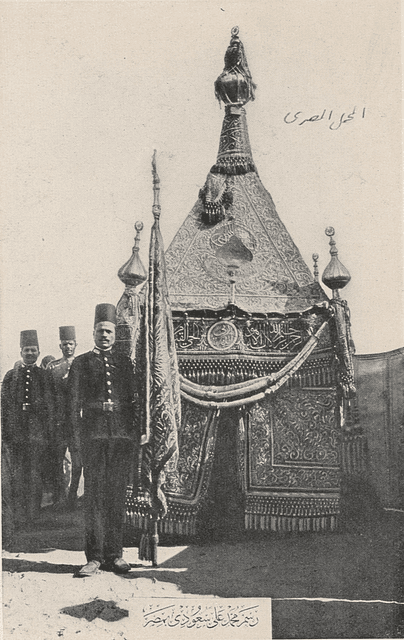
Mahmal (PICRYL)
The mahmal was ceremonially carried on the back of a camel during the Hajj pilgrimage and transported to the holy city of Mecca. This grand procession was typically repeated three times and drew significant public attention as a symbol of the state's protection over the pilgrims. As Hajj caravans entered cities along their route, the mahmal played a central role in the accompanying ceremonies and performances.
The fabric coverings of the mahmal—often similar in style to the Kiswah—held both aesthetic and symbolic significance. The gold embroidery and inscriptions used in its decoration reflected the sophisticated artistic and artisanal traditions of the period. Beyond its religious function, the mahmal also served as a visual instrument of political legitimacy, showcasing the sovereign's authority and spiritual leadership to the public through ceremonial artistry.
ArtUK. “Mahmal.” ArtUK. Accessed July 17, 2025. https://artuk.org/discover/artworks/mahmal-330119.
Behrens-Abouseif, Doris. “The Mahmal Legend and the Pilgrimage of the Ladies of the Mamluk Court.” Mamlūk Studies Review 1 (1997): 87–96. Accessed July 17, 2025. https://knowledge.uchicago.edu/record/980/files/MSR_I_1997-Behrens-Abouseif.pdf.
Discover Islamic Art – Museum With No Frontiers. “Mahmal.” Islamic Art. Accessed July 17, 2025. https://islamicart.museumwnf.org/database_item.php?id=object%3BEPM%3Bqt%3BMus22%3B41%3Ben.
Europeana. “Hajj and the Remarkable Story of the Mahmal.” Europeana. Accessed July 17, 2025. https://www.europeana.eu/en/stories/hajj-and-the-remarkable-story-of-the-mahmal.
Khamseen: Islamic Art History Online. “Hajj Materials and Rites from Egypt.” Islamic Art History Online. Accessed July 17, 2025. https://sites.lsa.umich.edu/khamseen/topics/2021/hajj-materials-and-rites-from-egypt/.
PICRYL. "Mahmal in travelling dress." PICRYL. Accessed July 17, 2025. https://picryl.com/media/mahmal-in-travelling-dress-069dd9.
PICRYL. "Egyptian Mahmal." PICRYL. Accessed July 17, 2025. https://picryl.com/media/egyptian-mahmal-306ce8.
Mahmal (Created by artificial intelligence)
Type(s) | Religious-Political Symbol / Ceremonial structure | ||||||||
|---|---|---|---|---|---|---|---|---|---|
Purpose of Use(s) | Symbolic Representation of the Caliph | ||||||||
Carrier | Camel | ||||||||
Internal Structure | Wooden Frame with Dome-Like Form | ||||||||
Covering Material | Silk, Satin or Velvet | ||||||||
Places of Use | Egypt, Syria, Ottoman Hajj Caravans | ||||||||
Period of Use | From the 13th to the Mid-20th Century | ||||||||
Symbolic Meaning | Representation of the Caliph’s Protective Presence | ||||||||
Final Usage | 1920s to the 1950s | ||||||||
Museum Examples | Topkapı Palace (Istanbul), Louvre Museum (Paris), Museum of Islamic Art (Cairo) | ||||||||
Historical and Cultural Context
Architectural and Stylistic Features
Function and Ritual Use
Artistic and Symbolic Value
This article was created with the support of artificial intelligence.