


This article was automatically translated from the original Turkish version.
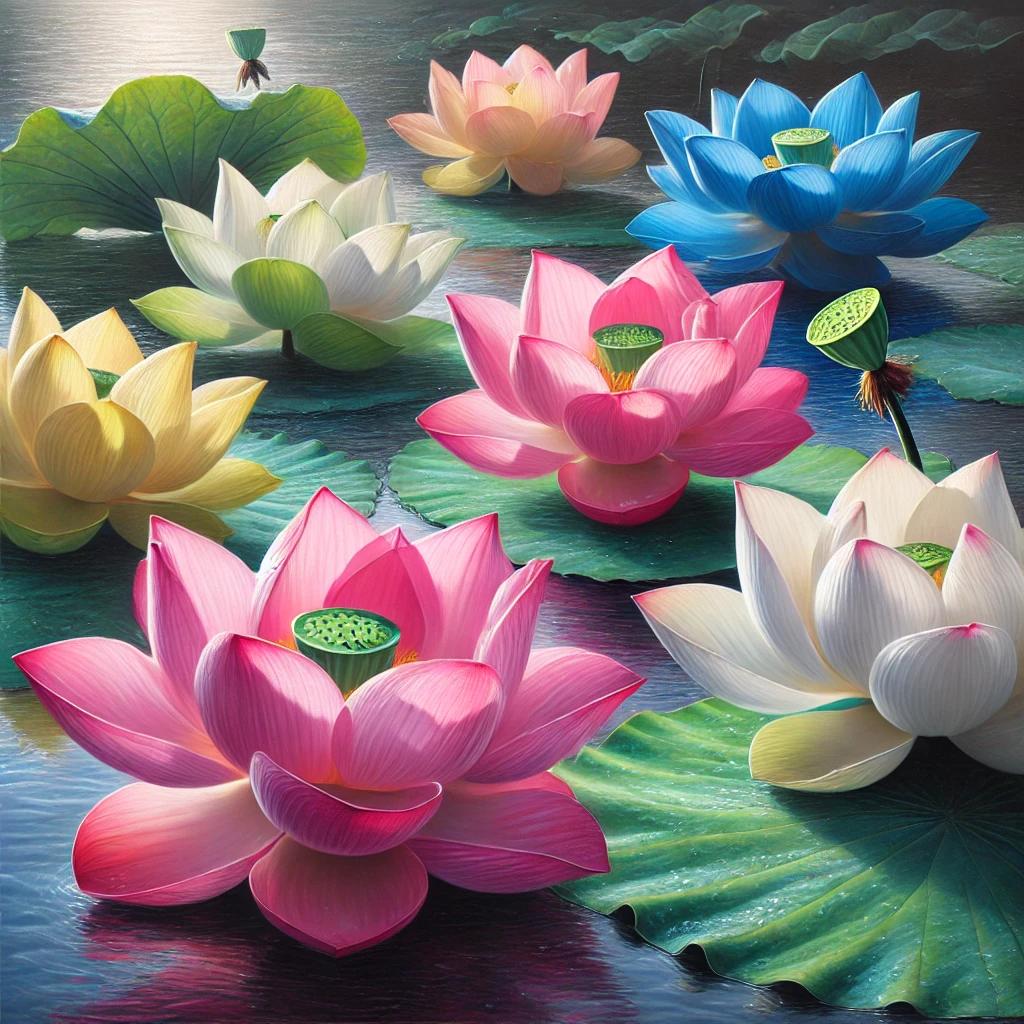
Lotus Flower
Places of Growth | India, China, Egypt, Malaysia, Indonesia | ||||||||
|---|---|---|---|---|---|---|---|---|---|
Climate of Growth | Temperate and tropical climates | ||||||||
Colors | Pink, Red, White, Blue, Yellow | ||||||||
Lotus flower (Nelumbo nucifera) is a perennial herbaceous aquatic plant belonging to the family Nelumbonaceae. Asia in origin it thrives particularly in still or slow-moving waters. Although its roots are anchored in muddy waters its flowers and leaves rise cleanly and spotlessly to the water surface. This characteristic forms the basis of cultural and religious beliefs associating the lotus flower with purity cleanliness and spiritual enlightenment.
The leaves of the lotus plant have the biological ability to roll water droplets off their surface thus cleaning themselves. This adaptation is known as the lotus effect and has served as an inspiration for designing water-repellent surfaces.
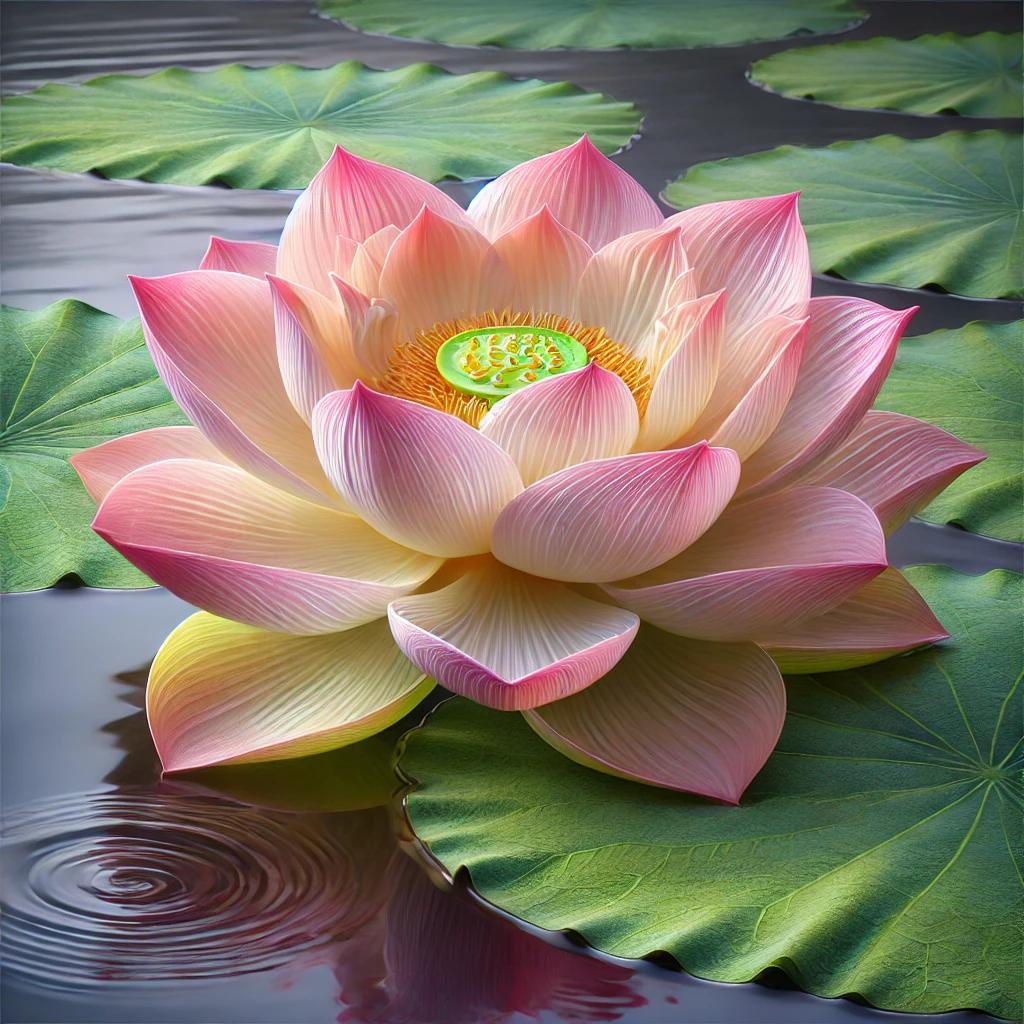
Lotus flower Image: artificial intelligence
In ancient Egypt the lotus was regarded as a symbol of creation rebirth and the sun. This flower growing in the still waters of the Nile River was associated with the sun god Ra due to its cyclical behavior of opening with the sunrise and closing at sunset. It was also used within the cult of Osiris as part of the symbolism of death and rebirth. It frequently appeared in tomb decorations and religious rituals.
In Hindu mythology the lotus is a sacred symbol associated with the gods. It is believed that the creator god Brahma emerged from a lotus flower and both Vishnu and Lakshmi are depicted seated upon lotus flowers. In this context the lotus represents fertility wisdom and divine beauty.
In Buddhism the lotus is accepted as a symbol of spiritual enlightenment and purity. The Buddha is commonly depicted seated upon a lotus flower. The flower’s emergence from muddy waters to bloom cleanly and spotlessly symbolizes the human journey from ignorance to enlightenment. Additionally the eight-petaled lotus representing the eightfold noble path of Buddhism holds an important place in Buddhist iconography.
The lotus flower has also held an important place in Turkic cultures of Central Asia. Following the Uyghurs’ adoption of Buddhism the lotus flower became a frequently used symbol in religious texts. In ancient Uyghur texts the lotus was employed as a metaphor for purity the attainment of wisdom and spiritual development. In Buddhist texts such as the Altun Yaruk the lotus appears among the metaphors used to describe the physical and spiritual qualities of the Buddha.
Lotus motifs are frequently found in Ottoman and Seljuk architecture. In ceramic decorations carpets and fabrics the lotus was incorporated combining aesthetic and spiritual meanings.
The lotus flower holds an important place in landscape architecture due to its aesthetic and ecological functions. It is cultivated in ponds and lakes to embellish still water areas. The roots of the lotus help maintain the water’s oxygen balance while its flowers and broad leaves create a visual atmosphere. Historically lotus motifs were used in the capitals of columns in Egyptian and Far Eastern architecture. Today its aesthetic qualities continue to be valued in gardening and landscape design.
In addition to its natural structure the lotus flower carries symbolic meanings within cultural and religious contexts. Throughout history from ancient civilizations to the present day it has been regarded as a symbol of purity cleanliness rebirth and spiritual enlightenment. This flower also occupies an important place in landscape design leaving a lasting imprint on human history through its aesthetic and ecological values.
Kara, Ahmet. “Uygur Türklerinde Su ve Su Kültü.” Uygur Araştırmaları Dergisi, no. 4 (2017): 27-40.https://dergipark.org.tr/en/pub/uygur/issue/35000/399492
Uplifers. "Lotus Çiçeği Anlamı, Özellikleri Nelerdir ve Neyi Sembolize Eder?" Accessed March 14, 2025.https://www.uplifers.com/lotus-cicegi-anlami-ozellikleri-nelerdir-ve-neyi-sembolize-eder/
Çalışkan, Mustafa. “Orta Asya Türk Kültüründe Hayvan Motifleri.” Çağdaş Türk Dili Araştırmaları Dergisi, no. 6 (2023): 45-62.https://dergipark.org.tr/tr/pub/cutad/issue/88961/1543135.

Lotus Flower
Places of Growth | India, China, Egypt, Malaysia, Indonesia | ||||||||
|---|---|---|---|---|---|---|---|---|---|
Climate of Growth | Temperate and tropical climates | ||||||||
Colors | Pink, Red, White, Blue, Yellow | ||||||||
Lotus in Ancient Egypt
Lotus in Hinduism and Buddhism
Lotus in Turkish Culture
Use in Landscape Design