This article was automatically translated from the original Turkish version.
F-35 Lightning II
Official Name | Lockheed Martin F-35 Lightning II | ||||||||
|---|---|---|---|---|---|---|---|---|---|
Type | 5th Generation Multirole Combat Aircraft | ||||||||
Country of Origin | United States of America | ||||||||
Manufacturer | Lockheed Martin (Prime Contractor) Northrop Grumman BAE Systems | ||||||||
Produced Quantity | 1,000+ units as of January 2024 | ||||||||
First Flight | 2006-12-15 | ||||||||
Status | In Active Service / Serial Production Ongoing | ||||||||
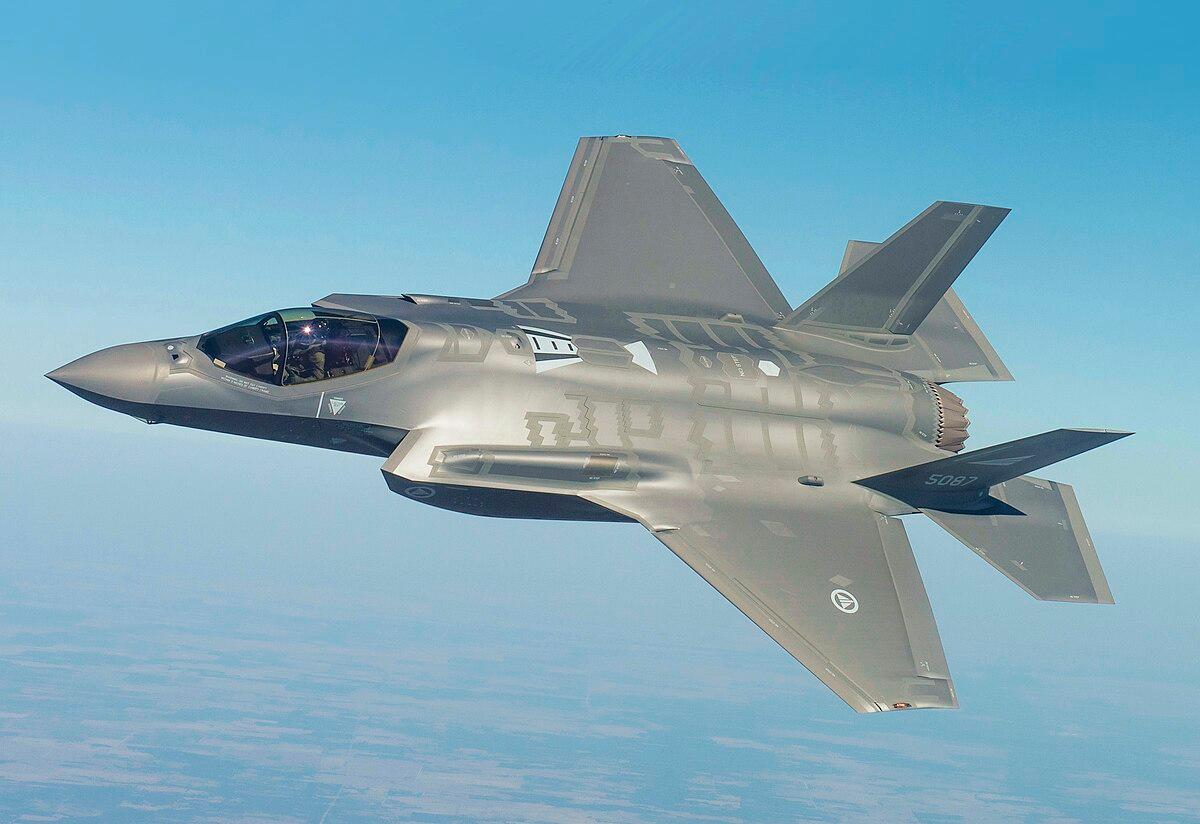
F-35 Lightning II Fighter Aircraft, is a low-observable, supersonic, multirole fighter aircraft designed to meet the fifth-generation fighter requirements of the United States and its allied defense forces worldwide. The system is engineered for both air superiority and strike missions, while also possessing electronic warfare, intelligence, surveillance, and reconnaissance capabilities. Lockheed Martin, Northrop Grumman, and BAE Systems are the principal contractors for the F-35 fighter aircraft.
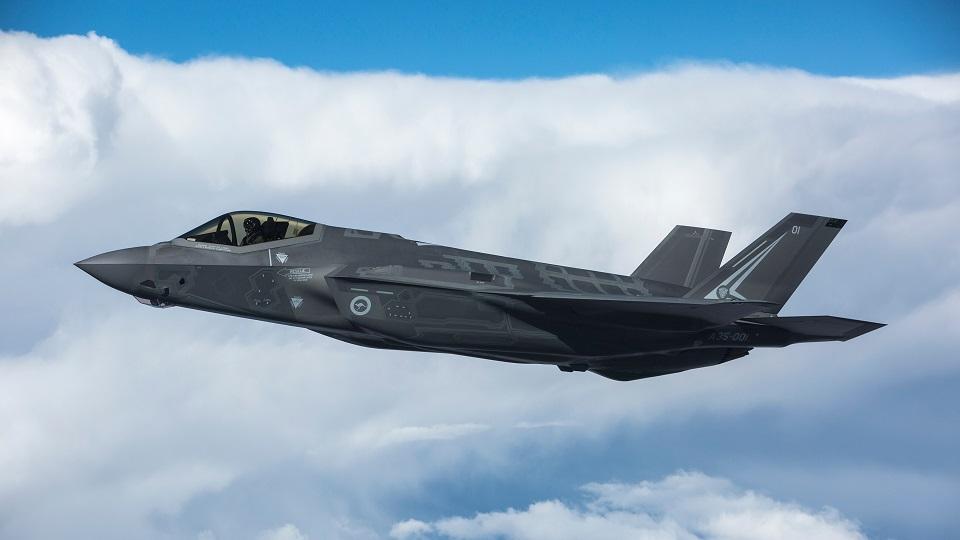
F-35A Lightning-II (Air Force)
The development of the F-35 program is primarily funded by the United States, with additional financial contributions from NATO member states and close allied nations.
The aircraft has three main variants:
1. F-35A: Conventional takeoff and landing (CTOL) variant,
2. F-35B: Short takeoff and vertical landing (STOVL) variant,
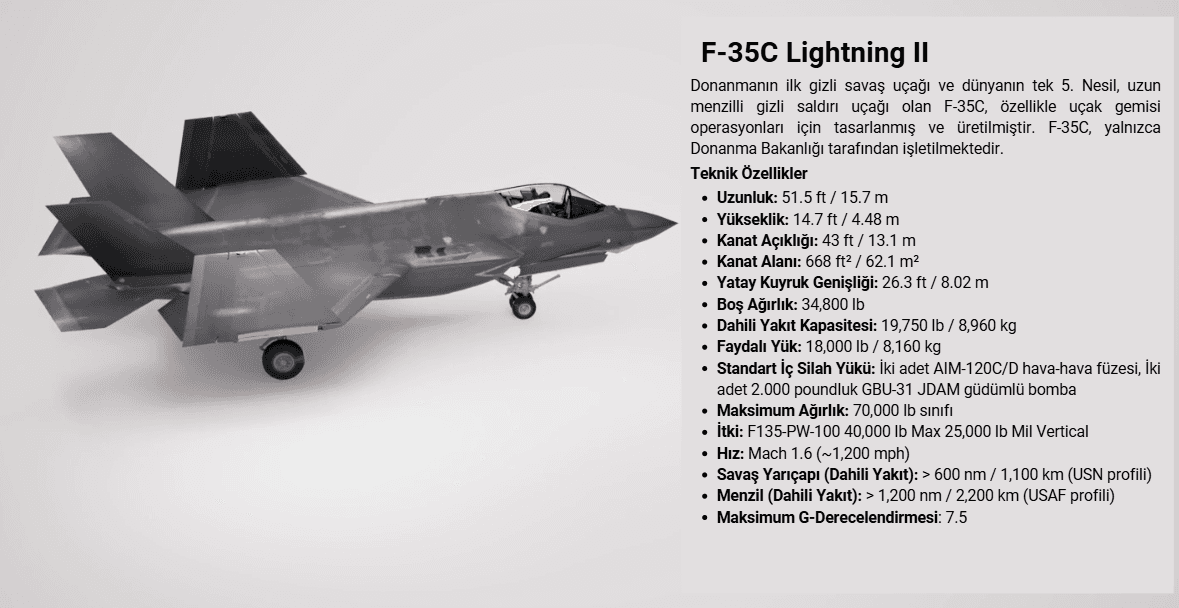
3. F-35C: Carrier variant (CV) with catapult-assisted takeoff and arrested recovery (CATOBAR).
The F-35 made its first flight in 2006, and the United States Marine Corps introduced the F-35B variant into service in July 2015. This was followed by the United States Air Force’s F-35A in August 2016 and the United States Navy’s F-35C in February 2019. The aircraft was first used in combat by the Israeli Air Force in 2018. The United States plans to purchase 2,456 F-35s by 2044. These aircraft are expected to form the bulk of the United States Air Force, Navy, and Marine Corps’ manned tactical aviation fleet over the coming decades and serve as the cornerstone of NATO and U.S. allied air power until 2070.
The program has faced criticism due to its unprecedented scale, complexity, rising costs, and delayed deliveries. The strategy of concurrent production during development and testing led to expensive design changes and retrofits.
The F-35 emerged as a product of the Joint Strike Fighter (JSF) program, which consolidated various fighter aircraft projects. The program’s foundations lie in the Advanced Short Takeoff/Vertical Landing (ASTOVL) project initiated in the 1980s, aimed at developing a supersonic STOVL fighter to replace the Harrier for the United States Marine Corps (USMC) and the United Kingdom’s Royal Navy.
In 1993, ASTOVL was renamed the Common Affordable Lightweight Fighter (CALF), and major aerospace companies including Lockheed, McDonnell Douglas, and Boeing joined the program. At the same time, the end of the Cold War and reductions in the U.S. defense budget led to the cancellation of the United States Air Force’s (USAF) Multi-Role Fighter (MRF) and the United States Navy’s Advanced Attack/Fighter (A/F-X) projects.
Following these cancellations, in 1993 the U.S. Department of Defense launched the Joint Advanced Strike Technology (JAST) program. Initially, JAST aimed not to develop a new aircraft but to work on concepts and technologies for advanced strike systems. In 1994, JAST merged with ASTOVL/CALF to form the JSF program, establishing the goal of developing a common fighter aircraft for air forces, navies, and marine corps.
The JSF program was formally launched in 1995, with major companies including Lockheed Martin, Boeing, McDonnell Douglas, and Northrop Grumman participating. The JSF’s objective was to replace diverse aircraft such as the Harrier, F-16, F/A-18, A-10, and F-117 with a single platform. The program also had an international dimension: the United Kingdom became the first and only Tier 1 partner, while Italy and the Netherlands (Tier 2), along with other countries including Türkiye (Tier 3), joined as partners.
In 1997, Lockheed Martin and Boeing were selected for the concept demonstration phase. Lockheed Martin’s X-35 demonstrated STOVL capability using a shaft-driven lift fan (SDLF) system, while Boeing’s X-32 opted for a direct-lift system. The X-35A made its first flight on 24 October 2000, and the X-35B successfully demonstrated STOVL performance. The X-35C underwent carrier landing tests.
On 26 October 2001, Lockheed Martin was declared the winner, and the F-35 program’s System Development and Demonstration (SDD) phase began. Thus, the System production process for the F-35 Lightning II, one of the world’s most advanced multirole fighter aircraft, was officially initiated.
During the transition from the X-35 prototype to the F-35 fighter aircraft, several design modifications were implemented:
1. The forward fuselage was extended by 13 cm.
2. The horizontal stabilizers were repositioned 5 cm rearward.
3. The weapons bays were enlarged.
4. The air intake (Diverterless Supersonic Inlet, DSI) was redesigned.
The first F-35A prototype, designated AA-1, underwent flight testing. Although the program experienced delays due to cost increases and technical challenges, development continued across all three variants: F-35A (CTOL), F-35B (STOVL), and F-35C (CV).
The F-35 is designed to evolve over time through continuous avionics, sensor, and software upgrades, enabling it to keep pace with technological advancements in modern combat environments.
Block 4 Upgrades:
1. Enhanced targeting capabilities through an improved EOTS system.
2. Integration of the AN/APG-85 radar for improved threat detection.
Unmanned Combat Air Vehicle Management: The United States Air Force is testing the F-35’s ability to direct UCAVs via its sensor and communication systems.
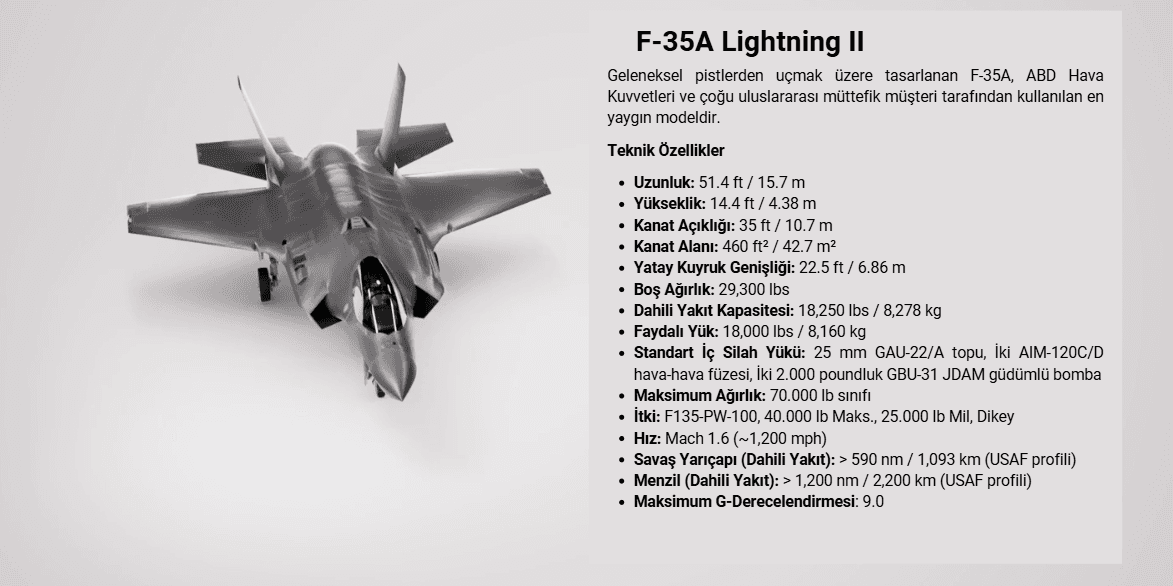
(Çeviren ve düzenleyen: Beyza Nur Türkü)
The F-35 is a platform distinguished among fifth-generation fighter aircraft by its low radar signature, advanced avionics, and sensor fusion. It is the second fifth-generation fighter to enter U.S. inventory and the first stealth fighter capable of short takeoff and vertical landing (STOVL) at supersonic speeds. The United States Air Force (USAF) positions the F-35 as its primary strike aircraft for missions such as Suppression of Enemy Air Defenses (SEAD) and air interdiction.
The F-35 is intended to play a pivotal role in modern air combat through high situational awareness, long-range strike capability, and advanced mission systems. Its operational effectiveness is expected to increase continuously through future software and hardware upgrades.
The F-35 is a modern fighter aircraft that enhances pilot situational awareness and provides network-centric warfare capabilities through advanced sensors and avionics systems. These systems comprise various components including radar, electronic warfare, electro-optical targeting, and communications.
AN/APG-81 AESA Radar (Northrop Grumman)
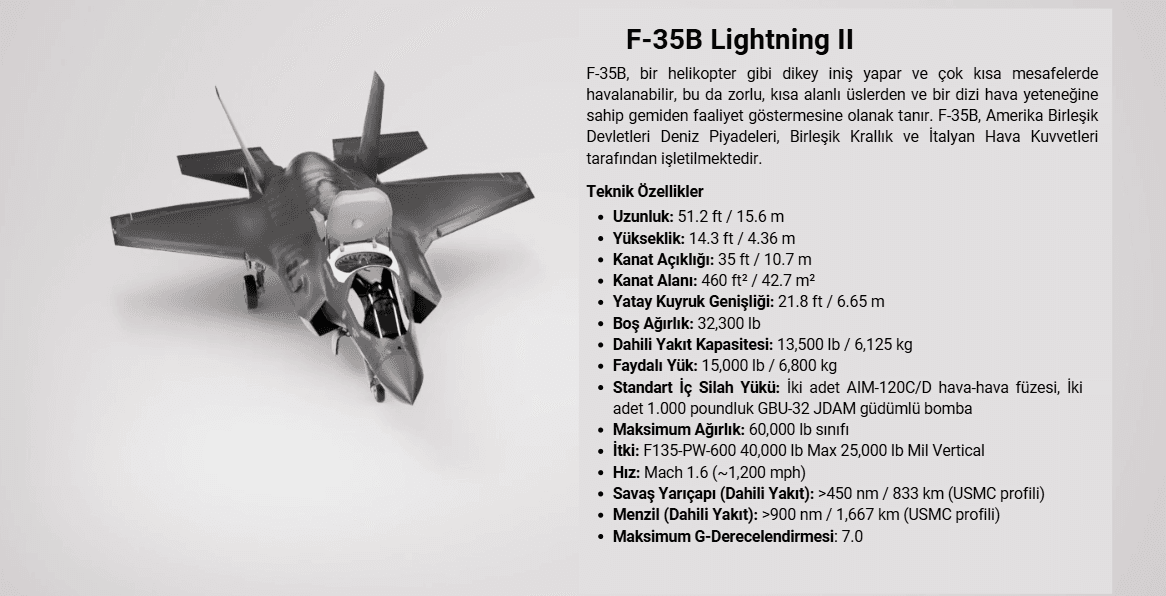
(Çeviren ve düzenleyen: Beyza Nur Türkü)
1. An active electronically scanned array radar that provides multi-target tracking beyond 150 km and synthetic aperture radar (SAR) capabilities.
2. Integrated with electronic warfare systems to operate in both passive and active air-to-air modes.
AN/ASQ-239 Barracuda Electronic Warfare System (BAE Systems)
1. Detects enemy radars, provides jamming, and offers protection against guided missiles.
2. Functions as a radar warning receiver (RWR) across all directions using antennas integrated into the wing and tail edges.
AN/AAQ-37 Electro-Optical Distributed Aperture System (DAS) (Northrop Grumman/Raytheon)
1. Uses six infrared sensors to provide 360 degree missile launch warnings and target tracking.
2. Enhances situational awareness by projecting night vision and global infrared imagery onto the pilot’s helmet.
AN/AAQ-40 Electro-Optical Targeting System (EOTS) (Lockheed Martin)
1. Features infrared search and track (FLIR), laser targeting, and long-range target tracking (IRST) capabilities.
AN/ASQ-242 CNI Suite (Northrop Grumman)
1. Enables low-observable, secure communication via the Multifunction Advanced Data Link (MADL).
2. Supports Link 16 connectivity for compatibility with legacy platforms.
The F-35 integrates data from its sensors to create a unified battlefield picture for the pilot. Sensor fusion converts information from radio frequency receivers and infrared sensors into a single tactical display, accelerating the pilot’s decision-making process.
(Çeviren ve düzenleyen: Beyza Nur Türkü)
The F-35 fighter aircraft can maintain controlled flight at high angles of attack up to 50°. The platform’s key aerodynamic features include:
1. Wing and Tail Structure: Canted vertical stabilizers reduce radar cross-section, while flight control surfaces (flaperons, rudders, and stabilators) provide high maneuverability.
2. Air Inlets: The Fixed Diverterless Supersonic Inlet (DSI) design improves engine efficiency by managing boundary layer airflow.
3. Composite Materials: Thirty-five percent of the airframe’s weight consists of composite materials, reinforced with carbon nanotube-enhanced epoxy for increased durability.
4. Internal Weapons Bay: Integrating weapons internally reduces aerodynamic drag caused by external stores, enhancing performance.
The F-35 is powered by the Pratt & Whitney F135 low-bypass turbofan engine. It produces 28,000 lbf (125 kN) of military thrust and 43,000 lbf (191 kN) with afterburner. It is an upgraded version of the F119 engine used in the F-22, though not optimized for supersonic cruise. The engine features a radar-invisible afterburner design, curved fuel injectors, and ceramic radar-absorbent coatings. Early development stages experienced pressure oscillation issues known as “screech.” The stealth exhaust nozzle contains 15 serrated flaps to reduce radar visibility and infrared signature.
The F-35B variant uses the F135-PW-600 engine, which enables STOVL operations through a Shaft-Driven Lift Fan (SDLF) system. The Rolls-Royce LiftSystem consists of a lift fan, drive shaft, two roll posts, and a three-bearing swivel module (3BSM). The 3BSM nozzle directs exhaust downward to assist in takeoff. It uses “fueldraulic” actuators powered by fuel pressure. Unlike the Harrier’s Pegasus engine, the F-35B receives additional lift from the lift fan, providing a more balanced takeoff. Roll post nozzles at the wingtips provide stability during slow flight.
As part of alternative engine development efforts, the General Electric/Allison/Rolls-Royce F136 engine was planned but canceled in 2011 due to budget constraints. In 2016, the Adaptive Engine Transition Program (AETP) initiated development of GE’s XA100 and Pratt & Whitney’s XA101 adaptive engine prototypes. However, in 2023, Pratt & Whitney’s F135 Engine Core Upgrade (ECU) was selected over alternatives due to higher cost and risk, resulting in improved fuel efficiency, thrust, and cooling capacity.
The F-35’s glass cockpit is designed to provide the pilot with high situational awareness. The primary display is a 20x8 inch (50x20 cm) panoramic touchscreen that presents flight instruments, weapons systems, communications, and warning information. It offers a customizable interface for the pilot. The cockpit also includes an audio recognition system developed by Adacel.
The F-35 replaces the traditional head-up display (HUD) with a Helmet-Mounted Display System (HMDS) that projects all flight and combat data onto the pilot’s helmet visor. Thanks to the Distributed Aperture System (DAS), the pilot can view night vision and infrared imagery directly on the helmet screen and monitor surroundings without looking out of the aircraft. This system allows the pilot to launch missiles even when the aircraft’s nose is pointed in a different direction. Each HMDS helmet is valued at $400,000 and is heavier than traditional helmets, posing potential safety risks for lighter pilots.
Cockpit features include:
1. A single-piece tinted canopy, hinged at the front and featuring an internal frame.
2. The Martin-Baker US16E ejection seat is launched via a dual-catapult system mounted on side rails.
3. Hands-on throttle-and-stick (HOTAS) system provides control via the right-hand control stick and throttle.
4. Oxygen supply is provided by an Onboard Oxygen Generating System (OBOGS) powered by the Integrated Power Package (IPP), along with a backup oxygen source.
During development, alternative helmet designs were considered due to issues with vibration, night vision, and sensor display in the HMDS. However, in 2013, improvements to the baseline helmet led to cancellation of the alternative project. The third-generation helmet, introduced in 2016, features an upgraded night vision camera, new liquid crystal displays, and automatic alignment capabilities.
Drew, J. (2024). First operational F-35 squadron declared ready for combat. Accessed July 8, 2026.https://web.archive.org/web/20201204204600/https://www.flightglobal.com/first-operational-f-35-squadron-declared-ready-for-combat/117812.article
Finnerty, R. (2024). Lockheed completes assembly of 1000th F-35. Accessed July 8, 2026.
LockheedMartin. *F-35 Lightning II.*
Lockheedmartin.com. "F-35 Lightning II: Electro Optical Targeting System (EOTS)."https://www.lockheedmartin.com/en-us/products/f-35-lightning-ii-eots.html
Majumdar, D. (2011). *GE, Rolls Royce Stop Funding F-35 Alt Engine.*https://archive.md/20120729014307/http://www.defensenews.com/story.php?i=8450963&c=AME&s=AIR
Naval Aviation News. "F-35B Completes At-Sea Developmental Testing."https://web.archive.org/web/20200731044849/https://navalaviationnews.navylive.dodlive.mil/2017/03/14/f-35b-completes-at-sea-developmental-testing/
Pawlyk, O. (2020). Key US Ally Declares Its F-35s Ready for Combat.https://www.military.com/daily-news/2020/12/28/key-us-ally-declares-its-f-35s-ready-combat.html
Raytheon Intelligence & Space. (2020). Electro-Optical Distributed Aperture System.https://web.archive.org/web/20230324232606/https://www.raytheonintelligenceandspace.com/what-we-do/air-dominance/eodas

F-35 Lightning II
Official Name | Lockheed Martin F-35 Lightning II | ||||||||
|---|---|---|---|---|---|---|---|---|---|
Type | 5th Generation Multirole Combat Aircraft | ||||||||
Country of Origin | United States of America | ||||||||
Manufacturer | Lockheed Martin (Prime Contractor) Northrop Grumman BAE Systems | ||||||||
Produced Quantity | 1,000+ units as of January 2024 | ||||||||
First Flight | 2006-12-15 | ||||||||
Status | In Active Service / Serial Production Ongoing | ||||||||
No Discussion Added Yet
Start discussion for "Lockheed Martin F-35 Lightning II" article
Development Process
International Partners of the Program
Design and Production
Technology Upgrades
Technical Specifications
Avionics Systems
Primary Sensors and Mission Systems
Sensor Fusion and Network-Centric Warfare
Aerodynamic Design and Structural Features
Engine and Thrust
Cockpit