This article was automatically translated from the original Turkish version.
Family | Pine family (Pinaceae) | ||||||||
|---|---|---|---|---|---|---|---|---|---|
Türkiye Distribution Area | Eastern Black Sea Region (from the Ordu border to the Georgia border) | ||||||||
Wood Characteristic | Light, durable, high resonance property | ||||||||
Reproductive Structure | Monoecious | ||||||||
Body Diameter | Average 1.5–2 metres | ||||||||
Body Length | Average 40–50 metres | ||||||||
General Form | Evergreen, needle-leaved, pyramidal | ||||||||
Genus | Spruce (Picea) | ||||||||
Spruce (Picea); a genus of evergreen, needle-leaved, pyramid-shaped forest trees belonging to the pine family (Pinaceae). Spruce taxa, distributed across the cool and humid regions of the Northern Hemisphere, are represented in Türkiye exclusively by the Oriental spruce (Picea orientalis) in the natural range of the Eastern Black Sea Region (from Ordu to the Georgian border). Spruce species can reach an average height of 40 to 50 meters and a trunk diameter of 1.5 to 2 meters, characterized by cylindrical trunks and pendulous branches.【1】 Due to its light, durable wood with high resonance properties, it has considerable industrial value.
The external appearance and organ structures of spruce trees serve as key diagnostic features for species identification. The bark is gray-brown and smooth in young trees, but develops longitudinal deep fissures and scaly textures in older individuals.
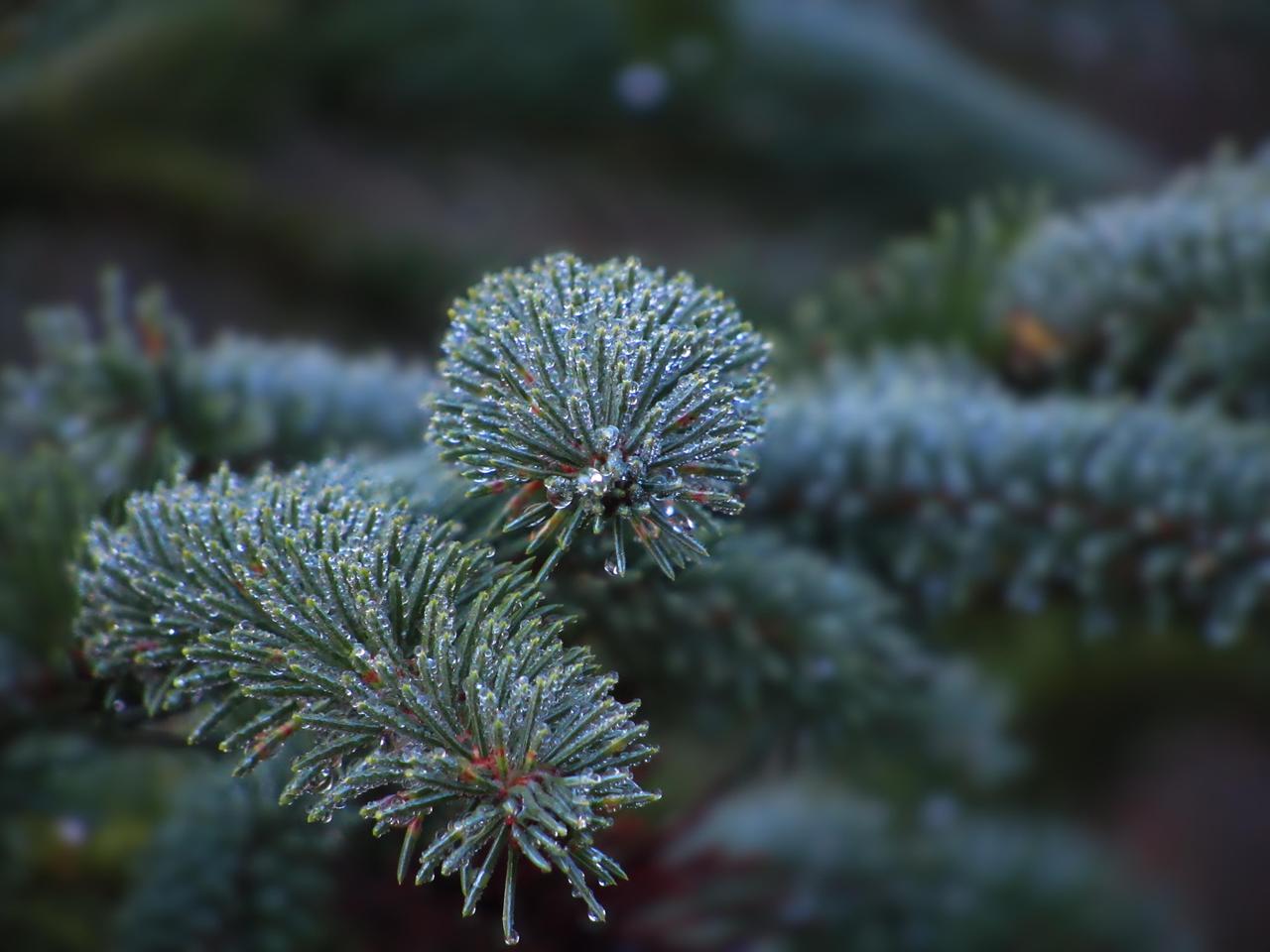
Spruce Tree (pixabay)
Needle leaves are typically 6 to 11 millimeters long, stiff, quadrangular in cross-section, and blunt-tipped.【2】 Leaves are arranged spirally on the branches and remain on the tree for 8 to 30 years before shedding.【3】 Stomatal lines occur on all four surfaces of the needles.
Spruce species are monoecious trees. Male flowers develop on the previous year’s shoots, while female flowers stand upright at the shoot tips. After pollination, cones hang downward and are initially green or reddish-purple. As they mature, cones become woody and turn brown. When the cone scales open, winged seeds are dispersed by wind.
Seed orchards established in Oriental spruce [Picea orientalis (L.) Link.] forests to preserve genetic quality and ensure sustainable seed supply exhibit specific structural characteristics. Studies conducted on 14 spruce seed orchards within the boundaries of the Artvin Regional Directorate of Forestry indicate that these areas are located at elevations between 1470 and 1925 meters.【4】
The sizes of the studied seed orchards range from 33.5 to 147.5 hectares, with an average area of 78.5 hectares. Slope gradients vary between 20 and 70 percent, with an overall average slope of 43.2 percent.【5】
The majority of seed orchards (78.6 percent) are located in “very good” growth environments. Tree densities range from 208 to 588 trees per hectare, with an average of 411 trees per hectare. Of these areas, 71.4 percent are classified as fully closed (canopy cover 0.7–1.0). Diameter at breast height values range from 32.5 to 53.7 centimeters, while tree heights vary between 21.7 and 31.5 meters.【6】
Seed orchards and genetic conservation areas selected to ensure the continuity of spruce forests are managed according to technical criteria.
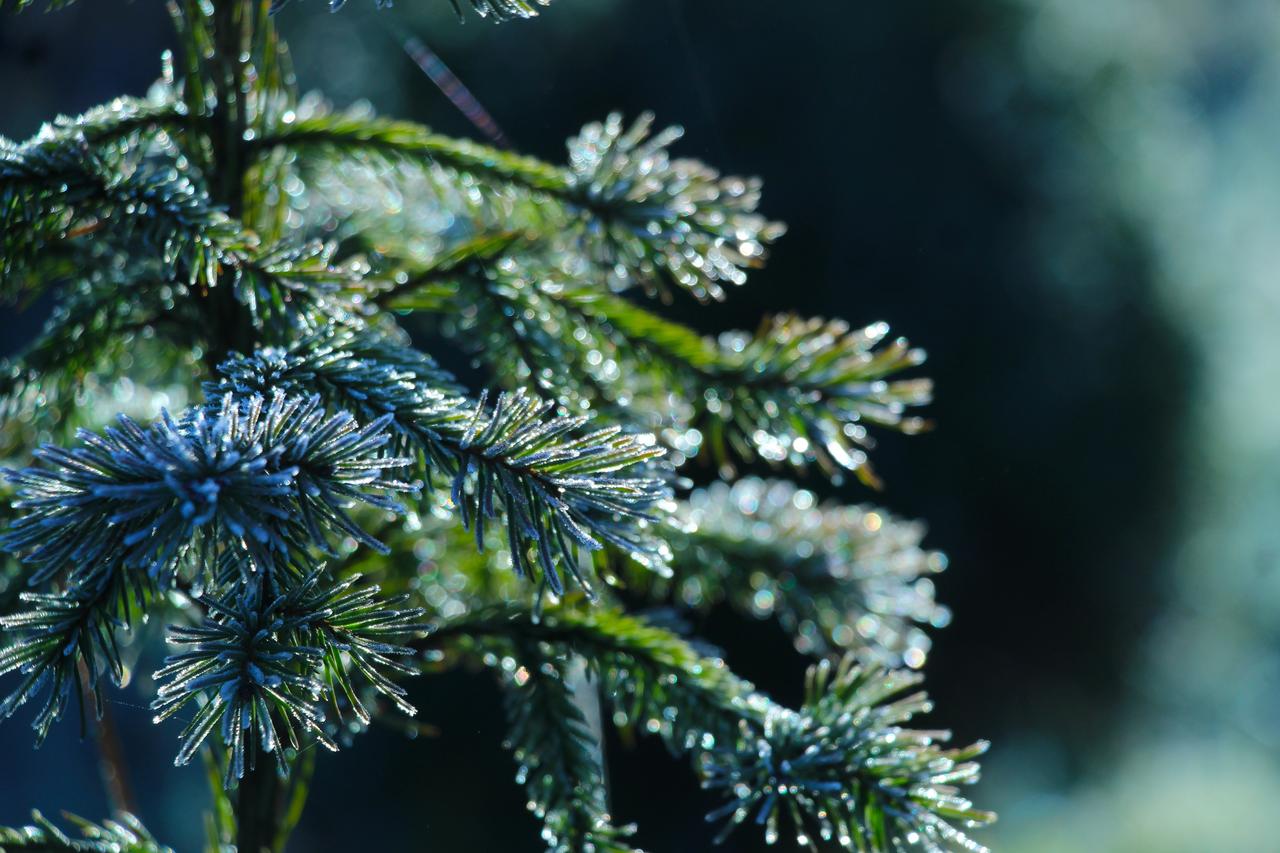
Spruce Tree (pixabay)
The average slope gradient of orchards designated for seed production is approximately 43.2 percent. The sizes of these areas range from 33.5 to 147.5 hectares.【7】 Genetic quality and growth rates of trees within orchards are the primary criteria for ensuring high-quality seed production.
Tree numbers have declined due to livestock grazing, uncontrolled logging, and severe wind damage. Total tree density per hectare has decreased by 51 percent, while the number of seed trees has declined by 56 percent.【8】 The success of regeneration efforts depends on the accurate delineation of seed transfer zones and the protection of seed sources from anthropogenic pressures.
Eroğlu, Mahmut. "Doğu Ladini Ormanlarımızda Dendroctonus micans (Kugelann), Ips typographus (L.) ve Ips sexdentatus (Boerner)'un Zarar Durumları ve Mücadele Çalışmaları." Trabzon: Karadeniz Teknik Üniversitesi Orman Fakültesi Yayınları, Accessed April 6, 2026. https://ktu.edu.tr/dosyalar/ormanmuhendisligi_1163c.pdf.
Orman Genel Müdürlüğü. "Türkiye'deki Doğu Ladini (Picea orientalis L. Carr.) Ormanlarında Yetişme Ortamı Faktörler-Verimlilik İlişkisi". OGM. Accessed April 6, 2026. https://www.ogm.gov.tr/doguanadolu/yayinlarimiz-sitesi/Yayinlarimiz/Tek%20Yapraklar/08_T%C3%BCrkiye%27dek%C4%B1%20Do%C4%9Fu%20Ladini.pdf.
Sönmez, Turan, Uzay Karahalil, Alkan Günlü, and Abdurrahman Şahin. "Aynı Yaşlı ve Saf Doğu Ladini (Picea orientalis (L.) Link.) Meşcerelerinde Çap Dağılımının Bonitet ve Yaş Sınıfları İçin Değerlendirilmesi." *Kastamonu Üniversitesi Orman Fakültesi Dergisi* 15, no. 1 (2015): 26-36. Accessed April 6, 2026. https://dergipark.org.tr/tr/download/article-file/159764.
Turna, İbrahim. "Doğu Ladini (Picea orientalis (L.) Link.) Tohum Meşcereleri Genel Değerlendirmesi." *Kafkas Üniversitesi Artvin Orman Fakültesi Dergisi* 2, no. 1 (2001): 28-35. Accessed April 6, 2026. https://dergipark.org.tr/en/download/article-file/25581.
avia5. "Mavi Ladin." Digital Image. Pixabay. Accessed April 6, 2026. https://pixabay.com/tr/images/download/avia5-blue-spruce-6767440_1920.jpg.
gosiak1980. "Ladin Ağacı." Dijital Görsel. Pixabay. Accessed April 6, 2026. https://pixabay.com/tr/images/download/gosiak1980-spruce-7675793_1920.jpg.
[1]
General Directorate of Forestry. "Growth Environment Factors and Productivity Relationships in Oriental Spruce (Picea orientalis L. Carr.) Forests in Türkiye." OGM. Access Date: 6 April 2026.https://www.ogm.gov.tr/doguanadolu/yayinlarimiz-sitesi/Yayinlarimiz/Tek%20Yapraklar/08_T%C3%BCrkiye%27dek%C4%B1%20Do%C4%9Fu%20Ladini.pdf.
[2]
Eroğlu, Mahmut. "Damage Conditions and Control Studies of Dendroctonus micans (Kugelann), Ips typographus (L.) and Ips sexdentatus (Boerner) in Our Oriental Spruce Forests." Trabzon: Karadeniz Technical University Faculty of Forestry Publications, Access Date: 6 April 2026.https://ktu.edu.tr/dosyalar/ormanmuhendisligi_1163c.pdf.
[3]
Eroğlu, Mahmut. "Damage Conditions and Control Studies of Dendroctonus micans (Kugelann), Ips typographus (L.) and Ips sexdentatus (Boerner) in Our Oriental Spruce Forests." Trabzon: Karadeniz Technical University Faculty of Forestry Publications, Access Date: 6 April 2026.https://ktu.edu.tr/dosyalar/ormanmuhendisligi_1163c.pdf.
[4]
Turna, İbrahim. "General Assessment of Oriental Spruce (Picea orientalis (L.) Link.) Seed Orchards." Kafkas University Artvin Faculty of Forestry Journal 2, no. 1 (2001): 28-35. Access Date: 6 April 2026.https://dergipark.org.tr/en/download/article-file/25581.
[5]
Turna, İbrahim. "General Assessment of Oriental Spruce (Picea orientalis (L.) Link.) Seed Orchards." Kafkas University Artvin Faculty of Forestry Journal 2, no. 1 (2001): 28-35. Access Date: 6 April 2026.https://dergipark.org.tr/en/download/article-file/25581.
[6]
Turna, İbrahim. "General Assessment of Oriental Spruce (Picea orientalis (L.) Link.) Seed Orchards." Kafkas University Artvin Faculty of Forestry Journal 2, no. 1 (2001): 28-35. Access Date: 6 April 2026.https://dergipark.org.tr/en/download/article-file/25581.
[7]
Sönmez, Turan, Uzay Karahalil, Alkan Günlü, and Abdurrahman Şahin. "Evaluation of Diameter Distribution in Even-Aged and Pure Oriental Spruce (Picea orientalis (L.) Link.) Stands with Respect to Site Quality and Age Classes." Kastamonu University Faculty of Forestry Journal 15, no. 1 (2015): 26-36. Access Date: 6 April 2026.https://dergipark.org.tr/tr/download/article-file/159764.
[8]
Sönmez, Turan, Uzay Karahalil, Alkan Günlü, and Abdurrahman Şahin. "Evaluation of Diameter Distribution in Even-Aged and Pure Oriental Spruce (Picea orientalis (L.) Link.) Stands with Respect to Site Quality and Age Classes." Kastamonu University Faculty of Forestry Journal 15, no. 1 (2015): 26-36. Access Date: 6 April 2026.https://dergipark.org.tr/tr/download/article-file/159764.

Family | Pine family (Pinaceae) | ||||||||
|---|---|---|---|---|---|---|---|---|---|
Türkiye Distribution Area | Eastern Black Sea Region (from the Ordu border to the Georgia border) | ||||||||
Wood Characteristic | Light, durable, high resonance property | ||||||||
Reproductive Structure | Monoecious | ||||||||
Body Diameter | Average 1.5–2 metres | ||||||||
Body Length | Average 40–50 metres | ||||||||
General Form | Evergreen, needle-leaved, pyramidal | ||||||||
Genus | Spruce (Picea) | ||||||||
Morphological and Biological Description
Leaf Characteristics
Flower and Cone Structure
Seed Orchards and Stand Structure Parameters
Area and Slope Characteristics
Stand Structure and Productivity
Physical Standards of Seed Orchards
Social Pressures and Mechanical Damage