This article was automatically translated from the original Turkish version.
Person Name | Şah Haydar Kureyş (Düzgün Baba) | ||||||||
|---|---|---|---|---|---|---|---|---|---|
Father's Name | Seyyid Mahmud-i Hayrani (Derviş Mahmud Hayrani) | ||||||||
Location | Tunceli, Zeve Location, Zargovit Hill and Düzgün Baba Mountain | ||||||||
Mountain Elevation | 2500 Metres | ||||||||
Cultural Function | Place of Visit, Offering and Sacrifice Center, Tradition of Respect for Baba | ||||||||
The Düzgün Baba legend is an anonymous folk narrative that centers on the miracles and name acquisition of Şah Haydar Kureyş, forming the basis for the sanctification of a mountain in the cultural fabric of Tunceli.【1】
Şah Haydar Kureyş is the son of Seyyid Mahmud-i Hayrani (Derviş Mahmud Hayrani). Şah Haydar built a house on Zargovit Hill near Zeve in Tunceli, where he lived while tending to his animals.【2】
During the harshest period of winter, known as zemheri, the well-fed state of Şah Haydar’s goats caught the attention of his father, Derviş Mahmud Hayrani. Curious about the situation, Seyyid Mahmud-i Hayrani traveled to Zargovit Hill to observe his son; he witnessed Şah Haydar touching his staff to oak trees, causing them to suddenly sprout new shoots, which the goats then fed upon.
During this observation, when one of the goats sneezed, Şah Haydar asked the goat whether it had seen his father, Derviş Mahmud. At that moment, as he turned around, he realized his father had been watching him.【3】
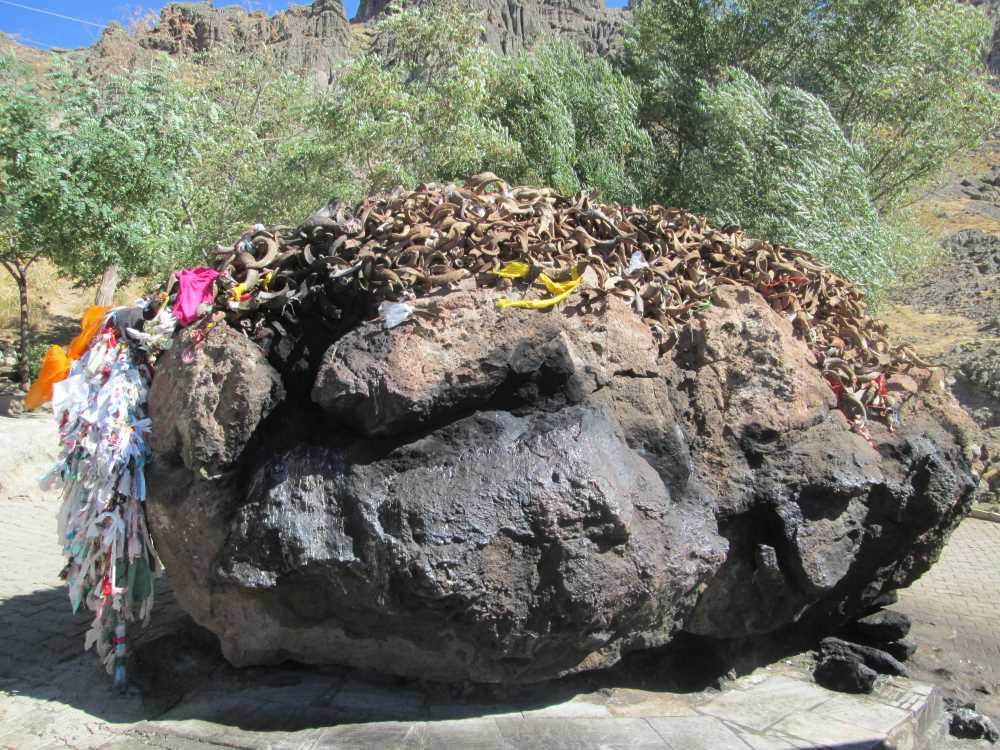
Realizing his father had witnessed his miracle, Şah Haydar felt profound shame for having revealed his spiritual power and for being addressed by name. As a result, he left Zargovit Hill and fled to the peak now known as Düzgün Baba Mountain. During his escape, Şah Haydar wore footwear called "hedik" or "leken," and he traversed the approximately five-kilometer distance between Zargovit and Düzgün Baba Hill in three steps. It is believed that the imprints left by his hedik on the stones along this path still remain visible today.【4】
When Şah Haydar did not return home, his mother became concerned, prompting his father to send his disciples (talibes) to investigate. The disciples ascended to the mountain peak at 2,500 meters altitude, encountered Şah Haydar, and confirmed that he was well.
Upon their return, the disciples described Şah Haydar’s condition and stated that his "işinin düzgün" — his matter was fine or orderly. This phrase spread orally through the region, eventually leading to Şah Haydar being known as Düzgün Baba.【5】
Alongside the legend, the 2,500-meter-high mountain has been named Düzgün Baba Mountain and has become a sacred pilgrimage site. Today, it functions as a center of intense visitation, where offerings are made and sacrifices are performed. The narrative is also regarded as a reflection of the deep-rooted regional tradition of reverence for the father figure.【6】
T.C. Ministry of Culture and Tourism. "Düzgün Baba Efsanesi." Accessed July 1, 2026. https://tunceli.ktb.gov.tr/TR-57275/duzgun-baba-efsanesi.html
Türkiye Kültür Portalı. "Düzgün Baba Efsanesi - Tunceli." Accessed July 1, 2026. https://www.kulturportali.gov.tr/turkiye/tunceli/kulturatlasi/duzgun-baba-efsanesi
[1]
T.C. Kültür ve Turizm Bakanlığı. "Düzgün Baba Efsanesi." Erişim Tarihi 1 Temmuz 2026. https://tunceli.ktb.gov.tr/TR-57275/duzgun-baba-efsanesi.html
[2]
T.C. Kültür ve Turizm Bakanlığı. "Düzgün Baba Efsanesi." Erişim Tarihi 1 Temmuz 2026. https://tunceli.ktb.gov.tr/TR-57275/duzgun-baba-efsanesi.html
[3]
Türkiye Kültür Portalı. "Düzgün Baba Efsanesi - Tunceli." Erişim Tarihi 1 Temmuz 2026. https://www.kulturportali.gov.tr/turkiye/tunceli/kulturatlasi/duzgun-baba-efsanesi
[4]
Türkiye Kültür Portalı. "Düzgün Baba Efsanesi - Tunceli." Erişim Tarihi 1 Temmuz 2026. https://www.kulturportali.gov.tr/turkiye/tunceli/kulturatlasi/duzgun-baba-efsanesi
[5]
Türkiye Kültür Portalı. "Düzgün Baba Efsanesi - Tunceli." Erişim Tarihi 1 Temmuz 2026. https://www.kulturportali.gov.tr/turkiye/tunceli/kulturatlasi/duzgun-baba-efsanesi
[6]
Türkiye Kültür Portalı. "Düzgün Baba Efsanesi - Tunceli." Erişim Tarihi 1 Temmuz 2026. https://www.kulturportali.gov.tr/turkiye/tunceli/kulturatlasi/duzgun-baba-efsanesi

Person Name | Şah Haydar Kureyş (Düzgün Baba) | ||||||||
|---|---|---|---|---|---|---|---|---|---|
Father's Name | Seyyid Mahmud-i Hayrani (Derviş Mahmud Hayrani) | ||||||||
Location | Tunceli, Zeve Location, Zargovit Hill and Düzgün Baba Mountain | ||||||||
Mountain Elevation | 2500 Metres | ||||||||
Cultural Function | Place of Visit, Offering and Sacrifice Center, Tradition of Respect for Baba | ||||||||
No Discussion Added Yet
Start discussion for "Legend of Düzgün Baba" article
Identity and Place of Residence
Miraculous Sustenance and Emergence
Transition to Düzgün Baba Mountain and Physical Traces
Naming Process and the Epithet "Düzgün"
Cultural and Belief-Based Influences