


This article was automatically translated from the original Turkish version.
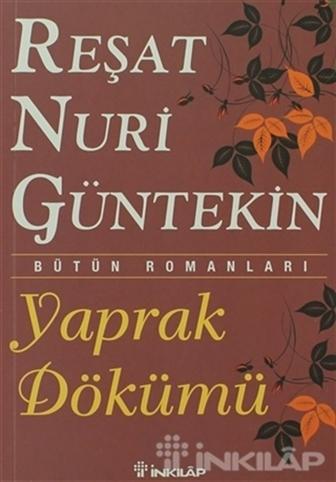
Leaf Fall
Author(s) | Reşat Nuri Güntekin | ||||||||
|---|---|---|---|---|---|---|---|---|---|
Genre | Novel | ||||||||
Publisher(s) | İnkılap Kitabevi | ||||||||
First Edition | 1930 | ||||||||
Reşat Nuri Güntekin’s 1930 novel Yaprak Dökümü is one of the most striking works in Turkish literature, addressing the clash between social modernization, individual aspirations and traditional values. Roman reveals the impact of the modernization process in Republican-era Türkiye on individuals and family institutions, while portraying moral decay and material decline within a tightly woven narrative structure.
In terms of narrative technique, Reşat Nuri Güntekin employs a realist style to depict social realities. Author He favors descriptive narration to emphasize the psychological depth of characters and strengthens the plot through dialogue.
The novel’s influence on contemporary literature is evident in its contribution to discussions on Turkish modernization and Westernization. Leaf Yaprak Dökümü presents the transformations experienced by the middle class as a literary document, offering a critical perspective on the process of modernization.
1. Modernization and Misguided Westernization: Reşat Nuri addresses the recurring theme of misguided Westernization in Turkish novels since the Tanzimat period. The novel’s portrayal of modernization shows how individuals who adopt Western values without critical reflection become vulnerable to cultural disintegration. Among the novel’s main characters, Ali Rıza Lord defends traditional moral values, while his children struggle to adapt to Western lifestyles, leading to conflict with their father.
2. The Decline of the Family Institution: The novel centers on the dramatic collapse of Ali Rıza Bey and his family. Ali Rıza Bey’s commitment to moral values and his efforts to protect his family weaken under the pressures of modernization and economic hardship. At this point, the novel critically depicts how the traditional structure of the Turkish family disintegrates in the face of life’s demands.
3. The Father Figure and the Loss of Values: Ali Rıza Bey represents traditional morality and spends the novel striving to uphold these values. However, due to societal changes, the moral degradation of his family members and financial struggles, he ultimately becomes a powerless father who has lost his values by the novel’s end.
Reşat Nuri Güntekin made changes to the plot and spatial usage of Yaprak Dökümü during the process of adapting it for the theater. The 1943–1944 theater version heightened the drama and made the relationships between Ali Rıza Bey and his children more prominent.
The novel was first adapted for cinema in 1958 and later reached audiences through additional film and television versions in 1967, 1988 and 2006. In particular, the 2006 television adaptation updated the novel’s events and transformed them into a modern melodrama.
Yaprak Dökümü is a powerful work that deeply examines the changes experienced during Türkiye’s modernization process and their impact on the family. Reşat Nuri Güntekin’s masterpiece narrates the tragedy of traditional figures resisting social change while sharply criticizing moral and economic decay. Its theater and cinema adaptations have varied according to historical conditions but have preserved the central theme. Yaprak Dökümü can be read not merely as a family drama but as a Türkiye panorama that conveys the pains brought about by social transformation.
Arslantepe, Mehmet. "Türk Modernleşmesinin Yaprak Dökümü Romanının Sinema ve Televizyon Uyarlamaları Üzerinden Dönemsel İncelenmesi." İnönü Üniversitesi İletişim Fakültesi Elektronik Dergisi (İNİF E-Dergi). Volume 6, Issue 2 (2021): 340-359.
Erdoğan, Türkan. "Reşat Nuri Güntekin’in ‘Yaprak Dökümü’ Adlı Romanında Değişmenin Sosyo-Kültürel Boyutları." Istanbul Journal of Sociological Studies, no. 31 (August 2011): 177-205.
Güntekin, Reşat Nuri. Yaprak Dökümü. İnkılap Kitabevi. İstanbul 2021.
Oğuzhan, Ülkü Ayşe. "Türkiye’de Modernleşmenin Oluşumu ve Cumhuriyet Dönemi Türk Romanında Batılılaşma Olgusu: 'Kiralık Konak', 'Sözde Kızlar', 'Yaprak Dökümü'." Türk Dili Araştırmaları Yıllığı - Belleten, Volume 55, no. 1 (2007): 111-144.
Sakallı, Fatih. "'Değerlerini Yitiren' Bir Babanın Romanı: Yaprak Dökümü." Türk Kültürü. 2021/2. Türk Kültürünü Araştırma Enstitüsü, Ankara (2021): 43-52.
Topçu, Hayrunisa. "Romandan Tiyatroya: Yaprak Dökümü, Eski Şarkı." Erdem. Issue 63 (2012): 223-245.
Yaman, Burcu. "Çeviri Göstergebilimi Bakış Açısıyla Reşat Nuri Güntekin’in Yaprak Dökümü Romanının Çözümlenmesi ve W. D Halsey’e Ait İngilizce Çevirisinin İncelenmesi." Turkish Studies - Language and Literature. 16 (2): 909-932.
Özdemir, Cihan. "Reşat Nuri Güntekin’in "Yaprak Dökümü" Romanında Muhafazakârlık ve Modernizm Çatışması." Uluslararası Türk Lehçe Araştırmaları Dergisi (TÜRKLAD). Volume 3, Issue 2 (2019): 226-232.

Leaf Fall
Author(s) | Reşat Nuri Güntekin | ||||||||
|---|---|---|---|---|---|---|---|---|---|
Genre | Novel | ||||||||
Publisher(s) | İnkılap Kitabevi | ||||||||
First Edition | 1930 | ||||||||
No Discussion Added Yet
Start discussion for "Leaf Shedding (Book)" article
Key Conflicts in the Novel
Adaptations of the Novel into Theater and Cinema