


This article was automatically translated from the original Turkish version.
Hasan Nuhanović’s work Son Sığınak is a study that examines the Srebrenica genocide during the Bosnian War through personal testimonies and an international context. The book recounts events the author witnessed firsthand, questioning the destructive impact of war on humanity and the responsibilities of the international community. This eser sheds light on the tragedy that unfolded in Srebrenica, declared a “safe bölge” by the United Nations, and carries the dual character of a tarihsel historical document and an ethical inquiry.
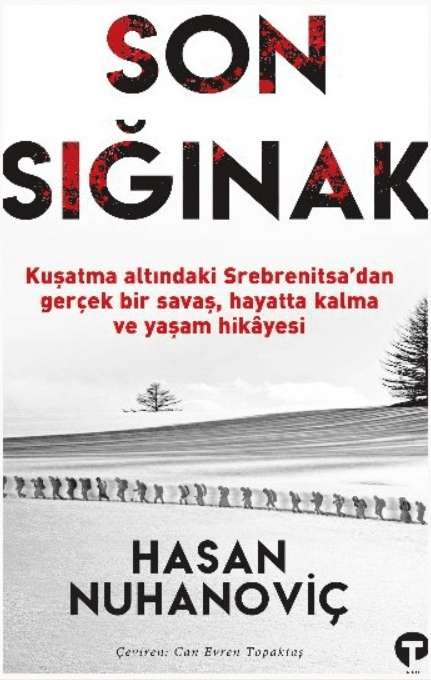
Son Sığınak
The book provides a detailed account of the Srebrenica genocide of 1995 through first-hand testimonies. Yazar is one of the thousands of people who sought refuge in Srebrenica, declared a safe zone. Nuhanović describes in the book how the trust placed by civilians in United Nations peacekeeping forces was tragically betrayed. The murder of his own family during the genocide unites his personal grief with a universal message. The book does not merely recount the history of a genocide; it also lays bare the helplessness and resistance of the individual in the face of such horrific events.
Nuhanović strongly criticizes the role and failure of the United Nations peacekeeping forces in the events in Srebrenica. He holds not only the Serbian militias but also the international community accountable for the massacre of more than 8,000 Bosniak Muslims in a zone declared “safe.” The UN’s inadequacy, the passivity of its troops, and the failure of international diplomatic mechanisms form central elements of his critique. At this point, the author emphasizes that justice is not merely a legal matter but also a moral imperative.
Son Sığınak deeply explores the personal impact of the genocide, bringing to the forefront the human dimension of war. Nuhanović conveys the pain of losing his family and its lasting consequences in a samimi and heartfelt manner. The book reveals how individuals are victimized by the destructiveness of war and how the trauma it creates can persist across generations. This narrative, which focuses not on physical destruction but on psychological and emotional devastation, leaves a profound impact on the reader.
Nuhanović does not treat the Srebrenica genocide as an isolated olay but analyzes its historical and political background. The dissolution of Yugoslavya, the rise of ethnic nationalism, and the indifference of the Batı world to this process are given extensive attention in the work. The book underscores that the Bosnian War was not merely a regional conflict but a consequence of international policies and power dynamics.
Son Sığınak thoroughly examines the importance of adalet and memory. The author argues that the genocide must not be forgotten and that the international community must learn from its mistakes to prevent such tragedies from recurring. Nuhanović asserts that justice must be found not only in courts but also in collective memory. The book reminds readers that past tragedies serve as warnings for future generations.
Nuhanović, Hasan. Son Sığınak. Trans. Can Evren Topaktaş. Turkuvaz Yayınları, 2020

No Discussion Added Yet
Start discussion for "Last Shelter (Book)" article
Content of the Book
The Srebrenica Genocide and the Author’s Witness Account
The International Community and the Responsibility of the United Nations
The Loss of Family and the Human Dimension of War
Historical and Political Context of the Genocide
Justice and Remembrance