


This article was automatically translated from the original Turkish version.
Landslide is the movement of a mass of rock, soil, or debris down a slope under the influence of gravity. This type of mass movement, common in the Earth’s crust, can occur either rapidly or slowly. Landslides play a significant role in the formation, erosion, and reshaping of landforms.
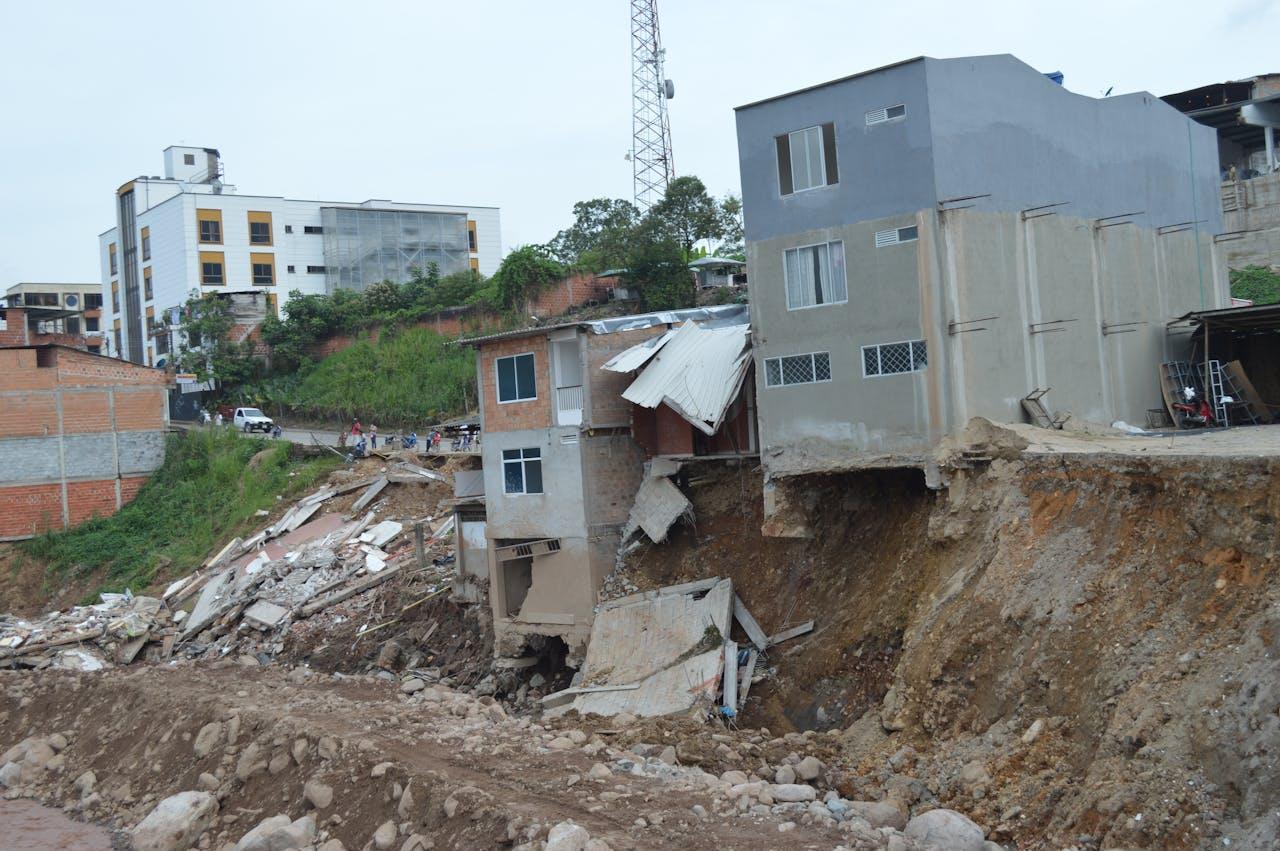
Heyelan görüntüsü. (Pexels)
Landslides typically result from the combined effect of multiple factors. The main causes are as follows:
Landslides are classified into various types based on their movement patterns and the nature of the material involved:
Landslides are events that significantly impact both the natural environment and human life. As a result of these disasters, infrastructure such as buildings, roads, and railways, as well as essential service networks including electricity, water, and natural gas, can suffer severe damage. Destruction of agricultural land leads to economic losses and reduced food production. Loss of life and property are among the most serious consequences of landslides. Furthermore, blockage of river channels can lead to the formation of new lakes, altering ecological balances. Permanent changes in topography disrupt the natural structure of the terrain. In addition, loss of soil fertility increases the rate of erosion, which negatively affects ecosystems in the long term.
Various measures must be taken to reduce landslide risk. First, construction must be strictly avoided on risky and steep slopes, and these areas should not be selected for settlement. Preservation of natural vegetation and reforestation efforts play a vital role in preventing landslides by anchoring the soil in place. On sloping agricultural land, terracing and plowing parallel to the slope prevent soil movement. Additionally, early warning systems should be established in landslide-prone areas, and cracks and seepages on slopes must be regularly monitored to detect potential hazards in advance. Preventing rivers flowing at the base of slopes from eroding and weakening the ground is another effective preventive measure.
Landslide events in Türkiye are particularly frequent in the Black Sea Region. The North Anatolian Mountains are highly prone to landslides due to high rainfall, lithological structure, and steep slopes. Cities such as Trabzon, Rize, Artvin, and Gümüşhane are among the areas where landslides commonly occur.
Kadıoğlu, Mikdat. "Sel, Heyelan ve Çığ İçin Risk Yönetimi." 2008. Accessed May 6, 2025.https://eskisakarya.imo.org.tr/resimler/ekutuphane/pdf/3941.pdf.
T.C. Dörtyol Kaymakamlığı. "Heyelan." Accessed May 6, 2025.http://dortyol.gov.tr/heyelan.
Yayla, Onur. *Heyelan Set Göllerinin Oluşum ve Gelişim Şartlarının Jeomorfolojik İndislerle Değerlendirilmesi: Kop Akburak Gölü (Bayburt) Örneği.* Accessed May 6, 2025.https://www.academia.edu/103120311/Heyelan_Set_G%C3%B6llerinin_Olu%C5%9Fum_ve_Geli%C5%9Fim_%C5%9Eartlar%C4%B1n%C4%B1n_Jeomorfolojik_%C4%B0ndislerle_De%C4%9Ferlendirilmesi_Kop_Akburak_G%C3%B6l%C3%BC_Bayburt_%C3%96rne%C4%9Fi?auto=download.

Factors Causing Landslides
Types of Landslides
Consequences of Landslides
Preventive Measures
Landslides in Türkiye