


This article was automatically translated from the original Turkish version.
+1 More
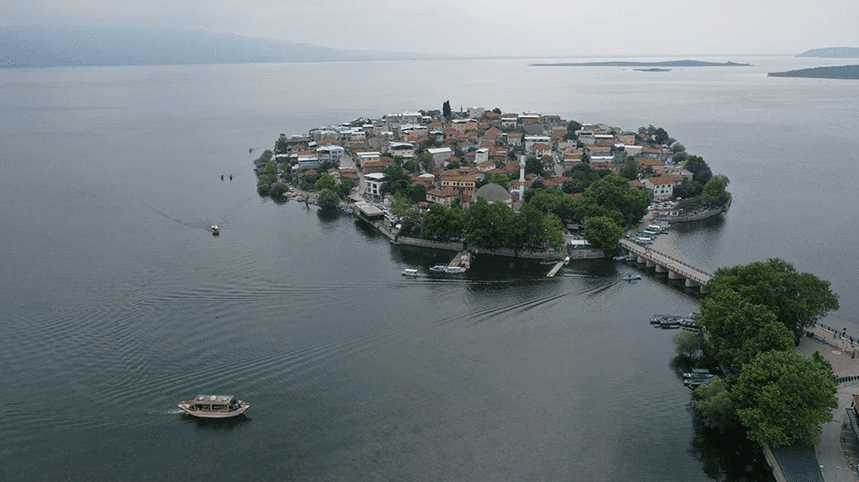
Uluabant Lake
Location | Bursa | ||||||||
|---|---|---|---|---|---|---|---|---|---|
Length | 24 km | ||||||||
Width | 10 km | ||||||||
Type | Tectonic Lake | ||||||||
Water Property | Sweet | ||||||||
Uluabat Gölü is a freshwater lake located within the boundaries of Bursa, extending in an east-west direction with a length of 24 km and a width of 10 km. The lake is fed by the Mustafakemalpaşa Çayı, which enters from the south and connects to the Marmara Sea via the Koca Çay to the west. This geographical structure makes Uluabat Gölü one of the most important wetlands not only in Türkiye but also in Europe and the Middle East.
In 1998, Uluabat Gölü was designated as a RAMSAR protected area by the Ministry of Environment and was included in the International Network of Living Lakes at the 4th International EXPO 2000 conference. These conservation measures represent a significant step toward preserving the lake’s biological diversity and ecosystem.
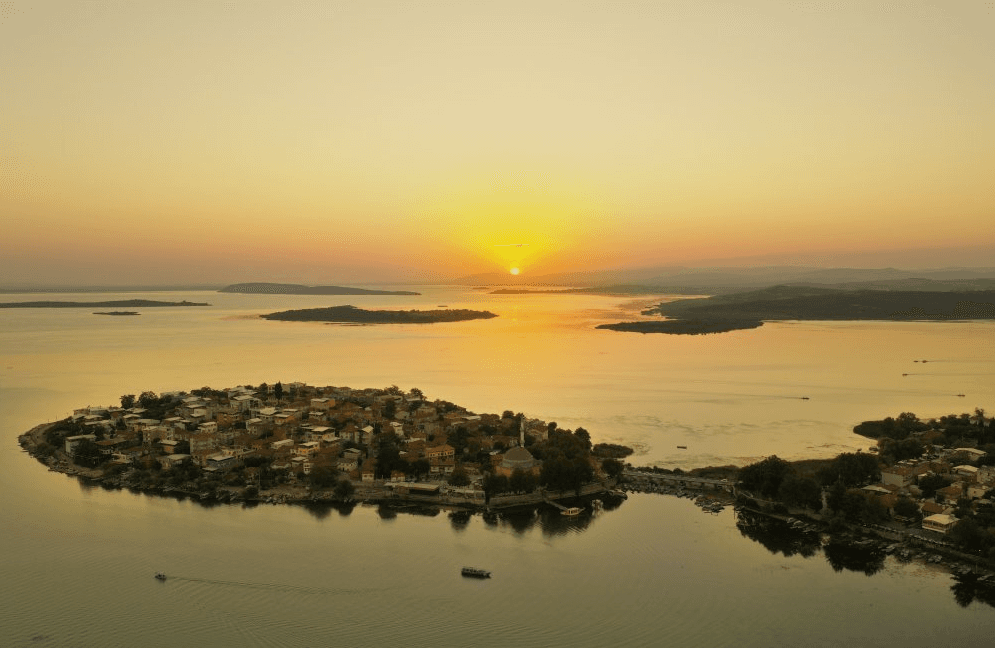
Uluabat Gölü (Source: Bursa Turizm Portalı)
Uluabat Gölü is located 25 km west of the city center of Bursa. It is a shallow freshwater lake of tectonic origin, surrounded by hills extending from Uludağ to the east and broad plains stretching as far as Manyas Gölü to the west. The southern part of the lake is dominated by rocky and stony formations.
The delta where the Mustafakemalpaşa Çayı flows into the lake is the area with the richest habitat diversity in the lake. This delta is enriched with reed beds, sandy plains, seasonal marshes and wet meadows. Additionally, the Gölyazı Peninsula hosts the largest water lily beds in Türkiye.
Mediterranean shrubland vegetation dominates the hills surrounding the lake, with wild olive groves and mixed shrubland habitats also observed. Extensive reed beds are found along the northwestern shores of the lake, and these areas expand further east of the Gölyazı Peninsula.
Uluabat Gölü is one of Türkiye’s most important wetlands in terms of biological diversity. It is the only Turkish lake included in the International Network of Living Lakes and provides habitat for species requiring international protection. Research in the lake has identified 21 fish species. Major commercially fished species include carp and tench, while others such as bleak, freshwater bream, rudd, roach and crayfish are also present.
The lake also provides habitat for many bird species threatened with extinction. Notable among these are the little bittern, Dalmatian pelican, pied kingfisher and spoonbill. Additionally, the little grebe and the little ringed plover are observed during their breeding seasons.
The lake serves as a wintering ground for hundreds of thousands of waterbirds. In 1996, a census recorded 429,423 waterbirds, the highest number ever recorded in a wetland since the 1970s. Uluabat Gölü also provides habitat for mammals such as the Eurasian otter (Lutra lutra).
Economic activities around Uluabat Gölü include fishing, agriculture and livestock farming. The village of Gölyazı is used by residents of Bursa as a weekend relaxation destination, and organized tourist visits are common. However, several threats to the lake’s ecosystem exist. Nutrients carried by the Mustafakemalpaşa Çayı contribute to the lake’s shallowing, while untreated domestic wastewater and industrial effluents from surrounding settlements are discharged directly into the lake. These factors disrupt the lake’s delicate balance and negatively impact its biological diversity.
Other threats include the introduction of non-native fish species, reed fires and unplanned willow cutting. Agricultural burning and the use of reed fires for hunting also negatively affect biological diversity and continue to pose a fire risk to the lake.
In 2002, with the support of the Ministry of Environment and the Society for the Protection of Natural Heritage, the Uluabat Gölü Management Plan was developed. This plan was created with active participation from all stakeholders in the region and has initiated key steps toward the lake’s conservation. Additionally, Uludağ University Bird Observation Community (ULUKUŞ) organizes numerous activities including environmental education, birdwatching tours and bird censuses.
Bursa.com.tr. "Uluabat Gölü." Accessed February 20, 2025.https://www.bursa.com.tr/tr/mekan/uluabat-golu-105/.
Doğa Derneği. "Uluabat Gölü." Accessed February 20, 2025.https://dogadernegi.org/uluabat-golu-2/.
Karacabey Belediyesi. "Uluabat (Apolyont) Lake." Accessed February 20, 2025.http://www.karacabey.gov.tr/uluabat-apolyont-golu-2.

Uluabant Lake
Location | Bursa | ||||||||
|---|---|---|---|---|---|---|---|---|---|
Length | 24 km | ||||||||
Width | 10 km | ||||||||
Type | Tectonic Lake | ||||||||
Water Property | Sweet | ||||||||
Geographical Features and Habitats
Biological Diversity and Conservation Priorities
Economic Activities and Threats
Conservation Efforts and Participatory Management