


This article was automatically translated from the original Turkish version.
+2 More
Lake İznik is located in the southeastern part of the Marmara Region, within the boundaries of the province of Bursa, and is the fifth largest and the largest natural lake in Türkiye. This tectonic lake, with a surface area of 298 km², lies 85 metres above sea level. Known in antiquity as Askania, the lake lies between the districts of İznik and Orhangazi and contains freshwater. Its depth increases from north to south, reaching a maximum of 65 metres at its deepest point. Fishing for species such as bleak, sea bass, carp and silverfish is practiced in the lake.
Lake İznik contains a basilica bearing traces from the Christian era and the Roman Empire. This discovery was made in 2014 during historical and cultural heritage surveys conducted by the Bursa Metropolitan Municipality. This basilica, significant in terms of underwater archaeology, dates to the 4th–5th centuries CE. The district of İznik, located around the lake, also attracts tourists with its historical structures and ancient ruins.
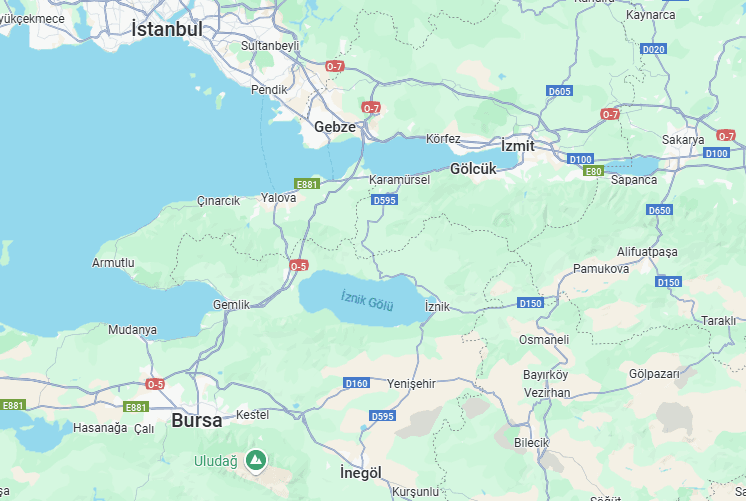
Map Display
Lake İznik lies between the district of İznik to the east and the Gemlik Gulf to the west. It is surrounded by the Samanlı Mountains to the north and the Avdan Mountain to the south. The lake stretches approximately 32 km in an east-west direction and reaches a maximum width of 11.5 km. Situated within a tectonic depression formed by the surrounding low mountain ranges, the lake’s catchment area covers 1,246 km². The surrounding area is covered by agricultural fields and olive groves. The main rivers feeding the catchment area are Karadere and Sölöz Creek. The lake is replenished by karstic springs and rainfall.
The area around Lake İznik is one of the important agricultural regions of Bursa Province. Olive groves and vineyards constitute the primary agricultural activities in this region. Irrigation projects drawing water from the lake and fishing are fundamental components of the local economy. Lake İznik is also a natural attraction for tourists, with picnic areas and social facilities located around its shores. Camping tourism and day-use recreation areas enhance the region’s tourist appeal.
Lake İznik possesses rich biological diversity. The lake is particularly significant as a habitat for birds, including several threatened species. For example, birds such as the purple heron (Ardea purpurea), little bittern (Ardeola ralloides) and pygmy cormorant (Phalacrocorax pygmeus) form substantial populations during their breeding season. Additionally, the oak forests and reed beds surrounding the lake hold considerable ecological importance.
The lake’s water was once used for drinking and currently contributes to the economy through fishing activities. Various ecosystem management efforts are needed to protect the waterbirds and vegetation around the lake. However, irrigation projects and illegal water extraction threaten this biological diversity.
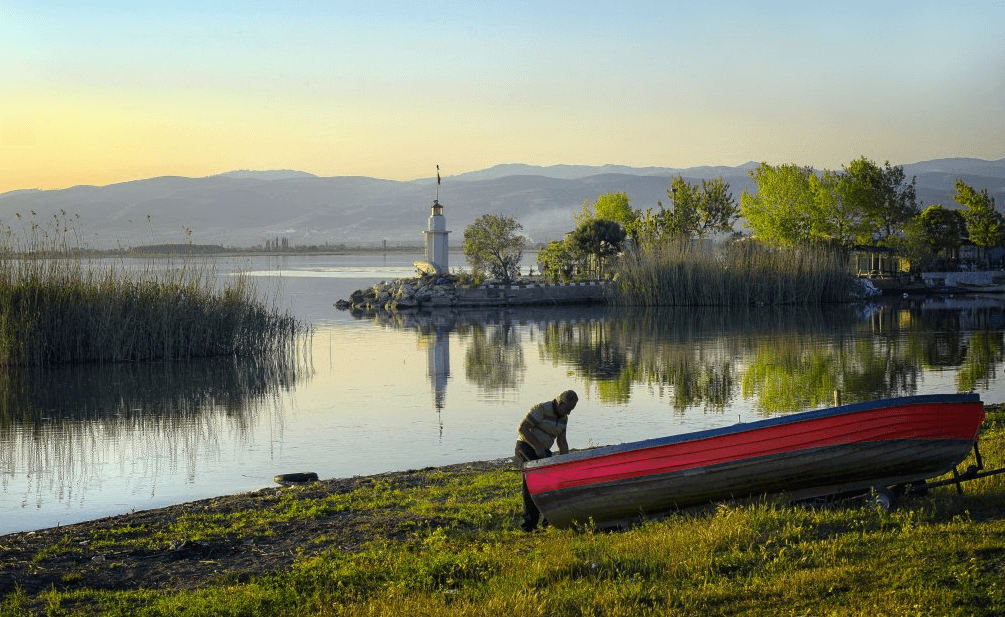
Lake İznik (Source: Bursa Kültür Portalı)
Lake İznik was designated a Site of Special Scientific Interest in 1990. Although various efforts are underway to protect the lake’s biological diversity, threats such as irrigation projects, pollution and illegal fishing persist. Furthermore, illegal water extraction from the lake and the impact of surrounding settlements constitute significant threats. Therefore, increased public awareness and enhanced conservation initiatives are required to safeguard the ecosystems around the lake.
Bursa.com.tr. "İznik Gölü ve Sualtı Bazilikası." Accessed February 20, 2025.https://www.bursa.com.tr/tr/mekan/iznik-golu-ve-sualti-bazilikasi-37/
Bursa.com.tr. "İznik Gölü." Accessed February 20, 2025.https://www.bursa.com.tr/tr/mekan/iznik-golu-43/.
Doğa Derneği. "İznik Gölü." Accessed February 20, 2025.https://dogadernegi.org/iznik-golu/.
İznik Belediyesi. "İznik Gölü." Accessed February 20, 2025.http://www.iznik.gov.tr/iznik-golu.
İznik Milli Education Directorate. "İznik Gölü." Accessed February 20, 2025.https://iznik.meb.gov.tr/www/iznik-golu/icerik/647

Geography and Climate
Biological Diversity and Ecosystem
Conservation Efforts and Threats