


This article was automatically translated from the original Turkish version.
+2 More
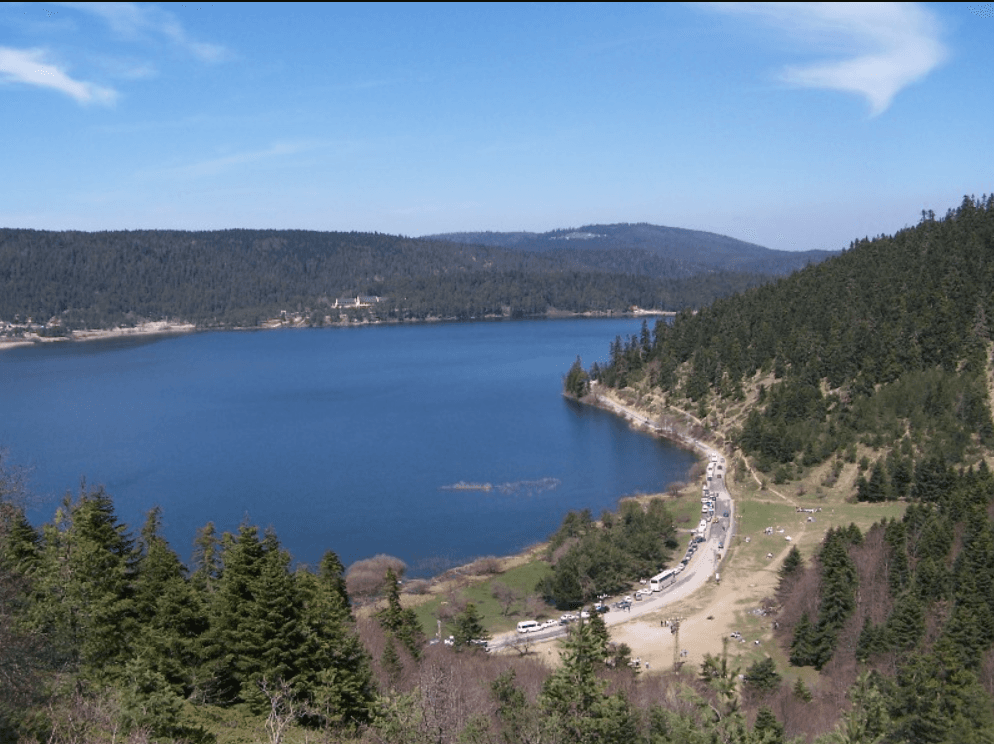
Lake Abant
Location | Bolu | ||||||||
|---|---|---|---|---|---|---|---|---|---|
Elevation | Between 1325 and 1700 m | ||||||||
Protection Status | 9 June 2022 – National Park status (Türkiye's 48th National Park) 21 October 1988 – Declaration as Nature Park | ||||||||
Abant Lake is a natural freshwater lake located within the boundaries of Bolu Province in western Türkiye’s Black Sea region, 18 km northeast of the district of Mudurnu. Situated at an elevation of 1328–1350 meters, it is a tectonic and landslide-formed lake on the Abant Mountains, with a surface area of approximately 125–127 hectares and a maximum depth of 18 meters.
The lake and its surrounding mountainous terrain, forests, and water sources were designated as a “Nature Park” in 1988 and attained the status of a “National Park” on 9 June 2022.
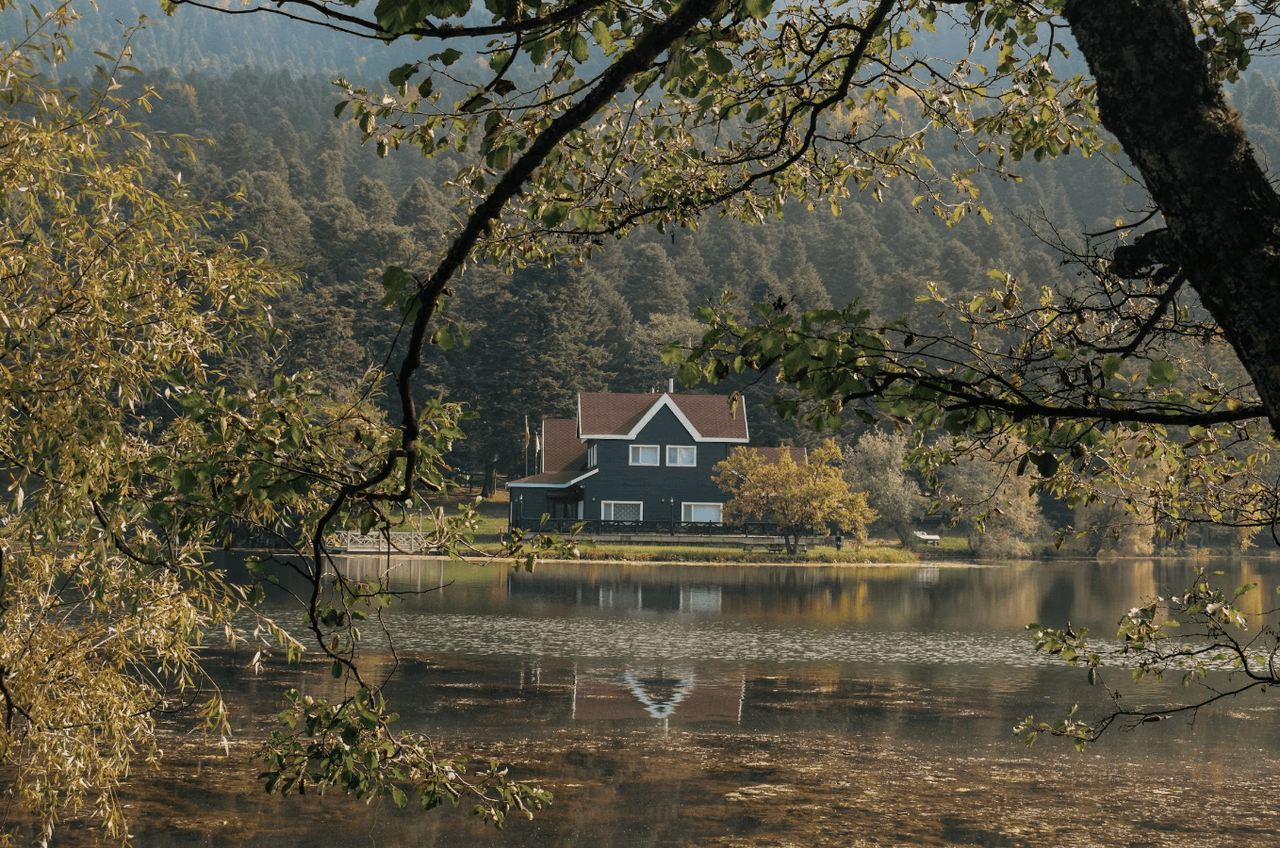
Abant Gölü (Pexels)
Abant Lake is a natural dam lake formed by the blocking of the Abant Creek valley by a landslide mass. It lies west of the North Anatolian Fault Line, near the Gerede segment. Fed year-round by snow, rainfall, and small streams, the lake discharges excess water into the Büyüksu Creek via the Abant Creek. The lake surface freezes completely during winter months.
The area surrounding Abant Lake possesses a rich vegetation cover due to its location in the transition zone between the Black Sea and Central Anatolian climate belts and its topographic diversity. Approximately 1305 scientifically identified plant species have been recorded in and near the lake, of which more than 50 are endemic.
Aquatic macrophytes found along the lake shore include:
Abant Lake and its surroundings host a wide variety of vertebrate and invertebrate species through their terrestrial and aquatic ecosystems.
Birds
Butterflies
Macrophyte studies and water quality monitoring data indicate that Abant Lake exhibits moderate nutrient enrichment (eutrophication). Macrophyte density increases notably during summer and autumn, with certain species becoming dominant.
Measured Values
The physicochemical variables of Abant Lake (temperature, dissolved oxygen, pH, conductivity, etc.) vary seasonally. Average temperature ranges from 10–12 °C and pH from 7.5 to 8.0. Studies have detected the presence of heavy metals such as cadmium, lead and mercury in the lake. Their accumulation in plankton and aquatic organisms varies by season.
Based on macrophyte analyses, the ecological quality of Abant Lake is rated as “good” and its nutrient enrichment as “moderate.” Measurements conducted in 2015 yielded a Macrophyte Index (MI) of 2.85 and an Ecological Quality Ratio (EQR) of 0.52.
The lake and its surroundings were placed under protection as a nature park in 1988 and became Türkiye’s 48th national park in 2022. Since 2003, a “long-term development plan” has aimed to preserve the area, manage tourism pressure and ensure sustainable use.
Major threats include overgrazing, illegal hunting, introduction of non-native species into aquatic environments and uncontrolled tourism activities. Particularly day-trip tourism and hotel construction damage the vegetation cover. In 2015, the lake was designated a “Sensitive Area” due to eutrophication risk.
Abant Lake (Youtube)
Abant Lake was discovered in the 1920s and began to be promoted as a tourist destination from the 1930s onward. Atatürk’s visit to Abant during his 1934 trip to Bolu significantly contributed to the region’s promotion.
Today, the lake area is enriched with accommodation facilities, walking trails, a nature museum, viewing terraces, restaurants and cafés, tented camping areas and sport fishing opportunities, alongside its natural landscape. The national park attracts visitors year-round, with peak demand during winter and holiday periods. In 2023, it was visited by 571,162 people.
Access to the lake has been regulated since 2023 through the HGS system. Open fires and wood-burning barbecues are prohibited around the lake; only gas or electric stoves are permitted.
Coşkun, Tolga, and Ayşe Nilsun Demir. “Abant Gölü’nde Biyolojik Kalite Elementlerinden Sucul Makrofitler.” *Acta Aquatica Turcica* 15, no. 4 (2019): 499–506. Accessed May 31, 2025.https://dergipark.org.tr/en/download/article-file/892320
Kara, Serdar. “Cumhuriyet Döneminde Bir Turistik Mekân Projesi: Abant Gölü (1923–1950).” *Atatürk Yolu Dergisi* 72 (2023): 200–223. Accessed May 31, 2025.https://dergipark.org.tr/tr/download/article-file/2867495
Çelekli, Abuzer, Sidar Yaygır, and Özgür Eren Zariç. “Türkiye’nin Gölleri: Abant Gölü'nün Kapsamlı İncelemesi.” *Acta Aquatica Turcica* 19, no. 4 (2023): 368–380. Accessed May 31, 2025.https://agris.fao.org/search/en/providers/123973/records/6582fce5ebe24a6dee898e4f
“48. National Park of Our Country Is ‘Abant Gölü National Park’.” T.C. Tarım ve Orman Bakanlığı Doğa Koruma veMilli Parklar Genel Müdürlüğü. Accessed May 31, 2025.https://www.tarimorman.gov.tr/DKMP/Haber/241/48-Milli-Parkimiz-Abant-Golu-Milli-Parki-Oldu.
“Abant Dağları.” Doğa Derneği. Accessed May 31, 2025.https://dogadernegi.org/abant-daglari/.
“Abant Gölü Milli Parkı.” *Türkiye Turizm Ansiklopedisi*. Accessed May 31, 2025.https://turkiyeturizmansiklopedisi.com/abant-golu-milli-parki.
“Abant Gölü.” Bolu Kültür ve Turizm İl Müdürlüğü. Accessed May 31, 2025.https://bolu.ktb.gov.tr/TR-157484/abant-golu.html.
“Abant Tabiat Parkı.” T.C. Bolu Valiliği. Accessed May 31, 2025.http://www.bolu.gov.tr/abant-tabiat-parki.
“Bolu Abant Gölü Milli Parkı.” T.C. Tarım ve Orman Bakanlığı 9. Bölge Müdürlüğü Bolu Şube Müdürlüğü. Accessed May 31, 2025.https://bolge9.tarimorman.gov.tr/Menu/53/Bolu-Abant-Golu-Milli-Parki.
“Villa Manzaralı Yolculuk.” Pexels. Photo: trees, travel, journey, villa. Accessed May 31, 2025.https://www.pexels.com/tr-tr/fotograf/agaclar-seyahat-yolculuk-villa-16494034/
“Yolculuk Vlogu – Abant Gölü.” YouTube. Accessed May 31, 2025.https://www.youtube.com/watch?v=kXMu7YQFS5A.

Lake Abant
Location | Bolu | ||||||||
|---|---|---|---|---|---|---|---|---|---|
Elevation | Between 1325 and 1700 m | ||||||||
Protection Status | 9 June 2022 – National Park status (Türkiye's 48th National Park) 21 October 1988 – Declaration as Nature Park | ||||||||
Geological and Hydrological Structure
Flora (Plant Diversity)
Forest Flora
Shrubs and Herbaceous Plants
Endemic Plants
Aquatic Plant Communities
Fauna (Animal Diversity)
Mammals
Fish
Amphibians and Reptiles
Ecological Quality and Environmental Indicators
Conservation Status and Threats
Main Threats
Limnological and Water Quality Assessments
Conservation and Management
Tourism and Human Impact