This article was automatically translated from the original Turkish version.
Location | Near the ancient city of Stratonikeia Muğla Yatağan district | ||||||||
|---|---|---|---|---|---|---|---|---|---|
Initial Construction | Hellenistic period (3rd–2nd century BCE) | ||||||||
Architectural Style(s) | Temple in the Ionic order and commercial structures monumental propylon | ||||||||
Excavation History | Initiated in the 19th century by Osman Hamdi Bey, continued by Pamukkale University | ||||||||
Conservation Status | Archaeological site Cultural heritage | ||||||||
Religious Significance | Center of the cult of Hecate | ||||||||
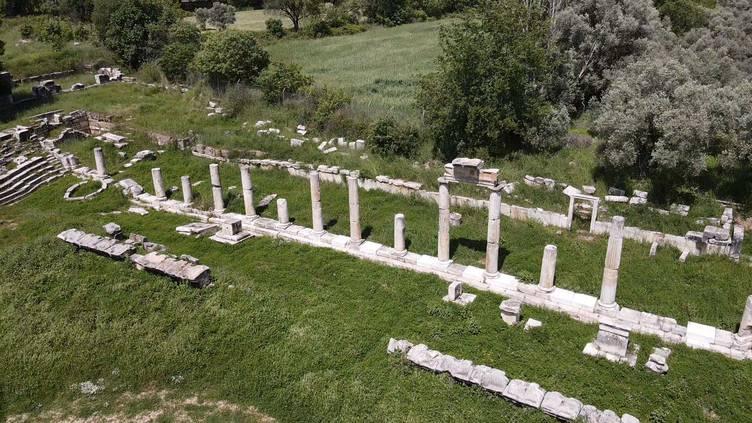
Lagina Sanctuary of Hekate is located in Lagina, within the boundaries of the Yatağan district of Muğla Province, and was one of the major religious centers of the ancient region of Caria. This site was connected to the ancient city of Stratonikeia by a sacred road (heilige straße) and is regarded particularly as one of the most important cult centers of Hekate in the ancient world. Hekate is known in ancient Greek mythology as the goddess of crossroads, magic, and the underworld.
The sanctuary at Lagina gained prominence from the Hellenistic period onward and was further expanded during the Roman period with the addition of monumental structures. The site was first excavated in the late 19th century by Osman Hamdi Bey, and the architectural fragments and reliefs discovered there are now exhibited at the Istanbul Archaeology Museums.
Current excavations are led by Pamukkale University, revealing new structures related to the sanctuary, including shops, passageways, and the main entrance gate. In excavations conducted during the 2020s, the propylon (monumental entrance gateway) to the sanctuary and surrounding shop buildings were among the significant new finds.
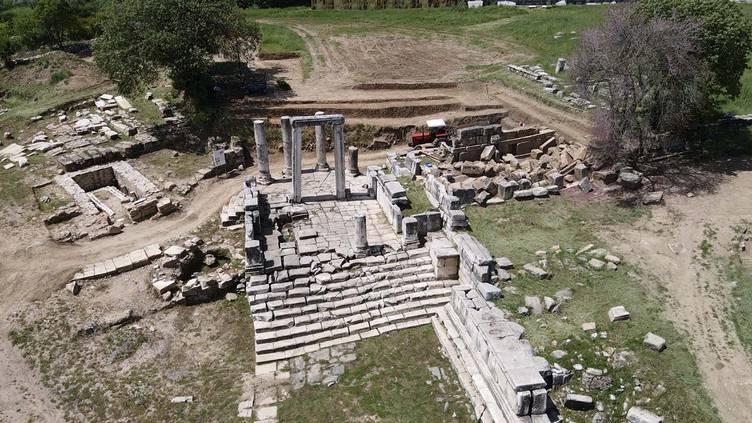
Lagina Sanctuary of Hekate ( Anadolu Agency)
The Sanctuary of Hekate follows a typical temenos (sacred precinct) layout. At its center stands the temple dedicated to the goddess, surrounded by areas used for rituals and worship. The temple was constructed in the Ionic order and features a highly ornate frieze. These friezes depict scenes of battles with the Amazons, representations of gods and goddesses, and religious ceremonial events. The temple’s architecture reveals not only its religious significance but also its artistic richness.
The cult of Hekate was especially strong in the region of Caria. The sanctuary at Lagina was more than a place of worship; it served as a central hub for sacred processions (pompaia) and religious ceremonies, maintaining a continuous ritual connection with Stratonikeia. Each year, during the sacred processions, religious marches began in Stratonikeia and extended all the way to Lagina, where sacrifices and rituals were performed.
Inscriptions found at the sanctuary also indicate that women and children played significant roles in these ceremonies. The cult of Hekate was not only tied to themes of magic and transition associated with the goddess but also played a defining role in the local community’s identity.
Today, Lagina is an important site requiring preservation both archaeologically and culturally. The area, visited by both domestic and international tourists, offers a comprehensive panorama of the region’s ancient religious topography, especially when considered together with the Stratonikeia-Lagina sacred road. Informational panels at the site and conservation efforts are carried out in collaboration between the Ministry of Culture and Tourism and universities.
Anadolu Ajansı. “Lagina Hekate Kutsal Alanı’nda kentin giriş kapısı ve dükkanlar açığa çıkarılıyor.” Accessed June 21, 2025. https://www.aa.com.tr/tr/kultur/lagina-hekate-kutsal-alaninda-kentin-giris-kapisi-ve-dukkanlar-aciga-cikariliyor/3564589
Büyüközer, Aytekin. “Lagina Hekate Kutsal Alanı Güney Propylonu.” *Cedrus: Akdeniz Uygarlıkları Araştırma Dergisi* 3 (2015): 67–87. https://dergipark.org.tr/tr/pub/cedrus/issue/51823/674034
Culture Portal. "Lagina Hekate Kutsal Alanı." *Republic of Turkey Ministry of Culture and Tourism Culture Portal*. Accessed June 21, 2025. https://www.kulturportali.gov.tr/turkiye/mugla/gezilecekyer/lagina
Feniks Dergi. “Dünya Üzerinde Hâlen Ayakta Olan Tek Hekate Tapınağı: Stratonikeia Kenti Kutsal Alanı Lagina.” Accessed June 21, 2025. https://www.feniksdergi.org/dunya-uzerinde-halen-ayakta-olan-tek-hekate-tapinagi-stratonikeia-kenti-kutsal-alani-lagina
MUTRO (Muğla Turist Rehberleri Odası). "Lagina Kutsal Alanı." MUTRO Resmî Web Sitesi. Accessed June 21, 2025. https://mutro.org.tr/haber-lagIna-kutsal-alani-112.html
Ministry of Culture and Tourism. "Lagina Örenyeri Site – Museums and Archaeological Sites." T.C. Ministry of Culture and Tourism. Accessed June 21, 2025.
Muğla İl Directorate of Culture and Tourism. "Lagina." _Turkish Republic Muğla Provincial Directorate of Culture and Tourism_. Accessed June 21, 2025. https://mugla.ktb.gov.tr/TR-177740/lagina.html
Pamukkale University. "Lagina Kutsal Alanı Kazıları." Pamukkale Üniversitesi Arkeoloji Bölümü. Accessed June 21, 2025. https://www.pau.edu.tr/lagina

Location | Near the ancient city of Stratonikeia Muğla Yatağan district | ||||||||
|---|---|---|---|---|---|---|---|---|---|
Initial Construction | Hellenistic period (3rd–2nd century BCE) | ||||||||
Architectural Style(s) | Temple in the Ionic order and commercial structures monumental propylon | ||||||||
Excavation History | Initiated in the 19th century by Osman Hamdi Bey, continued by Pamukkale University | ||||||||
Conservation Status | Archaeological site Cultural heritage | ||||||||
Religious Significance | Center of the cult of Hecate | ||||||||
No Discussion Added Yet
Start discussion for "Lagina Sanctuary of Hecate" article
History and Discoveries
Architectural Features
Religious and Cultural Significance
Conservation and Tourism