


This article was automatically translated from the original Turkish version.
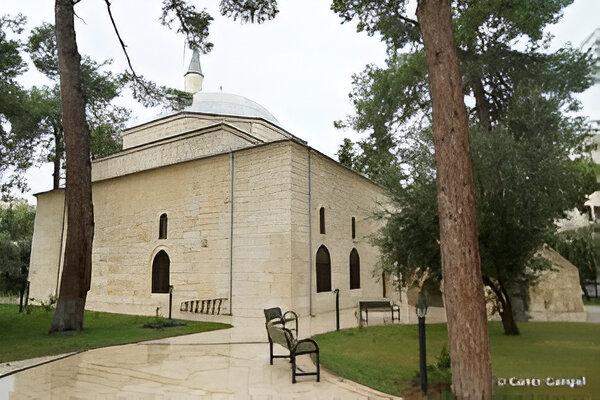
Laal Paşa Camii
Location | Mersin Mut District | ||||||||
|---|---|---|---|---|---|---|---|---|---|
Founder | Laal Paşa (real name: Musa) | ||||||||
Period | Karamanoğlu Beylik | ||||||||
Historical Significance | Built by Laal Paşa, who was a slave of Karamanoğlu Alâeddin Bey; after being freed, Laal Paşa became the governor of Niğde Castle and constructed a mosque, madrasa, and bath in Mut, endowing them with waqf revenues. | ||||||||
Plan | Built on a rectangular base. | ||||||||
Dome | A single dome resting on an octagonal drum; external dimensions 18x21 m, internal dimensions 11.45x18.70 m. | ||||||||
Final Prayer Area | A five-domed portico on the north side, supported by four cylindrical green-tiled columns. | ||||||||
Windows | Two rows of four windows each on the east, west, and south facades (smaller ones above, wider ones below); on the north, a central door with two large windows on either side (Ottoman style). | ||||||||
Doors | Main entrance door on the north; a small door on the east (accessible by a wooden staircase to the women’s gallery). | ||||||||
Minaret | Originally absent; an azan tower was built over the portico and demolished in 1915. The minaret, begun in 1923, was completed in 1936. | ||||||||
Interior Features | A dome carried by four piers, a marble mihrab niche with muqarnas, and a painted mihrab. | ||||||||
Material | Regularly cut stone. | ||||||||
Laal Paşa Camii, located in the Mut district of Mersin, is a significant historical structure dating back to the Karamanoğlu Beylik period. The mosque’s founder (patron) was Laal Paşa, a former slave whose real name was Musa. Laal Paşa was one of the slaves of Karamanoğlu Alâeddin Bey, won his favor, and was educated under his patronage. Impressed by Laal Paşa’s competence, Alâeddin Bey granted him freedom, elevating him to the status of a free birey. Due to his successes in state affairs, Laal Paşa was appointed governor of Niğde Castle. During his tenure in Mut, he commissioned the construction of a mosque, a medrese, and a hamam, and allocated endowment revenues to ensure their continued operation. His exact date of birth, how he came to serve the Karamanoğlus, his date of death, and the location of his tomb remain unknown. However, Evliya Çelebi’s Seyahatname records that Laal Paşa’s grave is located in one of the domed tombs within the mosque’s courtyard.
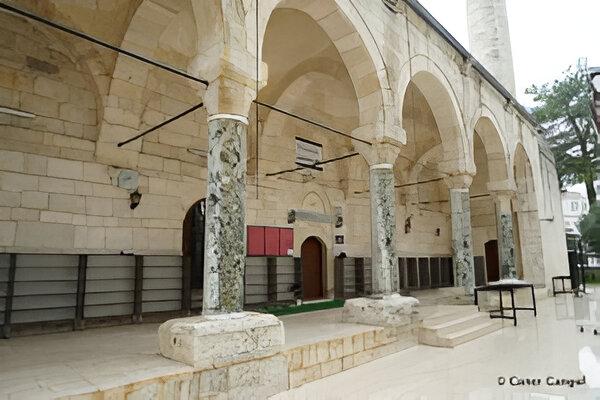
Laal Paşa Camii (kulturenvanteri)
Laal Paşa Camii is built on a rectangular base using precisely cut stone. The mosque’s main dome rests on an octagonal drum; its external dimensions are 18 by 21 metres, while the internal measurements are 11.45 by 18.70 metres. On the north façade, a five-domed cemaat area is supported by four monolithic green stone columns with rounded arches. Inside, the main dome is supported by four piers, and in addition to the four main arches, four secondary arches form niches. The mosque’s mermer pulpit is original and notable for its mukarnas craftsmanship, while the mihrab niche was repainted at a later date.
On the east, west, and south façades, there are two rows of four windows each, in accordance with Karamanoğlu architectural style; the upper row consists of smaller windows, while the lower row features wider ones. On the north façade, the mosque entrance is centrally located, flanked by two larger and taller windows on either side. These kapı and windows reflect Ottoman architectural features, suggesting renovations carried out during the Ottoman period. On the east façade, near the corner, there is a small door; entering through it leads to a wooden staircase that provides access to the women’s gallery. The mosque has no other entrance.
Originally without a minaret, a slender ezan tower was added above the western revak arch during its construction, but this yapı was demolished in 1915 along with the revak. Construction of the current minaret began in 1923 and was completed in 1936; the inscription related to this construction is located to the right of the revak.
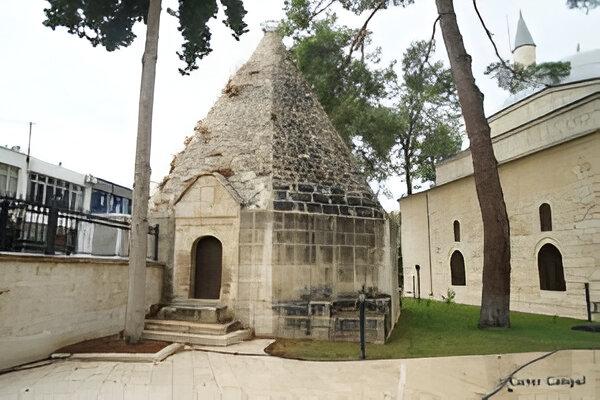
Laal Paşa Camii (kulturenvanteri)
The exact construction date of Laal Paşa Camii is unknown, but documents dated 1798 and 1815 clearly state that both the mosque and the medrese were commissioned by Laal Paşa. In a document dated February 1798, the qadi of Mut and Sinanlı, Molla Süleyman, referred to the structure as “the noble mosque built by the late and forgiven La’l Paşa in the Mut district”; an 1815 document mentions “the medrese built by the late, blessed La’l Paşa, one of the virtuous figures of Mut.”
The mosque has undergone several restorations throughout its history. The first repair was carried out in 1752 by Hacı Mustafa, the secretary of the divan of Çelik Mehmet Paşa, the governor of İçel; however, the inscription commemorating this repair has not survived. The second restoration was conducted in 1820 by Mehmet ibn Emrullah. Construction of the revak and minaret began in 1923, with the minaret completed in 1936. Currently, the mosque is the subject of restoration efforts that began on 5 May 2017 and were planned to conclude on 5 April 2019, though they remain unfinished.
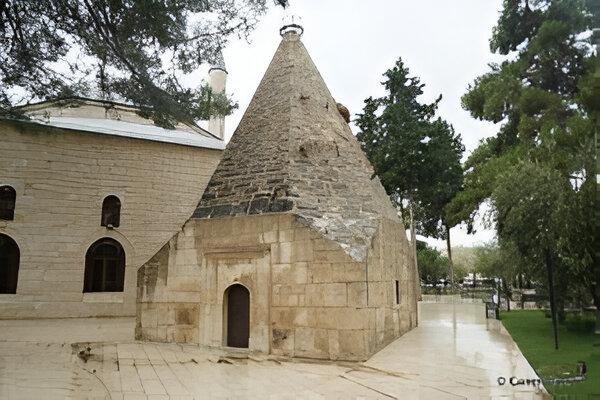
Laal Paşa Camii (kulturenvanteri)
Originally, a hamam and a stone-built medrese with a roof covered in earth stood around the mosque, but these structures have not survived to the present day. Two kümbet tombs are located in the courtyard; one contains three graves, the other four. According to Evliya Çelebi, Laal Paşa’s tomb is in one of these domed tombs. The Çarşı Street, which runs between the mosque courtyard and Çınarlı Park’s walls, is Mut’s second busiest thoroughfare. The area is surrounded by the castle’s towers and walls, the inner citadel, tombs, a middle school building, the belediye palace, and five majestic plane trees. The abundant water from Kale Pınarı flows from pool to pool, forming a small şelale that feeds into the Mut Stream. This site is regarded as one of Mut’s most magnificent and spiritually compelling places.
Culture Inventory. "Laal Paşa Camii." Accessed April 5, 2025.https://kulturenvanteri.com/yer/laal-pasa-camii/#17.1/36.644263/33.436262
Kültür Portalı. "Laal Paşa Camii | Kültür Portalı." Accessed April 5, 2025.https://www.kulturportali.gov.tr/turkiye/mersin/gezilecekyer/laal-pasa-camii.
Mersin İl Müftülüğü. "Laal Paşa Camii." Accessed April 5, 2025.https://mersin.diyanet.gov.tr/mut/sayfalar/contentdetail.aspx?MenuCategory=Kurumsal&ContentId=506.
Türkiye Turizm Ansiklopedisi. "Laal Paşa Camii." Accessed April 5, 2025.https://turkiyeturizmansiklopedisi.com/laal-pasa-camii

Laal Paşa Camii
Location | Mersin Mut District | ||||||||
|---|---|---|---|---|---|---|---|---|---|
Founder | Laal Paşa (real name: Musa) | ||||||||
Period | Karamanoğlu Beylik | ||||||||
Historical Significance | Built by Laal Paşa, who was a slave of Karamanoğlu Alâeddin Bey; after being freed, Laal Paşa became the governor of Niğde Castle and constructed a mosque, madrasa, and bath in Mut, endowing them with waqf revenues. | ||||||||
Plan | Built on a rectangular base. | ||||||||
Dome | A single dome resting on an octagonal drum; external dimensions 18x21 m, internal dimensions 11.45x18.70 m. | ||||||||
Final Prayer Area | A five-domed portico on the north side, supported by four cylindrical green-tiled columns. | ||||||||
Windows | Two rows of four windows each on the east, west, and south facades (smaller ones above, wider ones below); on the north, a central door with two large windows on either side (Ottoman style). | ||||||||
Doors | Main entrance door on the north; a small door on the east (accessible by a wooden staircase to the women’s gallery). | ||||||||
Minaret | Originally absent; an azan tower was built over the portico and demolished in 1915. The minaret, begun in 1923, was completed in 1936. | ||||||||
Interior Features | A dome carried by four piers, a marble mihrab niche with muqarnas, and a painted mihrab. | ||||||||
Material | Regularly cut stone. | ||||||||
Architectural Features
History and Restorations
Surroundings and Significance