


This article was automatically translated from the original Turkish version.
+1 More
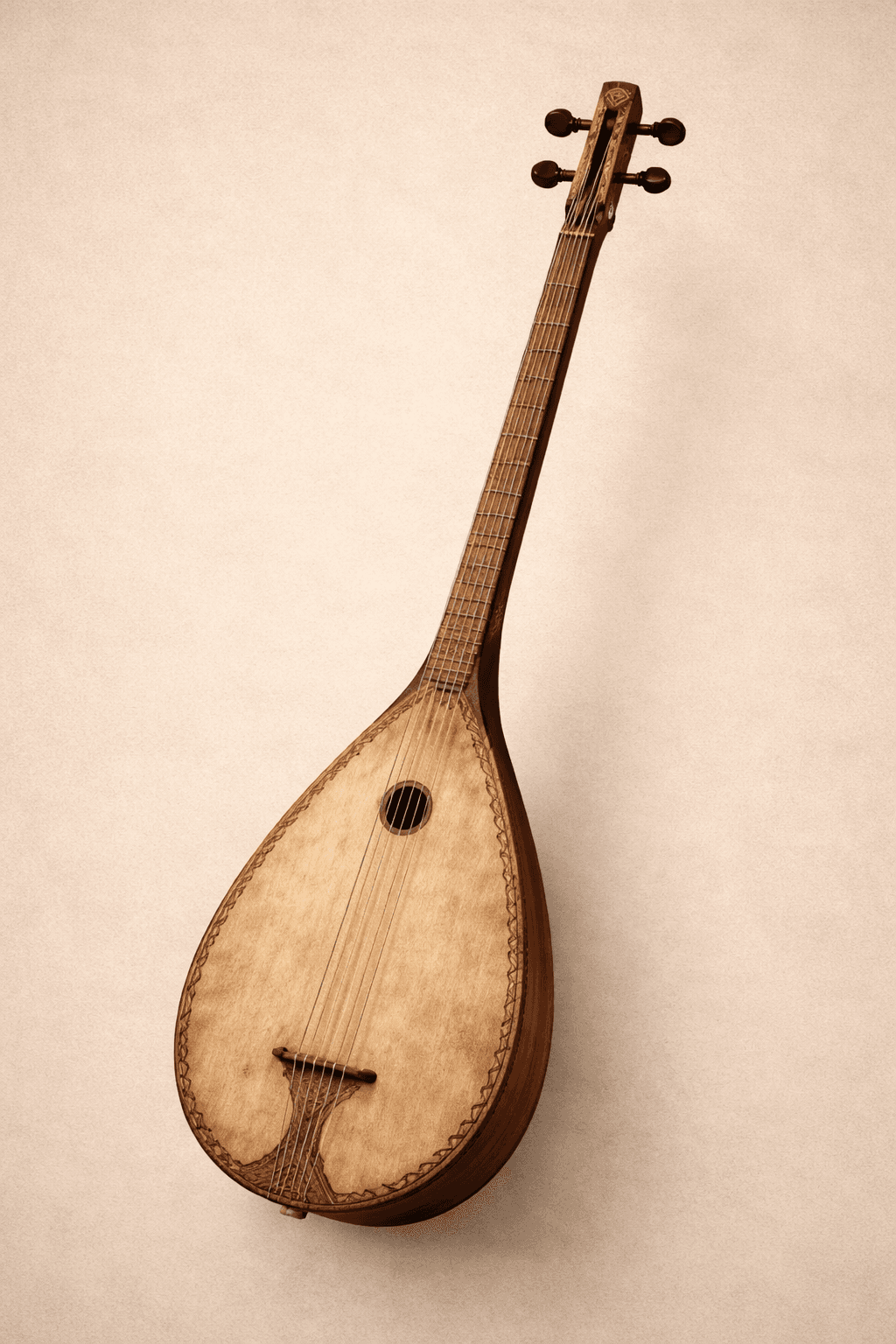
Kopuz
(Generated by artificial intelligence)
Instrument Type | Stringed instrument | ||||||||
|---|---|---|---|---|---|---|---|---|---|
International Registration | UNESCO List of Intangible Cultural Heritage in Need of Urgent Safeguarding | ||||||||
Registration Name | Art of Crafting and Playing Kobyz | ||||||||
Year of Registration | 2025 | ||||||||
Country of Registration | Karakalpakstan Autonomous Republic - Uzbekistan | ||||||||
Kopuz is a musical instrument of significant historical and cultural importance within Turk communities, directly linked to their oral narrative tradition. It has been used as a cultural instrument alongside epic storytelling, ozanship, baksılık, and shamanism practices. In 2025, the tradition of its manufacture and performance in the Karakalpakstan region of Uzbekistan was inscribed on UNESCO’s List of Intangible Cultural Heritage in Need of Urgent Safeguarding under the Convention for the Safeguarding of the Intangible Cultural Heritage.
Kopuz Production and Performance Art (UNESCO)
The earliest detailed assessments of the kopuz’s history have been made within the context of Turkish literature and cultural history studies. Fuad Köprülü, in his work The Origins of Turkish Literature, evaluated the kopuz as integral to the formation of Turkish poetry and music, highlighting its place in social life since the Huns. The practice of presenting musical instruments to rulers and court officials among the Huns demonstrates that the kopuz and similar instruments carried cultural value from an early period.

Traditional Turkic Instruments (Anadolu Ajansı)
Periskes Rheter, a source from the 5th century on the Huns, notes that the Huns had heroic epics and folk songs; he describes how Hun girls sang upon the entrance of Attila’s court and how ozans performed melodies praising the ruler’s military victories accompanied by the kopuz. 【1】 These accounts reveal that the kopuz was not merely an instrument but a fundamental element in the transmission of oral history.
Chinese sources indicate that the Köktürks (Tukiyu) valued music and that men played an instrument called “hyupu,” which is identified as the kopuz. Texts relating to the Uyghur Turks explicitly mention the kopuz, recording that Uyghur ruler Bökü Kağan played it and that princes performed musical pieces accompanied by the instrument.【2】
In the epic period of Turkic culture, the kopuz was closely associated with the baksı and ozan traditions. Radloff defined the baksı as a Kyrgyz shaman who practiced shamanism through the kopuz. It is noted that Kyrgyz baksıs believed they could influence spirits and demons while playing the kopuz, and that they performed with it during weddings, communal ceremonies, and healing rituals.【3】
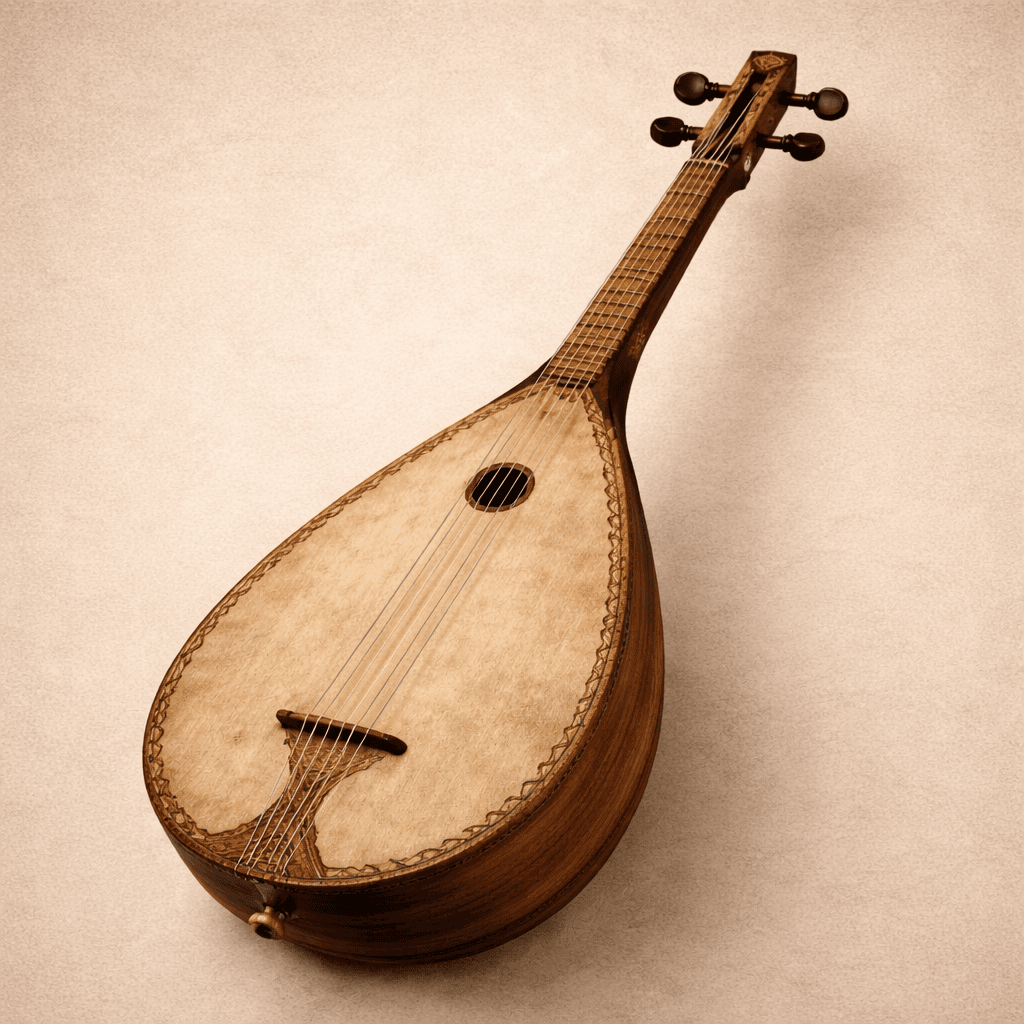
Kopuz (Generated by Artificial Intelligence)
In ozan performances, the kopuz served as a tool to regulate the rhythm of narration and support oral storytelling. Ozans rendered heroic epics and anonymous compositions accompanied by the kopuz, enriching their repertoire with improvised forms known as “obon.” In this context, the kopuz functioned as an element uniting melody, text, and performance in the transmission of oral culture.
The term “kopuz” appears in historical and oral sources in various forms. Kaşgarlı Mahmud, in Dîvânu Lugâti’t-Türk, compared the kopuz to the Arab ud and recorded related terms such as “kobzamak” and “kobuzlug.” The İbn Mühenna Lügati, from the 13th century, mentions an instrument called “kobur,” noting that among the Altay Turks it was used in the forms “kopur” and “kuur.”【4】
Codex Cumanicus contains the term “cobuhçi,” meaning a person who plays the kopuz, along with its verbal and nominal derivatives. Houtsma and Nemeth Gyula identified various regional forms of the word in Turkic dialects. Gazimihal drew attention to the semantic proximity between the word “kopuz” and the modern Turkish word for “throat.”【5】
The earliest Turkic kopuz had a body covered with skin, strings made of horsehair, and frets on the neck. Historian Hammer noted that wooden-bodied kopuzes began to be made by Anatolian Turks in the 16th century. According to Ataman, the kopuz is a stringed instrument with a long neck and a pear-shaped or three-sided body. During its development in Anatolia, its strings were replaced with metal and frets were added to the neck, giving it a new structure.【6】
There are differing views regarding the performance technique of the kopuz. Reinhard describes the kolca kopuz as a bowed instrument, while other sources mention kopuz types played with a plectrum. Abdülkadir Merâgî described the kopuz as resembling a small ud, noting that its soundboard was covered with skin and that it had five pairs of strings.【7】
In Kyrgyz and Kazakh regions, the kopuz is described as a hollow-bodied, two-stringed instrument with horsehair strings, played between the knees. The kopuz used by the Caucasian Nogays is also noted to have two strings and is played with a bow. Among the Uzbeks, the kopuz has a body composed of a tail, bowl, neck, and headstock, with strings made from horse tail hair.
The mouth kopuz, a type within the kopuz family, is also known as the jaw harp. This instrument operates on the principle of a vibrating metal or bamboo tongue directed by the oral cavity and breath. The mouth kopuz is widely used across Central Asia and Siberia and is known among Turkic communities under names such as awız kopuz, demir kopuz, domboi, and şankopız.
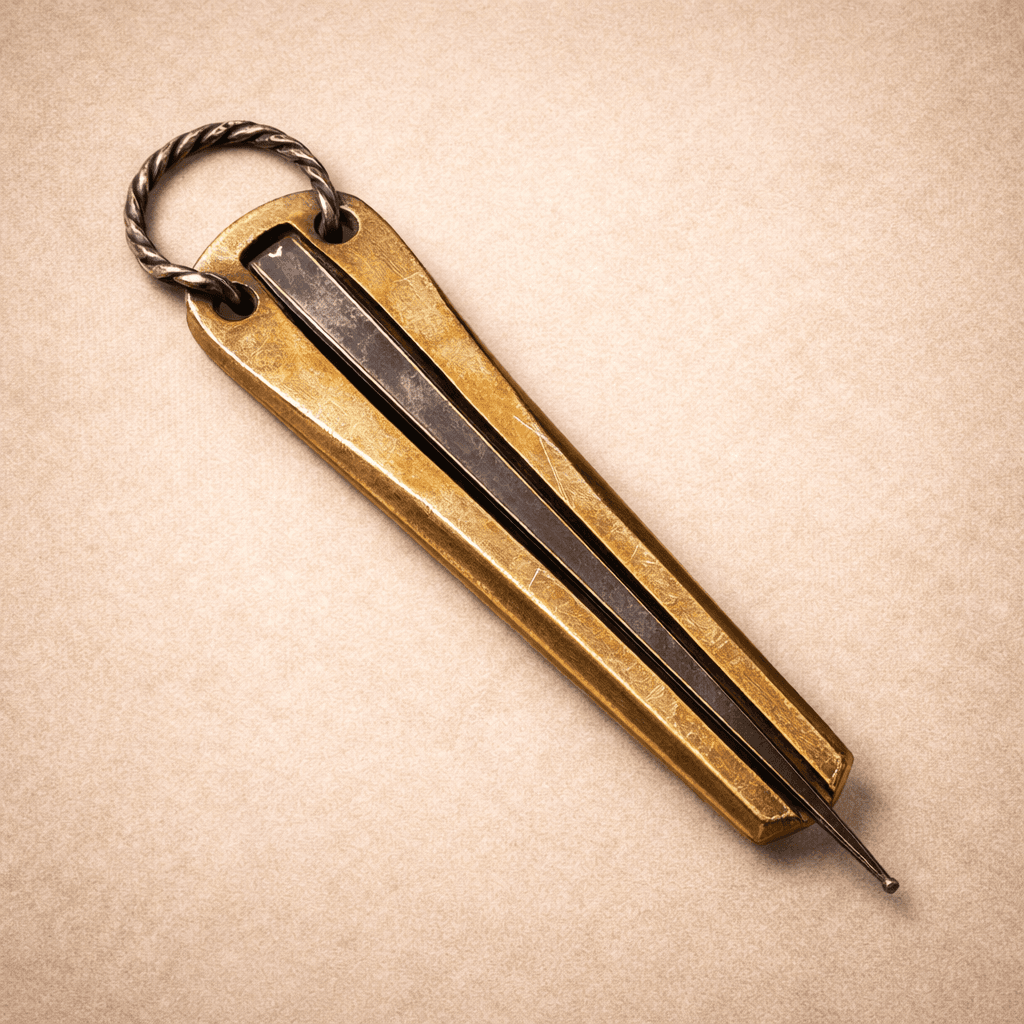
Mouth Kopuz (Generated by Artificial Intelligence)
In the context of shamanic belief, the mouth kopuz was used alongside drums and tambourines to facilitate trance states. Among the Altai, Khakas, Tuvan, and Yakut Turks, the mouth kopuz was employed in hunting rituals, weddings, and healing practices. In some regions, its use was prohibited in certain places due to the belief that it could influence supernatural entities.
The kopuz has persisted within Anatolian Turkic culture. Fuad Köprülü noted that the kopuz is mentioned in numerous works by âşıks and poets since the Dede Korkut Stories. In these tales, the kopuz is directly associated with the ozan tradition; Korkut Ata is regarded as the patriarch of both the instrument and the art of ozanship. The fact that the kopuz is mentioned nineteen times in the texts underscores its central role in the narrative tradition. In Anatolia, the kopuz was also known as “yelteme” and “şeştâr.” Evliya Çelebi recorded that the yelteme was the kopuz played by Korkut Ata and that it had many strings. Şeştâr, a six-stringed variant of the kopuz, was known in Iran and Azerbaijan.【8】
The kopuz, as a tradition of manufacture and performance preserved in the Karakalpakstan Autonomous Republic of Uzbekistan, was inscribed in 2025 on UNESCO’s List of Intangible Cultural Heritage in Need of Urgent Safeguarding under the Convention for the Safeguarding of the Intangible Cultural Heritage. It is a stringed instrument with a skin-covered body, horsehair strings, and a bow. It is used by Zhyrau, the epic narrators, in rituals, weddings, festivals, and community gatherings. Transmission of the tradition occurs through familial learning, master-apprentice relationships, small-group instruction, and cultural events. UNESCO’s nomination files and committee decisions provide institutional context for this information.【9】
Feyzioğlu, Nesrin. "Türk Dünyası’nda ve Anadolu’da Kopuz." *A.Ü. Türkiyat Araştırmaları Enstitüsü Dergisi* 12, no. 31 (2006): 233-245. Accessed January 2, 2026.https://dergipark.org.tr/en/download/article-file/32997
UNESCO. "Art of Crafting and Playing Kobyz." YouTube, 10:46. Accessed January 2, 2026.https://www.youtube.com/watch?v=P3XdF2NS_C8
UNESCO. “Art of Crafting And Playing Kobyz.” Accessed January 2, 2026.https://ich.unesco.org/en/USL/art-of-crafting-and-playing-kobyz-02329#identification
UNESCO. “Twentieth Session of the Intergovernmental Committee for the Safeguarding of the Intangible Cultural Heritage.” Accessed January 2, 2026.https://ich.unesco.org/en/20com
Yeşil, Yılmaz. "Ağız Kopuzundan Çene Arpına; Türk Enstürmanının İzinde." 21. Yüzyılda Eğitim ve Toplum 4, no. 12 (2015): 191–199. Accessed January 2, 2026.https://dergipark.org.tr/en/download/article-file/367634
Şahin, Halil. “Geleneksel Türk Çalgılarını Dünyaya Tanıtıyor.” Anadolu Ajansı, April 24, 2017. Accessed January 2, 2026.https://www.aa.com.tr/tr/kultur-sanat/geleneksel-turk-calgilarini-dunyaya-tanitiyor/801177
[1]
Nesrin Feyzioğlu. "Türk Dünyası’nda ve Anadolu’da Kopuz." A.Ü. Türkiyat Araştırmaları Enstitüsü Dergisi 12, no. 31 (2006): 234. Erişim 2 Ocak 2026. https://dergipark.org.tr/en/download/article-file/32997
[2]
Feyzioğlu. "Türk Dünyası’nda ve Anadolu’da Kopuz." (2006): 234. Erişim 2 Ocak 2026. https://dergipark.org.tr/en/download/article-file/32997
[3]
Feyzioğlu. "Türk Dünyası’nda ve Anadolu’da Kopuz." (2006): 235. Erişim 2 Ocak 2026. https://dergipark.org.tr/en/download/article-file/32997
[4]
Feyzioğlu. "Türk Dünyası’nda ve Anadolu’da Kopuz." (2006): 235. Erişim 2 Ocak 2026. https://dergipark.org.tr/en/download/article-file/32997
[5]
Feyzioğlu. "Türk Dünyası’nda ve Anadolu’da Kopuz." (2006): 235. Erişim 2 Ocak 2026. https://dergipark.org.tr/en/download/article-file/32997
[6]
Feyzioğlu. "Türk Dünyası’nda ve Anadolu’da Kopuz." (2006): 236. Erişim 2 Ocak 2026. https://dergipark.org.tr/en/download/article-file/32997
[7]
Feyzioğlu. "Türk Dünyası’nda ve Anadolu’da Kopuz." (2006): 235-237. Erişim 2 Ocak 2026. https://dergipark.org.tr/en/download/article-file/32997
[8]
Feyzioğlu. "Türk Dünyası’nda ve Anadolu’da Kopuz." (2006): 239-240. Erişim 2 Ocak 2026. https://dergipark.org.tr/en/download/article-file/32997
[9]
UNESCO. “Art of Crafting And Playing Kobyz.” Erişim 2 Ocak 2026. https://ich.unesco.org/en/USL/art-of-crafting-and-playing-kobyz-02329#identification

Kopuz
(Generated by artificial intelligence)
Instrument Type | Stringed instrument | ||||||||
|---|---|---|---|---|---|---|---|---|---|
International Registration | UNESCO List of Intangible Cultural Heritage in Need of Urgent Safeguarding | ||||||||
Registration Name | Art of Crafting and Playing Kobyz | ||||||||
Year of Registration | 2025 | ||||||||
Country of Registration | Karakalpakstan Autonomous Republic - Uzbekistan | ||||||||
Historical Development
Kopuz within the Baksı, Ozan, and Shamanism Traditions
Nomenclature
Structural Features and Types
Mouth Kopuz
Kopuz in Anatolia
Kopuz within UNESCO’s Intangible Cultural Heritage Framework