This article was automatically translated from the original Turkish version.
Type of Geographical İndication | Signaling Mark | ||||||||
|---|---|---|---|---|---|---|---|---|---|
Application Date | 02.01.2014 | ||||||||
Registration Number | 414 | ||||||||
Registration Date | 11.02.2019 | ||||||||
Product / Product Group(s) | Chocolate confectionery and related products | ||||||||
Province(s) | Konya | ||||||||
Applicant/Registrant(s) | Konya Chamber of Commerce | ||||||||
Konya Cheese Candy is a hard confectionery type unique to Konya Province in Türkiye, prepared using traditional production techniques and registered with a geographical indication. It has been registered by the Konya Chamber of Commerce and is protected under Law No. 6769 on Industrial Property.
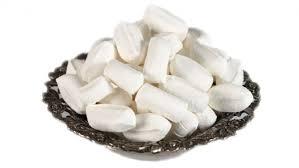
Konya Cheese Candy is a large, smooth-surfaced confection that appears hard but easily dissolves in the mouth. Although typically produced in white, colored varieties exist depending on the flavor. Due to its slightly firm texture, biting into it may produce a brief sensation of resistance in the teeth.
One of its historical uses was offering it to guests during funeral days, which is why it is also known among the public as “dead person’s candy.” In daily consumption, it is commonly crushed and wrapped in fresh yufka dough in a roll form. Although this tradition has declined over time, production and consumption increase during December, when ceremonies honoring Mevlana are held, and in summer months due to tourist interest.
According to written sources, Konya Cheese Candy was first produced in Konya in the 1950s and gradually became synonymous with the city, gaining recognition across the country.
One of the distinctive techniques in producing Konya Cheese Candy is a special bleaching process applied during manufacturing. During this step, air is incorporated into the sugar mass to increase its volume, resulting in a frothy white appearance. After bleaching, the confection is rolled into sheets and cut, then moved to a resting phase. In this stage, water is sprayed onto the product to achieve its characteristic “cheese-like” texture, enabling its unique ability to dissolve easily in the mouth. This process requires skill and directly affects production quality. Products not made using proper techniques may quickly develop defects such as crystallization and stickiness.
The sugar used must be white sugar compliant with the Turkish Food Codex Sugar Notice, with a polarization of at least 99.7º Z. Sweeteners and glucose/fructose syrups are strictly prohibited.
All stages of production for Konya Cheese Candy must be carried out exclusively within the boundaries of Konya Province. Oversight is conducted by a five-member commission established under the coordination of the Konya Chamber of Commerce. The commission consists of representatives from relevant professional groups of the Konya Chamber of Commerce, one faculty member from the Food Engineering Department of Selçuk University, and one representative from the Provincial Directorate of Agriculture and Forestry. Inspections are carried out at least once per year; additional inspections may be conducted upon complaint or as needed. Inspection reports are regularly submitted to the Turkish Patent and Trademark Office.
Turk Patent and Trademark Office. "Konya Peynir Şekeri." Accessed August 16, 2025. https://ci.turkpatent.gov.tr/cografi-isaretler/detay/38107
Türk Patent ve Marka Kurumu. "Konya Peynir Şekeri." Accessed August 16, 2025. https://ci.turkpatent.gov.tr/Files/GeographicalSigns/21df4c97-e85b-4702-ae9e-f18c20cb80e6.pdf

Type of Geographical İndication | Signaling Mark | ||||||||
|---|---|---|---|---|---|---|---|---|---|
Application Date | 02.01.2014 | ||||||||
Registration Number | 414 | ||||||||
Registration Date | 11.02.2019 | ||||||||
Product / Product Group(s) | Chocolate confectionery and related products | ||||||||
Province(s) | Konya | ||||||||
Applicant/Registrant(s) | Konya Chamber of Commerce | ||||||||
Definition and Distinguishing Characteristics
History
Production Characteristics
Production Method
Raw Materials Used
Production Process
Production by Flavor
Geographical Boundary and Oversight