


This article was automatically translated from the original Turkish version.
+2 More

Ancient City of Kilistra
Location | Türkiye Gökyurt Village Meram District Konya | ||||||||
|---|---|---|---|---|---|---|---|---|---|
Settlement Periods | Late Bronze Age, Hellenistic, Roman, Early Byzantine, Seljuk, Ottoman | ||||||||
Prominent Structure | wine cellars Rock-cut churches ancient roads watchtowers cisterns monasteries chapels | ||||||||
Religious Significance | early Christian center attesting to the lives of Saint Paul, Saint Thecla, and Saint Timothy | ||||||||
Transportation | accessible via the King's Road (Via Sebaste) approximately 45–55 km from Konya center | ||||||||
Prominent Feature | early Christian architecture carved into volcanic terrain and rocks similar to Cappadocia | ||||||||
Ancient City of Kilistra is located within the boundaries of Gökyurt Village, in the Hatunsaray township (historically known as Lystra) of the Meram district in Konya. Approximately 45–55 kilometers from the city center of Konya, Kilistra features a volcanic landscape similar to that of Cappadocia, a characteristic that enabled structures in the region to be carved directly into the rock.
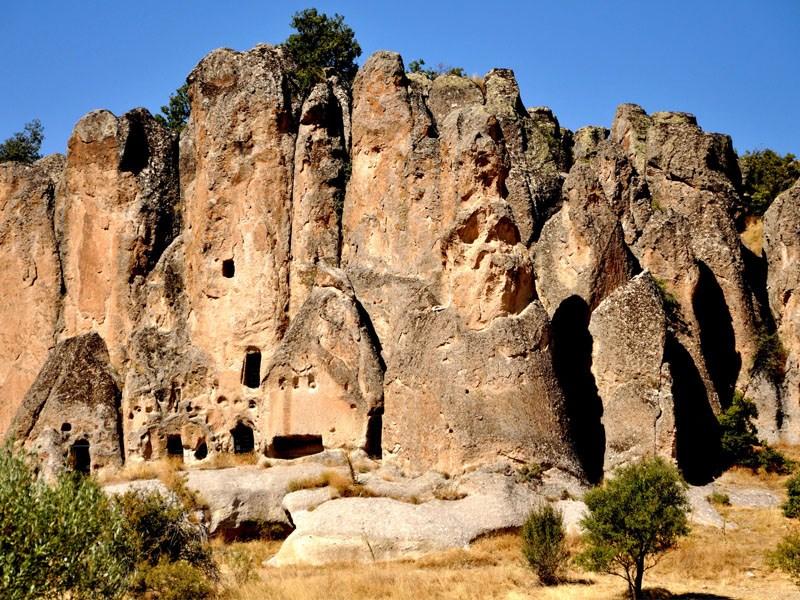
Kilistra Antik Kenti (T.C. Konya Valiliği)
The historical origins of the Ancient City of Kilistra can be traced back to the Late Bronze Age through ceramic finds in the area. The ancient settlement, together with the mound on which it is built, was intensively inhabited during the Hellenistic and Roman periods. During these eras, the region gained strategic importance as a transit point along the King’s Road (Via Sebaste).
In the early Byzantine period, the city expanded through settlements carved into the rock, with numerous structures constructed. These buildings were arranged across five distinct locations, shaped to conform to natural rock formations. It has been determined that the settlements were designed with privacy as a primary principle: from the outside, the structures appear as natural rock formations, while their interiors have been hollowed out to form spacious chambers. Lighting and ventilation were provided through skylights and chimney openings.
The structures identified in the city are categorized as follows:
Religious structures: Churches, chapels, monasteries.
Social structures: Dwellings, cisterns, wine cellars, workshops, stables, fountains, rock-cut tombs.
Defensive structures: Watchtowers, garrisons, barracks, and shelters.
Kilistra came under Turkish rule beginning in the 11th century and was incorporated into Ottoman territory in 1466. The city’s multi-layered history is reflected in the diversity of its structures.
The Ancient City of Kilistra became a center for the spread of Christianity in the 1st century CE through the missionary activities of Saint Paul (Paulus) and Barnabas. The ancient settlement holds significant importance in the context of early Christian missionary work, as Christianity rapidly spread throughout Kilistra and its surrounding areas during this period.
Kilistra lies between two major centers: Konya (Iconium), where Saint Paul preached, and Pisidian Antioch (Yalvaç). During one of Paul’s sermons in Lystra, Thecla, who listened from a window opposite the synagogue, was deeply moved by his message and embraced Christianity while maintaining her vow of virginity. Despite enduring persecution by the Romans, she refused to renounce her faith and was thereafter venerated as a saint.
During the same period, Timothy, the son of a Jewish family who had saved and healed Thecla, became one of Paul’s closest disciples and was appointed Bishop of Ephesus. Timothy is referred to in Paul’s letters with terms such as “my child,” “my true son in the faith,” “beloved son,” and “our brother.”
Thanks to these figures, Kilistra became an important center in medieval Christianity. The rock-hewn chapels, churches, and monasteries are architectural manifestations of this faith.
Kilistra has an urban fabric shaped in direct alignment with natural rock formations. The settlement plan emphasizes defense and concealment. Interior lighting was provided through skylights and chimneys, and the entire settlement was arranged so that it remained nearly invisible from the outside. The structures have remained largely intact and are still accessible to visitors today.
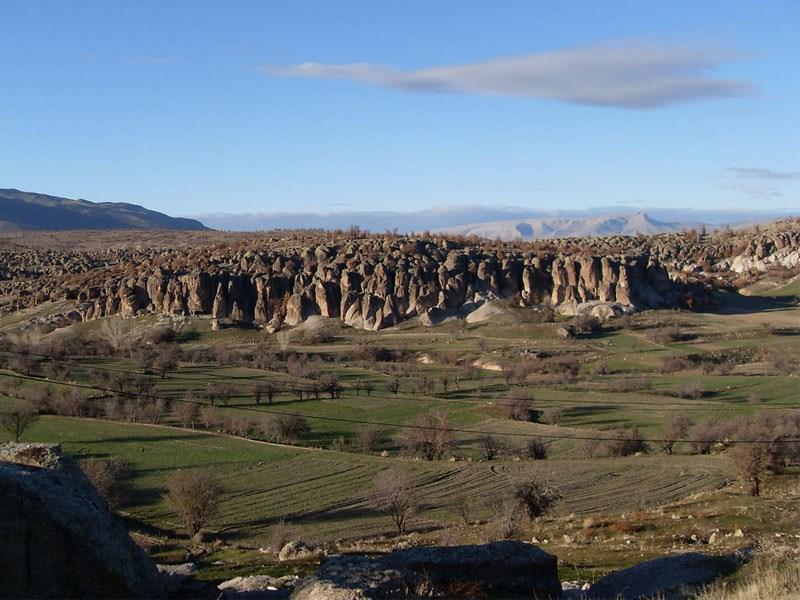
Kilistra Antik Kenti (T.C. Konya Valiliği)
Kilistra is located approximately 15 kilometers from Lystra (modern-day Hatunsaray), and both settlements shared similar cultural and religious influences during the Roman period. Lystra was one of five centers granted the status of a military colony by Emperor Augustus, and due to this strategic importance, it maintained historical and geographical proximity to Kilistra.
The Ancient City of Kilistra lies along the historical King’s Road (Via Sebaste), placing it at a crossroads of military, commercial, and religious routes. Today, visitors reach the ancient city by following this historic road, which still preserves its original stone paving, coming from the direction of Hatunsaray.
Due to its proximity to Konya, accessibility, and well-preserved structures, the Ancient City of Kilistra has become a popular archaeological site for visitors. Especially during winter months, when covered in snow, its volcanic terrain and rock-cut architecture attract the attention of photography enthusiasts. Photographers working in the region note that the winter landscapes create a natural photographic studio atmosphere within the city.
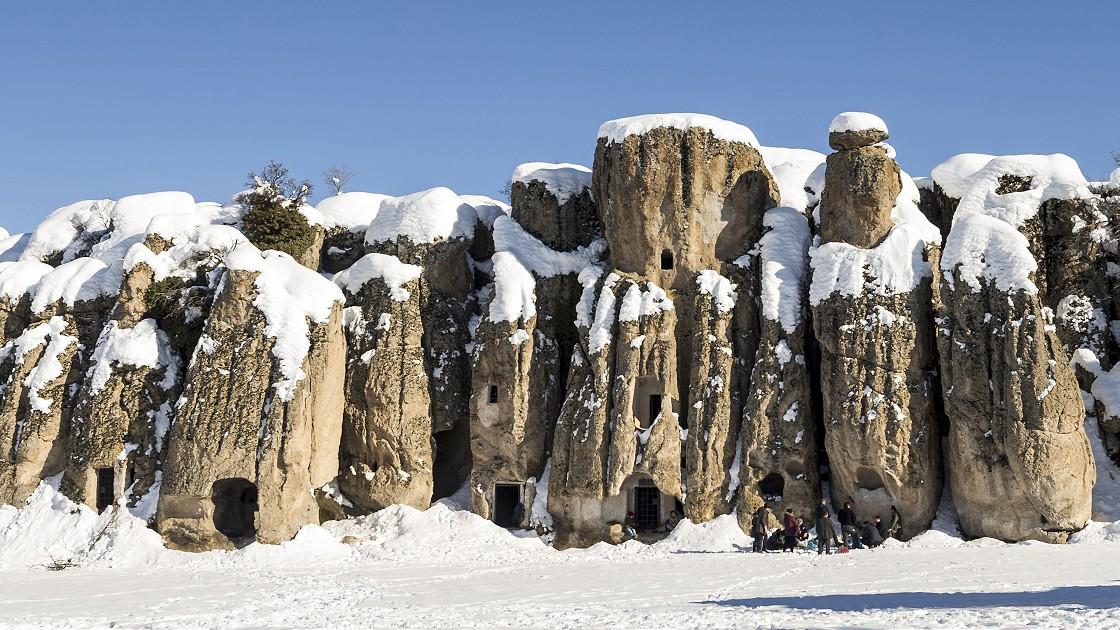
Kilistra Antik Kenti (AA)
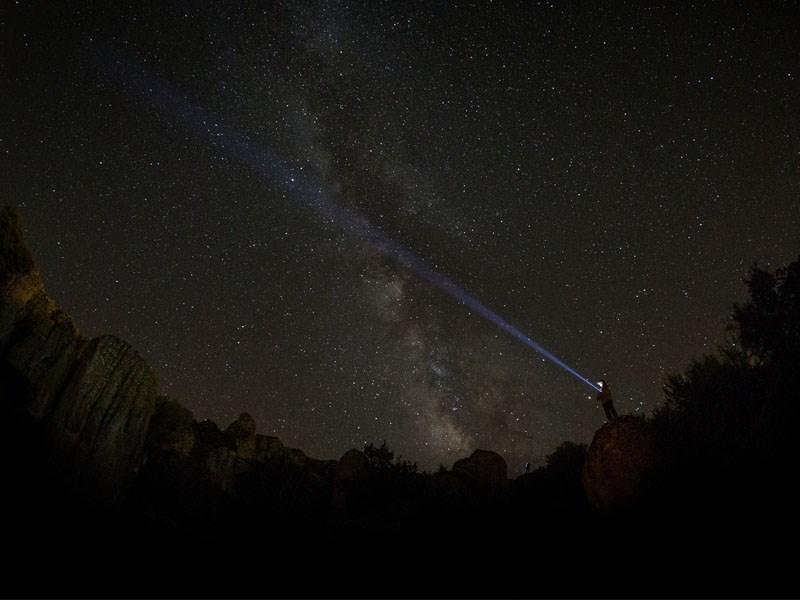
Kilistra Antik Kenti (T.C. Konya Valiliği)
Archaeological excavations and cleaning efforts at the Ancient City of Kilistra are ongoing. Work continues to enhance the site’s potential for both tourism and cultural heritage. Considering its historical value, early Christian architecture, and strategic position along the Via Sebaste, it is evident that Kilistra is a multi-layered and multi-period settlement.
Anadolu Ajansı. “Kilistra Antik Kenti Kışın Fotoğraf Tutkunlarını Cezbediyor.” Accessed May 2, 2025.https://www.aa.com.tr/tr/kultur-sanat/kilistra-antik-kenti-kisin-fotograf-tutkunlarini-cezbediyor/1702960
T.C. Konya Valiliği. "Konya Kilistra Antik Kenti." Accessed May 2, 2025.http://www.konya.gov.tr/konya-kilistra-antik-kenti
T.C. Kültür ve Turizm Bakanlığı. "Kilistra (Lystra)." Kültür Portalı. Accessed May 2, 2025.https://www.kulturportali.gov.tr/turkiye/konya/gezilecekyer/kilistra-lystra
T.C.Meram Kaymakamlığı Governorship. “Kilistra.” Accessed May 2, 2025.http://www.meram.gov.tr/kilistra

Ancient City of Kilistra
Location | Türkiye Gökyurt Village Meram District Konya | ||||||||
|---|---|---|---|---|---|---|---|---|---|
Settlement Periods | Late Bronze Age, Hellenistic, Roman, Early Byzantine, Seljuk, Ottoman | ||||||||
Prominent Structure | wine cellars Rock-cut churches ancient roads watchtowers cisterns monasteries chapels | ||||||||
Religious Significance | early Christian center attesting to the lives of Saint Paul, Saint Thecla, and Saint Timothy | ||||||||
Transportation | accessible via the King's Road (Via Sebaste) approximately 45–55 km from Konya center | ||||||||
Prominent Feature | early Christian architecture carved into volcanic terrain and rocks similar to Cappadocia | ||||||||
No Discussion Added Yet
Start discussion for "Kilistra Ancient City" article
History and Archaeological Development
Connection to Christianity
Architecture and Urban Structure
Relationship Between Kilistra and Lystra
Location on the King’s Road
Current Status and Photography
Current Research