This article was automatically translated from the original Turkish version.
Type of Geographical İndication | Mahreç Sign | ||||||||
|---|---|---|---|---|---|---|---|---|---|
Application Date | 02.09.2021 | ||||||||
Registration Number | 1245 | ||||||||
Registration Date | 26.10.2022 | ||||||||
Applicant/Registrant(s) | Kilis Municipality | ||||||||
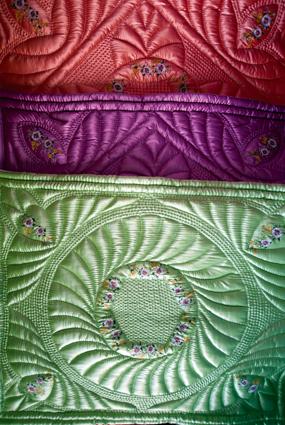
Kilis Yorganı is a traditional handicraft unique to the city of Kilis in southern Türkiye, crafted using traditional production techniques and featuring distinctive patterns. This product, with historical roots spanning centuries, combines skilled craftsmanship, cultural motifs, and local production practices. In 2022, it was officially registered with a geographical indication mark, granting it legal protection under geographical indication status.
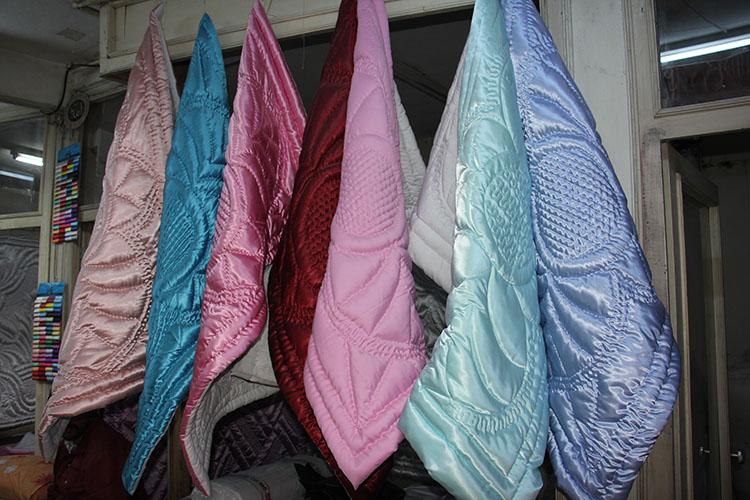
Kilis Yorganı (AA)
The Kilis Yorganı consists of a top layer made of shiny satin fabric and a bottom layer typically composed of cotton lining fabrics such as mermerşahi or patiska. Between these two layers, traditional filling materials include wool or cotton; in modern production, synthetic fibers are also used based on preference. The dimensions of the yorgan vary according to its intended use:
The amount of filling is adjusted according to the size of the yorgan. For example, double-sized yorgans use 3 kg of wool plus 1 kg of cotton; if filled only with cotton, 4 kg is used; if filled only with synthetic fibers, 3 kg is used.
Production begins by sewing together the lining and outer fabrics. The filling process involves placing the softened material into the casing after it has been aerated in a hallac machine. After the edges are sewn, the product is turned inside out, and the internal filling is evenly distributed using a special yorgan stick. Subsequently, the main stitching and pattern embroidery are applied. During stitching, tools such as needles of various sizes, yüksük, chalk, scissors, rulers, and motif templates are employed.
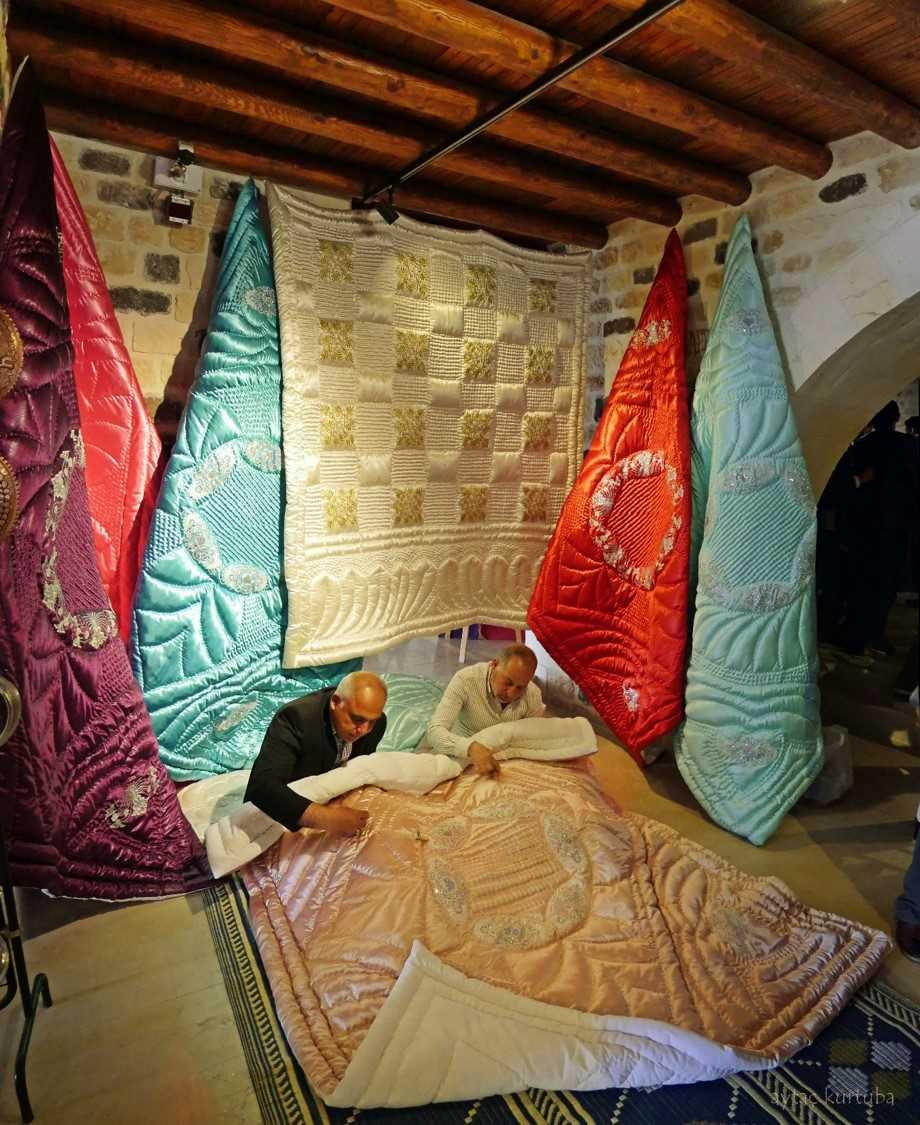
Yorgan Making (Culture Portal)
One of the defining characteristics of the Kilis Yorganı is the diversity and cultural significance of its embroidered motifs. Traditionally applied by hand, these motifs are now also executed using techniques such as machine stitching, Chinese needlework, and wrapping embroidery.
Motifs are generally arranged in two patterns:
These motifs are not merely decorative; they are also regarded as expressions of thought and emotion. The designs serve to communicate with the environment and imbue the cultural identity of Kilis with profound meaning.
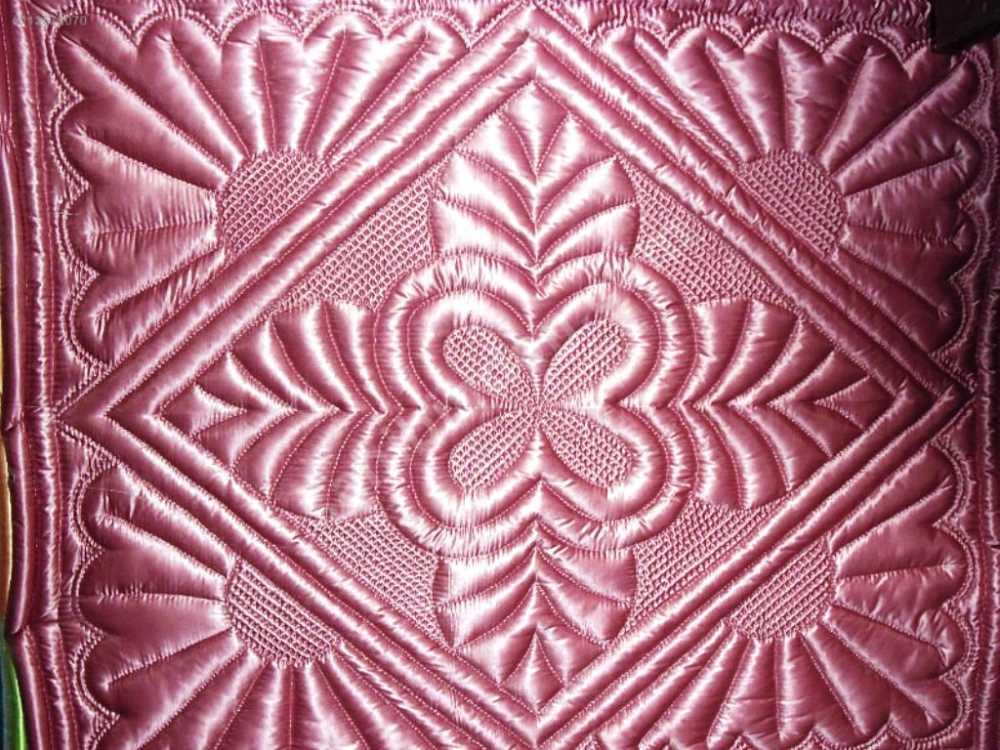
Pumpkin Flower Motif (Culture Portal)
While the production of Kilis Yorganı was once widespread among women in households, over time it evolved into a profession shaped by the expertise of male artisans. Most workers in yorgan workshops are men, and craftsmanship, passed down through skilled hands, preserves traditional patterns while expanding production capacity. Today, production is organized through cooperatives.
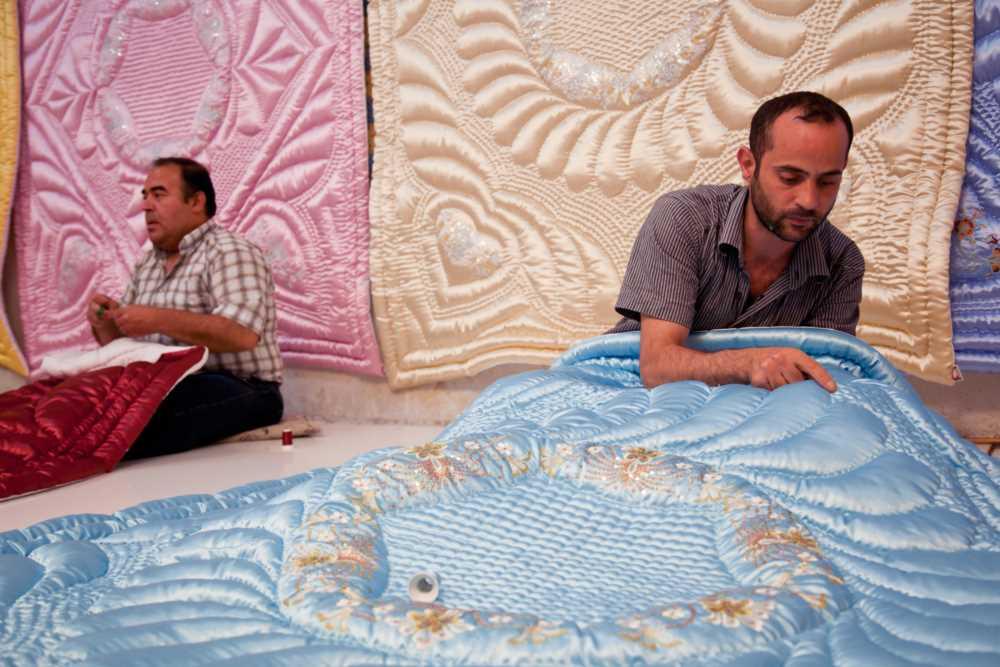
Yorgan Making (Culture Portal)
The Kilis Yorganı is an important product that contributes significantly to the local economy, finding buyers both within Türkiye and abroad. As a handcrafted item that is healthy, practical, and economical, it is preferred as an alternative to mass-produced goods and serves as a sustainable livelihood for the local population.
As a registered geographical indication product, all production processes of the Kilis Yorganı must take place exclusively within the boundaries of Kilis province. The logo, geographical indication mark, and emblem on the product symbolize this uniqueness. Regular inspections are conducted by relevant local institutions under the coordination of the Kilis Municipality.
Anadolu Ajansı. “'Kilis yorganı'nın tescil edilmesi yorgan ustalarını sevindirdi.” AA. October 29, 2022. Accessed July 4, 2025. https://www.aa.com.tr/tr/kultur/kilis-yorganinin-tescil-edilmesi-yorgan-ustalarini-sevindirdi/2724082.
Kilis Valiliği. "Geleneksel El Sanatları." *Kilis Valiliği Resmi Sitesi*. Accessed July 4, 2025. http://www.kilis.gov.tr/geleneksel-el-sanatlari.
Kilis İl Directorate of Culture and Tourism. “Yorgancılık.” *Kilis Provincial Directorate of Culture and Tourism – Cultural Details: Handicrafts*. Last updated 2025. Accessed July 4, 2025. https://kilis.ktb.gov.tr/TR-61746/yorgancilik.html.
T.C. Ministry of Culture and Tourism – Culture Portal. "Yorgan." *Kilis: Ne Alınır?* Added: February 21, 2013; updated: May 30, 2018. Accessed July 4, 2025. https://www.kulturportali.gov.tr/turkiye/kilis/nealinir/yorgan.
Turkish Patent and Trademark Office. "Kilis Yorganı." *Geographical Indications Portal*. Application date: September 2, 2021; registration date: October 26, 2022. Accessed July 4, 2025. https://ci.turkpatent.gov.tr/cografi-isaretler/detay/4923.
Type of Geographical İndication | Mahreç Sign | ||||||||
|---|---|---|---|---|---|---|---|---|---|
Application Date | 02.09.2021 | ||||||||
Registration Number | 1245 | ||||||||
Registration Date | 26.10.2022 | ||||||||
Applicant/Registrant(s) | Kilis Municipality | ||||||||
Technical Features and Production Process
Motifs and Embellishment Techniques
Production Systems and Craftsmanship
Economic and Cultural Value