


This article was automatically translated from the original Turkish version.
+1 More
Kesik Bridge
Location | Türkiye Sivas Over the Kızılırmak River | ||||||||
|---|---|---|---|---|---|---|---|---|---|
Construction Date(s) | It is not definitely known. | ||||||||
Repair | 1292 AH / 1875 CE (reign of Sultan Abdülaziz) | ||||||||
Length | 35 metres 326 | ||||||||
Width | 4.95 metres | ||||||||
Number of Arches | Total of 19 (17 + 2) | ||||||||
Material | Cut stone | ||||||||
Architectural Feature | Corniced railing system Selyaranlı arch supports Pointed and round-arched eyes | ||||||||
Restoration | Construction began in 2010, project approval was obtained in 2012, stone reinforcement and structural strengthening were carried out | ||||||||
Usage Status | Currently open to pedestrian traffic and closed to vehicular traffic | ||||||||
Related Institutions | Ministry of Culture and Tourism of the Republic of Türkiye, Sivas Municipality, 16th Regional Directorate of Highways | ||||||||
Connections Provided | Karşıyaka Neighborhood – Sivas city center | ||||||||
Type of Work | Historical bridge | ||||||||
Protection Status | Registered cultural heritage | ||||||||
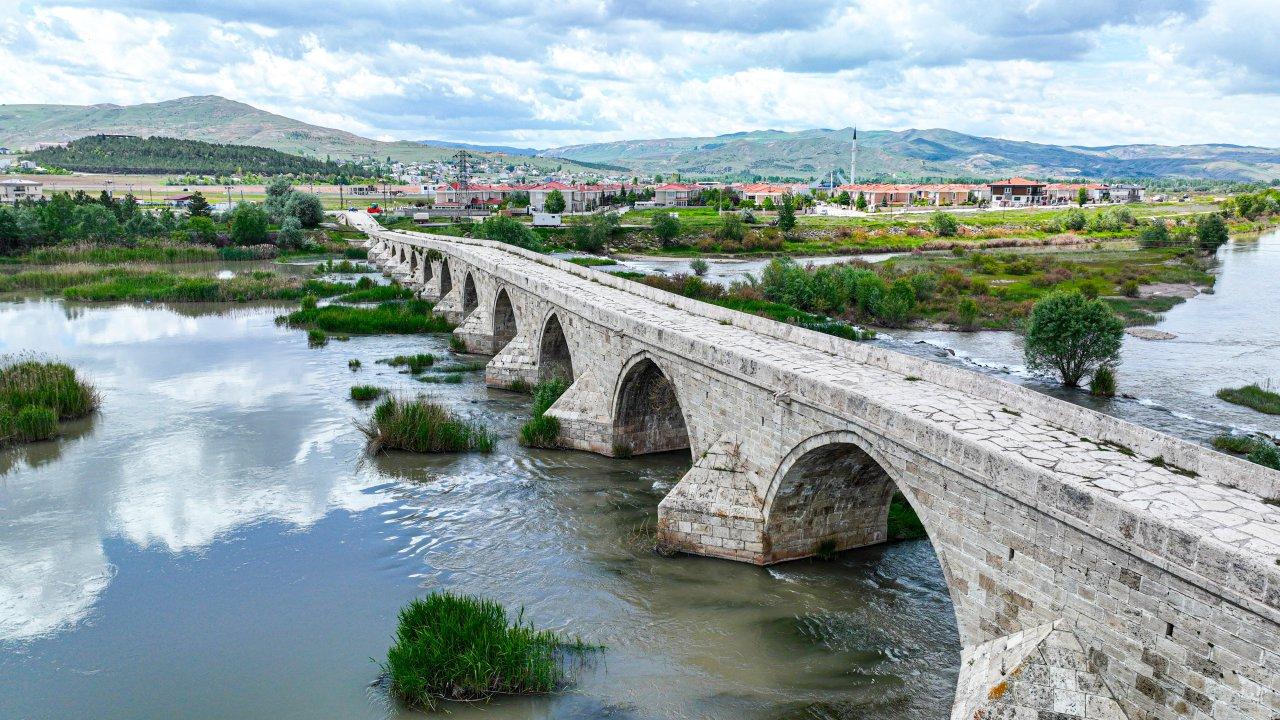
Kesik Köprü is a historical stone bridge located southwest of the city center of Sivas, spanning the Kızılırmak River. The bridge extends in a north-south direction, connecting the Karşıyaka Neighborhood with the central area of Sivas. Although no construction inscription has been found, various sources indicate that the bridge dates back to the Seljuk period.
.jpg&w=1280&q=75)
Kesik Köprü (Visit Sivas)
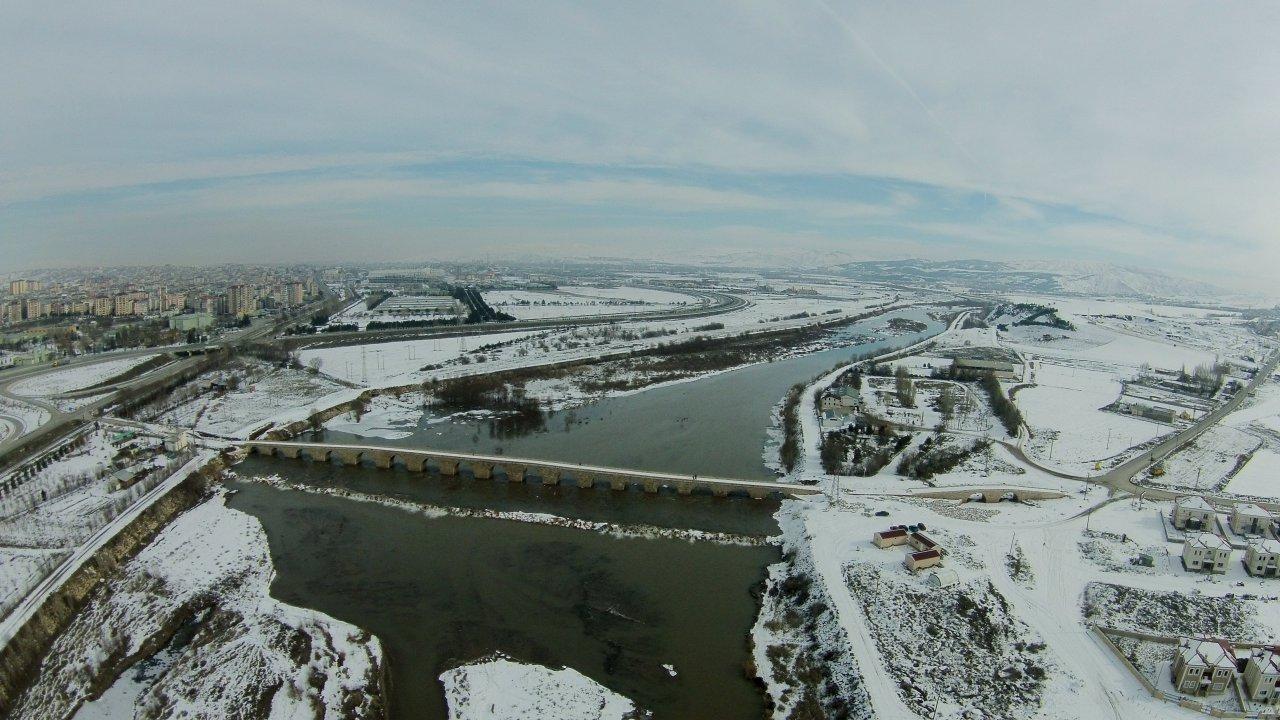
Kesik Köprü consists of two separate sections. The first section has 17 arches and the second has 2 arches, making a total of 19 arches. These arches are circular and pointed in shape. The distance between the two sections is approximately 10 meters. Although no water flows beneath the second section, it remains in use as a continuation of the first bridge.
The bridge is 326.35 meters long and 4.95 meters wide. The largest arch span measures 7.90 meters. Constructed entirely of cut stone, the arch piers on the upstream side are supported by triangular protrusions known as selyaran. There are no heels on the downstream side. The cornice line is completed with double-row cut stone balustrades. The central arches are higher and slope downward toward the sides, merging with the road level.
Kesik Köprü (Sivas Belediyesi)
Although no inscription detailing the construction of the bridge has been found, its architectural features and historical sources suggest it dates to the Seljuk period. The structure underwent extensive restoration during the reign of Sultan Abdülaziz in 1292 AH (1875 CE). During this restoration, some stones from the Şahna Kümbeti in Sivas, which collapsed in the early 20th century, were reused in the bridge.
By the present day, various structural deformations have occurred in the bridge. These have been observed in the foundation, the selyaran supports, the arch system, the deck, and the balustrade stones. Following these findings, restoration work began in 2010. In 2012, after the Sivas Regional Board for the Protection of Cultural Heritage approved the plans, implementation commenced. Between 2012 and 2013, the bridge’s foundations were reinforced with stone revetments to protect against the erosive effects of the Kızılırmak River.
During the restoration process, a decision was made to close the bridge to vehicular traffic in order to address all structural damage. During this period, the connection between Karşıyaka Neighborhood and the city center was maintained via Esenyurt. After the restoration was completed, the bridge was reopened to public access, but passage by heavy vehicles remains prohibited.
The historical Kesik Köprü is currently closed to vehicular traffic and open only to pedestrian use. As one of the city’s historical structures, it is preserved and holds cultural heritage significance.

Kesik Köprü (T.C. Kültür Portalı)
Although the exact construction date of Kesik Köprü is unknown, it is recognized as one of the multi-arched stone bridges over the Kızılırmak River dating to the Seljuk period. Historical records of repairs and technical interventions demonstrate that the structure remained in use for many centuries. Its 19-arch design, stone reinforcement measures, and closure to vehicular traffic have contributed to both its physical preservation and the reorganization of its usage. In its current state, the structure is under protection and accessible to pedestrians. The processes surrounding the bridge serve as a practical example of technical conservation efforts for cultural heritage.
T.C. Ministry of Culture and Tourism. "Kesik Köprü." Kültür Portalı. Accessed May 14, 2025.https://www.kulturportali.gov.tr/turkiye/sivas/gezilecekyer/kesk-kopru
T.C. Sivas Belediyesi. “Kesik Köprü.” Sivas Belediyesi. Accessed May 14, 2025.https://sivas.bel.tr/yapi/kesik-kopru
Türkiye's Historical Monuments. "Kesik Köprü." Accessed May 14, 2025.https://www.turkiyenintarihieserleri.com/?oku=1044
Visit Sivas. "Kesik Köprü." Sivas Kültür A.Ş. Accessed May 14, 2025.https://visitsivas.com/gezini-planla/kesik-kopru

Kesik Bridge
Location | Türkiye Sivas Over the Kızılırmak River | ||||||||
|---|---|---|---|---|---|---|---|---|---|
Construction Date(s) | It is not definitely known. | ||||||||
Repair | 1292 AH / 1875 CE (reign of Sultan Abdülaziz) | ||||||||
Length | 35 metres 326 | ||||||||
Width | 4.95 metres | ||||||||
Number of Arches | Total of 19 (17 + 2) | ||||||||
Material | Cut stone | ||||||||
Architectural Feature | Corniced railing system Selyaranlı arch supports Pointed and round-arched eyes | ||||||||
Restoration | Construction began in 2010, project approval was obtained in 2012, stone reinforcement and structural strengthening were carried out | ||||||||
Usage Status | Currently open to pedestrian traffic and closed to vehicular traffic | ||||||||
Related Institutions | Ministry of Culture and Tourism of the Republic of Türkiye, Sivas Municipality, 16th Regional Directorate of Highways | ||||||||
Connections Provided | Karşıyaka Neighborhood – Sivas city center | ||||||||
Type of Work | Historical bridge | ||||||||
Protection Status | Registered cultural heritage | ||||||||
Architectural Features
History and Restorations
Current Usage