


This article was automatically translated from the original Turkish version.
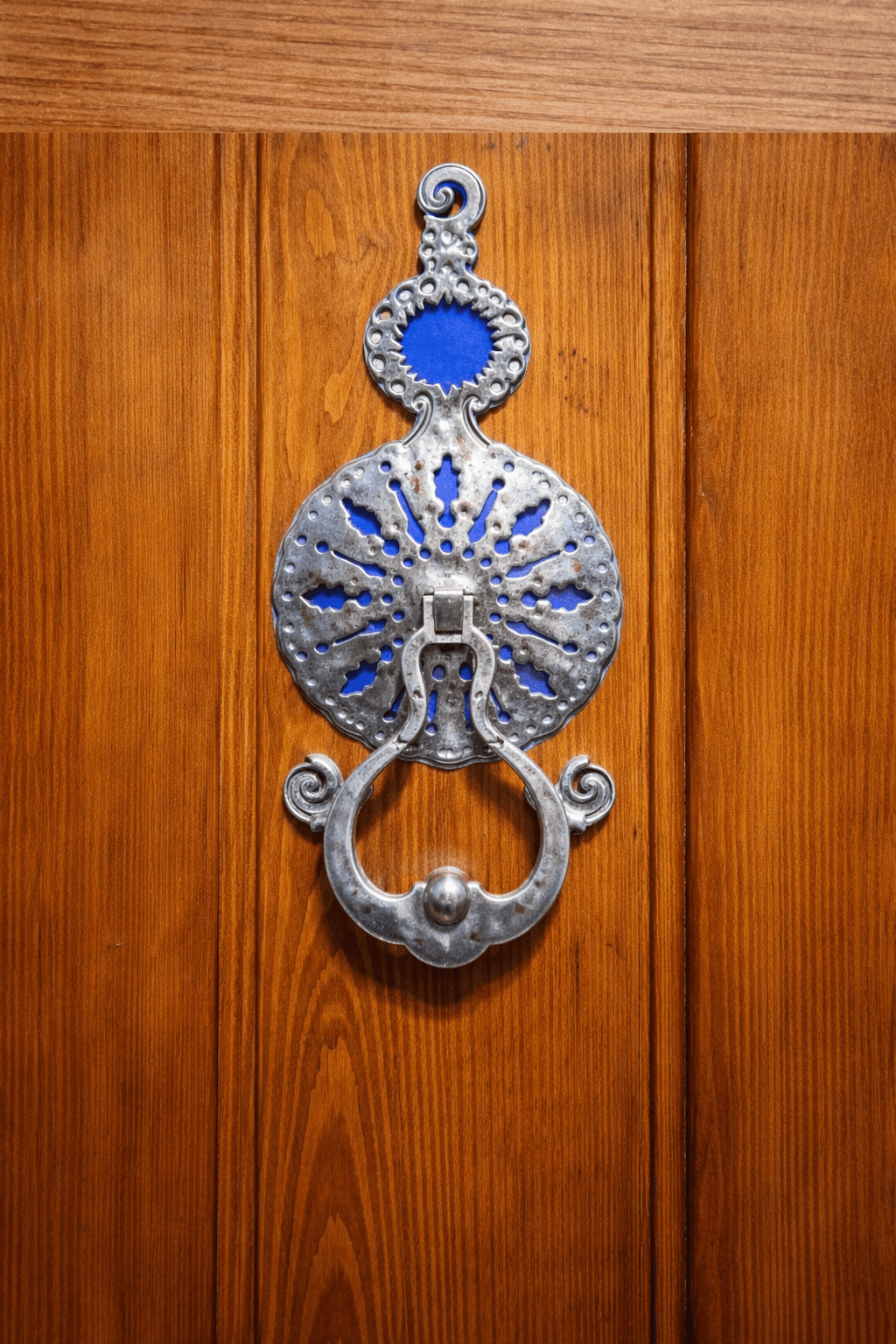
Kemaliye Gate Mallets (generated with artificial intelligence)
Place | Erzincan / Kemaliye (Eğin) | ||||||||
|---|---|---|---|---|---|---|---|---|---|
Material | Metal (mounted on wooden door) | ||||||||
Function | To enable the door to open, to notify the visitor | ||||||||
Context | Traditional residential architecture, Social communication | ||||||||
Related Field | History of architecture Ethnography Cultural heritage | ||||||||
Kemaliye door knockers are metal architectural elements used within the context of traditional residential architecture in the Kemaliye district of Erzincan province (historically known as Eğin). These knockers are regarded not only as functional components but also as cultural indicators linked to local architectural sensibilities and social norms. Official documents and academic studies define Kemaliye door knockers as traditional structural elements. 【1】
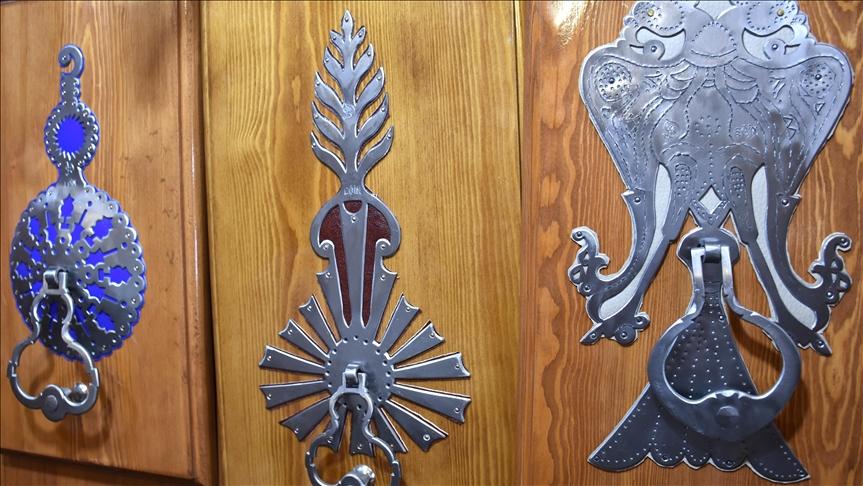
Kemaliye door knockers (Anadolu Agency)
Kemaliye has developed a settlement fabric since the Ottoman period and is known for its wooden-dominated residential architecture. In traditional Kemaliye houses, the door is not merely a spatial transition element but is considered an architectural component representing the building’s outward face. Within this context, door knockers were designed and used as inseparable parts of the door.
Official architectural reports indicate that Kemaliye houses were constructed as cohesive units preserving regional architectural characteristics. 【2】 Door knockers were positioned within this coherence, aligned with the door’s dimensions, material, and location. The architectural context of the knockers is directly related to the overall layout of the dwelling.
Kemaliye door knockers are predominantly made of metal and affixed to wooden door surfaces. Geographic indication documents identify these knockers by specific formal traits. 【3】 Their design avoids excessive ornamentation, favoring instead simple and function-oriented forms.
The size and placement of the knockers on the door were determined to ensure ease of use. Academic studies emphasize that such door hardware was produced not only for aesthetic purposes but also with emphasis on durability and functionality.
The primary function of Kemaliye door knockers is to signal the presence of a visitor to those inside the house. However, variations in the auditory characteristics of these knockers exist. The sound produced was designed to be clearly audible from within the house and served as a means of announcing a visitor’s arrival.
Academic sources highlight the communicative function of door knockers through sound. 【4】 This transforms Kemaliye door knockers from mere mechanical tools into integral components of traditional daily practices.
Kemaliye door knockers are directly tied to local social structures and everyday life. Doors and their hardware were among the elements defining the boundary of domestic privacy. Official and academic sources reveal that the use of doors and knockers in Kemaliye houses was connected to social relations and neighborhood dynamics. 【5】
These knockers are regarded as symbolic representations of the boundary between the home and the outside world. The manner in which the door was struck and the sound of the knocker could convey indirect information about the nature of the visit. In this sense, Kemaliye door knockers are understood as one of the auditory and physical instruments of social communication.
Kemaliye door knockers have been defined and registered in geographic indication documents published by the Turkish Patent and Trademark Office. These documents officially establish the unique regional characteristics and contextual usage of the knockers. Additionally, promotional and architectural materials issued by the Kemaliye District Governorship and related official institutions include references to these knockers. 【6】
Anadolu Ajansı. “Kemaliye’nin Asırlık Kültürü Kapı Tokmakları, 5 Kuşaktır Aynı Ailenin Elinde Şekilleniyor.” Accessed December 28, 2025.https://www.aa.com.tr/tr/kultur-sanat/kemaliyenin-asirlik-kulturu-kapi-tokmaklari-5-kusaktir-ayni-ailenin-elinde-sekilleniyor/2293317
Cumhuriyet University. "Kapı Kolları ve Kapı Tokmaklarının Mimari ve İşlevsel Özellikleri." *Cumhuriyet Üniversitesi Sosyal Bilimler Enstitüsü Yayınları.* Accessed December 28, 2025.https://yerbilimleri.cumhuriyet.edu.tr/tr/download/article-file/1307971
Kemaliye Kaymakamlığı. "Eski Eğin Kapı Tokmakları: Anadolu’nun Doğuya Açılan Kapısı." T.C. İçişleri Bakanlığı. Accessed December 28, 2025.https://www.kemaliye.gov.tr/fotograf-eski-egin-kapi-tokmaklari-anadolunun-doguya-acilan-kapisi
Ministry of Environment, Urbanization and Climate Change. "Yöresel Mimari Özelliklere Uygun Konut Projeleri: Kemaliye (Eğin) Evleri." T.C. Ministry of Environment, Urbanization and Climate Change. Accessed December 28, 2025.https://webdosya.csb.gov.tr/db/yapiisleri/icerikler/yoresel-m-mar--ozell-klere-uygun-konut-projeler-4-20190624132245.pdf
Republic ofTürkiye Cumhuriyeti of Culture and Tourism – Culture Portal. "Kemaliye (Eğin) Traditional Housing Culture." Türkiye Kültür Portalı. Accessed December 28, 2025.
Turk Patent and Trademark Office. "Kemaliye Kapı Knocker (Eğin Kapı Knocker)." Coğrafi İşaretler ve Geleneksel Ürün Adı Bülteni, 2025/194. T.C. Sanayi ve Teknoloji Bakanlığı. Accessed December 28, 2025.
[1]
Türk Patent ve Marka Kurumu. “Kemaliye Kapı Tokmağı (Eğin Kapı Tokmağı).” Coğrafi İşaretler ve Geleneksel Ürün Adı Bülteni, 2025/194. T.C. Sanayi ve Teknoloji Bakanlığı. Erişim tarihi: 28 Aralık 2025. https://webim.turkpatent.gov.tr/file/6977ef9c-c47e-439c-95a6-818dbd9c5a18
[2]
Çevre, Şehircilik ve İklim Değişikliği Bakanlığı. “Yöresel Mimari Özelliklere Uygun Konut Projeleri: Kemaliye (Eğin) Evleri.” T.C. Çevre, Şehircilik ve İklim Değişikliği Bakanlığı. Erişim tarihi: 28 Aralık 2025. https://webdosya.csb.gov.tr/db/yapiisleri/icerikler/yoresel-m-mar--ozell-klere-uygun-konut-projeler-4-20190624132245.pdf
[3]
Türk Patent ve Marka Kurumu. “Kemaliye Kapı Tokmağı (Eğin Kapı Tokmağı).” Coğrafi İşaretler ve Geleneksel Ürün Adı Bülteni, 2025/194. T.C. Sanayi ve Teknoloji Bakanlığı. Erişim tarihi: 28 Aralık 2025. https://webim.turkpatent.gov.tr/file/6977ef9c-c47e-439c-95a6-818dbd9c5a18
[4]
Cumhuriyet Üniversitesi. “Kapı Kolları ve Kapı Tokmaklarının Mimari ve İşlevsel Özellikleri.” Cumhuriyet Üniversitesi Sosyal Bilimler Enstitüsü Yayınları. Erişim tarihi: 28 Aralık 2025. https://yerbilimleri.cumhuriyet.edu.tr/tr/download/article-file/1307971
[5]
Kemaliye Kaymakamlığı. “Eski Eğin Kapı Tokmakları: Anadolu’nun Doğuya Açılan Kapısı.” T.C. İçişleri Bakanlığı. Erişim tarihi: 28 Aralık 2025. https://www.kemaliye.gov.tr/fotograf-eski-egin-kapi-tokmaklari-anadolunun-doguya-acilan-kapisi
[6]
Türk Patent ve Marka Kurumu. “Kemaliye Kapı Tokmağı (Eğin Kapı Tokmağı).” Coğrafi İşaretler ve Geleneksel Ürün Adı Bülteni, 2025/194. T.C. Sanayi ve Teknoloji Bakanlığı. Erişim tarihi: 28 Aralık 2025. https://webim.turkpatent.gov.tr/file/6977ef9c-c47e-439c-95a6-818dbd9c5a18

Kemaliye Gate Mallets (generated with artificial intelligence)
Place | Erzincan / Kemaliye (Eğin) | ||||||||
|---|---|---|---|---|---|---|---|---|---|
Material | Metal (mounted on wooden door) | ||||||||
Function | To enable the door to open, to notify the visitor | ||||||||
Context | Traditional residential architecture, Social communication | ||||||||
Related Field | History of architecture Ethnography Cultural heritage | ||||||||
No Discussion Added Yet
Start discussion for "Kemaliye Door Knockers" article
Historical and Architectural Context
Material and Formal Characteristics
Functional Use
Social and Cultural Significance
Protection and Documentation Status