


This article was automatically translated from the original Turkish version.
+2 More
Keloğlan Cave is a natural cave located within the boundaries of Dodurgalar Village, Acıpayam District, in the province of Denizli, in Türkiye’s Aegean Region. The cave’s entrance coordinates are (Y:721339, X:4140982), determined according to the ED50 UTM 6° system. Situated at an elevation of approximately 1110 metres above sea level, the cave lies on the eastern slope of Karadağ, in an area known as “Keloğlanlar Yakası,” facing east. Due to its morphological, geological and touristic value, the cave has been officially registered as a “Natural Heritage – Group B Cave” and declared a “Cave Protection Area” by a ministerial decision in 2021.
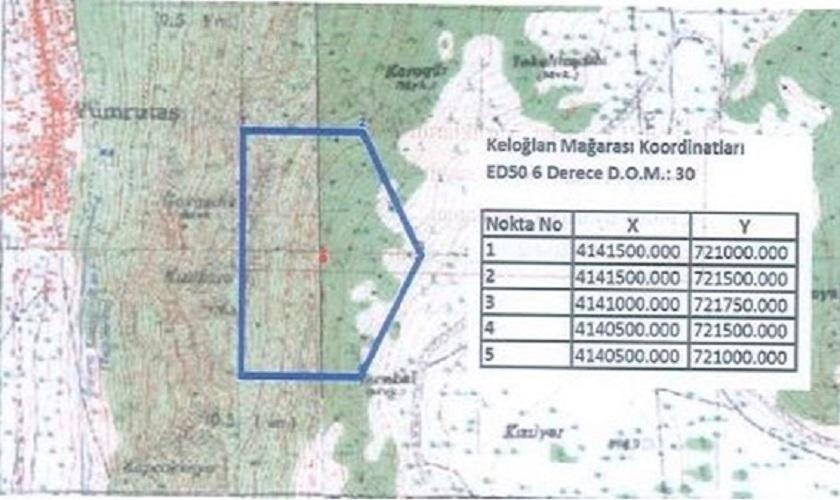
Keloğlan Mağarası (T.C Çevre, Şehircilik ve İklim Değişikliği Bakanlığı)
The cave is located approximately 5 kilometres from the Denizli-Antalya highway, on the eastern slope of Mallı Dağı, 3 kilometres west of Dodurgalar Village. It is also situated on Karadağ, part of the Eşeler Dağı mountain range to the southeast of the Acıpayam (Karaağaç) Plain. The region lies within the Western Mediterranean Taurus belt and is rich in karstic geomorphological features.
Keloğlan Cave formed within limestone deposits dating to the Jurassic-Cretaceous period through karstification processes. The cave’s structure is highly fractured, a condition that accelerated karstic shaping and led to the development of rich speleothems inside, including stalactites, stalagmites, columns, draperies and wall formations. The cave consists of a single large gallery divided into various natural chambers, bounded by columns and presenting a rugged, irregular appearance. Travertine formations created by the accumulation of calcium carbonate-rich water dripping from the ceiling have added visual depth and scientific value to the cave.
The total length of the cave is 145 metres, with its height varying between 5 and 6 metres in different sections. It features a wide entrance and an interior environment characterized by high humidity and warmth. Measurements taken in 1998 recorded an external air temperature of 32°C and an absolute humidity level of 65%. Due to these conditions, the cave has attracted interest from individuals suffering from respiratory conditions such as asthma and bronchitis.
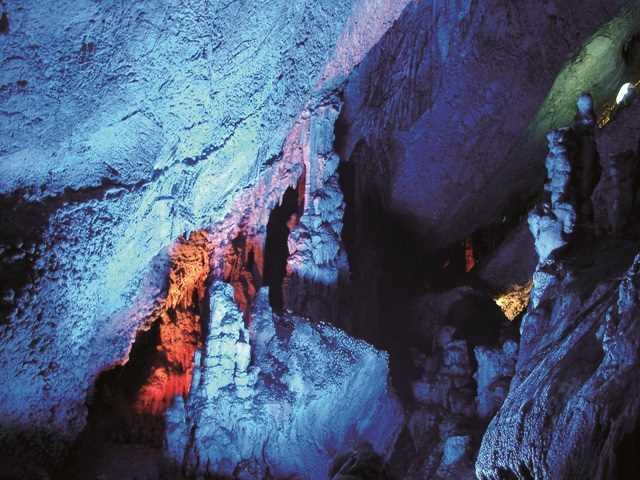
Keloğlan Mağarası (Türkiye Kültür Portalı
Until 1990, Keloğlan Cave was known only to local shepherds and remained isolated from public use. Following applications submitted to the General Directorate of Mineral Research and Exploration (MTA) by the Denizli Governorship and the Dodurgalar Municipality, feasibility studies concluded that the cave was suitable for tourism development. Its natural integrity has been preserved due to its prolonged isolation from human access.
In 2003, the cave was officially opened to visitors and became one of Türkiye’s publicly accessible caves. In the same year, a 3-kilometre asphalt road was constructed to improve access to the site. Promotional campaigns through TRT and various private television channels attracted interest from both domestic and international tourists.
Upon entering the cave, visitors encounter a spacious gallery. Within this area, columns formed by the union of stalactites and stalagmites, pasta-like stalactites, delicate lace-like formations and travertine deposits can be observed. Large stalactites that have merged along fracture lines have formed natural walls, giving rise to chamber-like sections within the interior space.
As part of the development project, illuminated walking paths have been installed inside the cave, and camera-based monitoring systems have been set up for safety purposes. A small colony of bats resides near the cave entrance. Additionally, various animal bones identified during preliminary studies are displayed within the interior.
Keloğlan Cave (YouTube)
The town of Dodurgalar and its surroundings are rich in cave formations due to their geographical location and natural structure. In addition to Keloğlan Cave, another cave known as Aslanlı İni exists. The older section of this cave was declared a Class 3 SIT area in 1989, while the newer section remains awaiting development for tourism. The area surrounding the cave is close to a natural viewing terrace known as “Seyirlik,” offering panoramic views of the Acıpayam Plain and the surrounding mountain ranges. Visitors can reach the summit of Karadağ via a nature trail of approximately 200 metres following their cave tour.
Keloğlan Cave was officially registered as a “Natural Heritage – Group B Cave” and its protection area boundaries were defined by the Denizli Natural Heritage Protection Regional Commission Decision dated 23.10.2020 (No. 649) and the Ministry Decision dated 05.02.2021. This decision entered into force in accordance with Article 109, Paragraph 1, Subsection (b) of Presidential Decree No. 30474 published in the Official Gazette on 10.07.2018.
The cave is managed by the Dodurgalar Municipality and preserved as a public natural heritage site. Various infrastructure and orientation initiatives are being implemented to enhance access to natural areas in the region and promote ecological tourism.
“Acıpayam Keloğlan Mağarası.” T.C. Acıpayam Kaymakamlığı. Accessed May 2025.http://www.acipayam.gov.tr/acipayam-keloglan-magarasi
“Denizli İli,Acıpayam İlçesi, Dodurgalar Keloğlan Cave Designation Notice.” Ministry of Environment, Urbanization and Climate Change, General Directorate of Nature Conservation, Turkey. Date Published: February 5, 2021. Accessed May 2025.https://tvk.csb.gov.tr/denizli-acipayam-dodurgalar-keloglan-magarasi-tescil-ilani-duyuru-412262
“Keloğlan Mağarası.” Türkiye Kültür Portalı, T.C. Kültür ve Turizm Bakanlığı. Accessed May 2025.

Location and Environmental Context
Geological Structure and Formation Characteristics
Physical Structure and Microclimate
Discovery and Opening to Tourism
Internal Structure and Visual Features
Regional and Ecological Context
Protection and Legal Status
Management and Operation