


This article was automatically translated from the original Turkish version.
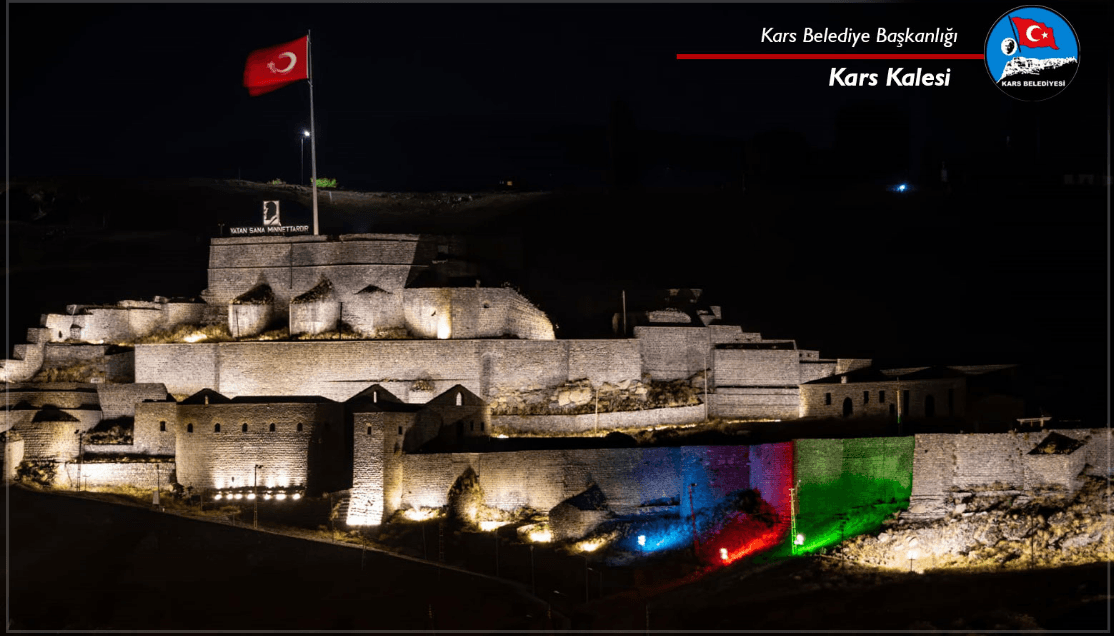
Kars Castle
Location | Kars Türkiye | ||||||||
|---|---|---|---|---|---|---|---|---|---|
Date of Construction | First construction 10th century (Bagratid period) | ||||||||
Reconstruction | 1153 (during the rule of Saltuklu Malik Izzeddin) | ||||||||
Building Material(s) | Basalt Stone | ||||||||
Building Type | Military Fortress | ||||||||
Number of Towers | 7 | ||||||||
Number of Gates | 5 | ||||||||
Prominent Structure | Celal Baba Türbesi Inner Fortress Walls Depot Remains | ||||||||
Strategic Importance | Active Role in Ottoman-Russian Wars; Center of City Defense | ||||||||
Current Condition | Preserved through Restorations and Open to Tourist Visits | ||||||||
Kars Kalesi is a defensive structure located in the city center of Kars in northeastern Türkiye. The castle holds a place among the region’s cultural heritage due to its military strategic position and the various repairs and functional changes it underwent throughout its history. It was built on a hill north of the Kars River and is one of the most prominent features of the city’s skyline.
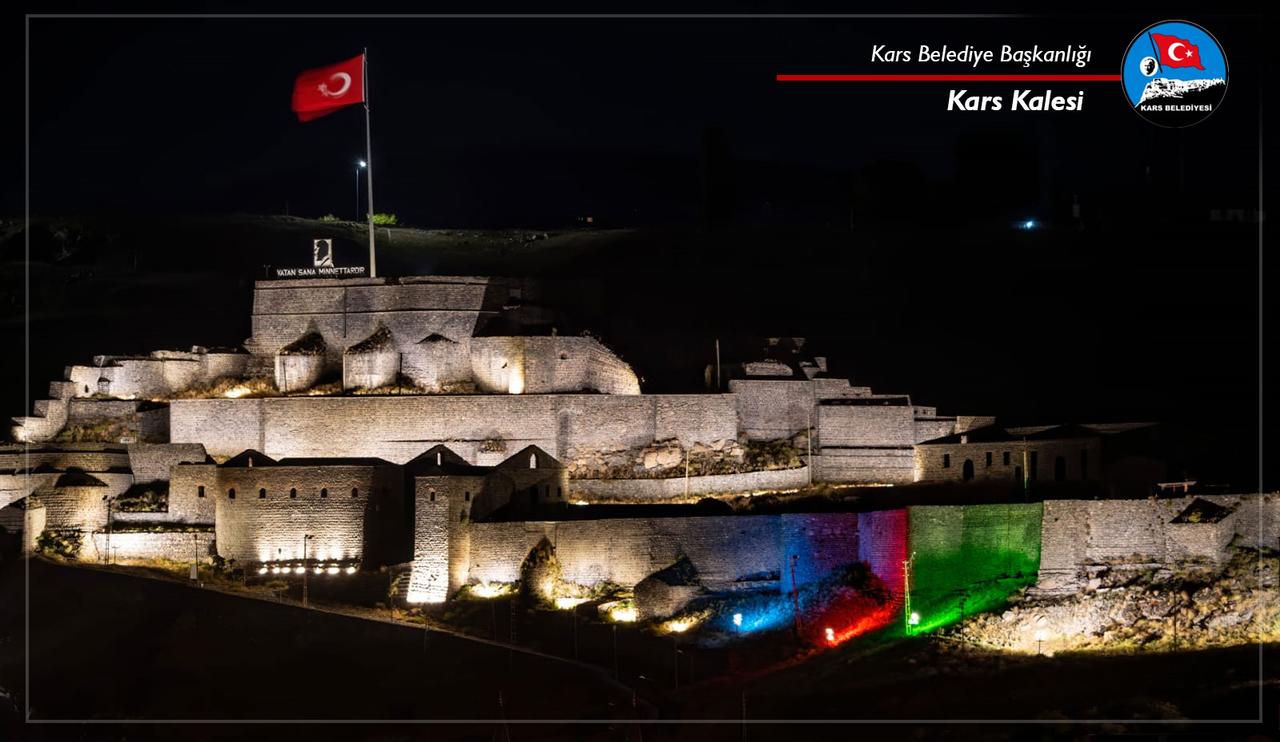
Kars Kalesi (Kars Belediyesi)
Kars Kalesi is generally believed to have been first constructed in the 10th century during the Bagratid period. At that time the castle was built by the Bagratid dynasty, which was associated with the Georgian kingdoms, for defensive purposes. In 1064, following the conquest of Kars by Sultan Alp Arslan of the Great Seljuk Empire, the castle came under Turkish rule.
In 1153, under the orders of Saltuklu ruler Izzeddin, the castle was rebuilt by Ebu’l-Hasan. However, during Timur’s campaign in Anatolia in 1386, the castle was largely destroyed. During the Ottoman period it was repaired and strengthened, particularly in the 16th century under Sultan Suleiman the Magnificent and Sultan Murad III. In the 19th century, during the Ottoman-Russian wars, the castle regained military significance. It was captured by Russian forces during the Ottoman-Russian wars of 1828–1829 and 1877–1878, during which the castle and its surroundings suffered serious damage.
Kars Kalesi has a rectangular plan oriented northeast to southwest. Basalt stone was used in its construction. Various repairs made over time to the walls, which consist of outer ramparts, an inner citadel and towers, are clearly visible. The castle has seven towers and five gates. Its most important gate is the Main Entrance Gate on the western side. Inside are remnants of various military structures, storage facilities, an armory and a mosque.
The Celal Baba Türbesi within the castle grounds belongs to Celal Baba, a Saltuklu commander who died in battle in the 12th century. Due to its location, the castle offers a commanding view over both the city center and its surrounding areas.
Throughout history, Kars Kalesi has served not only as a military headquarters but also as the foundational element of Kars city’s defensive fabric. Moreover, the castle has been an important reference point in urban planning during both the Ottoman and Russian periods. During the wars of the 19th century, the area around the castle was developed into a walled defensive system, effectively transforming the city into a garrison town.
Today, the castle is preserved as a monument of both historical and touristic value. Restoration efforts led by the Ministry of Culture and Tourism have sought to maintain the structure’s authenticity. It is also regarded as one of the primary symbols of Kars’s cultural identity.
Kars Belediyesi. Serhat Şehri Kars. Accessed May 2025.
Kars Kalesi Directorate of Culture and Tourism. Kars Castle and Other Castles. Ministry of Culture and Tourism of the Republic of Turkey. Accessed May 2025.https://kars.ktb.gov.tr/TR-54872/kars-kalesi-ve-diger-kaleler.html
Kars Kalesi Directorate of Culture and Tourism. Kars Castle and Other Castles. Ministry of Culture and Tourism of the Republic of Turkey. Accessed May 2025.https://kars.ktb.gov.tr/TR-54872/kars-kalesi-ve-diger-kaleler.html
Yıldız, Ümit. “1877–1878 Osmanlı-Rus Savaşı Sürecinde Kars’ta Askeri Mimari ve Kars Kalesi.” OTAM (Ankara Üniversitesi Osmanlı Tarihi Araştırma ve Uygulama Merkezi Dergisi), no. 53 (2023): 313–342.https://dergipark.org.tr/tr/pub/otam/issue/80458/1377438

Kars Castle
Location | Kars Türkiye | ||||||||
|---|---|---|---|---|---|---|---|---|---|
Date of Construction | First construction 10th century (Bagratid period) | ||||||||
Reconstruction | 1153 (during the rule of Saltuklu Malik Izzeddin) | ||||||||
Building Material(s) | Basalt Stone | ||||||||
Building Type | Military Fortress | ||||||||
Number of Towers | 7 | ||||||||
Number of Gates | 5 | ||||||||
Prominent Structure | Celal Baba Türbesi Inner Fortress Walls Depot Remains | ||||||||
Strategic Importance | Active Role in Ottoman-Russian Wars; Center of City Defense | ||||||||
Current Condition | Preserved through Restorations and Open to Tourist Visits | ||||||||
History
Architectural Features
Cultural and Strategic Importance