


This article was automatically translated from the original Turkish version.
+1 More
(AA)
Karnak Temple
Significance | The world's largest ancient religious complex | ||||||||
|---|---|---|---|---|---|---|---|---|---|
Construction Period | Middle Kingdom-Ptolemaic period | ||||||||
Gods | Amun-Ra, Mut and Khonsu | ||||||||
Basic Structures | Temple of Amun-Ra, Hypostyle Hall, Sacred Lake | ||||||||
Prominent Feature | Massive Hypostyle Hall with 134 columns reaching 20 meters in height | ||||||||
Status | UNESCO World Heritage List | ||||||||
Location | Egypt Luxor | ||||||||
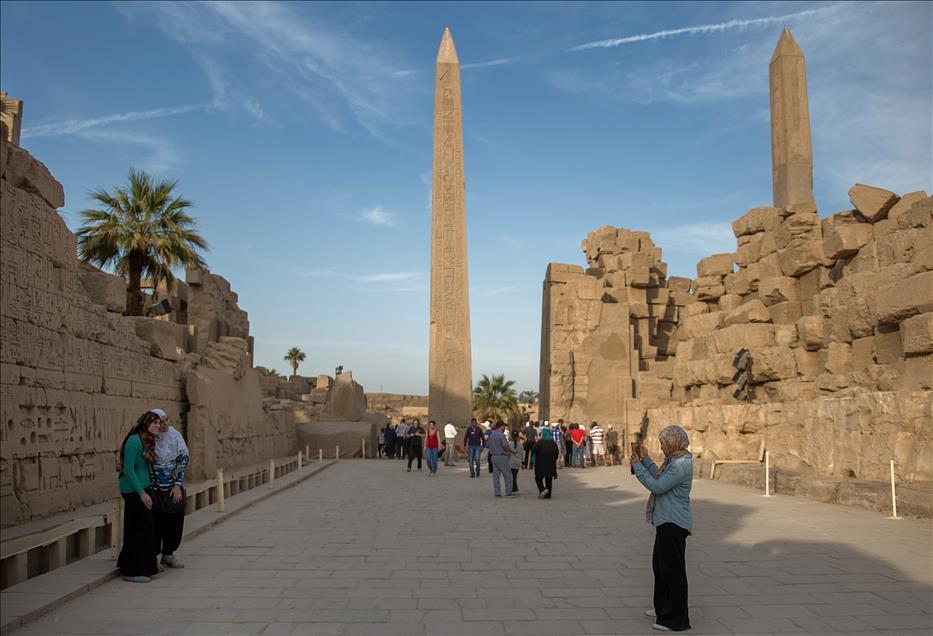
Karnak Temple, located 2.5 km north of the city of Luxor in Egypt, is one of the largest and most significant religious structures of the ancient world. Known in ancient Egyptian as Ipet-isu, meaning "the most select place," this vast complex served as a pilgrimage center and the spiritual heart of the empire for nearly 2,000 years. Covering an area of 1.2 million square meters (approximately 200 acres), it is recognized as the largest temple complex in the world.
Visual related to Karnak Temple (AA)
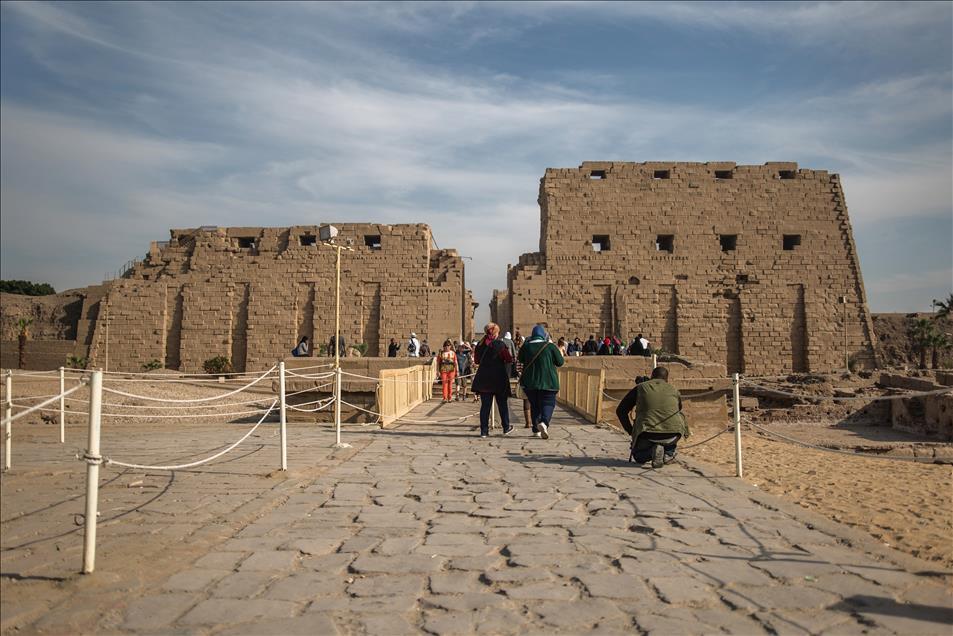
The construction of Karnak began during the Middle Kingdom period (21st century BCE) and continued uninterrupted until the 1st century CE, spanning over 2,000 years. During this time, each pharaoh added new sections, obelisks, or pylons (monumental gateways) to the complex to demonstrate their devotion to the gods and to immortalize their power.
Karnak is not merely a single temple but a collection of structures including temples, chapels, obelisks, and a sacred lake. The complex is primarily dedicated to the Theban triad: Amun-Ra, his consort the goddess Mut, and their son Khonsu.
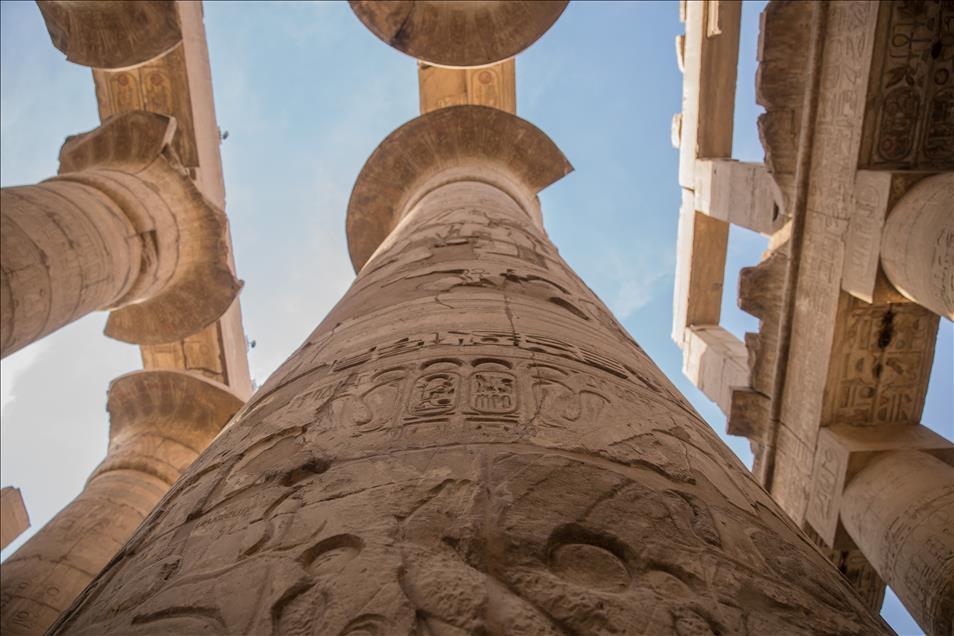
This is the largest columned hall in the world, covering an area of 54,000 square meters and consisting of 134 massive columns. The hieroglyphs on the columns depict ancient Egyptian religious rituals and military victories. The hall’s architecture strategically employs natural light; illumination filters through latticed openings in the raised central roof, creating a dramatic effect within the interior space.
The entrance to the temple is lined with sphinxes bearing the head of a ram and the body of a lion, symbols of the god Amun. It was believed that these statues protected the temple from evil spirits and symbolized the reverence of visitors toward the deity.
A large pool used by priests for ritual purification. In Egyptian mythology, water symbolized life and rebirth, and this lake was regarded as an essential element completing the temple’s spiritual power.
The massive granite obelisks within the complex were erected to commemorate the achievements of pharaohs and to offer gratitude to the gods. For example, an obelisk commissioned by Thutmose III now stands in Istanbul’s Sultanahmet Square.
Visual related to Karnak Temple (AA)
Karnak was not merely a place of worship in ancient Egypt but also a major propaganda center where the pharaohs reinforced their legitimacy. During the annual Opet Festival, the statue of Amun-Ra was carried along the Nile to be shared with the people. The temple was also a vast economic power; at its peak, it is estimated that nearly 80,000 priests worked there and managed extensive lands.
With the spread of Christianity in the 4th century CE, pagan rituals at the temple ceased, and some sections were converted into churches. Over time, the complex was buried under sand and abandoned, until archaeological excavations in the 19th and 20th centuries brought it back to light. Today, Karnak, listed as a UNESCO World Heritage Site, continues to stand as one of the best-preserved examples of ancient Egyptian architecture and belief systems.
Anadolu Ajansı. "Karnak Tapınağı." March 20, 2015. Accessed May 7, 2026. https://www.aa.com.tr
Kurhan, Mürüvvet. "İmparatorluk Tanrısı Amon." *Belleten* 59, no. 226 (December 1995): 449–582. Accessed May 7, 2026. https://doi.org/10.37879/belleten.1995.449
Mark, Joshua J. "Mısır'ın Orta Krallık Dönemi." Translated by Burak Yıldız. *Dünya Tarihi Ansiklopedisi*. Accessed May 7, 2026. https://www.worldhistory.org/trans/tr/1-15057/misirin-orta-krallik-donemi/
Şimşek, Ali. "Antik Mısır'ın Anıtları." Çömlek Arkeoloji: MART E-Dergisi, no. 19 (2019). Accessed May 7, 2026. http://mart.mersin.edu.tr

(AA)
Karnak Temple
Significance | The world's largest ancient religious complex | ||||||||
|---|---|---|---|---|---|---|---|---|---|
Construction Period | Middle Kingdom-Ptolemaic period | ||||||||
Gods | Amun-Ra, Mut and Khonsu | ||||||||
Basic Structures | Temple of Amun-Ra, Hypostyle Hall, Sacred Lake | ||||||||
Prominent Feature | Massive Hypostyle Hall with 134 columns reaching 20 meters in height | ||||||||
Status | UNESCO World Heritage List | ||||||||
Location | Egypt Luxor | ||||||||
Historical Development and Construction Process
Architectural Structure and Key Sections
Great Hypostyle Hall
Sphinx Avenue (Path of the Ram-Headed Sphinxes)
Sacred Lake
Obelisks
Religious and Political Role
Abandonment and Modern Era