This article was automatically translated from the original Turkish version.
Type of Geographical Indication | Mahreç Sign | ||||||||
|---|---|---|---|---|---|---|---|---|---|
Registration Number | 1586 | ||||||||
Registration Date | 08.05.2024 | ||||||||
Product / Product Group(s) | Textiles | ||||||||
Province(s) | Konya | ||||||||
Applicant/Registrant(s) | Karapınar Chamber of Commerce and Industry | ||||||||
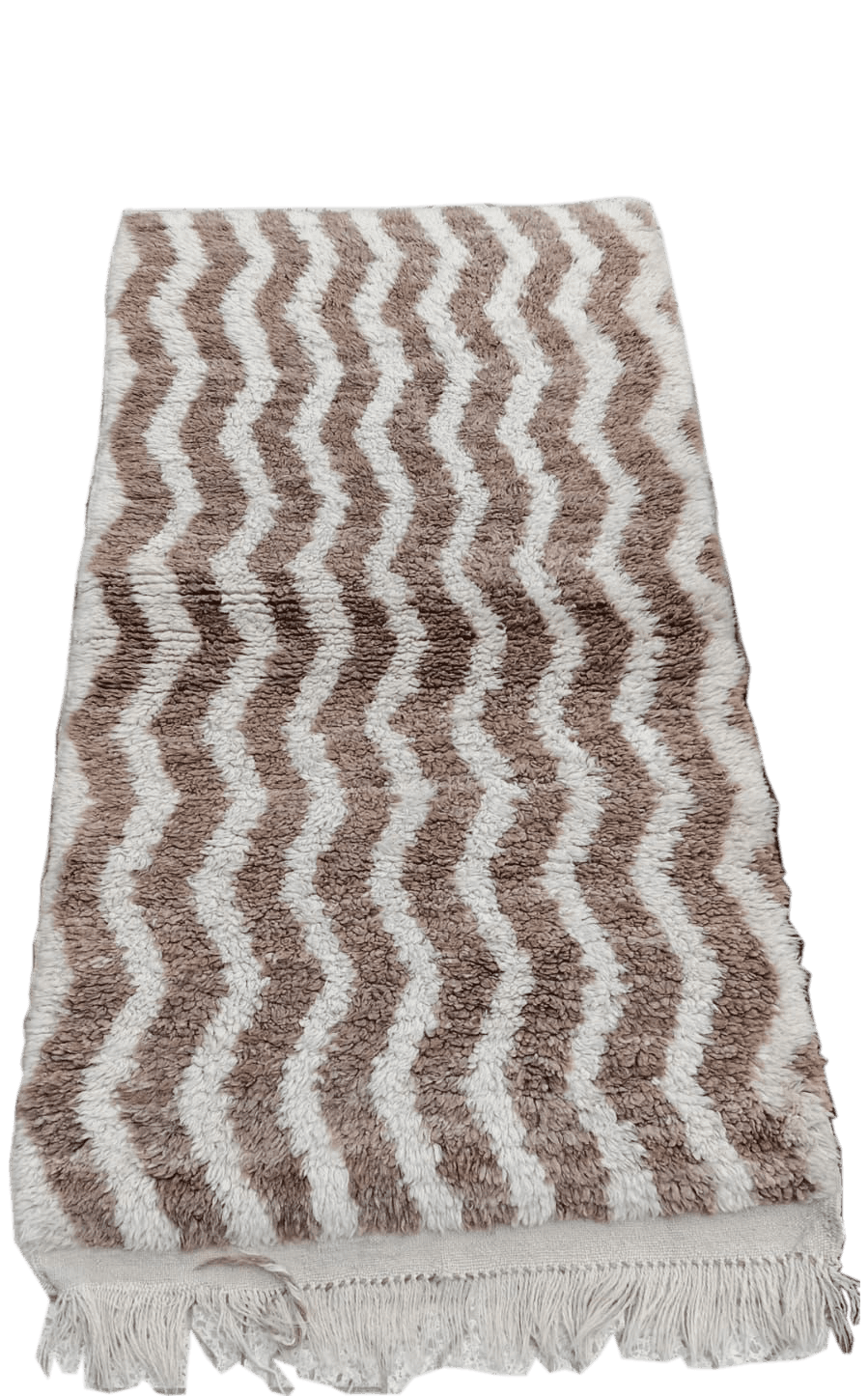
Karapınar Tülü Dokuması, Konya’s Karapınar district is a distinctive weaving type. This product is produced on upright, rotating looms called “ıstar,” using wool or tiftik (filik) from small livestock raised in the region. These textiles can take the form of long-haired carpets or wide rugs and may be produced with or without motifs. Tülü weaving holds an important place in the social and economic life of Karapınar and also reflects the local culture and traditions.
In Karapınar Tülü Dokuması, apart from motifless (imli) designs, plant-based, geometric and object-based motifs are also used. The colors found in the textiles—white, cream, brown and black—are the natural tones of the wool and tiftik used. Other colors are obtained through dyeing. Traditionally, natural plant sources such as serkile herb, palamut bark (cevt herb), cumin seed (çemen), walnut, onion peel and tea were used for dyeing, whereas today synthetic dyes are predominantly used in these processes.
Structurally, this textile consists of warp, weft and hav layers. It differs from carpets in that the hav layer uses wool or tiftik fleece directly rather than yarn. The most distinguishing feature of Karapınar Tülü Dokuması is the presence of wide ground weft rows between the hav rows. Additionally, by maintaining the length of the fibers during production, wool loss is avoided.
The Karapınar Tülü Dokuması produced in the region is primarily classified into three types: knotted (ilmeli), yamçı and çeki.
Among the commonly woven tülü varieties in the region are names such as Ilmeli, Kaneliçeli, Mihraplı, Çeki, Namazla, Sığır Kuyruğu, Yıldızlı, Lokumlu, Omuz Atmalı and Zincirli.
Weaving Technique: The production of Karapınar Tülü Dokuması primarily employs the Turkish (Gördes) Knot. In this method, the ilme yarn is wrapped around a pair of warp threads (both front and back threads), and the yarn ends are pulled from back to front underneath to form the knot. This technique creates an extremely durable structure; even as the hav height decreases over time, the yarn remains wrapped around the warp pair, preventing pattern distortion.
Weaving Process: The weaving process is carried out on upright, rotating looms known as “ıstar.” These looms typically measure between 1.50 and 2 meters in width and 1.30 to 2 meters in height. First, the warp is prepared. This involves winding the warp thread in a crisscross pattern between two wooden stakes placed according to the intended length of the textile. To prevent the threads from tangling and to ensure even spacing, a chain-like weave called “baş örgüsü” is applied between the warp threads. The prepared warp is then transferred to the loom using rods, secured and stretched.
Weaving begins from the bottom of the loom. In fringed models, approximately 10 cm of yarn is left at the beginning and end of the textile. To prevent the kilim weave from unraveling, a border weave called “çiti örgüsü” is applied at the start and end sections. This is created by passing the yarn through the warp threads. After the çiti örgüsü, the kilim section is woven and knots are tied according to the desired pattern. Once the weaving is complete, the textile is removed from the loom.
The woven textile is turned upside down so that the hav surface faces upward. It is then washed thoroughly with plenty of water and soap until it foams, followed by rinsing until the water runs clear. The washed product is rolled with the hav surface facing inward and left standing upright to drain excess water. The roll is then opened and the remaining water is wrung out using a “gelberi.” The textile is rolled again and left to rest in the shade for 24 hours before being finally spread out on a flat surface to dry.
The designated geographical boundary for Karapınar Tülü Dokuması is the Karapınar district of Konya province. Because the product’s reputation is strongly tied to this region, all stages of production must be carried out within the district’s boundaries.
Compliance with standards is monitored under the coordination of the Karapınar Chamber of Commerce and Industry. The inspection body consists of three experts—one each from the Karapınar Commodity Exchange, the Karapınar Agricultural Chamber and the Karapınar Chamber of Commerce and Industry.
Inspections are conducted at least once a year on a regular basis. Additionally, unplanned inspections may be carried out upon complaint or if deemed necessary.
The following criteria are used during inspections:
The inspection commission may obtain services or consult experts from public or private institutions as needed during the process.
Turk Patent and Trademark Office. "Karapınar Tülü Dokuması Sicil Belgesi." Turk Patent and Trademark Office. Accessed October 23, 2025. https://ci.turkpatent.gov.tr/Files/GeographicalSigns/b0bc7800-93ca-44f3-a707-b6fbc64b2c3a.pdf
Turk Patent and Trademark Office. "Karapınar Tülü Dokuması." *Coğrafi İşaretler Portalı*. Accessed October 23, 2025. https://ci.turkpatent.gov.tr/cografi-isaretler/detay/8367
Type of Geographical Indication | Mahreç Sign | ||||||||
|---|---|---|---|---|---|---|---|---|---|
Registration Number | 1586 | ||||||||
Registration Date | 08.05.2024 | ||||||||
Product / Product Group(s) | Textiles | ||||||||
Province(s) | Konya | ||||||||
Applicant/Registrant(s) | Karapınar Chamber of Commerce and Industry | ||||||||
No Discussion Added Yet
Start discussion for "Karapınar Tülü Weaving" article
Product Characteristics
Production Method
Geographical Boundary and Oversight