This article was automatically translated from the original Turkish version.
Type of Geographical Indication | Origin Name | ||||||||
|---|---|---|---|---|---|---|---|---|---|
Registration Number | 1359 | ||||||||
Registration Date | 22.05.2023 | ||||||||
Product / Product Group(s) | Processed and Unprocessed Fruits Vegetables and Mushrooms | ||||||||
Province(s) | Uşak | ||||||||
Applicant/Registrant(s) | Karahallı Municipality | ||||||||
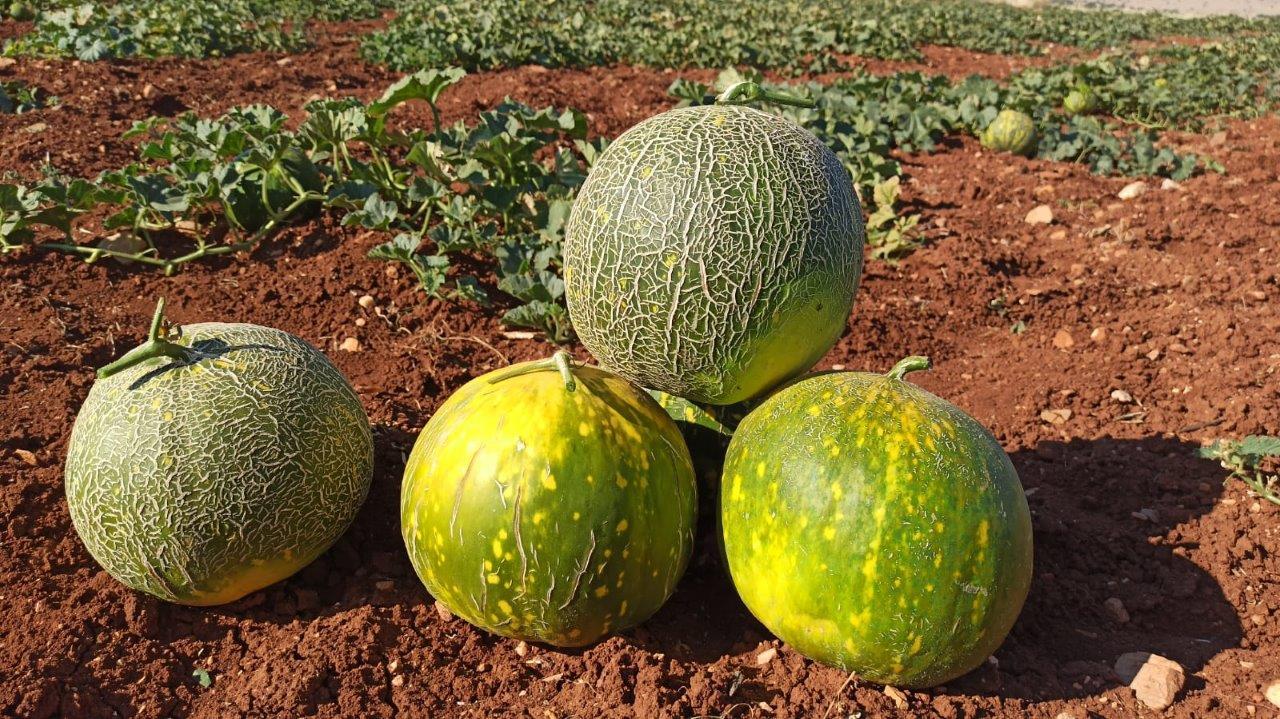
It is a local watermelon variety unique to the Karahallı district of Uşak province. This agricultural product, protected under registration number 1359, has fully adapted to the region’s soil and climatic conditions and developed distinctive characteristics. Scientifically classified under the species Cucumis melo, this watermelon is also known locally by various names such as Karahallı Düğleği, Cemile Düğleği, Cezik Kavunu, or Çoban Almaz. The geographical indication registration of the product was granted on 22 May 2023 following an application by the Karahallı Municipality.
This watermelon is typically small to medium in size (2–6 kg) and has a shape ranging from slightly round to oval. It has a thin rind with a yellow-green color. On the outer surface of the rind, irregular white veins and irregular green streaks on a yellow background (a mottled appearance) can be observed. The flesh inside is a tone ranging from orange to light yellow.
Its key physical and chemical properties are as follows:
The production of Karahallı watermelon continues using traditional farming techniques and the preservation of local seeds.
The geographical boundary for the cultivation of Karahallı watermelon encompasses the areas of Karahallı district in Uşak province at elevations between 905 and 1036 meters.
Monitoring is conducted by a minimum three-member inspection body composed of experts from the Karahallı Municipality, the Karahallı District Directorate of Agriculture and Forestry, and the Karahallí Chamber of Commerce and Industry, under the coordination of the Karahallı Municipality.
Inspections are carried out regularly once a year, and may also be conducted whenever deemed necessary or upon complaint. The inspection body verifies compliance with the production method, including seed sourcing, planting, cultivation period, cultural practices, harvesting, and storage conditions. It is also responsible for monitoring the proper use of the designation Karahallı watermelon and the “Place of Origin” emblem.
Turk Patent and Trademark Office. "Karahallı Kavunu Sicil Belgesi." Accessed October 25, 2025. https://ci.turkpatent.gov.tr/Files/GeographicalSigns/1043b56d-2fe4-446c-b89b-a7e6232f714a.pdf
Turkish Patent and Trademark Office. "Karahallı Kavunu." Geographical Indications Portal. Accessed October 25, 2025. https://ci.turkpatent.gov.tr/cografi-isaretler/detay/6685

Type of Geographical Indication | Origin Name | ||||||||
|---|---|---|---|---|---|---|---|---|---|
Registration Number | 1359 | ||||||||
Registration Date | 22.05.2023 | ||||||||
Product / Product Group(s) | Processed and Unprocessed Fruits Vegetables and Mushrooms | ||||||||
Province(s) | Uşak | ||||||||
Applicant/Registrant(s) | Karahallı Municipality | ||||||||
Product Characteristics
Cultivation Method
Geographical Boundary and Monitoring