This article was automatically translated from the original Turkish version.
Geographical Indication Type | Mahreç Sign | ||||||||
|---|---|---|---|---|---|---|---|---|---|
Application Date | 23.05.2024 | ||||||||
Registration Number | 1728 | ||||||||
Registration Date | 25.04.2025 | ||||||||
Product / Product Group | Rugs handcraft products other than carpets, kilims and textiles | ||||||||
Applicant / Registrant | Kadirli Chamber of Commerce and Industry | ||||||||
Place of Production | Osmaniye, Türkiye | ||||||||
Kadirli Andız Tespihi is a traditional handicraft product made from seeds of the Juniperus drupacea juniper tree, which grows naturally in the mountainous regions (800–1500 meter elevation) of the Kadirli district in Osmaniye Province, Türkiye. This product was officially registered as a geographical indication on 25 April 2025, distinguished by its unique qualities that reflect the cultural heritage and natural resources of the region.
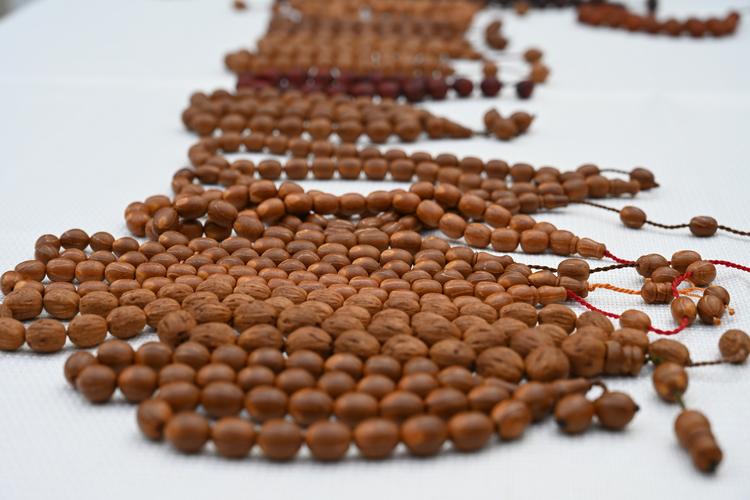
Kadirli Andız Tespihi (AA)
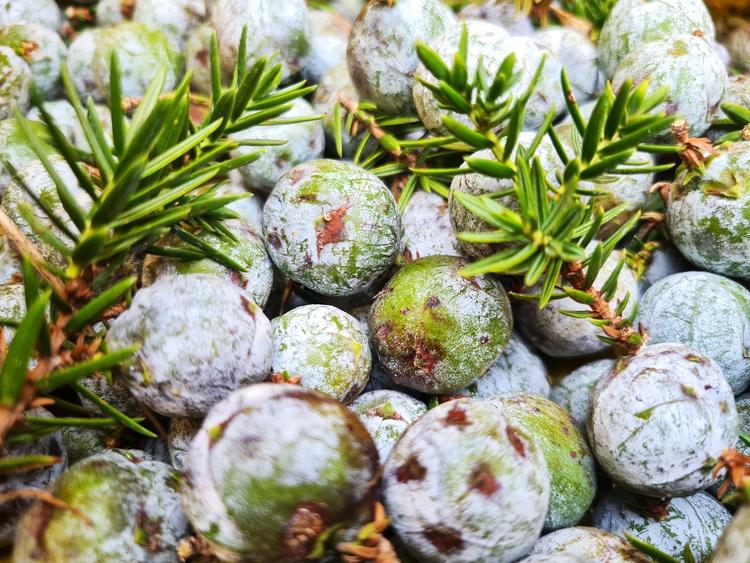
Seed Mat (AA)
Kadirli andız tespihi is produced using two distinct techniques:
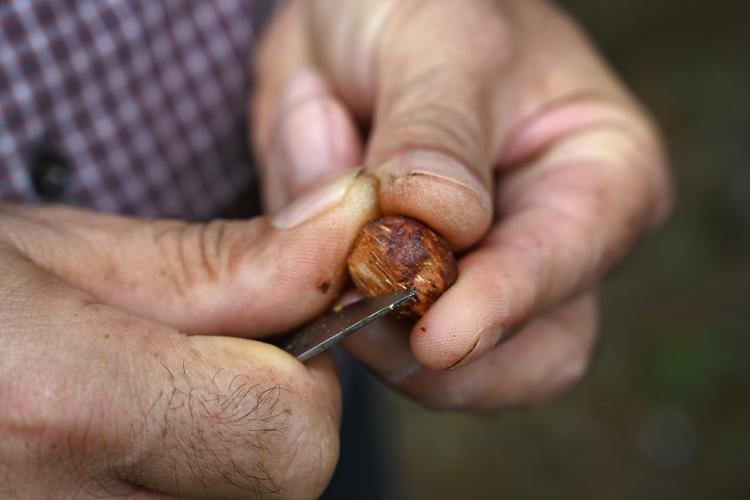
Production Process (AA)
Models and Forms
The seeds used in Kadirli andız tespihi production are classified into two stages based on harvest time: merik and yetkin. The merik stage includes seeds harvested between March and June, while the yetkin stage includes seeds that mature between September and October.
Tespihs made from merik-stage seeds, harvested before full maturity, exhibit more pronounced surface markings and more striking color transformation. In their raw state, these tespihs are naturally colored; with use, they gradually turn burgundy and acquire a semi-translucent appearance.
Tespihs made from yetkin-stage seeds, harvested from fully matured fruits, begin with various shades of brown. During use, they evolve into tones of chestnut red or dark brown. This transformation is linked to the chemical composition and fibrous structure of the seeds over time.
Thus, both merik and yetkin tespihs display distinct visual and aesthetic differences through natural color transitions.
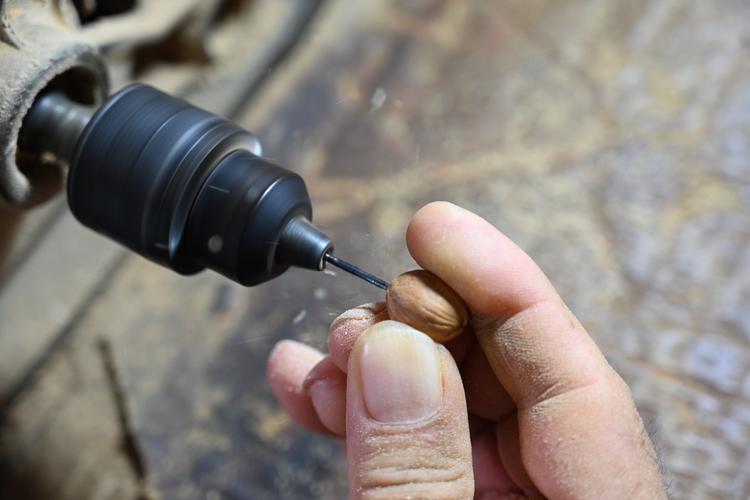
Production Process (AA)
Under the coordination of the Kadirli Chamber of Commerce and Industry, a three-member oversight body has been established with participation from Osmaniye Korkut Ata University, the Kadirli National Education Directorate and expert individuals. Production, use of the geographical indication and production methods are formally inspected at least once annually.
The production of andız tespihi not only preserves Kadirli’s traditional handicraft heritage but also serves as both an economic asset and a source of cultural identity for the local community. Each bead is a piece of history meticulously crafted by skilled artisans.
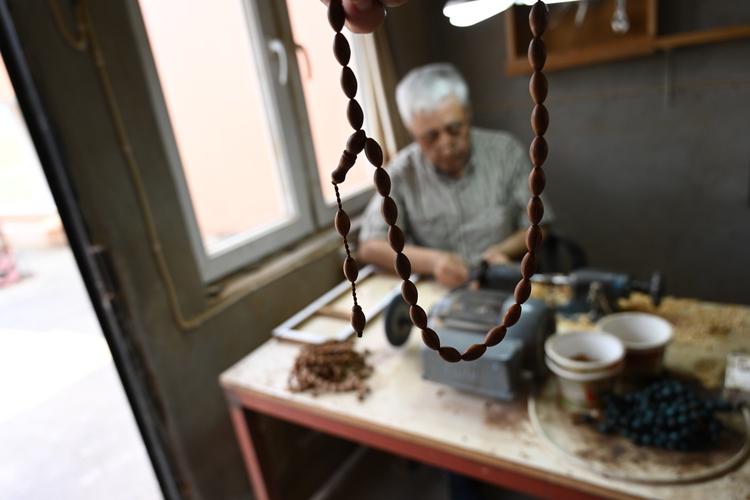
Kadirli Andız Tespihi (AA)
Anadolu Ajansı. "Andız Kozalaklarının Çekirdekleri Mustafa Ustanın Elinde Tescilli Tespihe Dönüşüyor." Accessed July 6, 2025.https://www.aa.com.tr/tr/yasam/andiz-kozalaklarinin-cekirdekleri-mustafa-ustanin-elinde-tescilli-tespihe-donusuyor/3572717.
Turkish Patent and Trademark Office. "Coğrafi İşaretler Portalı." Turkish Patent and Trademark Office. Accessed July 6.https://ci.turkpatent.gov.tr/cografi-isaretler/detay/11443

Geographical Indication Type | Mahreç Sign | ||||||||
|---|---|---|---|---|---|---|---|---|---|
Application Date | 23.05.2024 | ||||||||
Registration Number | 1728 | ||||||||
Registration Date | 25.04.2025 | ||||||||
Product / Product Group | Rugs handcraft products other than carpets, kilims and textiles | ||||||||
Applicant / Registrant | Kadirli Chamber of Commerce and Industry | ||||||||
Place of Production | Osmaniye, Türkiye | ||||||||
No Discussion Added Yet
Start discussion for "Kadirli Andız Rosary" article
Distinctive Characteristics
Production Methods
Lathe-Based Production
Natural Production Method
Color Transformation
Monitoring Mechanism
Cultural and Economic Significance