

This article was automatically translated from the original Turkish version.
+1 More
Distance(s) | Approximately 25 km from the city center of Gümüşhane | ||||||||
|---|---|---|---|---|---|---|---|---|---|
Important Documents | Appointment warrant issued by Sultan Abdülaziz | ||||||||
Modern Restorations | 1972 and 2010 | ||||||||
Year Converted to Mosque | 1737 | ||||||||
Original Function | Byzantine Period Church (Hagia Sophia) | ||||||||
Original Construction Date | 7th century or 8th century | ||||||||
Name Meaning | "Aya Sofya" (Holy Wisdom / Divine Wisdom) | ||||||||
Building Name | Kabaköy (Ayasofya) Camii | ||||||||
Location | Kabaköy Türkiye Gümüşhane | ||||||||
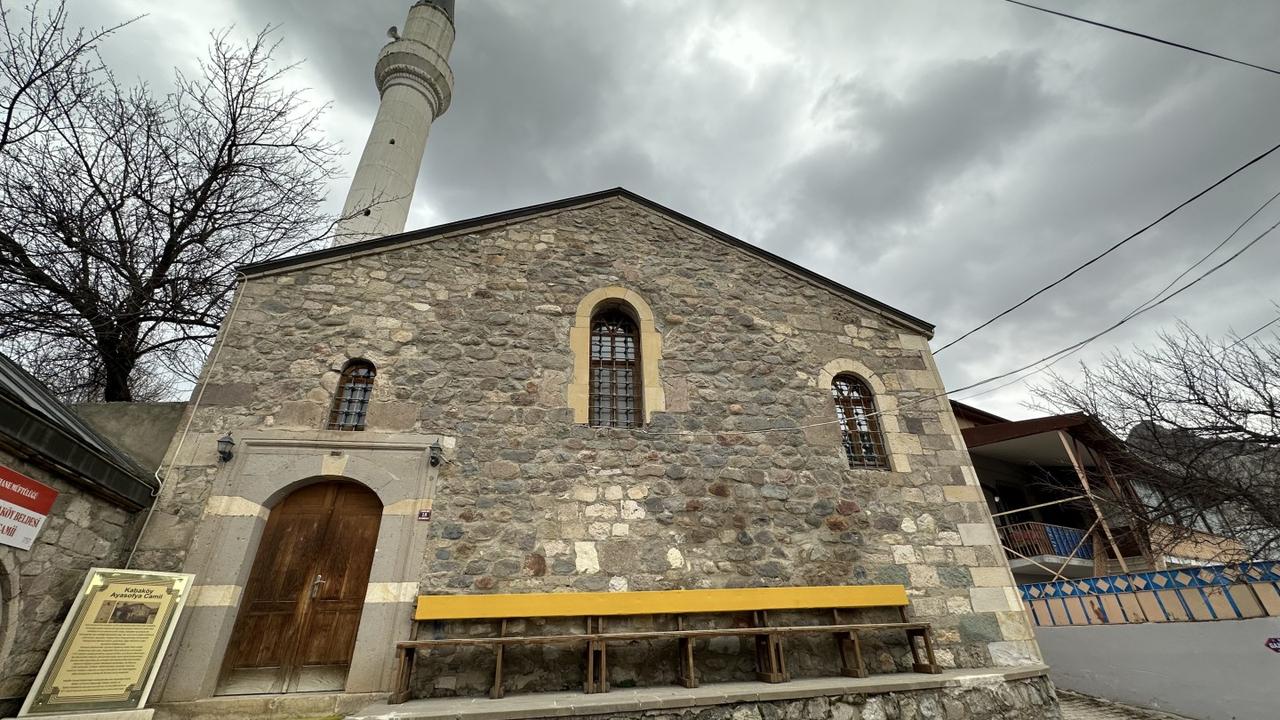
Kabaköy Ayasofya Camii is a historical place of worship located in Kabaköy, approximately 25 kilometers from the center of Gümüşhane province.【1】 It is one of nine mosques in Türkiye bearing the name "Ayasofya." The term "Ayasofya" derives from the combination of "aya," meaning "holy" or "saint," and "sophia," meaning "wisdom," and is defined as "divine wisdom".【2】 The structure is one of two Ayasofya buildings in the Eastern Black Sea region.
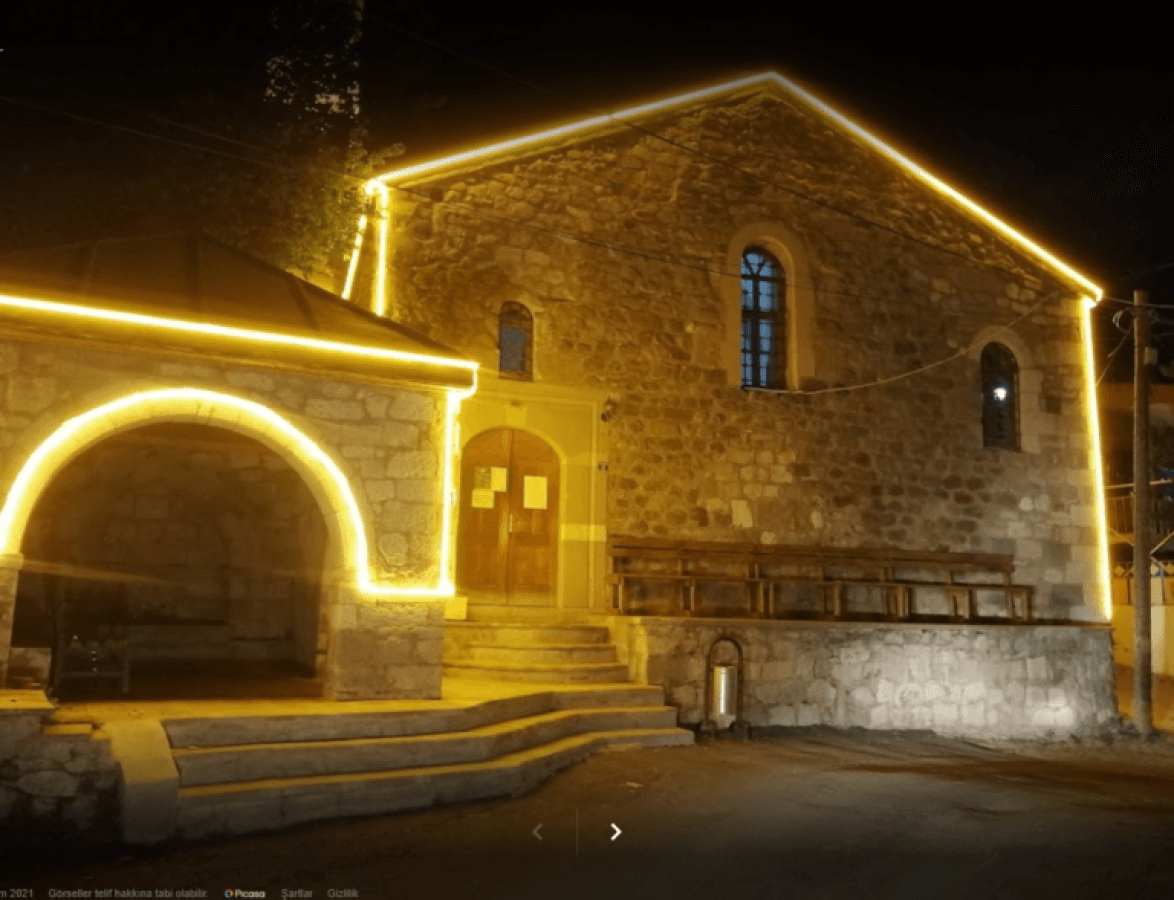
Kabaköy (Ayasofya) Mosque (Bahçeli Municipality)
There are differing views regarding the exact date of construction. While written sources indicate that the structure was built in the 8th century following the settlement of Armenians in the region, some assessments trace its origins back to the 7th century.【3】 During the Middle Ages, the church dedicated to the Hagia Sophia served as the episcopal center during the period of the Empire of Trebizond.
As the Turkish population in the region grew, the structure, which had remained silent for centuries, was converted into a mosque in 1737.【4】 During the Ottoman period, it is known that a special decree was issued by Sultan Abdülaziz to appoint an imam and staff for the mosque. After centuries of wear and decay, the structure underwent restoration in 1972 and 2010.【5】
Kabaköy Ayasofya Camii is a rectangular building constructed using a rubble masonry system with a basilical plan. Cut stone was used for the north, south, and east facades, while rubble stone was employed for the west facade. Internally, the structure features a three-nave and three-apse arrangement.【6】 The central nave is wider than the side naves, and the central apse is longer than the side apses. During its conversion into a mosque, the building’s pastophoria chambers were sealed. Access to the mosque is through a stone-arched entrance on the west facade. The side walls on the south face feature decorated and cross-motif stones. The roof, originally a gabled structure, was later covered with sheet metal.
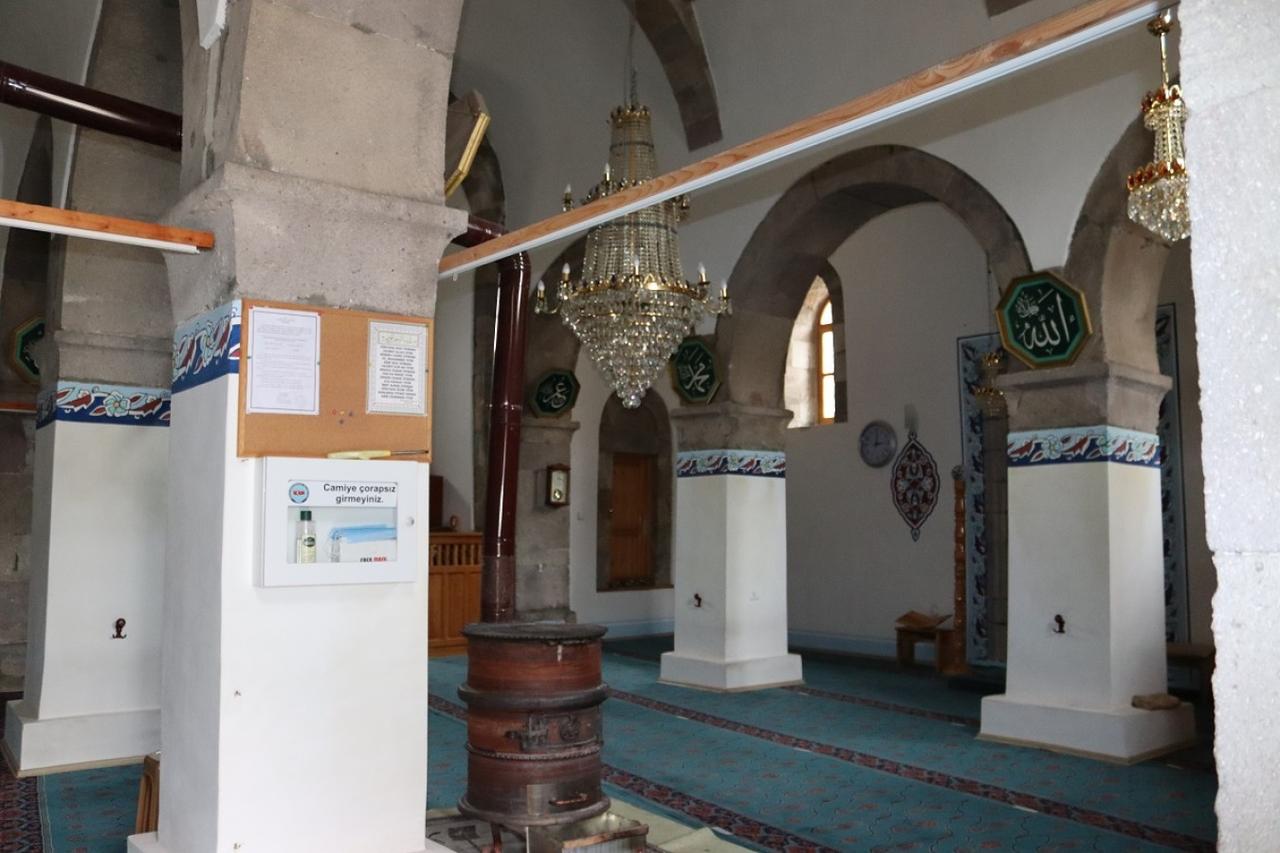
Interior of the Mosque (Bahçeli Municipality)
The ceiling structure is supported by massive columns. The side walls and load-bearing columns are plastered and painted, while the arches, supporting capitals, and window and door openings retain their exposed stonework. This approach imparts a simple sense of movement to the interior space.
With its conversion into a mosque, a mihrap made of cut stone was added to the south wall, and the niche was decorated with calligraphic ornamentation. The restored minbar and pulpit are made of wood. The windows are barrel-vaulted and framed in wood. The minaret on the north facade is a relatively recent addition, not part of the original structure.
Bahçeli Belediyesi. "Ayasofya Camii." T.C. Bahçeli Municipality Official Website. Accessed May 7, 2026. https://bahcelibelediyesi.bel.tr/tarihi-merkez/ayasofya-camii/7
Doğu Karadeniz Kültür Envanteri Projesi. "Kabaköy (Ayasofya) Camii." Accessed May 7, 2026. https://karadeniz.gov.tr/kabakoy-ayasofya-camii/
Karahaliloğlu, Aleyna, and Funda Kurak Açıcı. "Türkiye'deki Ayasofya Yapıları: Küçük Ayasofya." İnönü Üniversitesi Kültür ve Sanat Dergisi 7, no. 2 (2021): 1–24. Accessed May 7, 2026. https://www.researchgate.net/publication/353493343_TURKIYE'_DEKI_AYASOFYA_YAPILARI_KUCUK_AYASOFYA
TRT Haber. "Türkiye'nin benzer hikayelere sahip Ayasofyaları." July 24, 2020. Accessed May 7, 2026. https://www.trthaber.com/haber/turkiye/turkiyenin-benzer-hikayelere-sahip-ayasofyalari-504251.html
Taşçı, Halil İbrahim. "Gümüşhane’nin Saklı Hazinesi Kabaköy Ayasofya Camii." Yedikıta Dergisi, no. 204 (August 2025). Accessed May 7, 2026. https://yedikita.com.tr/gumushanenin-sakli-hazinesi-kabakoy-ayasofya-camii/
[1]
Halil İbrahim Taşçı, "Gümüşhane’nin Saklı Hazinesi Kabaköy Ayasofya Camii," Yedikıta Dergisi, sy. 204 (August 2025), accessed 7 May 2026, https://yedikita.com.tr/gumushanenin-sakli-hazinesi-kabakoy-ayasofya-camii/
[2]
Aleyna Karahaliloğlu ve Funda Kurak Açıcı, "Türkiye' deki Ayasofya Yapıları: Küçük Ayasofya," İnönü Üniversitesi Kültür ve Sanat Dergisi 7, sy. 2 (2021): 21, accessed 7 May 2026, https://www.researchgate.net/publication/353493343_TURKIYE'_DEKI_AYASOFYA_YAPILARI_KUCUK_AYASOFYA
[3]
TRT News, "Türkiye's Ayasofyas with Similar Histories," last updated 24 July 2020, accessed 7 May 2026, https://www.trthaber.com/haber/turkiye/turkiyenin-benzer-hikayelere-sahip-ayasofyalari-504251.html
[4]
Aleyna Karahaliloğlu ve Funda Kurak Açıcı, "Türkiye' deki Ayasofya Yapıları: Küçük Ayasofya," İnönü Üniversitesi Kültür ve Sanat Dergisi 7, sy. 2 (2021): 2, accessed 7 May 2026, https://www.researchgate.net/publication/353493343_TURKIYE'_DEKI_AYASOFYA_YAPILARI_KUCUK_AYASOFYA
[5]
Republic of Türkiye Bahçeli Municipality, "Ayasofya Mosque," accessed 7 May 2026, https://bahcelibelediyesi.bel.tr/tarihi-merkez/ayasofya-camii/7
[6]
Eastern Black Sea Cultural Inventory Project, "Kabaköy (Ayasofya) Mosque," accessed 7 May 2026, https://karadeniz.gov.tr/kabakoy-ayasofya-camii/

Distance(s) | Approximately 25 km from the city center of Gümüşhane | ||||||||
|---|---|---|---|---|---|---|---|---|---|
Important Documents | Appointment warrant issued by Sultan Abdülaziz | ||||||||
Modern Restorations | 1972 and 2010 | ||||||||
Year Converted to Mosque | 1737 | ||||||||
Original Function | Byzantine Period Church (Hagia Sophia) | ||||||||
Original Construction Date | 7th century or 8th century | ||||||||
Name Meaning | "Aya Sofya" (Holy Wisdom / Divine Wisdom) | ||||||||
Building Name | Kabaköy (Ayasofya) Camii | ||||||||
Location | Kabaköy Türkiye Gümüşhane | ||||||||
No Discussion Added Yet
Start discussion for "Kabaköy (Ayasofya) Camii" article
History
Architectural Structure
Interior and Decoration