June 21 Summer Solstice
Our planet travels a long journey around the Sun in space. During this journey, when calendars show June 21, a unique natural phenomenon occurs in the sky and on Earth. This event is called the summer solstice.
The summer solstice is astronomically recognized as the beginning of summer in the Northern Hemisphere—that is, the upper half of Earth where our country, Türkiye, is located.
Generated by Artificial Intelligence.
What Is a Solstice and Why Does It Occur?
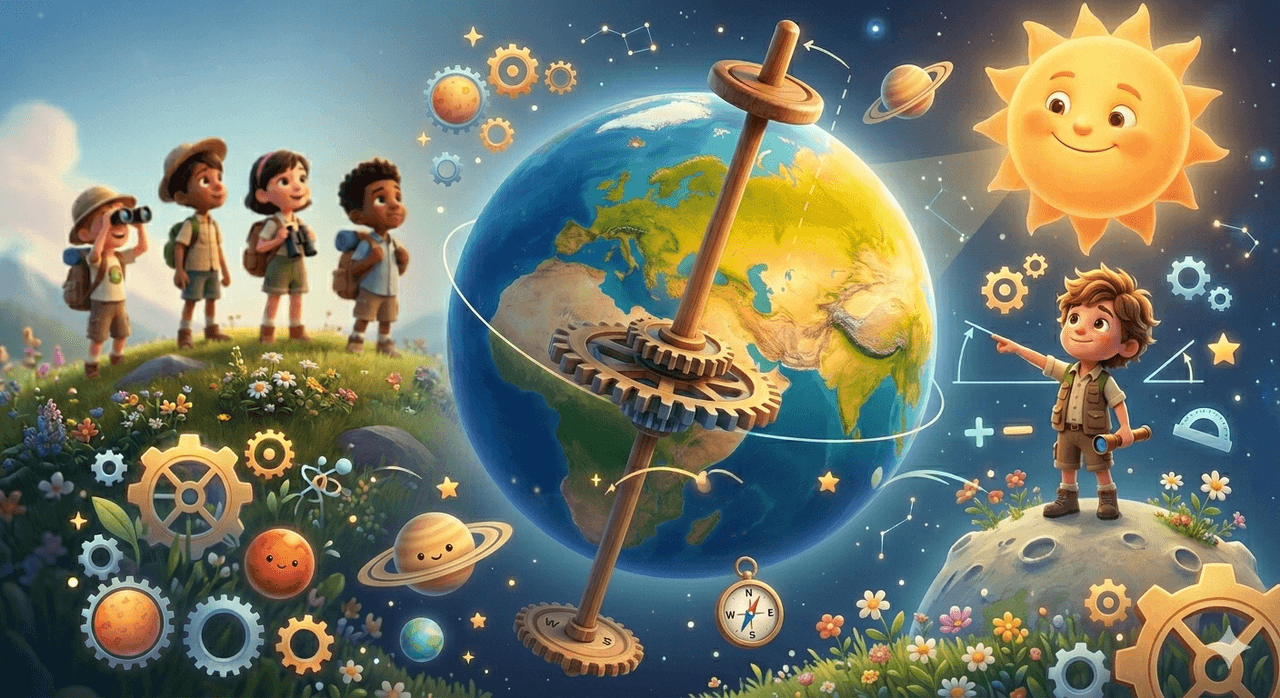
While Earth rotates on its axis like a spinning top, it does not spin perfectly upright. Instead, like a slightly tilted top, it rotates at an inclination of 23.44 degrees. Scientists call this the axial tilt.
As Earth continues its annual orbit around the Sun, this tilt causes one half of the year for the Northern Hemisphere to be tilted more toward the Sun, while the other half sees the Southern Hemisphere closer to the Sun.
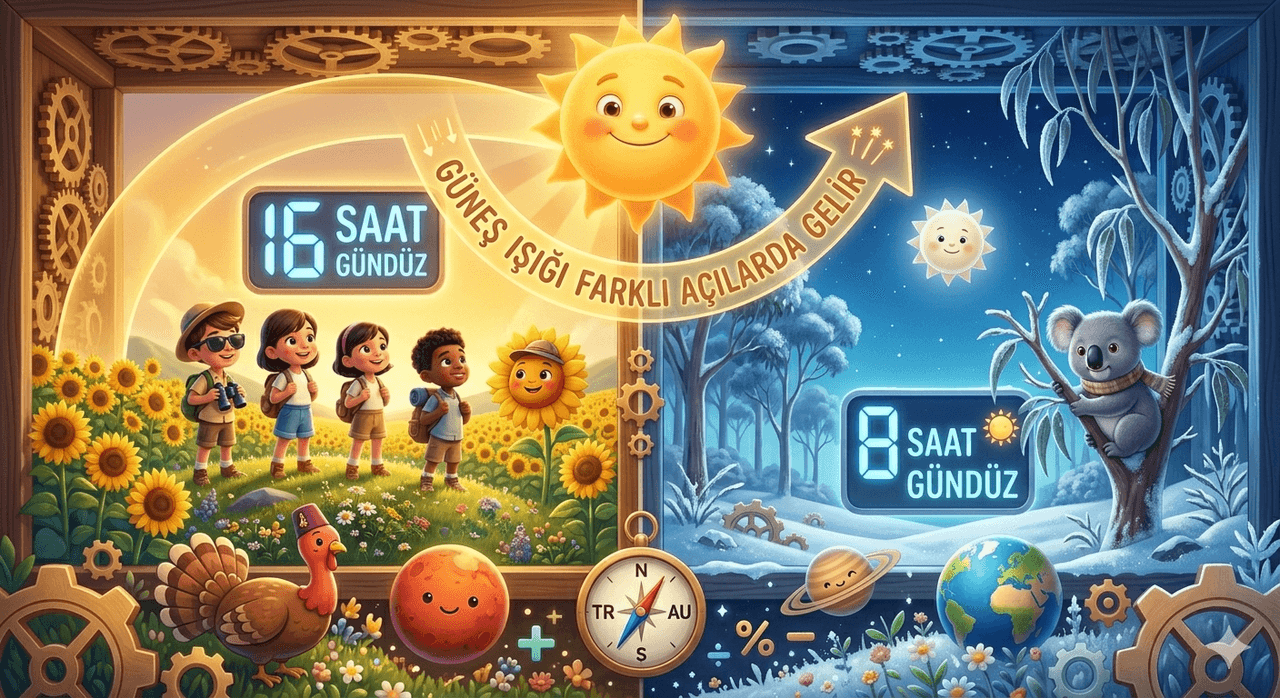
The Most Tilted Moment: June 21 is the specific moment when the Northern Hemisphere is tilted most directly toward the Sun and receives sunlight at its steepest angle.
Generated by Artificial Intelligence.
What Happens on June 21?
On this special day, sunlight strikes the Northern Hemisphere at a much steeper and more direct angle. As a result, the following natural phenomena occur:
- Longest Day, Shortest Night: The Northern Hemisphere experiences its longest day and shortest night of the year. After this date, days gradually begin to shorten and nights to lengthen.
- Continuous Light at the Poles: Due to Earth’s tilt, the North Pole and surrounding regions remain entirely under sunlight. On June 21, the Sun does not set at all in these areas, resulting in 24 hours of daylight.
- Opposite Conditions in the Southern Hemisphere: While we enter summer, people in the Southern Hemisphere—for example, in Australia—move farther from the Sun and begin winter, experiencing their longest night and shortest day of the year.
Generated by Artificial Intelligence.
A Scientific Fact: The Analemma and Shadows
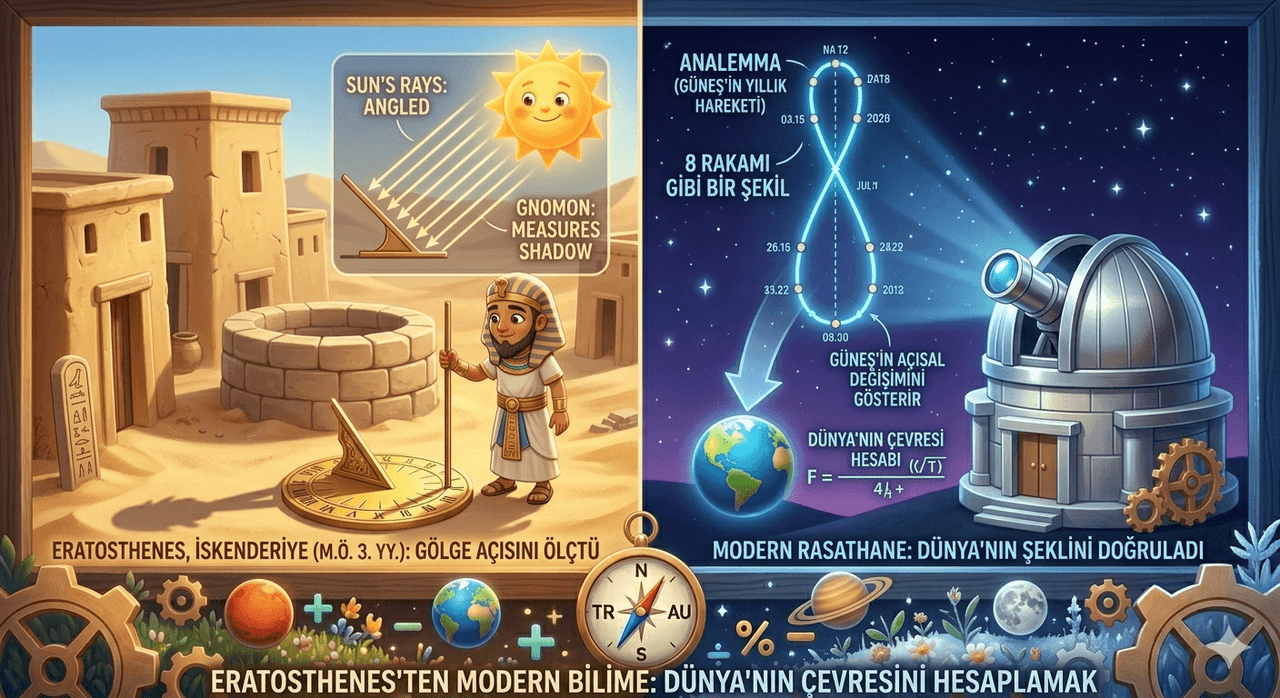
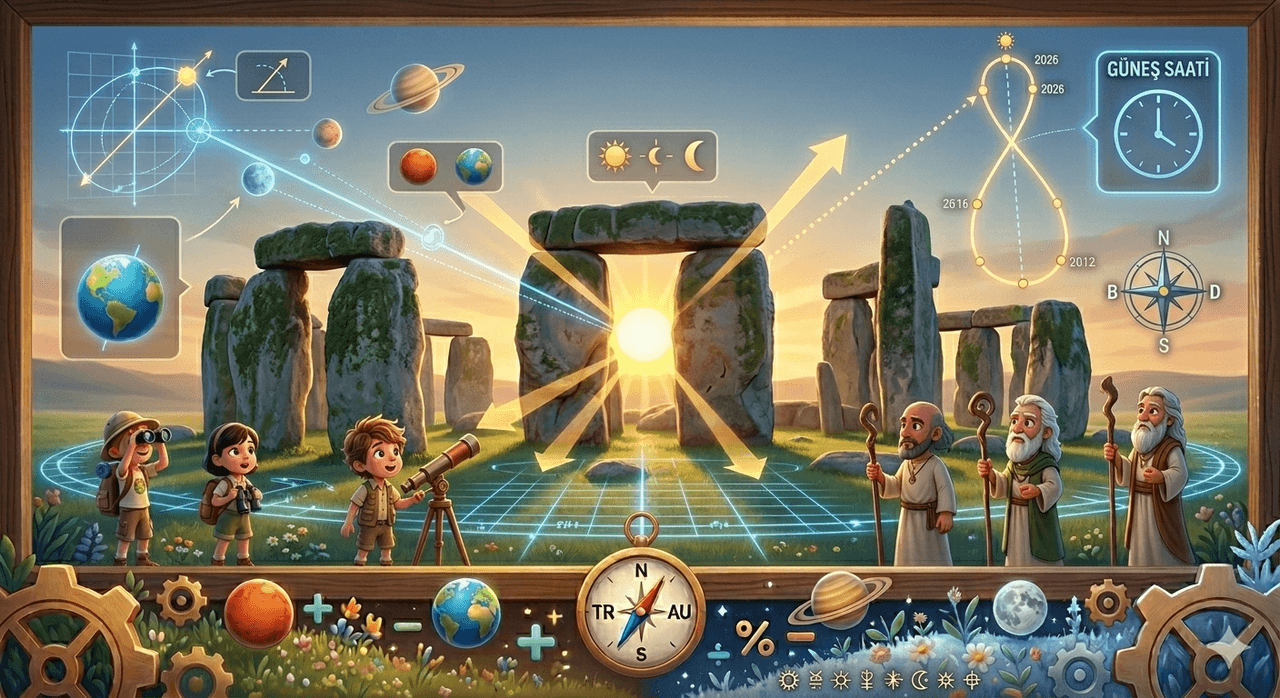
If you took a photograph of the Sun in the sky at exactly noon every day for a year and stacked them on top of each other, you would see a shape resembling the number “8.” Astronomers call this pattern the analemma, which illustrates Earth’s journey around the Sun.
On June 21, the Sun reaches the highest point of this “8” shape as seen from the Northern Hemisphere.
Additionally, because the Sun is directly overhead at this time, objects along the line known as the Tropic of Cancer cast almost no shadow at noon. This phenomenon is called the Zero Shadow Day. The renowned ancient scientist Eratosthenes, who lived around 200 BCE, observed the sunlight falling vertically into wells and measured shadow lengths precisely on the summer solstice to prove that Earth is spherical and calculate its circumference.
Generated by Artificial Intelligence.
Where Does the Name Come From?
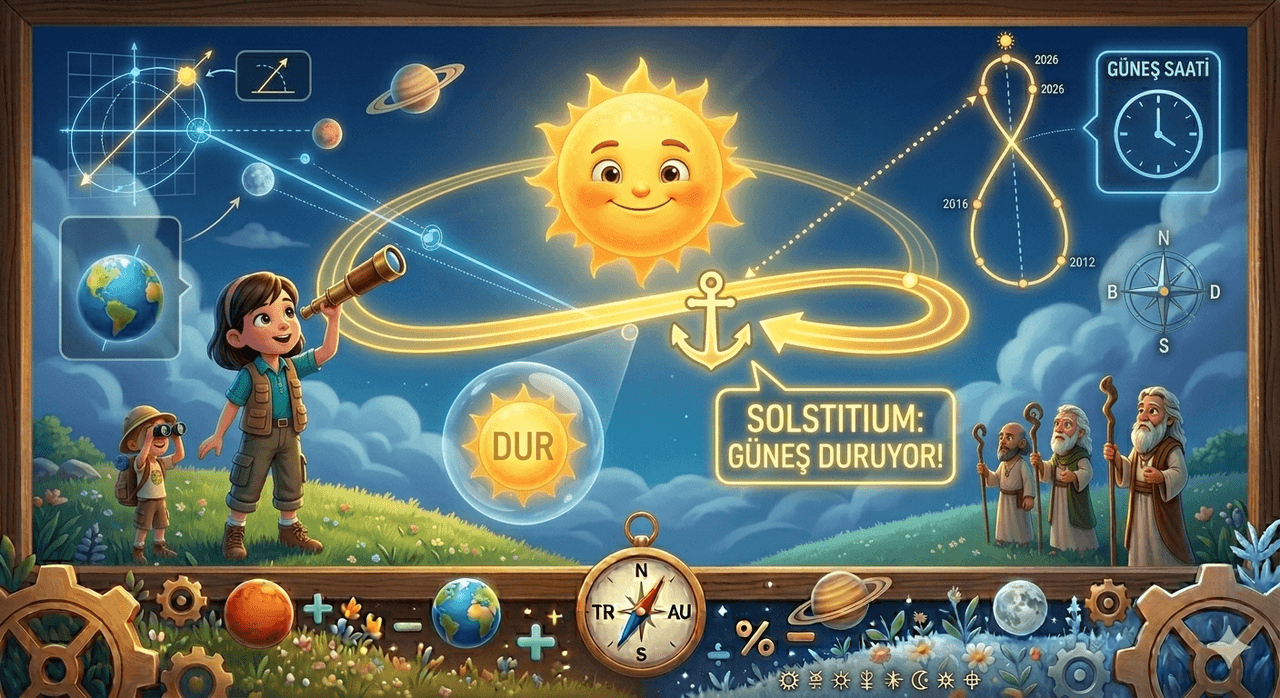
The word “solstice” comes from the Latin solstitium, meaning “Sun stands still.” This is because the Sun, which appears to move northward or southward across the sky each day, seems to pause briefly before reversing direction on this day.
Generated by Artificial Intelligence.
Historical Significance and Celebrations
Since ancient times, humans have used the Sun as a clock and calendar. For early agricultural civilizations, knowing the right time for crop growth was vital. For this reason, June 21 has been celebrated with festivals in many cultures throughout history. For example, the massive ancient stone circle Stonehenge in England was constructed to align precisely with the sunrise on the summer solstice. Even today, people around the world continue to gather to observe this magnificent natural balance and astronomical cycle.